
Europe's Megafires Mirror Latin America's Climate Crisis
Southern Europe is burning. As wildfires tear across France, Spain and Greece in one of the most destructive fire seasons in two decades, the smoke carries a warning that reaches far beyond the Mediterranean — to the Pantanal, the Amazon and every fire-prone corner of Latin America. Fuelled by record heat, drought and a powerful El Niño, the same climate machinery driving Europe's megafires is now priming the hemisphere's dry season for crisis.
Southern Europe is burning. As wildfires tear across France, Spain and Greece in one of the most destructive fire seasons in two decades, the smoke carries a warning that reaches far beyond the Mediterranean — to the Pantanal, the Amazon and every fire-prone corner of Latin America. Fuelled by record heat, drought and a powerful El Niño, the same climate machinery driving Europe's megafires is now priming the hemisphere's dry season for crisis.
Europe's Megafires Reveal Shared Climate Peril With Latin America
Brussels, Belgium – August 2, 2026 — Firefighters from Bordeaux to the Gulf of Corinth are battling blazes that have already forced more than 300,000 people from their homes, and the European Forest Fire Information System is tracking burned areas far above every 20-year benchmark. For Latin America, the scene is a preview of a dry season already tightening its grip from the Pantanal to Patagonia.
Europe's Megafire Summer
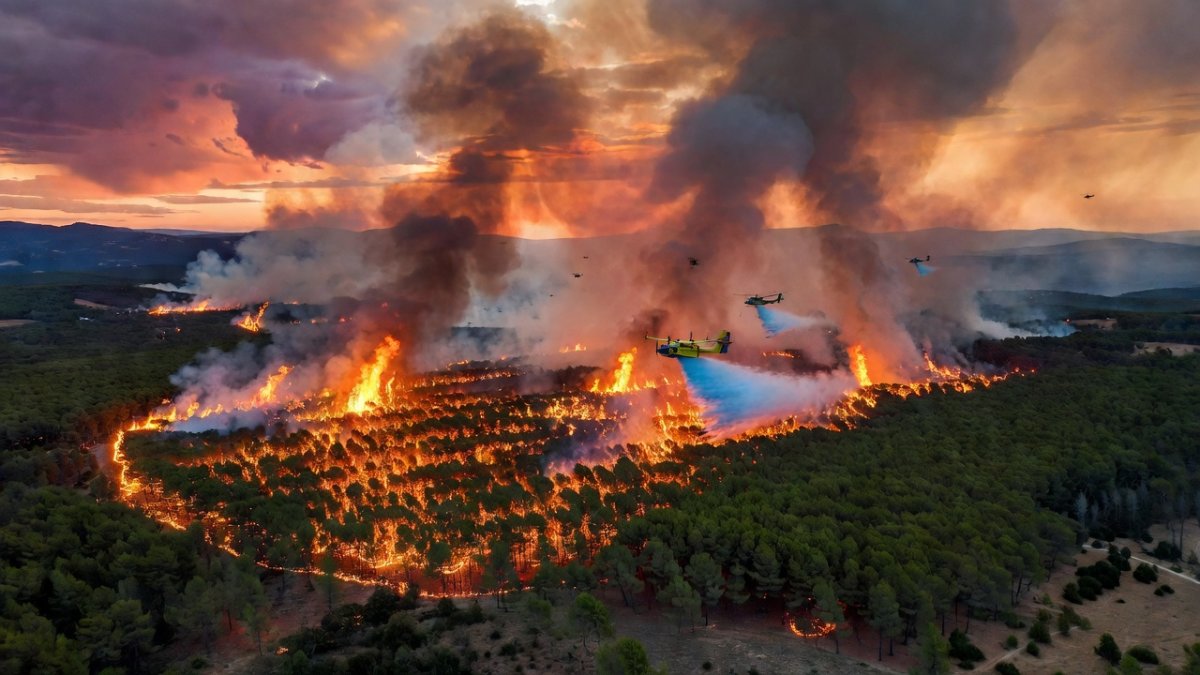
France faced one of its most devastating wildfire seasons in decades as the Gironde/Landes megafire near Bordeaux scorched roughly 42,000 hectares. Extreme heat near 40°C combined with prolonged drought to ignite and sustain the blaze, triggering one of the largest peacetime evacuations in French history with 220,000 to 250,000 people ordered to leave. Firefighters contained the spread of the largest wildfire in over 70 years, though hotspots remained active into early August. By then approximately 144,000 of the displaced residents received permission to return. Crews encountered a rare pyrocumulonimbus cloud, a fire-generated thunderstorm capable of producing lightning, marking a first for European teams in France. International support arrived from the EU and Ukraine, whose firefighters deployed for the first time on French soil. These events parallel the operational challenges faced by IBAMA and ICMBio teams in Brazil's Pantanal, where similar drought-driven fires threaten biodiversity hotspots and force rapid evacuations of rural communities.
The human toll extended beyond immediate displacement. Farmers in the affected Bordeaux region watched livestock and crops vanish under smoke, echoing the losses reported by Indigenous communities in Brazil's Mato Grosso do Sul when controlled burns were suspended statewide from August through November. French authorities stabilized the main front but warned that residual heat and wind could reignite sections, much as INPE monitoring shows thousands of active fire hotspots persisting across the Amazon basin during the July-to-October dry season. The pyrocumulonimbus phenomenon, previously documented in Latin American fire events, underscores how warming atmospheres intensify feedback loops that generate new ignitions. Local residents described nights illuminated by distant flames, a scene familiar to families in the Pantanal wetlands where 2020 fires injured iconic jaguars and displaced traditional fishing communities. These shared atmospheric and ecological pressures highlight why European and Latin American fire managers increasingly exchange tactics on rapid mapping and community alerts.
Spain and Greece on the Front Line
Spain declared a national state of emergency in affected provinces after wildfires prompted evacuation orders for roughly 63,000 people. The Avila fire became the largest in the country's recorded history, consuming over 50,000 hectares in a single event. National burned area estimates for the season reached 140,000 to 180,000 hectares. Strong winds, drought, and a fourth major heatwave pulse drove rapid spread, yet main fires stabilized by late July and early August, allowing the emergency to lift in key zones. Greece shifted into the active front by late July, recording dozens of fires in a single day under extreme conditions. A significant blaze near Agios Vasileios on the Gulf of Corinth forced about 300 people to evacuate by sea, affecting 40 to 50 square kilometers while gale-force winds hampered aerial drops. Nearly 500 firefighters, 19 water-dropping planes, and 11 helicopters operated with support from France, Romania, and Czechia. At least three firefighters died amid the crisis. These coordinated multinational responses mirror Chile's provision of aerial resources to Argentina during Patagonia fires earlier in 2026, where combined burned areas exceeded 230,000 hectares and exposed gaps in regional climate funding under President Javier Milei.
The Numbers Behind the Smoke
The European Forest Fire Information System, part of the Copernicus Emergency Management Service managed by the EU Joint Research Centre, reported burned areas of 254,000 to 435,000 hectares across the EU-27 by late July 2026, far above the 20-year average of 170,000 to 200,000 hectares. Roughly 1,200 to 1,254 fires were recorded, more than double the long-term average of 569. Fire weather severity tracked 43 percent higher than the 20-year average from January through late July. June 2026 marked Europe's hottest month on record, with western Europe 3.06°C above the 1991-2020 baseline according to the Copernicus Climate Change Service. Widespread temperatures exceeded 40°C and broke national records. EuroMOMO data indicated more than 10,000 excess heat-related deaths. Copernicus Sentinel-2 imagery enabled real-time tracking of active fronts and burn scars. Over 300,000 people faced evacuation at peak across affected countries, disrupting tourism, agriculture, and protected areas. These metrics align closely with INPE and MapBiomas observations in Brazil, where the 2025 Amazon season recorded the lowest burned area in at least 40 years at 7.7 million acres before 2026 conditions reversed gains under improved Lula-era enforcement.
Climate Attribution: A Fire Regime Rewritten
World Weather Attribution linked the June 2026 European heatwave directly to human-caused climate change, stating it would have been virtually impossible without anthropogenic influence. The heat-drought combination became roughly 20 times more probable in some assessments. Europe warms at roughly twice the global average rate, about 0.5°C per decade since the 1980s. Extreme heat accelerates evaporation and soil moisture loss beyond rainfall deficits alone. El Niño compounded drought and fire risk alongside background warming, placing 2026 on track as one of the hottest years recorded. Longer fire seasons now reach more northern latitudes with higher extremes. Ignition sources under arson investigation and land management issues such as fuel buildup from rural abandonment also contribute. These dynamics replicate across Latin America, where the 2026 strong El Niño threatens to push the Amazon and Pantanal toward tipping points as warned in late July Jornal Nacional reporting. President Gustavo Petro of Colombia has already shifted emergency funds toward water, food, and solar energy ahead of a potentially historic drought from December 2026 to March 2027 that could imperil hydropower supplying over two-thirds of national electricity.
Latin America Feels the Same Heat
Brazil's 2026 fire season in the Pantanal and Amazon entered early stages by early August, with the dry season running July through October and peaking August to September. After the exceptionally mild 2025 season that saw burned area drop sharply to 7.7 million acres, the return of El Niño and higher temperatures raised alarms. Mato Grosso do Sul suspended all controlled burns from August to November statewide, extending restrictions through December in the Pantanal. IBAMA and ICMBio intensified enforcement and on-the-ground response in federal conservation units. INPE continued monitoring thousands of active fire hotspots annually while MapBiomas tracked land-use changes. The Pantanal's wetland ecosystem remains especially vulnerable, recalling the 2020 fires that injured jaguars such as Ousado. These institutional efforts parallel the multinational aerial support deployed in Greece, demonstrating how Latin American agencies adapt European lessons on rapid mapping to protect Indigenous territories and rural livelihoods dependent on seasonal rains.
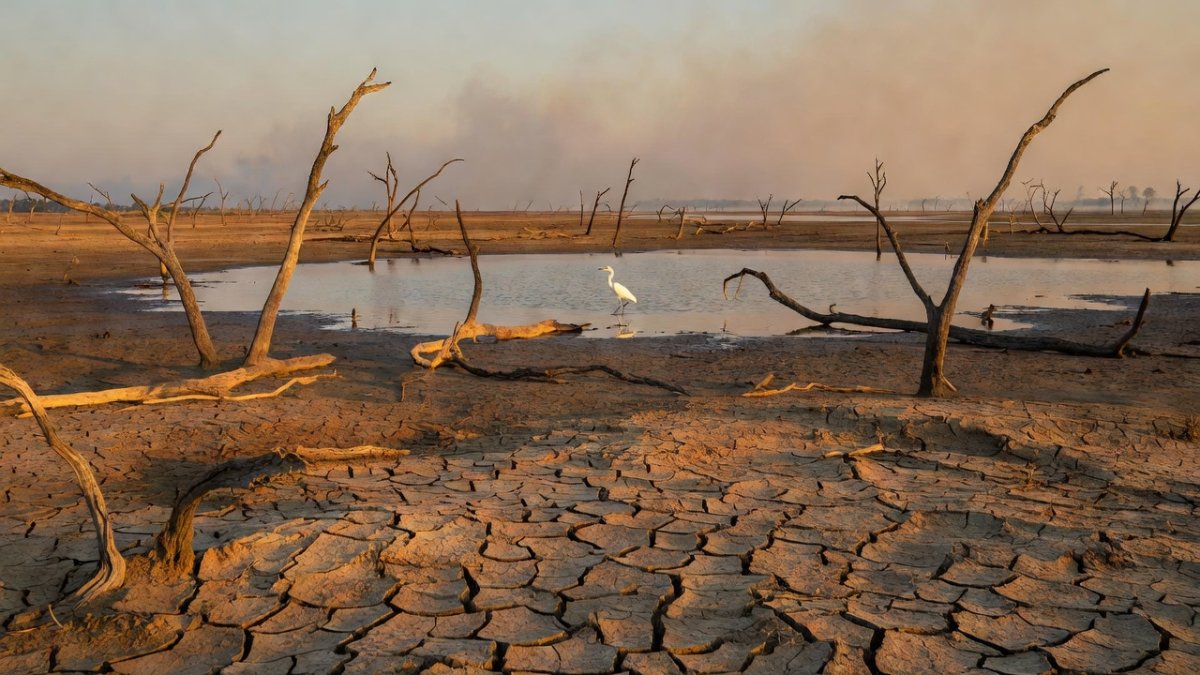
July 30-31, 2026 reporting highlighted how lack of rain and rising temperatures edge the Amazon basin closer to points of no return. Communities in Mato Grosso do Sul described canceled agricultural burns and heightened anxiety over lost income, much like evacuees in southern France who returned to damaged farms. Improved monitoring under the Lula administration offers hope, yet persistent drought signals that enforcement alone cannot offset climate-driven extremes. The same pyrocumulonimbus clouds observed in France have appeared in Latin American fires, creating lightning-started blazes that compound positive feedback loops. Daily life for smallholder farmers and Indigenous groups now includes constant vigilance against new ignitions, underscoring the hemispheric nature of the crisis.
From Patagonia to Mexico: A Hemisphere on Fire Watch
Argentina and Chile battled major wildfires in Patagonia during January 2026 and additional outbreaks in northwest Argentina's Salta province by June, with combined impacts reaching roughly 230,000 hectares. Political controversy arose over alleged cuts to climate budgets under President Javier Milei, while Chile supplied the only direct regional aerial and technical assistance. Mexico recorded approximately 5,102 forest fire events in 2026, down from 7,016 the prior year, though Jalisco, Michoacan, and Estado de Mexico remained hardest hit amid northern heat exceeding 45°C. Colombia faces warnings from President Gustavo Petro of a potentially worst-ever drought between December 2026 and March 2027, prompting emergency funding shifts to protect hydropower, water supplies, and agriculture. Pyrocumulus clouds generating new lightning fires have been documented across the region, creating feedback loops also seen in Europe. Strong El Niño effects brought wetter conditions and floods to southern South America including Chile, Argentina, Paraguay, Uruguay, and southern Brazil via the subtropical jet stream, illustrating the extreme variability now reshaping the hemisphere.
The Bottom Line: What Comes Next
The August 2026 southern Europe wildfire crisis, as captured in the Al Jazeera English report, demonstrates that fire regimes have been rewritten by climate change across both hemispheres. Longer seasons, more intense heat, and El Niño amplification demand sustained investment in monitoring by institutions such as EFFIS, Copernicus, INPE, and IBAMA. Latin American nations already apply lessons from European multinational deployments while adapting them to protect biodiversity hotspots and Indigenous lands. If implemented, expanded cross-hemispheric training and real-time satellite sharing could reduce response times and protect vulnerable communities from future evacuations. The data from over 300,000 displaced residents and thousands of excess heat deaths serve as urgent reminders that coordinated action must address both ignition sources and the underlying warming trajectory. Without accelerated mitigation, the patterns observed from Bordeaux to the Pantanal will intensify, threatening ecosystems, economies, and lives on an ever-larger scale.
By Elena Vasquez, Staff WriterThis article was produced with AI-assisted research and editorial support. Reporting is based on sources cited in the article.
What's Your Reaction?
 Like
0
Like
0
 Dislike
0
Dislike
0
 Love
0
Love
0
 Funny
0
Funny
0
 Wow
0
Wow
0
 Sad
0
Sad
0
 Angry
0
Angry
0

Latin America Correspondent at Global1.News. Based in Mexico City, covering politics, economics, energy, and culture across the region. Brings an on-the-ground perspective to stories spanning from the Rio Grande to Patagonia.












Comments (0)