
Brazil denies US officials visas over election interference fears
Brazil denied visas to US officials Riley M Barnes and Samuel Samson after Lula accused them of election meddling ahead of October's vote against Flávio Bolsonaro, defending the e-voting system used since 1996.
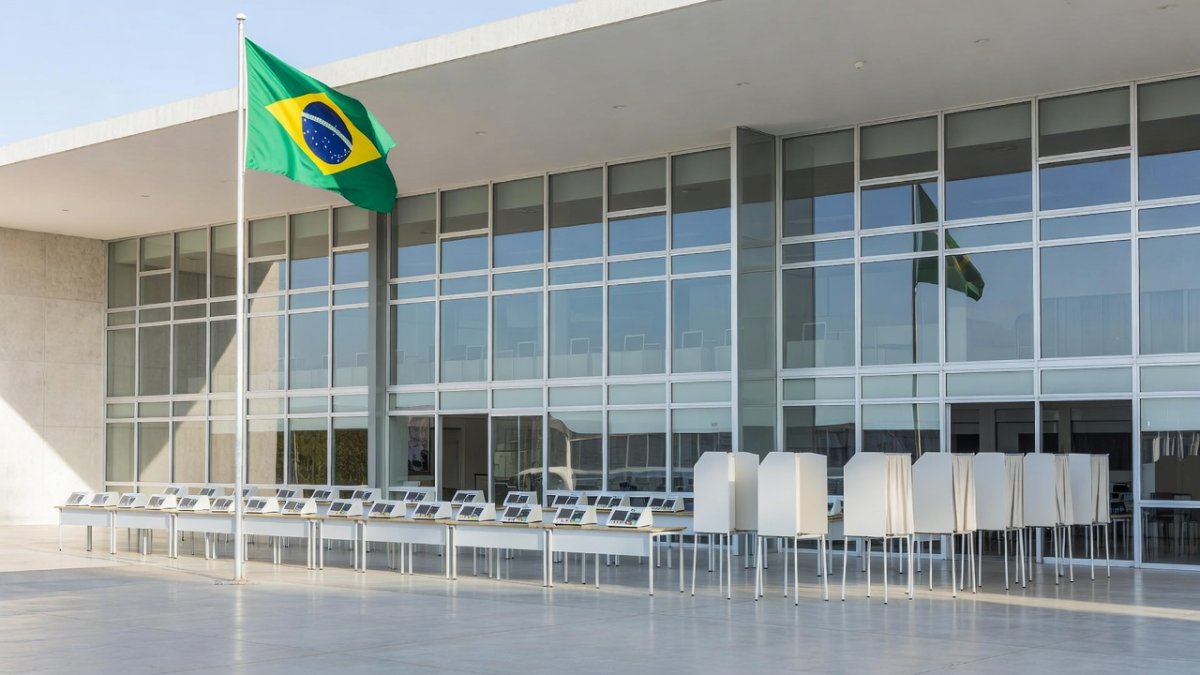
Brazil's refusal to grant visas to two US State Department officials has intensified scrutiny over foreign involvement in the country's October presidential election. President Luiz Inácio Lula da Silva directly accused the visitors of seeking to undermine confidence in the electronic voting system. The episode tests the resilience of Brazil's democratic institutions ahead of a contest between the incumbent and the son of a former president convicted of coup plotting.
Brasilia, Brazil — President Luiz Inácio Lula da Silva confirmed on Wednesday that his government denied visas to two US officials scheduled to arrive in late July, citing concerns they would cast unfounded doubts on Brazil's electoral system before the October vote.
Lula's Direct Accusation of Interference
Luiz Inácio Lula da Silva stated that the two officials were sent to meddle in Brazil's elections. He described them as young staffers whose visit would have raised suspicions about the reliability of the voting process. The Brazilian government acted after Flávio Bolsonaro met with diplomats and repeated claims linking Brazilian machines to those used in Venezuela. President Luiz Inácio Lula da Silva's Wednesday statement framed the visa denial as a necessary defense of Brazilian sovereignty at a critical moment, just months before the October presidential contest.
The visa denial signals a deliberate recalibration in US-Brazil ties under Lula's third term, where cooperation on trade and climate has coexisted with firm pushback against perceived political overreach. By blocking the officials, Brasília conveys that Washington cannot unilaterally insert itself into domestic electoral debates, a stance rooted in decades of Latin American wariness toward US democracy-promotion programs that often masked strategic interests. This episode echoes past tensions during the Odebrecht investigations, when Brazilian authorities similarly resisted external narratives framing local institutions as inherently flawed.
In the wider context of US election observation across Latin America, Lula's move highlights how such visits can amplify opposition voices without formal accreditation from bodies like the OAS. Regional governments have long questioned the selective focus of US State Department teams, which rarely scrutinize voting systems in allied nations with documented irregularities. The decision therefore reinforces a collective Latin American preference for observer missions vetted through multilateral channels rather than bilateral diplomacy.
Identities and Purpose of the US Delegation
The blocked travelers were Riley M Barnes, assistant secretary of state for democracy, human rights, and labor, and Samuel Samson, a deputy assistant secretary in the same bureau. Their stated agenda included discussions on freedom of expression, religion, and election integrity, with plans to meet Flávio Bolsonaro. The US State Department has rejected the interference claims as a baseless lie. Lula highlighted the visitors' youth and their planned meetings with opposition figures to position the episode as an attempt to import external skepticism into a process already proven reliable.
The Bureau of Democracy, Human Rights, and Labor has long shaped US engagement with foreign electoral processes through policy guidance and diplomatic outreach. Barnes and Samson’s planned discussions with Flávio Bolsonaro signaled alignment with opposition narratives on voting integrity, a move that Brazilian officials interpreted as partisan rather than neutral. Visa denials serve as calibrated diplomatic instruments that allow governments to register objections without severing broader ties, preserving space for cooperation on trade and climate while asserting control over who enters to discuss domestic institutions.
Brazil's Electronic Voting Protections
Brazil has used electronic voting since 1996 with no recorded systemic fraud. Each machine requires fingerprint verification, prints a paper tally for public comparison, and undergoes independent audits plus public hacking challenges. The Superior Electoral Court has refuted Flávio Bolsonaro's assertions about machine origins and cited a CIA report on Venezuela as irrelevant to Brazilian procedures. Government officials emphasized that the decision followed direct reports of Flávio Bolsonaro repeating Venezuelan machine claims to diplomats, underscoring how quickly such narratives could spread ahead of voting day.
Independent assessments from organizations monitoring Latin American elections have consistently ranked Brazil's system among the region's most resilient, crediting its incremental upgrades since 1996 with building layered safeguards that exceed those in countries still reliant on manual counts. Public hacking challenges organized by the Superior Electoral Court invite global experts to test vulnerabilities annually, creating transparency that contrasts sharply with systems in parts of Central America where allegations of tampering persist due to limited audit access.
These mechanisms have fostered measurable voter confidence across diverse socioeconomic groups in Brazil, unlike neighboring states where paper-ballot disputes fueled prolonged instability. The emphasis on verifiable paper records alongside digital processes addresses historical distrust from the Odebrecht era, when corruption scandals eroded faith in state institutions, allowing Brazil to position its model as a regional benchmark rather than an import from less secure Venezuelan technology.
Flávio Bolsonaro's Campaign and External Endorsements
Flávio Bolsonaro, the right-wing candidate facing Lula, has received public support from Argentina's President Javier Milei and Israeli Prime Minister Benjamin Netanyahu. He told diplomats that Brazilian machines share origins with Venezuela's systems. He later clarified that he sought more international observers rather than questioning the process itself. The timing of the refusal, announced as preparations for the October vote intensified, reflects Lula's broader strategy of shielding electoral institutions from foreign pressure.
Public backing from Javier Milei and Benjamin Netanyahu positions Flávio Bolsonaro within a transnational conservative network that emphasizes market reforms and security cooperation, lending his candidacy visibility beyond Brazil’s borders. This orientation diverges from Jair Bolsonaro’s narrower focus on domestic skepticism toward electronic voting by seeking explicit external validation. Such endorsements may strengthen appeal among right-leaning voters wary of multilateral bodies, yet they also highlight a continued reliance on foreign figures to bolster claims about electoral fairness that originated with his father’s post-2022 challenges.
Legacy of Jair Bolsonaro
Jair Bolsonaro received a 27-year prison sentence for plotting a coup after his 2022 loss and was already banned from office for spreading unfounded rigging claims. His supporters stormed Congress, the Supreme Court, and the Presidential Palace on 8 January 2023. These events left lasting scars on Brazilian institutions, reminding citizens in Brasília and beyond how quickly democratic norms can face direct assault.
The 8 January 2023 attacks prompted Brazilian institutions to accelerate judicial reforms and intelligence coordination between federal agencies, fundamentally altering how Brasília monitors threats to democratic continuity. Accountability efforts have extended beyond Jair Bolsonaro's sentencing to include investigations into military and civilian networks that amplified denial narratives, reshaping civil-military relations in ways that prioritize institutional loyalty over personal allegiance.
Bolsonaro's strategy of questioning results without evidence has influenced right-wing figures elsewhere in Latin America, encouraging similar rhetoric in nations where electoral commissions already face polarization. This cross-border diffusion has complicated regional efforts to standardize observation protocols, as local actors now cite Brazilian precedents to justify demands for expanded foreign scrutiny even in systems with strong domestic verification records.
Broader Stakes for Latin American Sovereignty
The visa denial underscores Brazil's determination to shield its electoral institutions from external narratives that have destabilized neighbors. Lula's government views the episode as part of a wider regional effort to protect democratic processes from imported doubts. Observers note that such interventions risk eroding public trust in systems long regarded as among the world's most secure. This dynamic echoes historical patterns where foreign involvement has influenced local politics, from Cold War-era interventions to more recent diplomatic pressures.
Foreign electoral observation, when conducted outside established multilateral frameworks, raises sovereignty concerns shared by multiple Latin American governments that view unilateral US engagements as potential vectors for political destabilization. Analysts note that Lula's response aligns with a growing regional consensus favoring observer teams coordinated through bodies like the OAS or UN, which apply uniform standards rather than ad-hoc diplomatic visits.
Protecting the October vote therefore carries implications beyond Brazil, testing whether Latin American states can maintain autonomous electoral processes amid external pressures. This stance may encourage other governments to adopt similar preemptive measures, reinforcing the principle that democratic legitimacy derives from internal institutions rather than imported validations that risk undermining public trust in long-established systems.
By Elena Vasquez, Staff WriterThis article was produced with AI-assisted research and editorial support. Reporting is based on sources cited in the article.
What's Your Reaction?
 Like
0
Like
0
 Dislike
0
Dislike
0
 Love
0
Love
0
 Funny
0
Funny
0
 Wow
0
Wow
0
 Sad
0
Sad
0
 Angry
0
Angry
0

Latin America Correspondent at Global1.News. Based in Mexico City, covering politics, economics, energy, and culture across the region. Brings an on-the-ground perspective to stories spanning from the Rio Grande to Patagonia.











Comments (0)