
Europe's Burning Summer: A Climate Warning Latin America Can't Ignore
Europe is burning in August 2026 — and for Latin America, the smoke carries a message. The continent’s worst wildfire season on record is unfolding under extreme heat and drought, sending urgent signals to regions already scarred by megafires. Latin America must prepare now for the El Niño-driven seasons ahead.
Europe is burning in August 2026 — and for Latin America, the smoke carries a message. The continent’s worst wildfire season on record is unfolding under extreme heat and drought, sending urgent signals to regions already scarred by megafires. Latin America must prepare now for the El Niño-driven seasons ahead.
Europe's Burning Summer: A Climate Warning Latin America Can't Ignore
Athens, Greece – August 4, 2026 — Europe has already burned 434,976 hectares since the start of 2026 according to EFFIS and Copernicus data, while five lives have been lost in Greece alone in the past two weeks. The crisis is no longer a distant European problem; it is a live demonstration of how climate change, prolonged drought and gale-force winds combine to turn forests into infernos that overwhelm even well-resourced nations. For Latin America, where Bolivia lost 12.6 million hectares in 2024 and Chile suffered 137 deaths in the Valparaíso megafires of February 2025, the lesson is immediate and unavoidable.
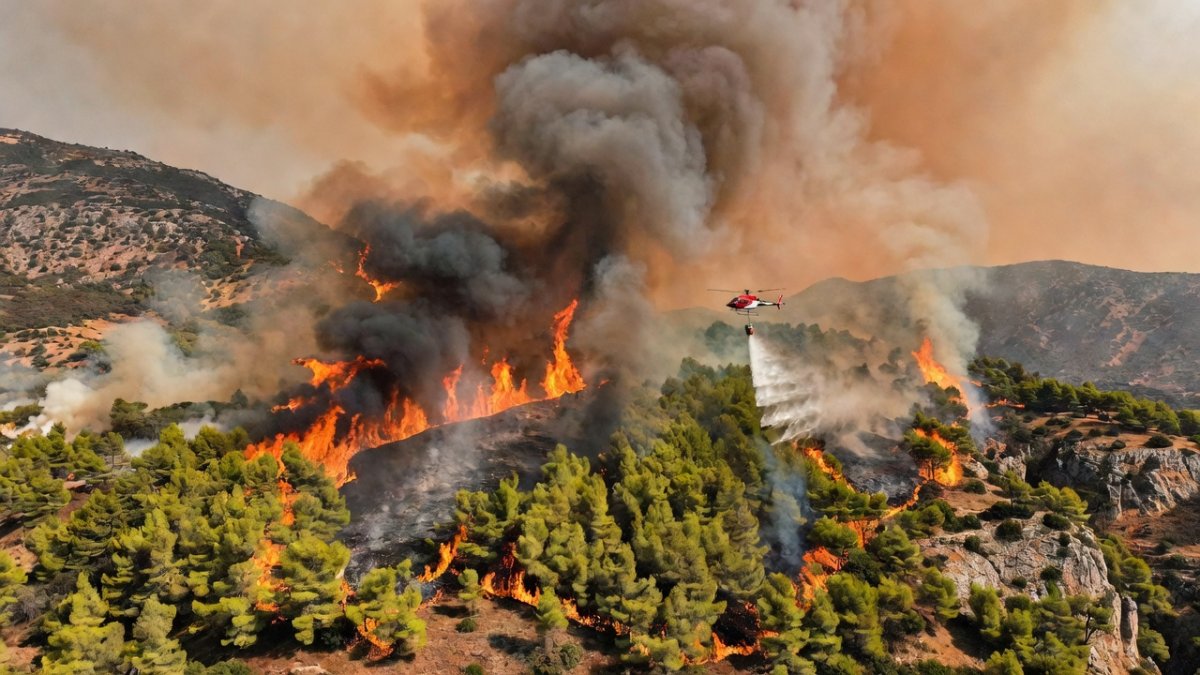
Europe's Burning Summer: The 2026 Crisis in Numbers
By 30 July 2026 the European Forest Fire Information System had recorded 434,976 hectares burned across the continent, already surpassing many previous annual totals. Spain alone accounts for 171,382 hectares, 80 percent above the twenty-year average, with sixteen named active fires still raging. France suffered its largest wildfire on record when flames consumed roughly 420 square kilometres in Gironde, forcing the evacuation of more than 224,000 people and destroying 183 homes in Le Porge before residents returned to the Cap Ferret peninsula on 3 August. Greece endured more than 12,000 hectares burned in a single week, including a probable megafire around Porto Germeno that destroyed over 10,000 hectares, crossed a military firing range and triggered unexploded ammunition. Nearly 500 firefighters, reinforced by teams from France and Romania, battled gale-force winds while two Australian helicopters collided near Athens on 2 August, killing two crew members. Italy placed nearly every major city on the highest red heat alert. The previous year’s record of 1,034,552 hectares burned now looks like a baseline rather than an outlier.
The pressure on emergency services extends beyond forests. In Spain’s Zamora province, a blaze at the Zaresa waste treatment plant in Roales del Pan sent a thick toxic smoke column into the air, drawing nearly 40 calls to dispatchers, forcing authorities to issue ES-Alert mobile warnings telling residents to stay indoors and closing a lane of the A-11 motorway. In Israel, a major wildfire swept through Ben Shemen Forest and forced the closure of Highway 6, while fire crews in the Netherlands battled a large fire in the De Rosmolen nature reserve. The 2026 season follows a 2025 in which 1,034,552 hectares burned across Europe — the highest total in the EFFIS record — and it is far from over.
Why Megafires Are the New Normal: The Science of Heat and Drought
Associate Professor Paleologos Paleologou and senior wildfire meteorologist Theodore Giannaros have both stated that climate change is creating conditions highly conducive to uncontrollable fire spread. Rising temperatures and prolonged droughts dry vegetation to tinder levels, allowing flames to advance at speeds that render traditional containment lines ineffective. Wildfires now generate their own weather through pyrocumulonimbus clouds that loft embers kilometres ahead of the main front. In Serbia, water shortages have already curtailed output at the Kostolac coal plants, while Romania resorted to blasting rock to divert Danube water to a nuclear reactor. France shut three nuclear reactors at Chooz and Cattenom to preserve river flows, illustrating how fire-driven heat cascades into energy-system stress. These feedback loops are no longer theoretical; they are measurable daily realities that Latin American fire managers must anticipate as El Niño strengthens.
What This Means for Latin America: A Warning From Across the Atlantic
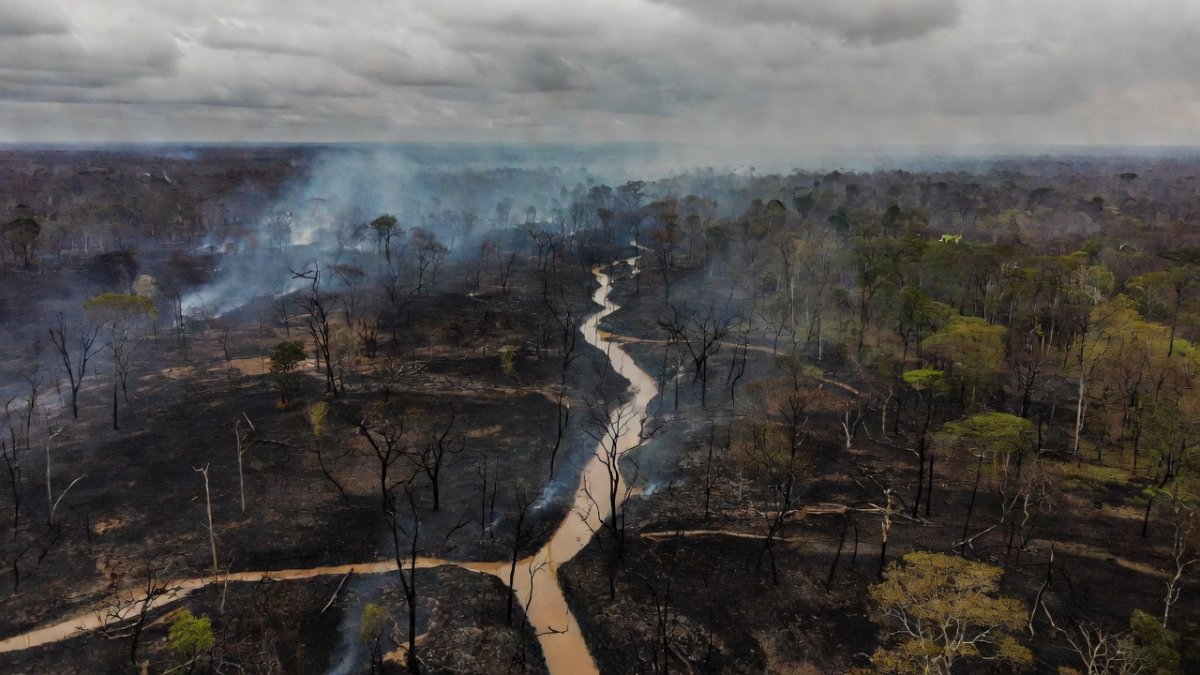
Bolivia’s 2024 fires scorched 12.6 million hectares, an area almost the size of New York state, while the 2020 Pantanal fires destroyed a quarter of the world’s largest tropical wetland. Chile’s February 2025 Valparaíso megafires killed 137 people, the country’s deadliest disaster since the 2010 earthquake. On 31 July 2026 the World Meteorological Organization warned that a powerful El Niño is strengthening, with central Pacific sea-surface temperatures projected to rise more than 2.9 °C above normal. UN Secretary-General António Guterres declared, “El Niño is not just on our doorstep—it is inside the house and turning up the heat.” The same signal points to above-normal temperatures across South America through 2027, threatening to intensify the Amazon’s August-September fire season. A NASA-supported study published in July 2025 found that burned Amazon forests remain approximately 2.6 °C hotter than intact stands for at least thirty years, locking in future flammability.
Fire in the Amazon is also a tool of land conversion: ranchers and land speculators routinely burn forest to clear pasture during the dry season, and the southern Amazon’s peak burning months of August and September line up exactly with its driest weeks. That human ignition source, layered on top of climate-driven drought, is what turns routine seasonal burning into megafire risk — the same combination of weather and land management that European authorities are now confronting on a continent with far more firefighting capacity.
Latin America cannot afford to treat Europe’s summer as someone else’s crisis.The Tools of the Trade: Satellites, Fleets and Early Warning Systems
The European Union launched its largest shared firefighting fleet yet under the rescEU programme for the 2026 season. Copernicus Climate Change Service data, delivered by Director Carlo Buontempo, and EFFIS mapping have become indispensable for real-time decisions. Australia’s Marta Yebra, Director of the Bushfire Research Centre of Excellence, emphasised the value of rapid satellite intelligence. In July 2026 the nonprofit Earth Fire Alliance deployed three FireSat satellites to provide firefighters worldwide with precise, near-real-time data, offering particular hope for the Amazon. Brazil’s INPE tracks fires by satellite while IBAMA and ICMBio enforce bans; Chile’s CONAF coordinates ground response. Yet local capacity gaps, limited funding and fragmented coordination remain barriers. The panel of experts convened by Al Jazeera—Paleologou, Yebra and Buontempo—agreed that prevention, not just suppression, must become the central strategy if megafires are to be contained.
The Al Jazeera English Inside Story discussion, presented by Mohammed Jamjoom, put the question directly: how catastrophic could the situation become before the fires are brought under control? Paleologou, Yebra and Buontempo each pointed to the same answer — that no country, however wealthy, can suppress its way out of a crisis engineered by heat and drought. The choice between investing in prevention now or paying for megafire suppression later is a choice every Latin American government will face in the coming years.
Voices From the Ground: Firefighters, Residents and Scientists
Sixty-one-year-old Tasos Tzempelikos in Greece captured the exhaustion felt across the continent: “The fire has been burning since last night; it is certain that they cannot have forces everywhere. We as residents are doing everything we can.” Giannaros described the current Greek crisis as one of the worst he has witnessed in eight to ten years. A 44-year-old man was arrested on Kefalonia island on 2 August on suspicion of arson, echoing the arrest of a firefighter for arson in Chile’s 2025 tragedy. The sacrifice of the two Australian helicopter crew members near Athens underscores the international nature of the response. Psychiatric patients had to be evacuated from Athens’ Dafni hospital because of smoke, while roughly 500 people stranded on the coastline required sea rescue on 31 July. These human stories reveal both the limits of state capacity and the resilience of communities that refuse to wait for external help.
Greece has been here before. The Mati wildfire of 2018 killed more than 100 people in a single afternoon, and the Evros blaze of 2023 was among the largest single fires ever recorded in the European Union. Each disaster hardened the eastern Mediterranean’s reputation as one of Europe’s most fire-vulnerable regions — a label that is now spreading westward across the continent. The pattern is repeating because the underlying conditions keep worsening, and the same arithmetic applies to the fire-prone landscapes of South America.
The Bottom Line: What Comes Next for a Planet Already on Fire
El Niño is projected to intensify fire risk across Latin America well into 2027, turning the current European summer into a preview rather than an exception. Policymakers must treat the crisis as a wake-up call and shift resources from reactive suppression toward landscape-scale prevention, early warning and community preparedness. Latin American institutions already possess satellite monitoring through INPE and Copernicus; what they need is sustained funding, cross-border coordination and political will to protect the Amazon, the Pantanal and the Andean forests before the next El Niño peak. A just transition that values both ecosystems and the people who live within them offers the only realistic path. The smoke rising over Athens, Gironde and Zamora is the same smoke that will darken South American skies if preparation is postponed. The time to act is now, before the next fire season begins.
By Elena Vasquez, Staff Writer
This article was produced with AI-assisted research and editorial support. Reporting is based on sources cited in the article.
What's Your Reaction?
 Like
0
Like
0
 Dislike
0
Dislike
0
 Love
0
Love
0
 Funny
0
Funny
0
 Wow
0
Wow
0
 Sad
0
Sad
0
 Angry
0
Angry
0

Latin America Correspondent at Global1.News. Based in Mexico City, covering politics, economics, energy, and culture across the region. Brings an on-the-ground perspective to stories spanning from the Rio Grande to Patagonia.











Comments (0)