
Drone War Reaches Russia's Warehouse Economy
Ukrainian drones killed at least one person and struck a Wildberries logistics hub and energy facility in Volgograd, part of a widening campaign against Russia's e-commerce backbone that Kyiv says supplies its military. Moscow said it intercepted 371 drones overnight as the economic front of the ...
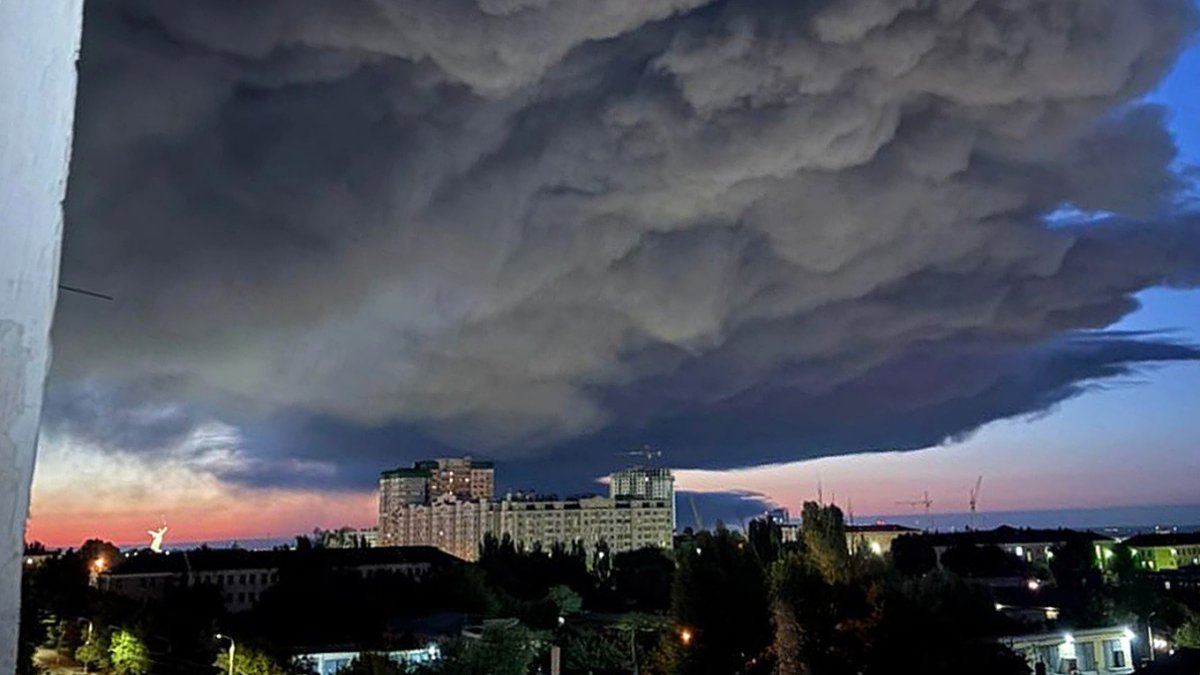
Ukrainian drones struck an energy facility and a Wildberries logistics hub in Russia's southern Volgograd region early Friday, killing at least one person and deepening a campaign that has exposed how deeply Russia's wartime economy now depends on private commercial infrastructure. The attack came as Moscow's Defense Ministry claimed to have intercepted hundreds of drones nationwide overnight.
Drone War Reaches Russia's Warehouse Economy
Moscow, Russia — The overnight strike on Volgograd marked the latest escalation in a two-week Ukrainian campaign against the logistics network of Wildberries, Russia's largest online marketplace, which Kyiv accuses of supplying components to the Russian military. The company denies the allegations, and the strikes have inflicted heavy losses on tens of thousands of small businesses that depend on the platform.
Deadly Strike on Volgograd
Volgograd region Governor Andrei Bocharov initially reported that five people were injured in the attack, which targeted an energy facility and a warehouse complex in the early hours of Friday. He later said the body of a woman had been recovered from beneath the rubble of a damaged residential building, according to The Moscow Times.
NASA's fire monitoring system FIRMS registered several large active fires at the site of a major oil refinery operated by Lukoil just south of the city, the Lukoil-Volgogradneftepererabotka facility. The independent Telegram channel Astra, citing photos and videos from witnesses, reported that the refinery may have been hit. Lukoil has not commented on the reported attack.
Wildberries Confirms Fire at Logistics Hub
Wildberries confirmed that a fire broke out at one of its logistics hubs in Volgograd following the drone attack, though the company reported no casualties at the site. Ukrainian sources said the strikes were carried out with FP-1 fire-point drones, and social media images showed a large column of black smoke rising above the city early Friday.
In a sign of the widening geographic reach of the campaign, the online retailer Ozon — a Wildberries competitor — said it evacuated one of its warehouses in Zelenodolsk, Tatarstan, after an air raid alert. A video shared on social media purportedly showed employees fleeing the building as a drone crashed in the distance. Ozon said employees have since returned to work and that the warehouse and goods stored there were not damaged. Zelenodolsk Mayor Mikhail Afanasyev said air defenses repelled drone attacks on the logistics center.
Rostov and the Wider Overnight Barrage
In the neighboring Rostov region, Governor Yury Slyusar said a woman was injured during a separate drone strike in the town of Gukovo. Russia's Defense Ministry said it intercepted 371 Ukrainian drones across Russia and annexed Crimea between Thursday night and Friday morning — one of the largest overnight totals reported in recent weeks.
Ukrainian monitoring channels also shared video of a drone exploding near a warehouse complex in Zelenodolsk where the Wildberries and Ozon logistics centers sit on the same industrial site, according to the regional outlet 116.ru. The repeated, coordinated strikes suggest a deliberate strategy aimed at Russia's commercial logistics backbone rather than isolated raids.
A Campaign Against Wildberries
The Volgograd attack is part of a pattern. Ukrainian strikes have damaged more than a dozen Wildberries warehouses over the past two weeks, according to The Moscow Times, destroying a significant portion of the company's storage capacity. Meduza reports that Ukraine has struck the company's logistics centers almost daily since mid-July, with more than 10 warehouses hit. Earlier strikes this week targeted facilities in Ryazan and Penza, and Ukrainian President Volodymyr Zelensky confirmed strikes on Wildberries logistics hubs in southern Russia last week.
The economic fallout reaches far beyond the company itself. Wildberries is a marketplace where tens of thousands of small sellers warehouse and ship goods; when its regional hubs burn, their inventory and livelihoods burn with them. Analysts suggest the disruption is intended to pressure ordinary Russians as much as it is to degrade military logistics.
The Dual-Use Debate
Ukraine's stated rationale is direct: it accuses Wildberries of helping supply the Russian military with parts for drones and other equipment. According to the BBC, Ukraine says the company's website has been used by Russian volunteers to purchase military equipment including walkie-talkies, body armour and drone components, and that such items are publicly listed on the platform. Wildberries denies the allegations.
"The primary rationale for striking Wildberries' warehouses is to disrupt Russian logistics and the supply of dual-use goods, critical electronics, sanctioned goods and the like to the Russian army and Russian arms manufacturers," Serhii Kuzan, chairman of the Ukrainian Security and Resilience Centre, told the BBC. International legal experts cited by the Kyiv Independent note that while the warehouses are civilian objects, supplying equipment to the Russian army may make them legitimate military targets under the laws of armed conflict.
The Kremlin's Logistics Dependence
For the Kremlin, the campaign exposes an uncomfortable vulnerability: a wartime state that has built its economic model on private commercial platforms now finds those platforms in the crosshairs. Wildberries and Ozon have become indispensable arteries for goods movement across a vast country, and their disruption ripples through the economy far faster than damage to state-owned factories.
This could indicate a broader strategic shift in Kyiv's targeting doctrine — moving beyond oil refineries and military depots toward the civilian-commercial infrastructure that keeps the Russian home front functioning. The strikes also arrive as Russia struggles with fuel shortages caused by earlier drone attacks on refineries, which have forced the government to extend a gasoline and diesel export ban through January 2027 while domestic prices have climbed.
The Human Cost on Both Sides
In Volgograd, the immediate human toll was a woman killed beneath rubble and five people injured, according to regional officials. In Ukraine on Friday, authorities said Russian attacks killed at least nine people and injured 48 across the country over the past day. The Russian military was also reported to have hit an American company's drone factory in Kyiv overnight.
The parallel tolls underscore the brutal symmetry of the long-range drone war: each side now routinely strikes targets hundreds of kilometers behind the other's front lines, and civilian infrastructure — warehouses, refineries, apartment blocks — is increasingly caught in the exchange.
Analysis and Implications
The Wildberries campaign, analysts suggest, is best understood as an attempt to raise the cost of war for the Russian public and private sector simultaneously. By targeting a beloved consumer brand with a visible national footprint, Kyiv signals that no part of Russia's wartime economy is off-limits — while also striking at the practical logistics that keep the military supplied with dual-use goods.
The Kremlin faces a difficult choice in response: hardening every commercial logistics hub in the country is not feasible, and the economic damage from continued strikes compounds the pressure of sanctions and inflation. For ordinary Russians, the attacks are a reminder that the war is no longer something that happens only in Ukraine — it now arrives in the skies over Volgograd, Rostov and Tatarstan, and in the empty shelves and delayed deliveries of the country's most popular online stores. The strikes on Wildberries may not decide the war, but they have decisively brought its economic front home.
By Irina Volkov, Staff Writer
This article was produced with AI-assisted research and editorial support. Reporting is based on sources cited in the article.
What's Your Reaction?
 Like
0
Like
0
 Dislike
0
Dislike
0
 Love
0
Love
0
 Funny
0
Funny
0
 Wow
0
Wow
0
 Sad
0
Sad
0
 Angry
0
Angry
0

Russia/Eastern Europe Correspondent at Global1.News. Covering Russian politics, energy, security, and the shifting dynamics of the post-Soviet space. Provides clear-eyed analysis on one of the world's most opaque regions.













Comments (0)