
Trump Vows Iran 'Will Get a Beating' as Hormuz War Escalates
Folks, if you've glanced at your phone in the past 48 hours, you already know: this is not a drill. The United States and Iran are at war — again — and this time it's not about centrifuges or regime change. It's about the Strait of Hormuz, the narrow throat through which a fifth of the world's oil must pass. And while Washington trades threats and Tehran launches missiles, the rest of us are left watching gas prices climb and wondering how the hell we got here.
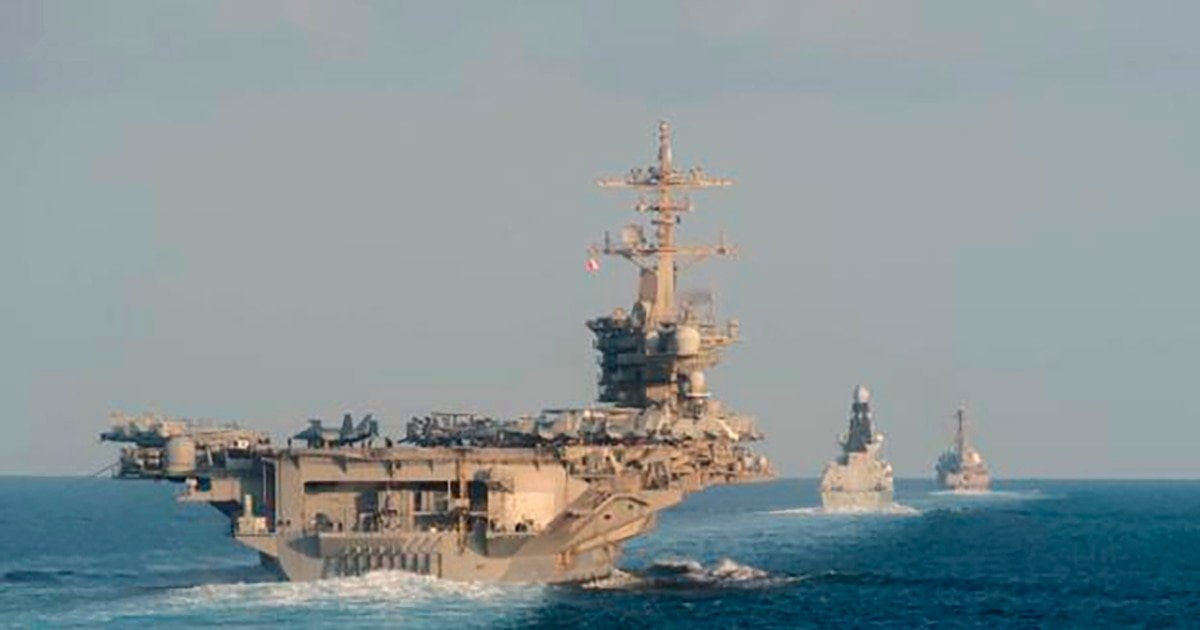
Folks, if you've glanced at your phone in the past 48 hours, you already know: this is not a drill. The United States and Iran are at war — again — and this time it's not about centrifuges or regime change. It's about the Strait of Hormuz, the narrow throat through which a fifth of the world's oil must pass. And while Washington trades threats and Tehran launches missiles, the rest of us are left watching gas prices climb and wondering how the hell we got here.
Here's what you need to know right now: Iran launched a missile attack on U.S. forces in Jordan this week, President Trump responded by promising Tehran is "going to get a beating," and Congress is fighting over a $95 billion war fund that could decide whether the government shuts down. Americans are searching for answers — "trump iran," "strait of hormuz news," "trump poll numbers," "government shutdown" are all spiking on Google right now. So let me break it all down for you, no spin, no sugarcoating.
Trump Vows Iran 'Will Get a Beating' as Hormuz War Escalates
Washington, D.C. — Article continues below.
How We Got Here: From Escort Mission to All-Out Blockade
Let's rewind, because this didn't happen overnight. Back in May, President Trump launched what the White House called "Project Freedom" — a U.S. military mission to escort commercial vessels through the Strait of Hormuz, backed by guided-missile destroyers, more than 100 aircraft, and roughly 15,000 service members. The message was simple: keep the oil flowing, no matter what.
Then came July 7. The Pentagon's Central Command — CENTCOM — launched precision strikes on more than 80 Iranian military installations along Iran's southern coast, responding to a series of multi-vessel maritime attacks in the strait. An LNG tanker caught fire after being hit by a projectile. The timing was brutal: it happened as Iran was still mourning Supreme Leader Khamenei, according to Africanews reporting.
Five days later, Tehran fired back in the most dramatic way possible. Iran declared the strait closed. According to The National, tanker traffic through Hormuz collapsed from more than 70 daily transits to as few as a dozen. War-risk insurance premiums for ships — the cost of insuring a vessel against being blown up — surged to 5 percent of a ship's value. Before this conflict, that number was 0.15 percent. Read that again: a thirty-fold jump in the price of sailing through the world's most important waterway.
The Economic Shockwave: Oil, Insurance, and Your Gas Tank
Here's where this stops being a foreign policy story and starts being a kitchen table story. When Iran closed the strait, oil jumped. On July 13, Axios reported crude prices spiking as Trump claimed a new blockade on Iran. By July 17, WTI crude had surged more than 10 percent in a single stretch amid the renewed hostilities and the reinstated U.S. naval blockade.
The New York Times reported on July 16 that very few ships passed through the waterway on the first full day of the American blockade. The strait — which normally carries a fifth of the world's oil — had effectively become a ghost highway. And when oil goes up, everything goes up. Analysts quoted by Axios warned that higher crude prices could push the U.S. national average gas price back toward $4 per gallon. For a country that runs on wheels, that's not an abstraction. That's the price of the war showing up at the pump.
Then, on July 26, an oil tanker hit a mine in the Strait of Hormuz, according to Iran's military-linked state media, which also said Iranian forces intercepted six vessels. Whatever your politics, a mined shipping lane in the middle of a blockade is a recipe for a regional economic catastrophe.
Jordan Under Fire: Iran's 'Surprise Attack'
This week, the war hit a new and dangerous phase. On Tuesday, July 28, Iran launched multiple ballistic missiles toward a U.S. military base in Jordan. CENTCOM described it as an "attempted surprise attack," according to Axios. All of the missiles were intercepted — no American casualties were reported in that strike — but the message was unmistakable: Iran is willing to hit U.S. troops directly, not just ships.
The next day, July 29, the picture got even sharper. Iran attacked U.S. forces in Jordan as President Trump met with Israeli Prime Minister Benjamin Netanyahu, per Al Jazeera and Stars and Stripes. At the same time, Tehran struck three ships in the Strait of Hormuz and rejected an Omani proposal for managing the waterway — a diplomatic off-ramp, publicly refused.
Trump's response was vintage Trump. "Hitting them hard, they're going to get a beating," he said, according to ABC News and USA Today. He promised retaliation after what his administration branded a "surprise attack." The pause in fighting that had given markets a sliver of hope — oil prices actually sank on July 27 as ceasefire hopes rose, per Al Arabiya — evaporated in a hail of missiles.
Allies Waver as Diplomacy Stalls
Here's the part the White House doesn't want to talk about: America's allies are not exactly lining up for this fight. POLITICO reported on July 28 that U.S. partners are shrugging as Washington pushes for a Strait of Hormuz patrol. One allied official conceded alignment on "securing maritime freedom" but made clear there are areas "where we have not agreed with the United States." The latest ceasefire, POLITICO noted, is "tenuous at best."
And the blockade is leaking. Al Jazeera reported on July 30 that Iranian oil sales are still happening — in Malaysian waters, of all places. The sanctions-and-blockade machine the administration has built has holes, and the world knows it. TIME magazine put it bluntly in a piece titled "Iran and America's Hormuz Forever War": the two countries are at war over a chokepoint, and neither side appears willing to blink.
The $95 Billion Fight on Capitol Hill
Now bring it home. On July 21, Defense Secretary Pete Hegseth told senators the Iran war has already cost the Pentagon $37.5 billion — and he asked for $67.1 billion more in emergency funding, according to Military Times. That's more than $100 billion in total war spending, and counting.
The next day, House Republicans narrowly muscled through a $95 billion budget blueprint to fund the war — and, in a move that should make every voter pay attention, to impose new election restrictions President Trump has demanded. They also passed a Pentagon funding bill worth more than $1 trillion, per NPR and the New York Times. But here's the catch: the package faces an uncertain path in the Senate, where Democrats are opposed. And with current government funding set to expire, that standoff is a live government-shutdown threat. That's why "government shutdown" is trending — it's not a hypothetical, folks. It's a countdown.
The Polls Turn: Americans Say It's Not Worth It
And what do the American people think about all this? The numbers are not pretty for the White House. A new AP-NORC poll shows most Americans say the war in Iran has not been worth fighting, and Trump's approval rating on Iran has slipped since last month. Rolling Stone reported this week that Trump's overall approval is hovering in the low 30s, according to three reputable polls released as the war intensifies.
The Guardian called the AP-NORC results "a stark repudiation" of Trump's approach — a war, it noted, that "has dragged on far longer than he originally predicted." Even the numbers watchers at the Silver Bulletin show Trump's net approval stuck in negative territory, around -17, improved only slightly from a second-term low of -20 back in May. Search "trump poll numbers" right now, and you'll see exactly what Americans are worried about.
What Happens Next
So where does this go from here? Three things to watch. First, the retaliation: Trump promised Iran "a beating" — the question is whether that means another round of strikes on Iranian soil, or something that drags allied forces deeper in. Second, the strait: with a mined waterway, a collapsed insurance market, and Iranian patrols intercepting vessels, the global oil trade is living on borrowed time. Every day the blockade holds is another day of pressure on prices at home. Third, the funding fight: if the Senate blocks the $95 billion package, we could be looking at a government shutdown layered on top of a shooting war — exactly the kind of chaos markets hate.
Here's my bottom line, folks. This war was sold as a quick, surgical response to maritime aggression. It has become an open-ended blockade with a $100 billion price tag, allied partners cooling on the mission, and a majority of Americans telling pollsters it wasn't worth it. The administration says it's about protecting the free flow of oil. But at $4-a-gallon gas and counting, the American people are paying for this fight twice — once in blood and once at the pump.
Stay sharp, stay informed, and hold your elected officials accountable. Call your senators and ask them directly where they stand on war funding. Ask whether they support a blank check for a conflict that most Americans now say was a mistake. This is your money. This is your country. And you deserve better than a fight nobody voted for, paid for by everybody.
By Jessica Ali, Staff Writer
This article was produced with AI-assisted research and editorial support. Reporting is based on sources cited in the article.
What's Your Reaction?
 Like
0
Like
0
 Dislike
0
Dislike
0
 Love
0
Love
0
 Funny
0
Funny
0
 Wow
0
Wow
0
 Sad
0
Sad
0
 Angry
0
Angry
0

Editor-in-Chief at Global1.News. Atlanta-based journalist who cuts through the BS and tells it like it is. Lead anchor, host, and the voice you hear when the spin stops and the truth starts.















Comments (0)