
Maharashtra Floods: NDRF Rescues Newborn as IMD Alerts Cover 32 Districts
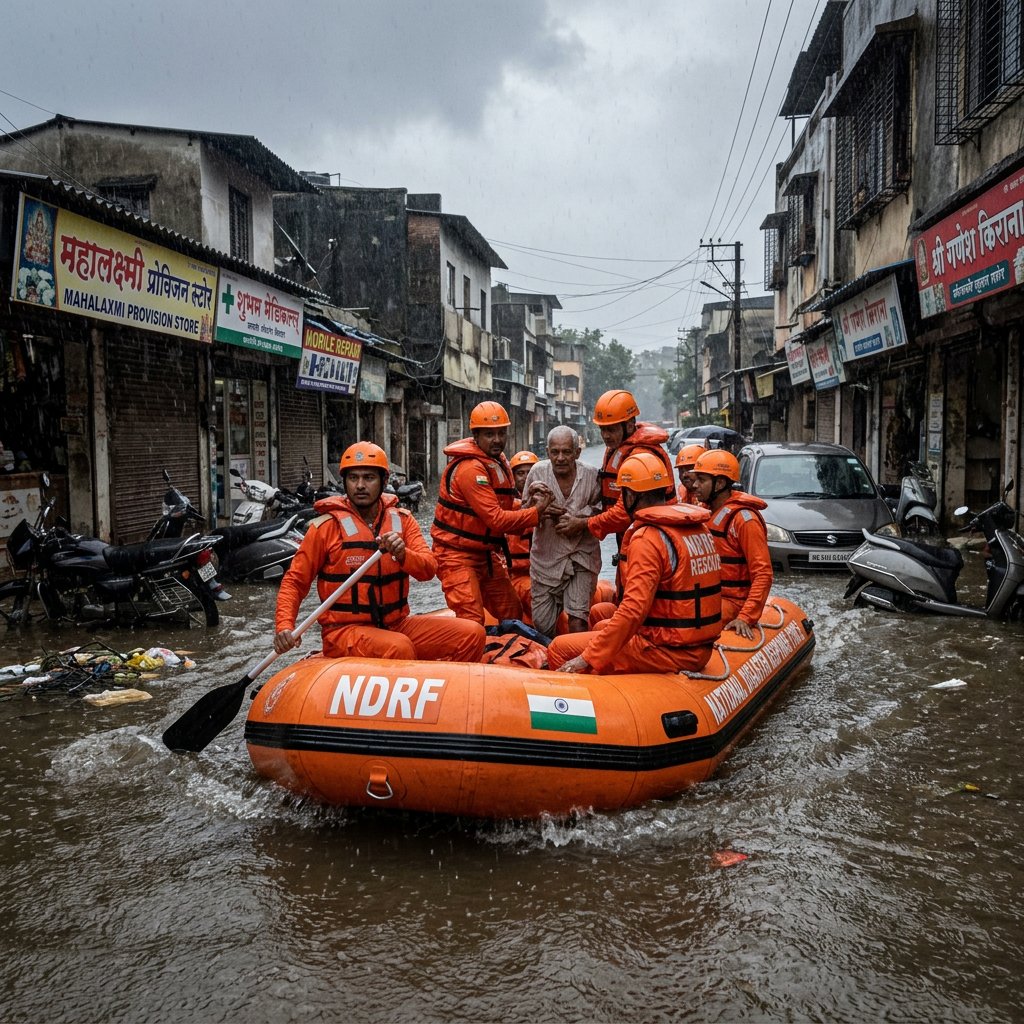
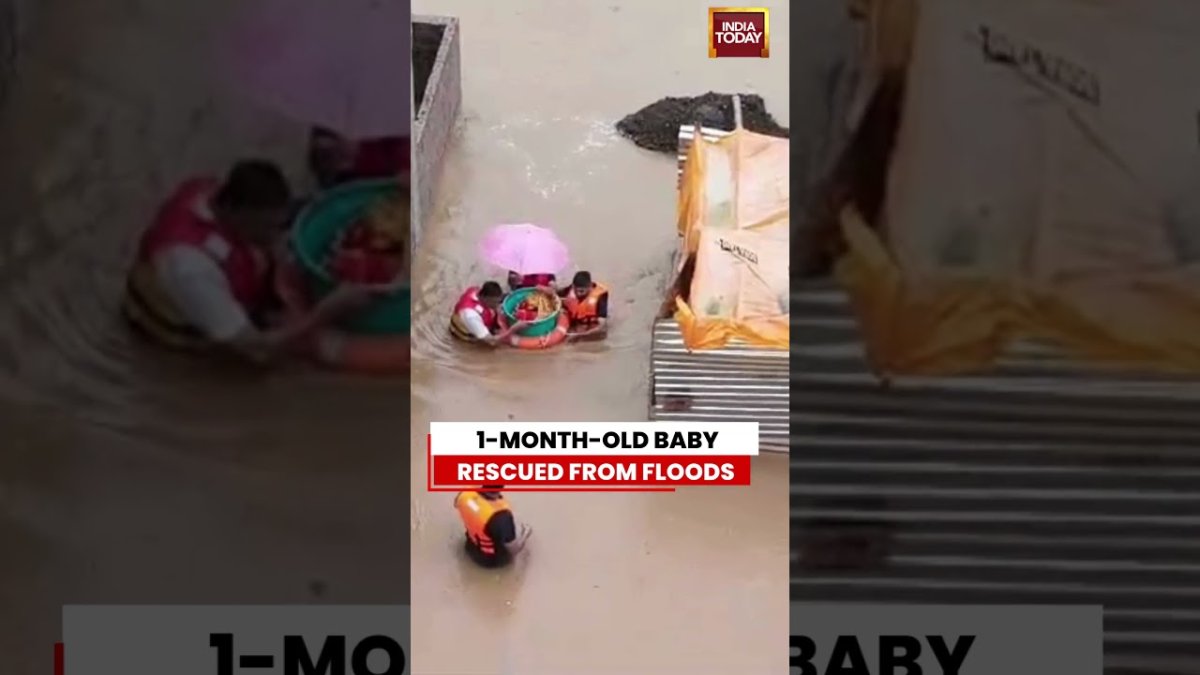
In late July 2026, rescue personnel carried a newborn baby and its family through floodwaters to safety in Maharashtra, as shown in India Today footage from the ongoing crisis. This operation occurred as the India Meteorological Department issued red, orange and yellow alerts across 32 districts, underscoring the recurring monsoon threats that affect millions across Indian states each year.
In late July 2026, rescue personnel carried a newborn baby and its family through floodwaters to safety in Maharashtra, as shown in India Today footage from the ongoing crisis. This operation occurred as the India Meteorological Department issued red, orange and yellow alerts across 32 districts, underscoring the recurring monsoon threats that affect millions across Indian states each year.
Flood Heroes and the Newborn Rescue: Maharashtra's Monsoon Health Emergency
Mumbai, Maharashtra – July 31, 2026 — Rescue teams from the National Disaster Response Force evacuated a newborn and its family from rising floodwaters in Maharashtra on July 31, 2026, amid an active monsoon crisis that has already claimed lives and damaged infrastructure across multiple districts. The India Today video captures personnel navigating chest-deep water to reach safety, a scene that repeats patterns seen in earlier July events and the September 2025 Marathwada floods. These operations highlight how India's disaster response system, built under the Disaster Management Act 2005, must continually adapt to protect the most vulnerable citizens during extreme rainfall events.

Rescue in the Floodwaters: A Newborn's Race Against Time
The July 31, 2026, footage from India Today shows NDRF personnel carrying the newborn and family through floodwaters in Maharashtra, part of intensified operations that also placed the Indian Navy on standby. Newborns face immediate risks of hypothermia, respiratory infection, and interrupted breastfeeding when displaced by floods, conditions that demand rapid access to emergency obstetric and neonatal care. The State Emergency Operations Centre coordinates these efforts across the state, ensuring that teams reach isolated families before water levels rise further. Similar rescues occurred in the July 5-7 period when NDRF evacuated 25 bus passengers near Talegaon-Dabhade and six family members including a six-month-old infant from a rooftop in Raigad's Sudhagad taluka.
The coordination between NDRF teams and the State Emergency Operations Centre demonstrates the layered response required when floodwaters isolate families across Maharashtra districts. In the July 31 operation, personnel navigated chest-deep conditions to extract the newborn and relatives, mirroring the urgency seen when the Indian Navy was placed on standby to support ground efforts. These actions directly address the heightened vulnerability of infants to hypothermia and respiratory complications that arise immediately upon displacement, underscoring why pre-positioned medical support must accompany every evacuation. Patterns from the July 5-7 rescues further illustrate how the system scales during successive rainfall spells. Evacuation of 25 bus passengers near Talegaon-Dabhade alongside the rooftop extraction of six family members including a six-month-old infant in Raigad's Sudhagad taluka shows consistent focus on reaching the youngest first. Such repeated interventions highlight the ongoing need for the Disaster Management Act 2005 framework to maintain flexible deployment protocols that prioritize neonatal safety amid recurring monsoon surges. Analysis of these events reveals that rapid access to emergency obstetric and neonatal care remains the decisive factor in outcomes for displaced newborns. The State Emergency Operations Centre's role in directing NDRF movements ensures teams can respond before water levels isolate additional households, yet the repetition of chest-deep rescues across multiple July dates indicates sustained pressure on response infrastructure throughout the season.
By the Numbers: A State Under Water
On July 30, 2026, the IMD placed Jalgaon district under red alert while issuing orange alerts for 15 districts including Raigad, Dhule, Nashik, parts of Pune and Satara, Kolhapur, Chhatrapati Sambhajinagar and Jalna. Yellow alerts covered 17 additional districts including Mumbai, Thane, Ratnagiri, Sindhudurg, Nandurbar, Parbhani, Beed, Hingoli, Nanded and Latur. On July 31, orange alerts continued for eight districts including Palghar, Thane, Raigad, Dhule, Nandurbar, Jalgaon, Nashik and the Satara Ghat area, with yellow alerts for 14 districts including Mumbai and Vidarbha regions. Pune broke its 117-year rainfall record on July 30, while Raigad experienced cloudburst-like conditions that forced school closures. Earlier in July 5-7, at least 13 people died and 10 were injured, with Lonavala recording 625 mm in 48 hours, Raigad 236 mm in 24 hours, and rivers such as the Ulhas, Amba and Savitri breaching danger marks. In that earlier spell, six people died in a Mankhurd building collapse and one in a Satara landslide.
The tiered alert structure issued by the IMD on July 30 and 31 reveals how forecasting granularity guides resource allocation across 32 districts. Red alert status for Jalgaon triggered the highest level of preparedness, while the 15 orange-alert districts including Raigad and Nashik received prioritized NDRF deployment. The 17 yellow-alert districts encompassing Mumbai and Vidarbha regions maintained monitoring status, allowing the State Emergency Operations Centre to sequence evacuations without overwhelming any single corridor. Record rainfall figures compound the operational challenge. Pune's breach of its 117-year mark on July 30, combined with Raigad's cloudburst-like conditions that prompted school closures, created simultaneous pressure points. These measurements align with earlier July 5-7 data showing Lonavala at 625 mm in 48 hours and Raigad at 236 mm in 24 hours, events that caused the Ulhas, Amba and Savitri rivers to breach danger marks and produced 13 deaths plus 10 injuries. Secondary impacts such as the Mankhurd building collapse claiming six lives and the Satara landslide resulting in one fatality illustrate how extreme rainfall translates into structural and terrain failures. The progression from July 5-7 to July 30-31 alerts demonstrates that the IMD's district-specific system enables repeated scaling of response, yet the cumulative toll on infrastructure and human life remains substantial across the affected districts.
The Health Threat That Follows the Flood
Floodwaters in Maharashtra's monsoon belt carry leptospirosis, dengue, chikungunya, typhoid and fungal skin infections, with stagnant pools creating mosquito breeding sites that threaten evacuated populations. Newborns remain especially vulnerable to hypothermia, contaminated water exposure and delayed neonatal care, conditions that the Ministry of Health addresses through the Integrated Disease Surveillance Programme. The September 2025 Marathwada floods demonstrated these risks when NDRF rescued 320 people including a newborn across Beed, Dharashiv and Solapur districts, after which eight deaths occurred and 5.5 lakh acres of farmland submerged. Pre-positioned medical teams now distribute ORS and chlorine tablets while mobile health camps operate in relief shelters to catch emerging cases early.
The post-flood disease profile in Maharashtra's monsoon belt centers on waterborne and vector-borne pathogens that proliferate once waters recede. Leptospirosis, dengue, chikungunya, typhoid and fungal skin infections spread through contaminated floodwaters and stagnant pools that serve as mosquito breeding sites, directly threatening populations housed in relief shelters. The Integrated Disease Surveillance Programme provides the surveillance backbone that allows the Ministry of Health to track these threats in real time. Newborns face compounded exposure risks because hypothermia and contaminated water contact can rapidly escalate into respiratory or gastrointestinal complications. Lessons from the September 2025 Marathwada floods, where NDRF rescued 320 people including a newborn across Beed, Dharashiv and Solapur districts, showed eight subsequent deaths and 5.5 lakh acres of submerged farmland, confirming that health consequences extend well beyond the initial inundation period. Current mitigation relies on pre-positioned medical teams distributing ORS and chlorine tablets alongside mobile health camps in relief shelters. These measures aim to interrupt transmission chains early, yet the recurring nature of monsoon displacement means the Integrated Disease Surveillance Programme must maintain continuous coverage across districts repeatedly placed under IMD alerts.
What This Means for India
India's National Disaster Management Authority, established under the Disaster Management Act 2005, oversees the National Disaster Response Force's 16 battalions and approximately 16,000 personnel who conduct these rescues. State Disaster Response Funds support operations coordinated by the State Emergency Operations Centre in Maharashtra, while IMD early warning systems provide the red, orange and yellow alerts that guide evacuations. The Ministry of Health maintains ante-natal registries to track pregnant women in flood-prone districts such as Raigad and Nashik, enabling targeted outreach during alerts. These institutional mechanisms directly affect Indian taxpayers who fund the response infrastructure and determine how quickly families in districts like Jalgaon and Kolhapur receive aid after each extreme rainfall event.
The National Disaster Management Authority's oversight of the NDRF's 16 battalions and approximately 16,000 personnel forms the operational core that executes rescues under the Disaster Management Act 2005. State Disaster Response Funds channel resources to the State Emergency Operations Centre in Maharashtra, enabling the sequenced deployment that matches IMD alert levels to ground teams across affected districts. Ante-natal registries maintained by the Ministry of Health allow targeted outreach to pregnant women in flood-prone districts such as Raigad and Nashik precisely when red, orange or yellow alerts are issued. This integration of health and disaster systems ensures that the most vulnerable receive priority during evacuations, directly influencing how rapidly aid reaches families in Jalgaon and Kolhapur after each rainfall event. Taxpayers fund the entire chain from IMD forecasting through NDRF battalions to post-flood medical camps, making the efficiency of these mechanisms a matter of public accountability. Sustained coordination between the National Disaster Management Authority, State Disaster Response Funds and district-level operations determines whether response capacity keeps pace with the frequency of extreme monsoon episodes.
The Climate Signal Behind the Record Rain
Research from the Indian Institute of Tropical Meteorology in Pune links warming Arabian Sea temperatures to short-duration extreme rainfall events that produce clustered downpours such as Lonavala's 625 mm in 48 hours and Pune's 117-year record on July 30, 2026. These patterns align with observed increases in intense monsoon bursts across the western ghats and coastal districts including Ratnagiri and Sindhudurg. The IMD's district-specific alerts for 32 locations on July 30 reflect improved forecasting capacity, yet the frequency of such events continues to strain existing drainage and early-warning infrastructure in Maharashtra and neighbouring states.
The Indian Institute of Tropical Meteorology in Pune has connected rising Arabian Sea temperatures to the short-duration extreme rainfall events that generate clustered downpours. Lonavala's 625 mm in 48 hours and Pune's 117-year record on July 30, 2026, exemplify the pattern now observed more frequently across the western ghats and coastal districts including Ratnagiri and Sindhudurg. Improved IMD forecasting enabled district-specific alerts for 32 locations on July 30, demonstrating enhanced capacity to anticipate these bursts. However, the repeated occurrence of such events places ongoing pressure on drainage systems and early-warning infrastructure throughout Maharashtra and neighbouring states, requiring continuous adaptation of response frameworks established under the Disaster Management Act 2005. These climate-linked patterns indicate that the frequency of intense monsoon episodes will continue to test the limits of existing preparedness measures. The alignment between observed warming trends and rainfall records underscores why institutional mechanisms such as the National Disaster Management Authority and State Disaster Response Funds must incorporate forward-looking adjustments to maintain effectiveness.
The Bottom Line
The July 2026 Maharashtra floods have already triggered IMD alerts across 32 districts, produced Pune's 117-year rainfall record, and required NDRF teams to rescue newborns and families from rising waters on multiple occasions. With leptospirosis and dengue risks rising after each inundation, the Integrated Disease Surveillance Programme and ante-natal registries provide critical public health safeguards. India's NDMA framework and NDRF battalions, supported by State Disaster Response Funds, demonstrate how coordinated institutional response protects citizens, yet sustained investment in forecasting and health preparedness remains essential for monsoon seasons ahead.
— By Dr. Raj Patel, Staff Writer
This article was produced with AI-assisted research and editorial support. Reporting is based on sources cited in the article.
What's Your Reaction?
 Like
0
Like
0
 Dislike
0
Dislike
0
 Love
0
Love
0
 Funny
0
Funny
0
 Wow
0
Wow
0
 Sad
0
Sad
0
 Angry
0
Angry
0

India/South Asia Correspondent at Global1.News. Analytical voice with a background in science and health journalism. Based in New Delhi, covering Indian politics, education, healthcare, technology, and policy. Breaks down complex data into clear, actionable reporting.















Comments (0)