
DJI Wins Fresh Court Chance to Exit Pentagon Blacklist
US appeals court gives DJI a fresh chance to challenge its Pentagon Chinese military company listing, faulting the Defence Department's secret rationale. The ruling sends the case back for review of classified evidence, with Asia-Pacific drone markets watching closely.
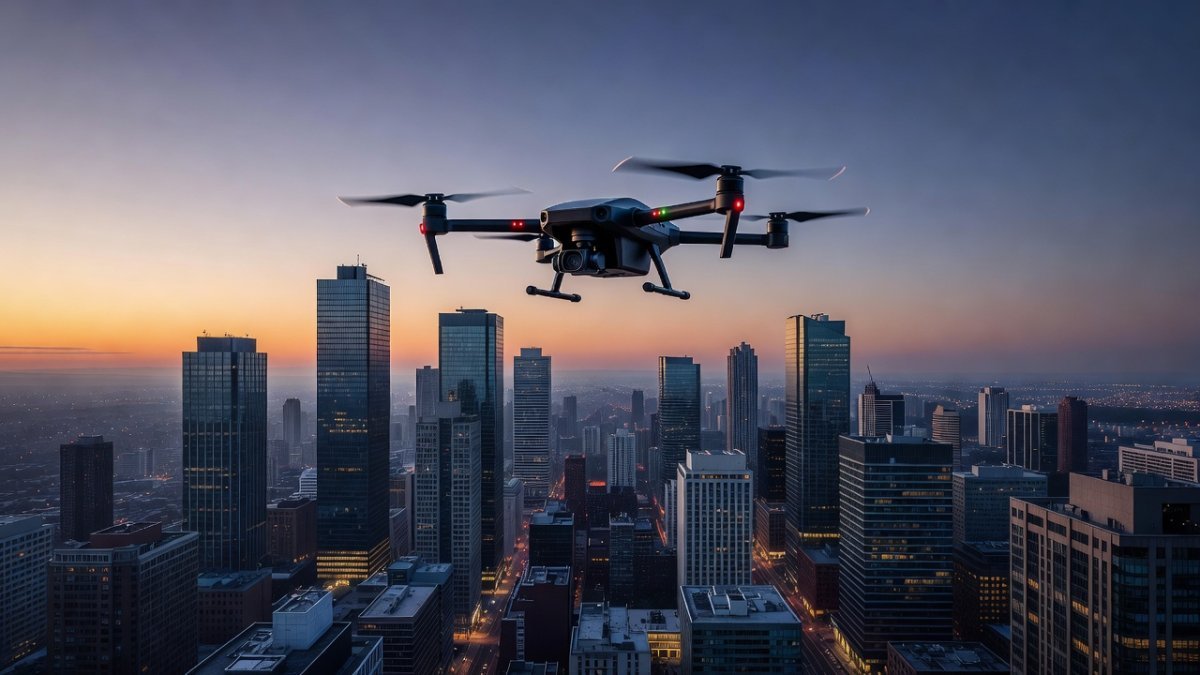
A Narrow Legal Win for the World's Biggest Drone Maker
Beijing — A US federal appeals court on Friday gave Shenzhen-based drone giant DJI another chance to challenge its place on the Pentagon's Chinese military company list, faulting the Defence Department for relying on a classified rationale it never publicly disclosed. The ruling does not remove DJI from the list, but it sends one contested finding back to a lower court for a fresh look at the secret evidence.
The decision by the US Court of Appeals for the District of Columbia Circuit is the latest turn in a legal battle that began when DJI was first designated in 2022. The company, which repeatedly denies any ties to the Chinese military, has spent years petitioning the Defence Department for delisting and suing over its designation. A lower court sided with the Pentagon in 2025, and Friday's ruling overturns part of that decision.
DJI's case is being watched closely across Asia, where Tokyo banned government procurement of DJI drones in 2020 and has funded domestic drone developers, and where the outcome could reshape how governments and companies assess the reliability of Chinese-made unmanned aircraft.
What the Appeals Court Actually Decided
Judge Bradley N. Garcia wrote the opinion for the three-judge panel in SZ DJI Technology Co. v. Department of Defence, docketed as No. 25-5367 and argued in February. The court rejected three of DJI's four arguments: its due process claims, its assertion that the Pentagon lacked sufficient evidence of Chinese government assistance, and its argument that the Defence Department failed to explain why DJI was treated differently from similarly situated companies.
The panel did, however, agree with DJI on one narrow but critical point. The lower District Court had upheld the Pentagon's separate finding that DJI "contributes to the Chinese defence industrial base" without ever examining the classified record behind that determination. Garcia wrote that the Pentagon's report contained a section bearing that exact title, yet every word except the heading was redacted in the unclassified record.
"On that assumption, the District Court's analysis cannot stand," Garcia wrote. "There is, in other words, no publicly stated rationale for why the Secretary believes DJI contributes to the Chinese defence industrial base." The appeals court sent the issue back to the District Court, which may now inspect the classified record and decide whether the determination survives scrutiny.
Why the Redacted Rationale Matters
The ruling is significant because it draws a clear line on how courts may treat government secrecy in designation cases. The appeals court said the District Court could not rely on arguments made by government lawyers or evidence elsewhere in the record to supply a rationale the Pentagon itself had not provided in public.
For DJI, the practical effect is a second hearing focused on a single question: whether the classified material genuinely supports the claim that the company contributes to China's defence industrial base. The company has long argued that its designation is unfair and that it has been stigmatised as a security threat without credible evidence.
The Defence Department declined to comment on the ongoing litigation, and DJI did not immediately respond to a request for comment as of Friday afternoon.
DJI's Dominance Makes the Case Global
The stakes extend well beyond one company's legal status. China's dominance of the drone market is at the heart of the geopolitical tension behind the case. In counter-drone detections tracked by Dedrone, a drone detection and defence company, DJI alone accounted for 83.48 per cent of all drones detected in 2025, underscoring how deeply the company's hardware has penetrated civilian and government operations worldwide.
That dominance has fuelled concerns in Washington about American reliance on Chinese-made drones and about US leadership in a sector increasingly treated as essential military infrastructure. The Trump administration signed an executive order titled "Unleashing American Drone Dominance" in June 2025, signalling that drones are no longer viewed as niche tools but as core defence capability.
The market dynamics reinforce the concern. DJI's consumer and enterprise lines dominate retail shelves and industrial fleets across North America and Europe, while a wave of US start-ups backed by venture capital and, in some cases, defence contracts has struggled to match the Chinese firm's price-performance curve. Analysts tracking the sector note that DJI's vertical integration — its own cameras, gimbals, propulsion systems and flight software — gives it a cost advantage that rivals have found hard to replicate, even as Washington pushes for domestic alternatives through procurement restrictions and new funding programmes.
For Asia-Pacific governments, the case illustrates a broader strategic question: how to balance the cost, quality and availability of Chinese drone technology against security concerns. Japan's 2020 decision to bar government agencies from buying DJI drones pushed Tokyo to cultivate domestic manufacturers, a strategy that has gained urgency as the global drone supply chain becomes more contested.
DJI Is Not Alone on the Blacklist
DJI is among a growing number of Chinese companies challenging their placement on the Pentagon list. Earlier this month, a federal judge granted a preliminary injunction barring the Pentagon from including Chinese biotech company WuXi AppTec on the list, a ruling that gave other listed firms hope that courts are willing to scrutinise the designation process.
E-commerce giant Alibaba, added to the list in June, has also sued seeking its own removal. Alibaba owns the South China Morning Post, which first reported details of the DJI ruling. The pattern of litigation suggests that the Pentagon's list, created under a 2021 law, is now facing its most significant legal test since companies began fighting back.
What This Means for Japan and the Asia-Pacific
For Japanese policymakers, the case is a reminder that the drone question is not simply about procurement bans. As Tokyo expands its own defence spending and looks to strengthen its industrial base, the reliability of unmanned systems — and the technology supply chains behind them — has become a core security concern.
The ruling also comes at a moment when US allies are being pressed to make choices about Chinese technology across multiple domains, from drones to semiconductors to artificial intelligence. Japan's approach has been to reduce reliance on Chinese hardware while building domestic alternatives, a strategy that mirrors broader efforts in the region to hedge against supply chain disruption. The fate of DJI's listing is therefore more than a corporate matter: it is a test of how far legal process can push back against national-security designations, and of whether the Pentagon will be forced to justify its decisions in public rather than behind a classified curtain.
What to Watch For
The District Court's review of the classified record is the next milestone. If the court finds the Pentagon's classified evidence does not support the "defence industrial base" finding, DJI could win removal from the list, a result that would have ripple effects for other designated companies and for the drone market at large.
Watch also for how the Pentagon responds — whether it releases a fuller public rationale, presses the classified case, or revisits its designation process. And in Tokyo and other Asia-Pacific capitals, the case will be followed closely as governments weigh how much of their drone supply chain they can safely leave in Chinese hands.
By Kenji Tanaka, Staff Writer
This article was produced with AI-assisted research and editorial support. Sources: South China Morning Post; Reuters.
What's Your Reaction?
 Like
0
Like
0
 Dislike
0
Dislike
0
 Love
0
Love
0
 Funny
0
Funny
0
 Wow
0
Wow
0
 Sad
0
Sad
0
 Angry
0
Angry
0

Japan Correspondent at Global1.News. Tokyo-based voice covering Japanese politics, technology, economy, and culture. Tracks the intersection of tradition and innovation in one of the world's most dynamic societies.















Comments (0)