
DepEd Faces Critical Guidance Counselor Shortage: Fewer Than 1,000 Counselors for 45,000 Schools, Agency Moves to Hire 10,000 Associates
DepEd faces a critical shortage of guidance counselors, with fewer than 1,000 serving 45,000 schools. Under RA 12080, the agency is hiring 10,000 school counselor associates this year to strengthen mental health support for Filipino learners.
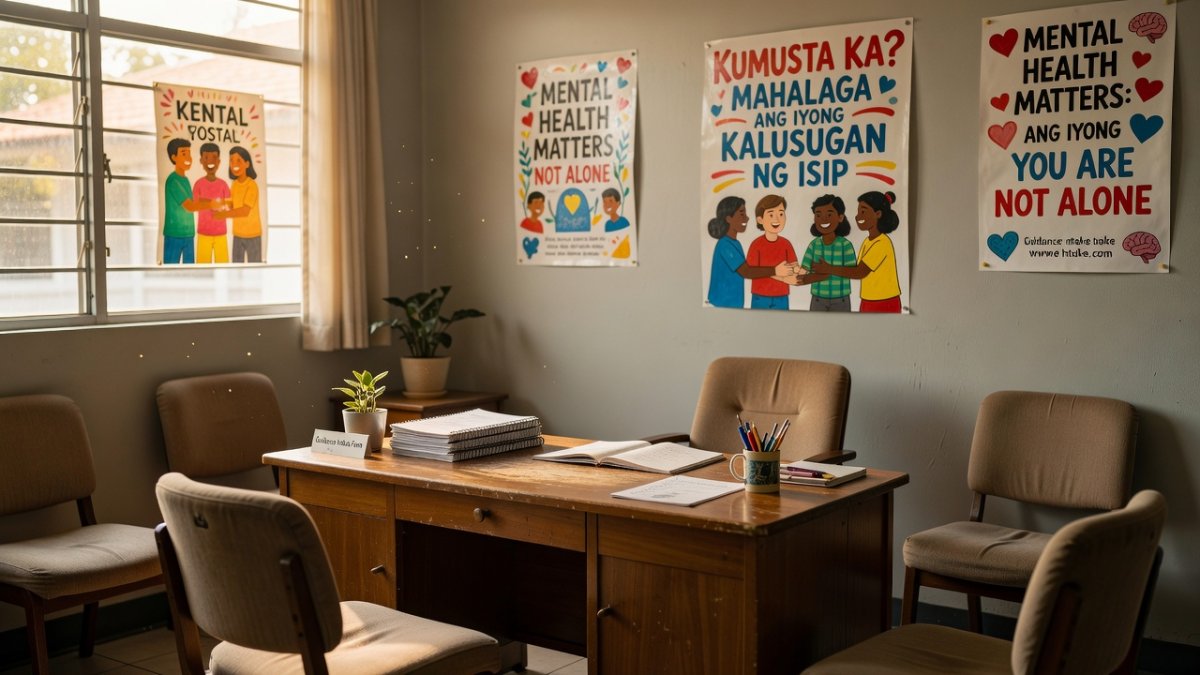
DepEd Faces Critical Guidance Counselor Shortage: Fewer Than 1,000 Counselors for 45,000 Schools, Agency Moves to Hire 10,000 Associates
The numbers are stark, and for Filipino parents and educators, they hit close to home. The Department of Education (DepEd) is grappling with a severe shortage of guidance counselors, with fewer than 1,000 registered professionals serving more than 45,000 public schools nationwide. This comes at a time when incidents of violence and bullying continue to challenge the safety and well-being of learners across the archipelago.
In an interview with dzBB, DepEd Undersecretary for Human Resource and Organizational Development Willie Cabral laid out the grim reality: the ideal international standard, as cited by the American School Counselor Association, is one counselor for every 250 learners. The Philippines, however, remains far from that target. "In the Philippines, in DepEd in particular, we only have a thousand registered guidance counselors. And this meets the needs of more than 45,000 schools across the country. So we are still a bit far from the ideal ratio," Cabral said.
The department is now banking on Republic Act 12080, or the Basic Education Mental Health and Well-Being Promotion Act, to turn the tide. A key component of this law is the hiring of at least 10,000 school counselor associates this year, a move that could bring much-needed support to classrooms from Luzon to Mindanao.
A Crisis in Numbers: The State of Mental Health Support in Public Schools
The shortage of guidance counselors is not a new problem, but its scale has become more pronounced as the Department of Education confronts rising cases of bullying and violence in schools. As of Jan. 31, Cabral reported that there were around 5,000 registered guidance counselors and fewer than 3,000 registered psychologists nationwide. However, the number of these professionals actually serving under DepEd is significantly lower — fewer than 1,000 registered guidance counselors are working within the public school system.
This disparity becomes even more troubling when placed against the backdrop of the country's vast educational landscape. With over 45,000 public schools spread across the Philippines — from bustling Metro Manila classrooms to remote barangay learning centers in the Visayas and Mindanao — the current workforce is stretched impossibly thin. Many schools, particularly in rural areas, have no dedicated guidance counselor at all, leaving teachers and administrators to fill the gap as best they can.
The department's efforts to address this shortage have been ongoing but slow. Cabral noted that DepEd created 5,000 guidance counselor positions back in 2020, yet only about 1,000 of these were actually filled. The gap between authorized positions and qualified applicants remains a significant hurdle, one that the new law aims to overcome through a different approach.
RA 12080: A New Framework for School-Based Mental Health
Republic Act 12080, signed into law to promote mental health and well-being in basic education, represents a structural shift in how DepEd approaches the mental health needs of Filipino learners. Cabral expressed gratitude for the legislation, emphasizing that it provides a clear pathway to address the counselor shortage. "That is why we are grateful because we have Republic Act 12080, which provides for the promotion of basic education, mental health and well-being. We will start with the creation of school counselor associates," he said.
Under the law, DepEd is tasked with establishing a care center in every school. This is a monumental undertaking, given the sheer number of educational institutions nationwide. The framework envisions a layered support system: each school should have a school counselor and a school counselor associate, along with other allied services. At the division level, a Mental Health and Well-Being Office will be established, led by a schools division counselor.
This structure is designed to create a more robust and accessible mental health support system for students. For ordinary Filipino families, this could mean that a child struggling with anxiety, depression, or the effects of bullying would no longer have to wait weeks or travel long distances to access professional help. The care center in every school is envisioned as a first line of defense, a place where learners can feel safe and heard.
Hiring 10,000 School Counselor Associates: Progress and Challenges
For 2026, the department is set to hire at least 10,000 school counselor associates, with the Department of Budget and Management (DBM) having already authorized the creation of these positions. This is a significant step forward, but the implementation is still in its early stages. Cabral provided a detailed update on the hiring process: "In fact, after the qualification standards were approved, the Department of Budget and Management has already released the creation of these positions and out of 10,000, we have 9,641 positions that have already been published."
The numbers show momentum, but also the complexities of large-scale government hiring. Of the published positions, 6,968 are currently undergoing assessments, while 2,469 remain open for applications. Another 400 positions are still waiting for the issuance of the Notice of Organization, Staffing and Compensation Action. This means that while the wheels are in motion, the full complement of 10,000 associates will not be in place overnight.
Cabral emphasized that these are not temporary or contractual roles. "The 10,000 positions have been created, all of them regular and permanent. That's why they also need to have matching eligibility for services," he said. This permanence is crucial for building a stable and reliable mental health workforce within the education system, one that can develop long-term relationships with students and communities.
Qualification Standards: Who Can Become a School Counselor Associate?
The qualifications for school counselor associate positions have been carefully defined to ensure that those hired are adequately prepared for the demands of the role. Applicants must have completed a degree in psychology, guidance and counseling, or related courses. Additionally, they must have earned at least 18 units in behavioral science and completed a supervised internship of at least 200 hours.
These requirements strike a balance between academic preparation and practical experience. The 18 units in behavioral science ensure that candidates have a solid theoretical foundation in understanding human behavior, while the 200-hour supervised internship provides hands-on exposure to real-world counseling situations. For fresh graduates in psychology or guidance and counseling, this opens up a clear career pathway within DepEd — a welcome development in a country where many psychology graduates end up working in call centers or other unrelated fields due to limited job opportunities.
The compensation package for these positions is also designed to be competitive. A School Counselor Associate I is entitled to receive a basic monthly salary of P31,000, along with a P2,000 personal economic relief allowance. For many Filipino families, particularly those in provinces where employment opportunities are limited, this represents a stable and respectable income that can support a household.
What This Means for Filipino Learners and Communities
The shortage of guidance counselors has real, tangible consequences for Filipino students. In schools without counselors, incidents of bullying may go unaddressed until they escalate into violence. Learners dealing with academic pressure, family problems, or mental health issues often have no one to turn to within the school system. Teachers, already burdened with large class sizes and administrative duties, are often the de facto first responders to these crises.
The implementation of RA 12080, with its care centers and counselor associates, offers a glimmer of hope. For a student in a public school in Quezon City or a remote barangay in Zamboanga del Sur, having a dedicated mental health professional on campus could be transformative. It means that a child being bullied has a safe space to report the incident. It means that a teenager struggling with depression can receive early intervention. It means that families, many of whom cannot afford private psychological services, have access to free mental health support within their community.
The law also aligns with the spirit of bayanihan, the Filipino tradition of communal unity and cooperation. By embedding mental health services within schools, the government is essentially bringing the community together to care for its children. The school becomes not just a place of learning, but a center for holistic development — addressing not only the academic needs of students but also their emotional and psychological well-being.
As the hiring process for the 10,000 school counselor associates continues, there is cautious optimism. The road ahead is long, and the ideal ratio of one counselor per 250 learners remains a distant goal. But with the framework of RA 12080 now in place, and with the DBM's authorization of these new positions, the Philippines is taking its first significant steps toward building a mental health support system that truly serves its most valuable resource — its children.
For now, parents, teachers, and students alike will be watching closely as these positions are filled and the care centers begin to take shape. The promise of RA 12080 is not just about numbers on a spreadsheet; it is about creating a safer, more supportive environment for every Filipino learner, from the bustling streets of Manila to the quiet shores of Mindanao.
This article was produced with AI-assisted research and editorial support. Sources: Philstar.com.
Source: Philstar.com
By Bella Reyes, Staff Writer
What's Your Reaction?
 Like
0
Like
0
 Dislike
0
Dislike
0
 Love
0
Love
0
 Funny
0
Funny
0
 Wow
0
Wow
0
 Sad
0
Sad
0
 Angry
0
Angry
0

Philippines/Southeast Asia Correspondent at Global1.News. Manila-based journalist covering Philippine politics, environment, maritime security, and social issues. Passionate about marine conservation and the communities protecting the Philippines' natural heritage.














Comments (0)