
Rescene and Fans Donate $64K to Flood-Hit Geoje
The convergence of K-pop celebrity, digital-age fandom, and localized disaster response has produced a notable case study in South Korea this week.
The convergence of K-pop celebrity, digital-age fandom, and localized disaster response has produced a notable case study in South Korea this week. On August 19, 2026, the rookie girl group Rescene and its fandom, REMINE, committed a combined sum exceeding 90 million won (approximately US$64,560) to support recovery efforts in the southern coastal city of Geoje, following a catastrophic rainfall event that the Korea Meteorological Administration (KMA) has characterized as a once-in-200-year occurrence. The donation, delivered to Geoje City officials, is not merely a charitable gesture; it represents a sophisticated intersection of regional identity politics, the economic imperatives of a shipbuilding hub, and the evolving civic power of organized K-pop fan communities.
From Viral Catchphrase to Civic Duty: Rescene and REMINE’s 90 Million Won Pledge for Geoje’s Flood Recovery
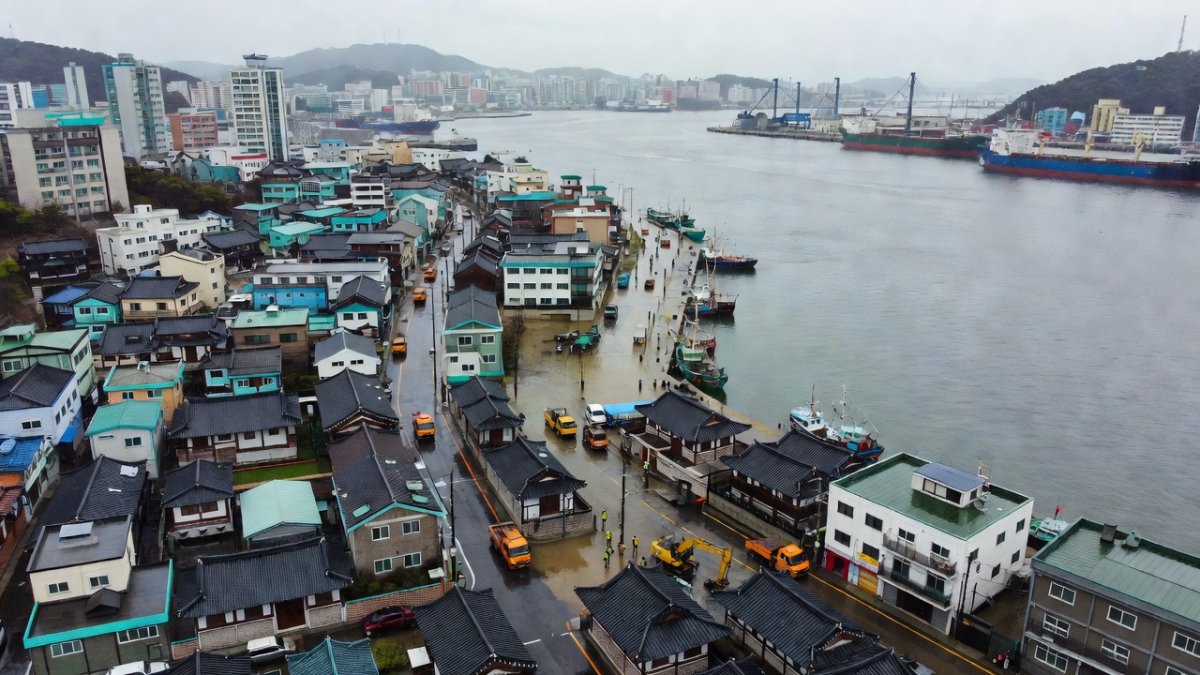
[Seoul, South Korea – August 2026] — On Wednesday afternoon, representatives of the agency managing Rescene visited Geoje City Hall to formally deliver a donation of 50 million won (approx. $36,000 USD) on behalf of the group—members Woni, Liv, Minami, May, and Zena. Simultaneously, the group’s fandom, REMINE, mobilized through online communities to raise an additional 40 million won, with approximately 800 individual fans participating in the voluntary drive as of August 19. The combined philanthropic effort arrives as Geoje grapples with the aftermath of torrential rains that lashed the region from August 15 to 17, causing landslides, flooding, power outages, and water supply disruptions that have displaced residents and damaged critical infrastructure.
Detailed Analysis: The "Geoje Yaho!" Phenomenon and Its Philanthropic Culmination
The donation’s origin story is as much about digital culture as it is about disaster relief. The connection between Rescene and Geoje was cemented earlier this year through a viral video featuring leader Woni and member Minami walking through Seoul dressed as "gyarus"—a flamboyant Japanese youth subculture. In the clip, Woni jokingly warned that such attire would invite scolding from citizens in her conservative hometown, prompting Minami’s now-iconic cheerful retort: "Geoje yaho!" The catchphrase exploded across South Korean social media, becoming one of the year’s most pervasive memes, adopted by celebrities from TWICE, BIGBANG, and BTS.
A subsequent follow-up video, in which the duo traveled to Geoje to explore Woni’s roots in Okpo-dong, further endeared the group to the public. Reports indicate that tourism to the city surged by an extraordinary 300 percent following the viral content. This cultural momentum translated into formal recognition in May 2026, when Geoje City appointed Rescene as goodwill ambassadors—a role the group also holds for Suwon, Gyeongju, and Goyang, the respective hometowns of Liv, Zena, and May. The August donation, therefore, is not an isolated act of charity but the logical extension of a symbiotic relationship between a municipality and its celebrity advocates.
Geoje Mayor Byeon Gwang-yong acknowledged the significance of the gesture, stating: "The warm-hearted support conveyed by Rescene will be a great source of comfort and strength for our citizens. We will use the donated funds carefully to support recovery efforts and help our citizens return to their daily lives as soon as possible." The mayor’s remarks underscore the psychological as well as material value of the contribution during a period of acute communal stress.
Geopolitical and Regional Context: Geoje’s Economic Vulnerability and Strategic Importance
Geoje is not merely a scenic coastal city; it is a linchpin of South Korea’s heavy industry. The city hosts major shipbuilding yards operated by Samsung Heavy Industries and Hanwha Ocean, making it a critical node in the nation’s export-driven economy. The recent flooding, which the KMA reported brought more than 900 millimeters of rain over three days—a volume statistically expected only once every two centuries—has threatened not only residential areas but also the industrial supply chains that underpin regional employment and national economic output.
The disaster’s impact on South Gyeongsang Province, including the neighboring city of Tongyeong, highlights the broader vulnerability of Korea’s southern coastline to extreme weather events, a vulnerability likely to be exacerbated by climate change. For a nation that has historically prided itself on rapid disaster response and technological resilience, the Geoje floods serve as a sobering reminder of the limits of infrastructure in the face of unprecedented meteorological phenomena. The KMA’s rainfall warnings and the subsequent emergency response have been closely monitored by regional governments, which are now reassessing flood mitigation strategies for industrial zones.
In this context, the Rescene donation carries symbolic weight beyond its monetary value. It signals a form of "soft power" localization—where national cultural exports (K-pop) are redirected to bolster specific regional communities. This dynamic is particularly salient in South Korea, where the concentration of economic and cultural resources in the Seoul Capital Area has long been a point of regional tension. The engagement of a popular idol group with a mid-sized industrial city like Geoje offers a template for how celebrity influence can be harnessed for regional revitalization and morale-building.
Policy Implications: Celebrity Ambassadors and the Institutionalization of Fan-Driven Philanthropy
The Geoje case exemplifies a growing trend in South Korean local governance: the formal appointment of K-pop idols as honorary ambassadors to promote tourism, regional products, and civic pride. Rescene’s multi-city ambassadorship—spanning Geoje, Suwon, Gyeongju, and Goyang—reflects a strategic calculation by local governments to leverage the global reach and domestic appeal of idol groups. However, the philanthropic dimension introduces a new layer of complexity. When a celebrity’s hometown faces a disaster, the expectation of a public response is now nearly instantaneous, driven by the hyper-connected nature of fan communities.
This phenomenon is not unprecedented. South Korean fandoms have a documented history of mobilizing charitable giving following national tragedies, including donations after major wildfires, seasonal floods, and the 2022 Halloween crowd crush in Itaewon. What distinguishes the Rescene-REMINE effort is the explicit linkage to a specific locality and the scale of participation relative to the group’s rookie status. Rescene debuted only in March 2024, yet their fandom has demonstrated an organizational capacity that rivals that of more established acts. The REMINE community’s ability to raise over 40 million won from approximately 800 participants—an average of 50,000 won per person—indicates a high level of engagement and financial commitment among fans.
From a policy perspective, this raises questions about the role of local governments in facilitating or acknowledging such donations. Geoje City’s prompt announcement of the contribution, coupled with the mayor’s public gratitude, suggests a recognition of the soft-power benefits of associating the city with a positive, charitable narrative. This is particularly important for a city whose international profile has historically been defined by industrial output rather than cultural cachet. The "Geoje Yaho!" meme and its aftermath have effectively rebranded the city as a site of youthful, playful energy—an image that could have long-term implications for tourism and talent attraction.
Expert Perspectives: Fandom as Civic Infrastructure and the Limits of Celebrity Relief
Scholars of Korean popular culture have long noted that K-pop fandoms function as "communities of practice," capable of rapid, coordinated action. The REMINE donation drive exemplifies this, with fans organizing through online platforms to pool resources for a cause directly tied to their idols’ personal histories. This behavior aligns with broader patterns of "participatory philanthropy," where fans view charitable giving as an extension of their support for the artist—a way to honor the idol’s values and origins.
However, experts caution against overstating the efficacy of celebrity-driven relief efforts. While the 90 million won donation is substantial, the recovery needs in Geoje are likely to be far greater, given the scale of the flooding and the damage to public infrastructure. The funds will provide immediate relief and support for affected families, but long-term reconstruction will require substantial government investment and insurance payouts. The donation’s primary value may therefore be symbolic—reinforcing social cohesion and signaling that the nation’s cultural elite stands in solidarity with affected communities.
There is also a strategic dimension to consider. For Rescene, a rookie group navigating a fiercely competitive industry, the donation serves as a powerful branding exercise. It positions the group as socially conscious and deeply connected to regional Korea, differentiating them from peers who may be perceived as Seoul-centric. For Woni personally, the act reinforces her authenticity as a Geoje native, deepening her emotional bond with both her hometown and her fandom. This reciprocal relationship—where the idol elevates the city’s profile, and the city provides the idol with a narrative of rootedness—is a delicate but potentially durable form of mutual benefit.
Looking Ahead: Recovery, Resilience, and the Evolving Role of K-Pop in Korean Society
As Geoje begins the arduous process of recovery, the timeline for full restoration remains uncertain. The KMA’s designation of the rainfall as a once-in-200-year event suggests that the city’s infrastructure was not designed to withstand such extremes, raising urgent questions about climate adaptation for Korea’s industrial coastal zones. The national government, along with South Gyeongsang Province, will need to prioritize investments in flood defenses, early warning systems, and resilient urban planning to mitigate future risks.
For Rescene and REMINE, the donation marks a significant milestone in the group’s young career, demonstrating that their influence extends beyond music charts. The group’s 2024 track "Love Attack" topped South Korea’s Melon chart, with subsequent singles "Pretty Girl" and "Deja Vu" climbing into the top five—commercial successes that have provided the platform for this philanthropic engagement. The question now is whether this moment of civic participation will translate into sustained advocacy for regional issues or remain a singular, albeit impactful, gesture.
Ultimately, the Rescene-REMINE donation to Geoje is a microcosm of contemporary South Korean society: a fusion of hyper-modern digital culture, deep-rooted regional loyalties, and a collective capacity for rapid, organized compassion. It demonstrates that in an era of climate uncertainty and social fragmentation, the bonds between celebrities, their fans, and specific localities can serve as a powerful mechanism for resilience. As Geoje rebuilds, the "Geoje Yaho!" catchphrase—once a playful meme—has evolved into a rallying cry for recovery, embodying the spirit of a community that refuses to be defined by disaster.
By Prof. David Park, Staff Writer
This article was produced with AI-assisted research and editorial support. Reporting is based on sources cited in the article.
What's Your Reaction?
 Like
0
Like
0
 Dislike
0
Dislike
0
 Love
0
Love
0
 Funny
0
Funny
0
 Wow
0
Wow
0
 Sad
0
Sad
0
 Angry
0
Angry
0

East Asia/Technology Correspondent at Global1.News. Seoul-based voice covering Korean politics, technology, business, and culture. Analyzes how technology and geopolitics intersect across East Asia.














Comments (0)