
Chiang Mai Monks Face Warnings Over Khao Phansa Parties
Chiang Mai, Thailand — this week Buddhist authorities in Chiang Mai have issued direct warnings to monks after receiving reports of private parties held inside temple quarters during Khao Phansa.
Chiang Mai Monks Face Warnings Over Khao Phansa Parties
Chiang Mai, Thailand — this week
Buddhist authorities in Chiang Mai have issued direct warnings to monks after receiving reports of private parties held inside temple quarters during Khao Phansa. The allegations describe gatherings that brought entertainment workers and alcohol into monks’ living spaces across multiple temples in the province. These reports reached the inspection committee under the Chiang Mai Provincial Ecclesiastical Office on Saturday at 08:50.
Khao Phansa and the Rains Retreat Tradition
Khao Phansa marks the traditional three-month rains retreat when monks remain at their temples and focus on religious practice. In Chiang Mai, this period aligns with the monsoon season and calls for heightened monastic discipline. The Chiang Mai Provincial Ecclesiastical Office oversees compliance with these expectations at temples throughout the province.
Monks are expected to limit travel and avoid activities that distract from meditation and study. The rains retreat strengthens community ties as laypeople offer support to temples during the wet months. Any departure from this discipline draws attention because it affects how residents view the sangha.
The practice traces back to the time of the Buddha, when monks were instructed to remain in one location during the rainy season to avoid trampling young rice plants or disturbing wildlife in the fields. In northern Thailand, this observance often includes special evening chanting sessions and the presentation of new robes by lay donors at the end of the retreat. Local temples in Chiang Mai province also use the period for intensive Vinaya study, reinforcing the rules that govern monastic conduct.
Communities in the region view Khao Phansa as a time when the sangha should model restraint, with many households preparing merit-making offerings such as candles and incense that symbolize the light of the Dhamma during the darker monsoon months.
Candle processions known as thian phansa often accompany these observances, with devotees carrying lit candles around temple grounds to mark the start of the retreat.
Reports Received by Provincial Authorities
The inspection committee under the Chiang Mai Provincial Ecclesiastical Office received photographs, a list of allegedly involved monks, and descriptions of vehicles used to reach the gatherings. The monks named in the reports range from junior residents to abbots at temples across Chiang Mai province. Authorities noted that some images originated from private Line chats before reaching ecclesiastical offices.
The source stated that monks reportedly drove their own cars or used ride-hailing services instead of temple drivers to reduce the chance of information spreading. Detailed vehicle descriptions formed part of the materials submitted to the committee. No temple names or individual identities have been released publicly.
Provincial ecclesiastical offices in Thailand typically log such submissions through formal channels that include timestamped records and cross-referenced temple registries. This process allows senior monks to assess patterns across districts without immediate public disclosure, preserving the possibility of internal resolution before any wider announcement.
Allegations of Late-Night Gatherings
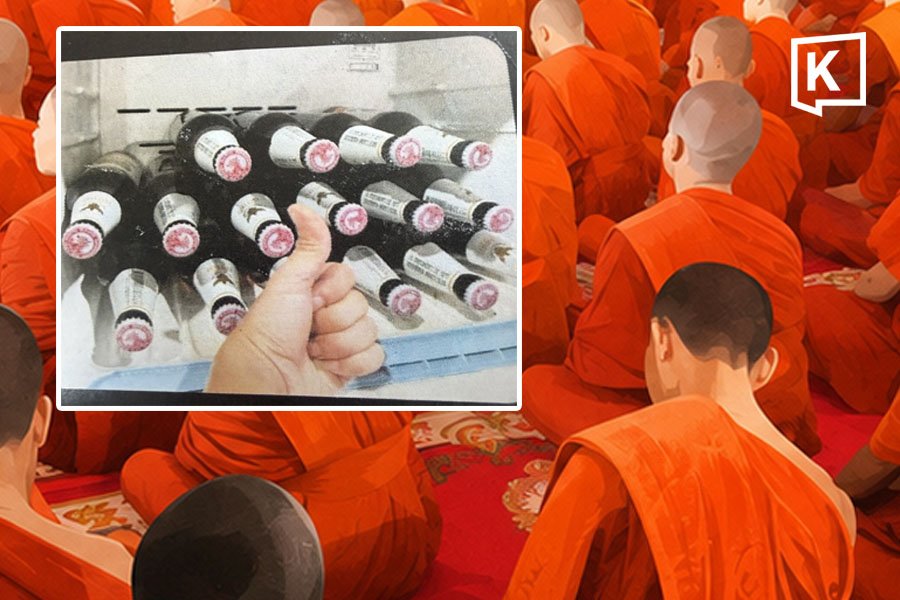
The reports claim that monks arranged late-night parties inside their living quarters and invited entertainment workers to attend. Alcohol, including beer and spirits, was allegedly stored in refrigerators and ice boxes at the venues. These activities took place at different temples, with participants moving between locations during the retreat period.
One entertainment worker reportedly sought medical testing after an encounter with members of the group and expressed concern about possible infection. The test returned negative, and no formal complaint followed. The Chiang Mai Provincial Ecclesiastical Office has not confirmed whether a formal investigation has begun.
Monastic quarters in Thai temples are traditionally simple living spaces meant for rest and quiet reflection between daily alms rounds and teaching duties. The presence of outside visitors and stored beverages during Khao Phansa stands in contrast to the expectation that these areas remain dedicated to personal discipline and scriptural review.
Statement from Cultural Council Adviser
Wallop Namwongphrom, a member of the Chiang Mai Provincial Cultural Council and adviser to provincial monastic authorities, addressed the allegations directly. He noted that Khao Phansa traditionally requires monks to stay at their temples during the rainy season. Wallop stated that some monks have been accused of leaving temples or gathering in quarters to hold parties.
He described such conduct as inappropriate and damaging to public confidence, even if it amounts only to a minor monastic offence. Wallop warned that continued parties would cause widespread damage if discovered. He urged monks to stop the practice for the sake of Buddhism regardless of the month.
Advisers like Wallop often serve as bridges between lay cultural bodies and the sangha, offering guidance drawn from both local customs and national monastic regulations. Their statements during sensitive periods help frame public understanding while encouraging self-correction within temple communities.
Impact on Community Trust in the Sangha
Incidents like these affect how Thai communities view the monastic order that serves as a moral anchor in daily life. Temples in Chiang Mai function as centers for merit-making, education, and cultural preservation. When reports surface of alcohol and private gatherings during Khao Phansa, residents question the discipline expected of those who represent Buddhist teachings.
Public faith supports temple activities and tourism tied to religious sites across northern Thailand. Erosion of that trust can reduce donations and participation in festivals that sustain local economies. The Chiang Mai Provincial Ecclesiastical Office maintains authority over such matters to protect the reputation of the sangha.
In many northern provinces, temples also host community events such as youth education programs and seasonal festivals that rely on the visible integrity of resident monks. When confidence dips, families may redirect merit-making activities to neighboring districts perceived as more observant.
Thai social media platforms and local news outlets frequently amplify reports of monastic misconduct, prompting widespread family discussions about temple conduct and prompting households to evaluate which monasteries they will support through regular visits and donations during the rains retreat.
Lay Support and Temple Life During the Rains Retreat
During Khao Phansa, lay Buddhists across Thailand increase their support for temples through regular food offerings and donations of essential supplies, allowing monks to focus inward without the need to seek alms daily. In Chiang Mai, this tradition often includes group processions where households present candles and robes, reinforcing the bond between the sangha and the wider community.
These contributions underscore the mutual responsibilities within Thai Buddhist practice, where monks uphold strict conduct in exchange for material and spiritual sustenance from devotees. Disruptions during the retreat can therefore ripple outward, affecting how families plan their annual merit-making schedules.
Broader Regional Implications for Southeast Asia
Thailand’s handling of monastic discipline influences neighboring Buddhist communities in Laos, Myanmar, and Cambodia where similar rains retreats occur. News of alleged misconduct in Chiang Mai travels through regional networks and shapes perceptions of Thai temple life. Cultural councils and ecclesiastical offices play key roles in maintaining standards that support cross-border religious tourism.
Wallop Namwongphrom emphasized that Buddhism itself remains undamaged while individual monks bear responsibility for their actions. The current situation highlights the need for clearer oversight during Khao Phansa to preserve the integrity of temple communities throughout the region.
Buddhist universities and ecclesiastical education programs throughout Southeast Asia play a central role in upholding discipline by delivering formal instruction in Vinaya regulations and ethical standards, preparing monks to observe the rains retreat with consistency and thereby reinforcing regional confidence in monastic institutions.
By Ann Srisawat, Staff Writer
This article was produced with AI-assisted research and editorial support. Reporting is based on sources cited in the article.
What's Your Reaction?
 Like
0
Like
0
 Dislike
0
Dislike
0
 Love
0
Love
0
 Funny
0
Funny
0
 Wow
0
Wow
0
 Sad
0
Sad
0
 Angry
0
Angry
0

Southeast Asia Correspondent at Global1.News. Based in Bangkok, covering Thai and Southeast Asian politics, economy, technology, and culture. Deep regional perspective on one of the world's most dynamic regions.













Comments (0)