
Burnham's Kyiv Gamble: PM Hands Ukraine Missile Blueprints
Prime Minister Andy Burnham has handed Ukraine the declassified blueprints for British Storm Shadow missile components during a defiant Independence Day visit to Kyiv, prompting Moscow to accuse Britain of being “in this war” as the Kremlin withdraws its ambassador and threatens to destroy production sites.
The first foreign trip of any new Prime Minister is a statement of intent. Andy Burnham chose Kyiv, not Washington or Brussels, and he chose to arrive bearing gifts that have sent the Kremlin into a fury. In a move that cements Britain's position as Ukraine's most resolute European backer, the Prime Minister has handed Volodymyr Zelenskyy the keys to a domestic missile industry — and dared Moscow to do something about it.
Burnham's Bold Gambit: UK Hands Kyiv the Blueprints to Build Its Own Arsenal
Kyiv, Ukraine – 25 August 2026 — The train from the Polish border was quiet, the mood reflective. Andy Burnham, just weeks into the job at No 10, was heading into a warzone for his maiden international engagement. Sitting opposite António Costa, the President of the European Council, and Luxembourg's Luc Frieden, the new Prime Minister confessed that the weight of office was already pressing down. Being PM, he told them, "feels like a lifetime already." By the time the train pulled into Kyiv on Monday for Ukraine's 35th Independence Day, he had decided to make that lifetime count.

A Historic Handover at St Sophia
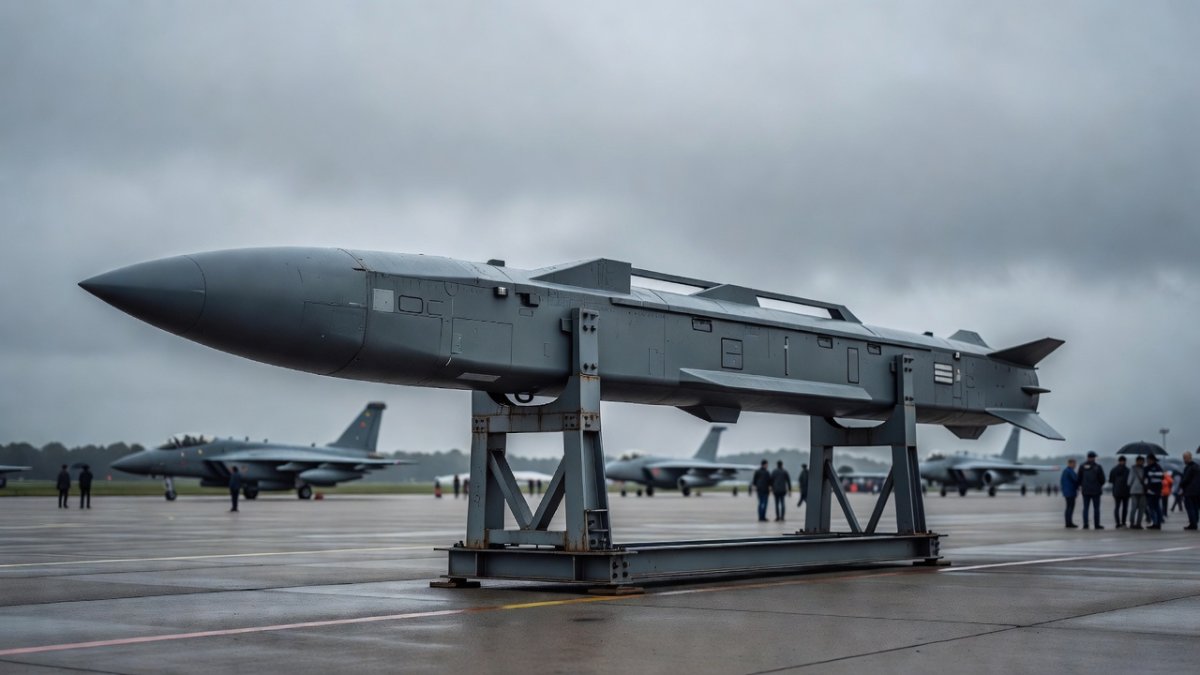
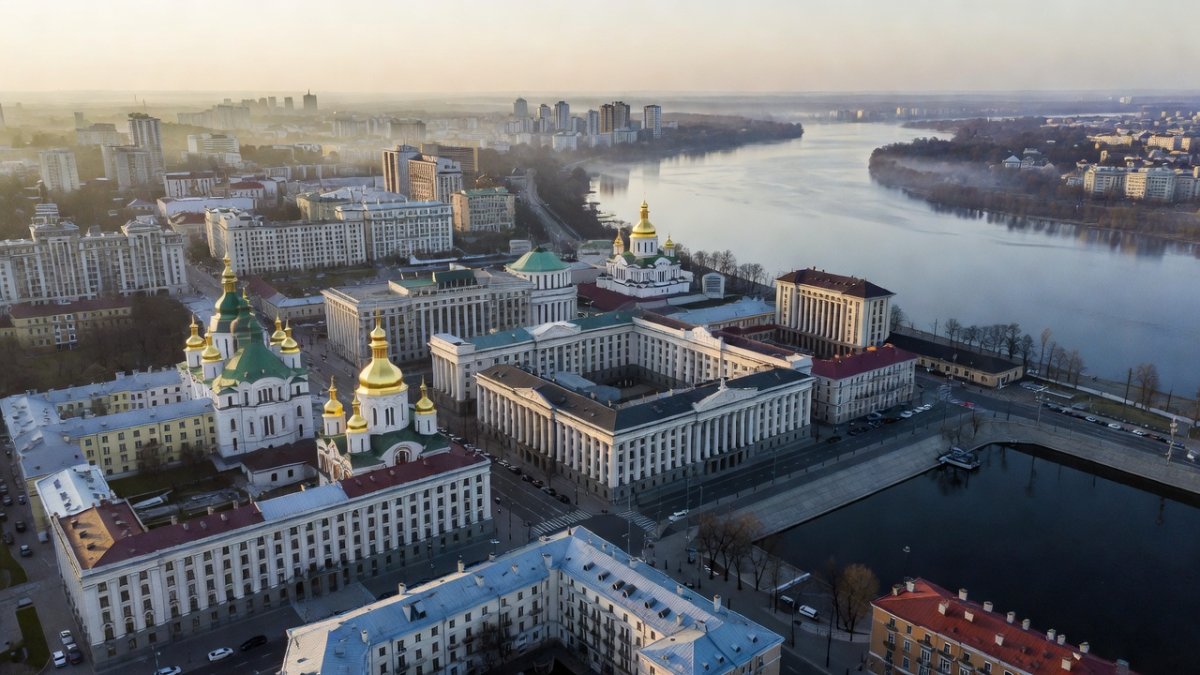
In the shadow of the golden domes of St Sophia Cathedral, Burnham delivered a message that was both historical and pointedly contemporary. "My nation kept the flame of European freedom alive in the 20th century," he told the assembled dignitaries and Ukrainian officials. "You hold that flame in the 21st." The rhetoric was Churchillian, but the substance was pure military pragmatism. The Prime Minister confirmed that Britain and France had jointly authorised Kyiv to build its own version of the Storm Shadow/SCALP cruise missile, handing over declassified blueprints for the British-made components of the weapon system.
The strike range of the missile is approximately 250 kilometres — enough to reach deep into Russian-occupied territory and, crucially, beyond it. The blueprints, which have been the subject of intense speculation in Westminster defence circles for months, will allow Ukraine to eventually produce its own long-range missiles domestically. The caveat, which officials in the Ministry of Defence were quick to stress, is that production may take years. This is not an immediate battlefield game-changer; it is a long-term industrial commitment. It signals that London and Paris are no longer content to be arms suppliers — they are now investing in Ukraine's future as a defence manufacturer in its own right.
Burnham was unequivocal about the scale of the aggression Ukraine has faced. "You have endured 12 years of naked aggression, the occupation of Crimea, and now four and a half years of Russia's full-scale invasion," he said. He also addressed the veiled threats emanating from Moscow directly: "Despite Russia's outrageous threats to my country, we will continue our support for Ukraine."
Kremlin Fury and a Diplomatic Rupture
The response from Moscow was swift and predictable. Kremlin spokesman Dmitry Peskov described the exchange as adding "fuel to the fire" and accused London of scuppering any potential peace moves. "Britain is involved in this war on the side of the Kyiv regime," Peskov said, in a statement that stopped short of direct threats but left little to the imagination. Moscow has stated it will "identify and destroy" the missile production sites, a threat that will now force the UK and France to consider the security of any future Ukrainian industrial facilities.
Burnham, however, was in no mood to be cowed. In a robust exchange with ITV News, he turned the Kremlin's fire metaphor back on them. "Who started the fire? That's the question, isn't it?" he asked, dismissing the notion that he was recklessly provoking a nuclear-armed state. "Obviously with a change of prime minister people think there has been a change in policy. Well I'm here to say there isn't... If we don't take a firm stand, who would be next? It's right to do this. It's in Britain's interest to stand firm."
The diplomatic fallout has been severe. Russia has withdrawn its ambassador to the UK, with the long-serving Andrey Kelin having left his post last month after seven years in London. No replacement is in sight. The Russian embassy in London issued a terse statement claiming relations had "deteriorated to an unprecedentedly low level entirely on London's initiative." The UK ambassador remains in post in Moscow, a deliberate signal that Britain is not closing the door entirely — but the door is now very firmly ajar.
The Patriot Puzzle and the Coalition of the Willing
Beyond the blueprints, Burnham's primary task in Kyiv was strategic coordination. He chaired a meeting of the 34-leader "coalition of the willing" — the grouping of nations pledged to help secure Ukraine in the event of a truce. French President Emmanuel Macron and German Chancellor Friedrich Merz joined by video link, underscoring the European weight behind the initiative. The Prime Minister's message to the room was simple: Ukraine needs more air defence, and it needs it now.
Specifically, Burnham urged allies to help Kyiv secure more US-made Patriot interceptor missiles, the only weapon system currently capable of effectively countering Russian ballistic missiles. The urgency is acute. Kyiv's intelligence services report that Russia is amassing more ballistic missiles and is actively considering mobilising an additional 300,000 soldiers. The prospect of a winter campaign with a fresh wave of conscripts and a stockpile of missiles is a chilling one for Ukrainian planners.
Complicating matters is the mercurial position of Washington. Donald Trump has backtracked on an earlier offer to give Ukraine the designs for Patriot missiles, a reversal that has frustrated European allies who see the US system as the linchpin of Ukraine's defensive umbrella. According to Bloomberg, Burnham plans to travel to the US in September to urge Trump to release US Patriot stocks ahead of the winter. It is a delicate diplomatic dance: the UK needs to maintain US engagement without appearing subservient to Washington's whims.
What This Means for the UK: Defence, Security, and the Home Front
Back in Westminster, the debate over how far Britain should go is intensifying. Burnham insists his policy is a continuation of his predecessors' support, not a radical departure. But the decision to share missile blueprints is a significant escalation in the level of technological transfer. The Ministry of Defence will now be tasked with overseeing the declassification process and ensuring that sensitive British components do not fall into the wrong hands. The Foreign Office, meanwhile, is managing the fallout with Moscow, a task made more difficult by the absence of a Russian ambassador in London.
For the British public, the implications are twofold. First, there is the security dimension: the UK has been explicitly threatened by Moscow, and the threat to "identify and destroy" production sites could theoretically extend to British facilities involved in the programme. Second, there is the economic angle. The UK has agreed to share Ukrainian battlefield data with the Ministry of Defence and private companies to train AI models, a move that could position British firms at the forefront of defence technology. There is also UK help for France to set up missile assembly lines in Ukraine, a promise made by Macron last month that will now involve British engineering expertise.
The domestic political calculus is delicate. Burnham's stance has broad cross-party support in principle, but the details are contentious. Some Labour backbenchers are uneasy about the escalation, while Conservative critics argue the government is not going far enough. The Prime Minister's visit to Ukrainian soldiers, where he played a Smiths song on electric guitar with them, was a human moment that played well on the evening news — but it also served to remind voters that this is a conflict with real human cost, not just a geopolitical abstraction.
Deeper Analysis: European Security and the Shadow of Attrition
The question that hangs over Kyiv, London, and every European capital is whether Europe can fill the gap if US support weakens. Channel 4 News analysts, including Krishnan Guru Murthy with International Editor Lindsey Hilsum and Guardian correspondent Luke Harding, have raised serious doubts. Russia is ramping up its own missile production, and the attritional nature of the war means that industrial capacity is as important as battlefield tactics. The UK's decision to share blueprints is a recognition that Ukraine cannot rely on Western stockpiles indefinitely — it must build its own.
The timing is significant. Days before Independence Day, a Russian drone attack on a shopping centre in Kryvyi Rih killed between 14 and 16 people. EU foreign policy chief Kaja Kallas called it "terror by design." Kyiv was braced for further missile attacks over the holiday, and the fact that the city remained relatively quiet on Monday was a small mercy, not a sign of de-escalation. The war is entering a new phase, one where the front lines may be static but the industrial and diplomatic battles are intensifying.
There is also the internal Ukrainian political dimension. Former defence minister Mykhailo Fedorov has called for elections for the first time since the war began, a move that has created tension within Zelenskyy's administration. The President argues that any poll risks splitting the country and would be "a tsunami for the state." Burnham's visit, and the tangible support it brought, is a boost for Zelenskyy at a time when his political position is being tested from within as much as from without.
Reaction and Response: A Divided Europe, A Resolute Britain
The reaction across Europe has been mixed. Macron and Merz are supportive, but other EU leaders are more cautious, wary of provoking Moscow further. The Baltic states, unsurprisingly, are fully behind the UK's stance, seeing it as essential to their own security. The Kremlin's rhetoric, meanwhile, continues to escalate. Peskov's assertion that Britain is "involved in this war" is a deliberate attempt to frame the conflict as a NATO-Russia confrontation, a narrative that Moscow has been pushing since 2022.
Burnham's retort to ITV News — "Who started the fire?" — was a masterclass in political messaging. It reframed the debate, placing the onus on Russian aggression rather than Western provocation. It also served notice that the UK, under its new Prime Minister, is not going to be intimidated. The question now is whether that resolve can be sustained. The September trip to Washington will be a critical test. If Trump can be persuaded to release Patriot stocks, the coalition's position is strengthened. If not, Europe will have to dig deeper into its own arsenals.
The Bottom Line — What Comes Next
Andy Burnham's first foreign trip has set the tone for his premiership: resolute, interventionist, and unapologetically pro-Ukraine. The decision to hand over missile blueprints is a long-term investment in Ukraine's sovereignty, but it is also a gamble. It assumes that Ukraine will survive the coming winter, that the production lines can be established, and that Russia will not escalate in response. These are significant assumptions.
For the UK, the immediate priorities are clear: manage the diplomatic rupture with Moscow, persuade Washington to release Patriot stocks, and ensure that the domestic political consensus holds. The Prime Minister has staked his credibility on the proposition that standing firm in Ukraine is in Britain's interest. The coming months will test that proposition to its limits. As the sun set over the Dnipro river on Monday evening, Burnham's message was one of defiance and hope. Whether that hope is justified will depend on decisions made in Washington, Moscow, and the factories of Europe over the next year.
By Erica Thornton, Staff Writer
This article was produced with AI-assisted research and editorial support. Reporting is based on sources cited in the article.
What's Your Reaction?
 Like
0
Like
0
 Dislike
0
Dislike
0
 Love
0
Love
0
 Funny
0
Funny
0
 Wow
0
Wow
0
 Sad
0
Sad
0
 Angry
0
Angry
0

US Politics and Policy Correspondent at Global1.News. Based in Washington DC, covering American politics, policy, elections, and the courts. Knows how the system works and tells you what it actually means.










Comments (0)