
Barrydale: The Tiny Karoo Town Becoming an Artists' Haven
On the edge of South Africa's Karoo semi-desert, a small Western Cape town is quietly becoming one of the continent's most surprising artistic destinations. Barrydale, a 19th-century village on the legendary Route 62, has drawn painters, sculptors and craft makers with its dramatic mountain landscap
On the edge of South Africa's Karoo semi-desert, a small Western Cape town is quietly becoming one of the continent's most surprising artistic destinations. Barrydale, a 19th-century village on the legendary Route 62, has drawn painters, sculptors and craft makers with its dramatic mountain landscapes, open skies and unhurried rhythm of life. For a growing creative community, this corner of the Klein Karoo offers something increasingly rare in the modern world: space to slow down, experiment and create.
Barrydale: The Tiny Karoo Town Becoming an Artists' Haven
Barrydale, South Africa — In a world where creative communities are often priced out of urban centres, a town of just over 4,000 people in South Africa's Western Cape province is proving that artistic renewal can flourish far from the gallery districts of Cape Town or Johannesburg. Barrydale, nestled in the Klein Karoo between the Swartberg and Langeberg mountains, has become a magnet for painters, sculptors and craft makers seeking the kind of peace that fuels imagination. For African creative communities watching from Dakar to Nairobi, this small town's transformation offers a compelling lesson in how rural spaces can become cultural destinations without losing their soul.
A Canvas in the Karoo: Why Artists Keep Coming
There is something about the light in the Klein Karoo that artists describe in almost spiritual terms. The town of Barrydale sits in a valley where the Swartberg mountains rise to the north and the Langeberg range frames the southern horizon, creating a natural amphitheatre of rock and sky. The semi-desert landscape, with its hardy succulents, ancient aloes and vast expanses of open veld, shifts colour with the passing hours in ways that seem almost theatrical. For painters, this ever-changing canvas of light and shadow is an endless source of inspiration.
The town itself, founded in the 19th century, retains a character that has largely disappeared from South Africa's faster-growing settlements. Cape Dutch and Victorian architecture line the main street, their whitewashed facades and steep gables telling stories of a slower, more deliberate era. The wide countryside surrounding Barrydale offers something that urban artists increasingly cannot find: room to breathe, to think, and to work without the constant pressure of city life. Studios here are not cramped apartments converted into workspaces, but proper rooms with proper light, often looking out onto mountains or orchards.
For African artists, this kind of space carries particular significance. Across the continent, creative communities are often concentrated in crowded capitals where rent is high and quiet is scarce. Barrydale represents an alternative model, one where the landscape itself becomes a collaborator in the creative process. The peace of the Karoo is not an absence of stimulation but a different kind of presence, one that allows artists to hear their own thoughts and follow their own instincts.
The town's isolation, far from being a drawback, has become its greatest asset. Artists who arrive for a weekend often find themselves staying for months or years, drawn into a rhythm of life that prioritises the work itself over the business of being seen. The dramatic mountain landscapes that surround the town provide both subject matter and solace, a reminder that the natural world remains the ultimate reference point for creative expression.
What makes Barrydale particularly notable is that this artistic migration has happened organically, without the kind of government programmes or development schemes that often accompany cultural regeneration projects. Artists simply found the town, fell in love with it, and stayed. Their presence has, in turn, attracted others, creating a self-sustaining cycle of creativity that continues to this day.
The Karoo Art Hotel and a Village of Studios
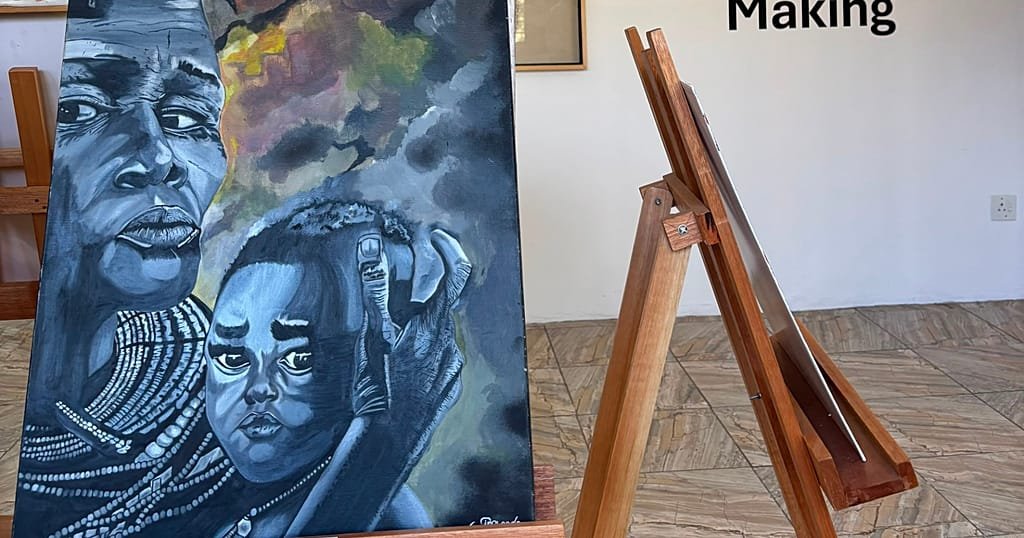
At the heart of Barrydale's artistic revival stands the Karoo Art Hotel, a restored landmark that has become both a gathering place and a symbol of the town's creative identity. Rick Melville, who co-owns the hotel, speaks of his adopted home with the warmth of someone who has found exactly where they belong. "It's a pretty well-integrated village," he says. "It's very peaceful. We don't have really crime to talk about. And I think it's a great vibe."
Melville's assessment of the town's creative density is characteristically modest. He estimates "there must be 15, 20 I don't know, art studios in Barrydale," a remarkable number for a town of roughly 4,156 residents. The studios are scattered throughout the village, tucked into converted outbuildings, attached to family homes, or occupying spaces above the colourful shops and cafes that line the main street. Walking through Barrydale, one encounters art at every turn, from gallery windows to murals on exterior walls.
The growth of this creative community follows a simple logic, according to Melville. "Artists bring artists, so one artist comes," he explains, describing a pattern of migration that has repeated itself across decades. Some artists have been putting down roots in the town for decades, long before the current wave of attention. Their presence created the foundation upon which newer arrivals have built, establishing Barrydale as a place where serious creative work is possible.
Cathy Milner, an art instructor who has been bringing students to Barrydale for years, has become something of a bridge between the town and the wider art world. "Barrydale has become a destination for me to bring artists to from around South Africa and obviously internationally as well," she says. Her workshops, which explore techniques ranging from brushwork to mark-making, have introduced countless artists to the town's unique atmosphere, many of whom have returned to stay.
The main street of Barrydale reflects this creative energy in its very architecture. Colourful shops, cafes and craft outlets line the thoroughfare, their facades painted in hues that seem to echo the Karoo landscape at sunset. Visitors can browse pottery, textiles, paintings and sculpture while sipping coffee or enjoying a meal, experiencing the town's artistic character in a way that feels natural rather than curated. The commercial life of Barrydale has become inseparable from its creative life, each sustaining the other.
From Discarded Plastic to Public Art
Barrydale's creative community extends far beyond traditional painting and sculpture. Local artists have embraced recycled materials with remarkable ingenuity, turning discarded plastic into large-scale works of art that now punctuate the town's public spaces. This resourceful approach to creativity reflects a deeper African tradition of making something beautiful from what others have thrown away, a practice that has long been central to the continent's artistic expression.
The transformation of waste into art carries particular resonance in a country like South Africa, where environmental concerns and economic realities often intersect. By demonstrating that beauty can emerge from the most unlikely materials, Barrydale's artists offer a powerful example of creative problem-solving. Their work speaks to the resilience and inventiveness that characterises African art across the continent, from the recycled metal sculptures of Mozambique to the upcycled fashion of Lagos and Dakar.
Community organisations in Barrydale have taken this ethos further, using creativity to engage young people with arts, crafts and puppetry programmes. These initiatives provide more than just artistic training; they offer young residents a sense of possibility and purpose, showing them that their own hands can create things of value. In a town of Barrydale's size, such programmes can have an outsized impact, touching a significant portion of the youth population.
The parallels with broader African recycling-art traditions are striking. Across the continent, artists have long transformed found objects and waste materials into works of cultural significance, from Ghana's coffin makers to Kenya's recycled metal sculptors. Barrydale's plastic art sits within this proud tradition, demonstrating that the impulse to create from available materials transcends national boundaries and speaks to something fundamental in the human spirit.
For visitors, encountering these large-scale works of recycled art adds an unexpected dimension to the Barrydale experience. The pieces are not confined to galleries but appear in public spaces, inviting engagement and conversation. They serve as reminders that art need not be precious or expensive to be meaningful, and that the most powerful creative statements often emerge from the most humble materials.
Puppets, Festivals and a Town That Performs
Perhaps nothing captures Barrydale's creative spirit quite like the Barrydale Giant Puppet Parade, an annual public puppet parade and performance presented by Net vir Pret, an Afrikaans phrase meaning "for fun." The parade has become a beloved December tradition, drawing residents and visitors alike into a world of imagination and spectacle. Recent editions have been titled Moving Mountains and Steek My Weg, each theme inspiring new creations and performances.
The parade starts outside the Karoo Art Hotel and moves through the streets of Barrydale, transforming the town into a stage. Giant puppets, some several metres tall, dance and sway above the crowds while performers in elaborate costumes bring the streets to life. For a town of Barrydale's size, the production is remarkably ambitious, involving months of preparation and the participation of a significant portion of the community.
The puppetry tradition in Barrydale demonstrates how street performance can build community imagination in ways that gallery exhibitions cannot. When residents and visitors gather to watch giant puppets process through their streets, they share an experience that is both deeply local and universally accessible. The parade has become a marker of the town's identity, a public declaration that Barrydale is a place where creativity is not confined to studios but spills out into everyday life.
Beyond the puppet parade, Barrydale hosts a lively calendar of events including art festivals and markets that draw visitors from across South Africa and beyond. These gatherings provide platforms for local artists to showcase their work and for the town to celebrate its creative identity. The events also contribute significantly to the local economy, bringing visitors who stay in accommodation, eat in restaurants and purchase artworks and crafts.
The town's location on Route 62, often called the world's longest wine route, adds to its appeal as a cultural destination. Visitors can combine artistic exploration with visits to nearby attractions including the Tradouw Pass, popular for hiking and cycling, natural hot springs, hiking trails and wine estates. This combination of culture and nature makes Barrydale an attractive stop for travellers exploring the Western Cape, extending their stay and deepening their engagement with the town's creative community.
Keeping the Character: Progress and Gentrification Worries
As Barrydale's reputation has grown, so too have concerns about the pressures of success. Graham Abbott, an events organiser who knows the town intimately, expresses a sentiment shared by many residents. "Barrydale is one of the last towns that has characters, real characters," he says, his words carrying both pride and a note of apprehension. The very qualities that have made the town attractive to artists and visitors are, paradoxically, at risk from the attention they generate.
Abbott is philosophical about the changes that have come to Barrydale. "Progress happens, gentrification happens, but we don't really want to change our town's character," he acknowledges. This tension between growth and preservation is familiar to creative communities around the world, from Marrakech to Mexico City, but it takes on particular significance in a town as small as Barrydale, where every new development can shift the balance.
He describes Barrydale as "a robust little town" where a lot of people are moving in, drawn by the same qualities that attracted the original artistic pioneers. The influx brings economic benefits and new energy, but it also raises questions about affordability, authenticity and the preservation of the town's distinctive character. Residents say the challenge is to welcome new artists and visitors without losing the qualities that drew them there in the first place.
For African creative towns, this balancing act carries particular weight. Across the continent, communities are grappling with how to benefit from cultural tourism without being overwhelmed by it. The experience of Barrydale offers lessons in the importance of maintaining local control over development, of ensuring that growth serves the community rather than displacing it, and of recognising that a town's character is its most valuable asset.
The hope among Barrydale's residents is that newcomers will respect the town's quaintness and contribute to its character rather than eroding it. The artistic community that has made Barrydale what it is today understands that the town's appeal lies not in any single gallery or attraction but in the overall atmosphere of creativity and welcome. Preserving that atmosphere requires conscious effort and a shared commitment to the values that have made Barrydale special.
What to Watch For: Barrydale's Creative Future
Barrydale, with its population of about 4,156 people in the Western Cape's Swellendam municipality, represents a model of rural creative development that deserves attention across Africa. The town's place on Route 62, often called the world's longest wine route, positions it within a broader network of tourism that brings visitors from around the globe. The growing number of artists putting down roots and discovering the town through workshops and cultural events suggests that its creative community will continue to expand.
The potential of art-driven tourism for rural South African economies is significant. Towns like Barrydale demonstrate that cultural assets can generate economic activity in places where traditional industries have declined or never existed. The studios, galleries, cafes and accommodation that have emerged around the artistic community create jobs and opportunities that did not previously exist, offering a sustainable path to economic development that builds on local strengths.
African cultural towns like Saint-Louis in Senegal, Lamu in Kenya or N'gor in Senegal can learn valuable lessons from Barrydale's experience. The South African town shows that artistic communities can thrive in small, rural settings when the conditions are right: affordable space, inspiring landscapes, and a welcoming atmosphere. It also demonstrates the importance of community engagement, ensuring that artistic development benefits residents rather than displacing them.
The africanews report on Barrydale, published this week in August 2026, has brought renewed attention to the town's creative scene. For African readers, the story offers both inspiration and a cautionary tale. Inspiration comes from seeing what a small community can achieve through creativity and determination. The caution lies in the challenges of managing growth while preserving character, a challenge that will only intensify as Barrydale's reputation continues to spread.
Residents of Barrydale are under no illusions about the road ahead. They know that the town's success brings risks as well as rewards, and that maintaining the qualities that made it special requires constant vigilance. But they also know that Barrydale has something valuable to offer the world: proof that art can flourish in the most unexpected places, and that a small town with big dreams can become a beacon for creative communities everywhere.
"Barrydale may be a small town, but its artistic ambitions are proving anything but small." This observation, shared by those who know the town best, captures the essence of what has happened here. In a corner of the Karoo where the mountains meet the sky, a community of artists has built something remarkable, a place where creativity is not an escape from life but a way of living it. For Africa and the world, Barrydale stands as a reminder that the most powerful cultural movements often begin in the most humble settings.
By Amara Diop, Staff Writer
This article was produced with AI-assisted research and editorial support. Reporting is based on sources cited in the article.
What's Your Reaction?
 Like
0
Like
0
 Dislike
0
Dislike
0
 Love
0
Love
0
 Funny
0
Funny
0
 Wow
0
Wow
0
 Sad
0
Sad
0
 Angry
0
Angry
0

West Africa/Sahel Correspondent at Global1.News. Dakar-based journalist covering politics, security, climate, and development across Francophone and Anglophone West Africa. Tells the stories of a region undergoing profound transformation.












Comments (0)