
Barzani Meets al-Sharaa on SDF Integration and Syria-KRG Ties
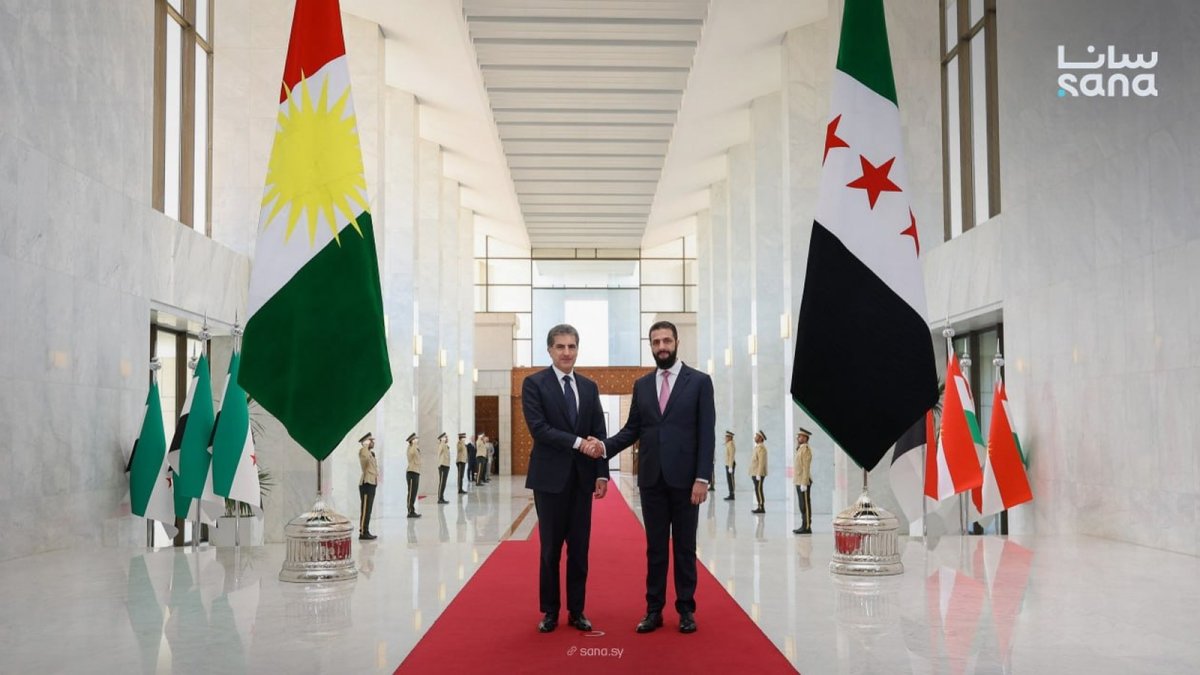
The August 3, 2026 meeting between Syrian President Ahmad al-Sharaa and Kurdistan Region President Nechirvan Barzani in Damascus marks the first official visit by an Iraqi Kurdish leader to Syria since the fall of Bashar al-Assad.
The August 3, 2026 meeting between Syrian President Ahmad al-Sharaa and Kurdistan Region President Nechirvan Barzani in Damascus marks the first official visit by an Iraqi Kurdish leader to Syria since the fall of Bashar al-Assad. The talks focused on implementing the January 2026 ceasefire and integration agreement between Damascus and the Syrian Democratic Forces while exploring expanded economic links between Syria and the Kurdistan Region. This development intersects with Turkey's ongoing concerns over YPG-PKK links, U.S. mediation efforts, and post-conflict reconstruction across the Levant and northern Iraq.
Barzani's Damascus Visit Advances Syria-Kurdistan Economic and Security Coordination
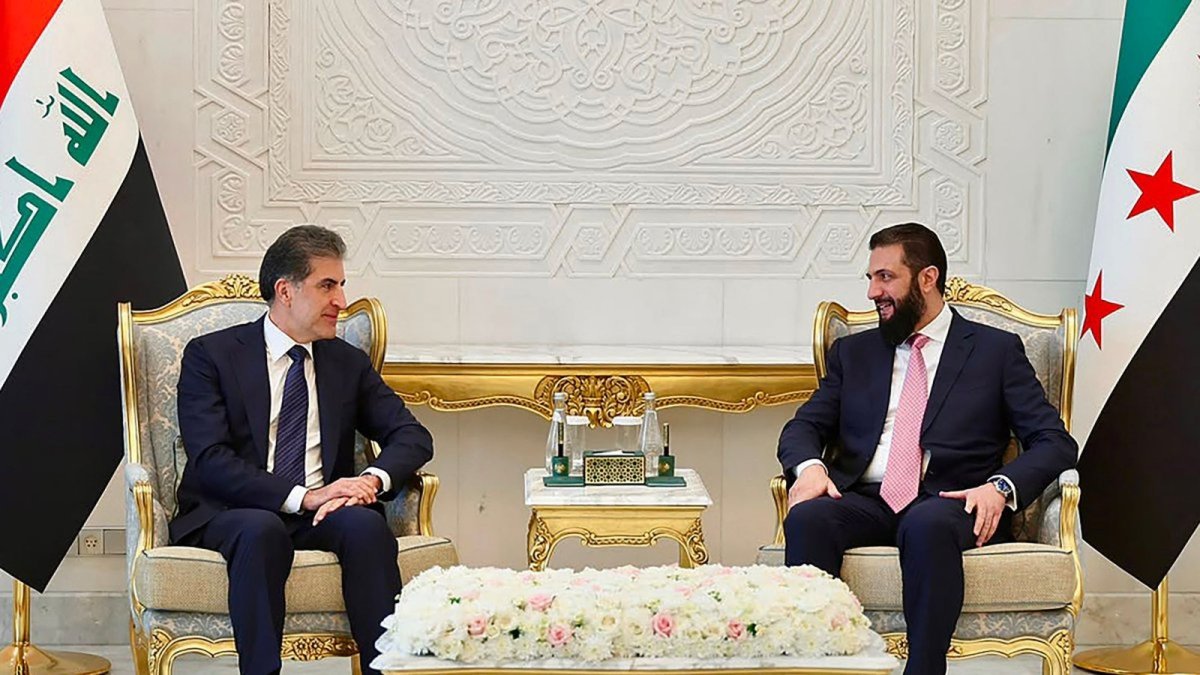
Damascus, Syria – August 3, 2026 — Syrian state news agency SANA reported that President Ahmad al-Sharaa received Nechirvan Barzani and his delegation at the People's Palace for discussions on bilateral relations, economic cooperation and mutual security interests. Al-Sharaa's office stated the leaders examined ways to strengthen coordination, particularly in the economic sphere, to support regional stability. Barzani posted on X that Syria, Iraq and the Kurdistan Region share common interests as neighbors and possess significant opportunities for expanded economic cooperation.
Core Agenda: Following Up on SDF Integration Agreement
The one-day visit centered on procedures for integrating the Syrian Democratic Forces into state institutions under the January 2026 comprehensive ceasefire and integration agreement. A Syrian official told AFP that the leaders would address the January agreement and steps for SDF integration into the army and security structures. Differences over the pace of brigade integration have persisted since senior YPG member Sipan Hamo was appointed regional assistant defense minister.
Government forces have already entered Hasakah and Qamishli, with management of Qamishli Airport and key oil fields transferred to central authority. The SDF's territorial control has narrowed from roughly one-third of Syria to core areas in Hasakah province after handing over administrative authority in Raqqa and Deir ez-Zor. Barzani previously welcomed the January deal as a potential path to protect Kurdish rights in the forthcoming Syrian constitution.
Barzani arrived with a high-level delegation, underscoring the Kurdistan Region's interest in practical outcomes beyond symbolic diplomacy. Syrian Presidency statements emphasized that the discussions addressed issues of common interest contributing to regional stability, including coordination mechanisms for border security and trade facilitation. These steps reflect Damascus's priority to consolidate authority in the northeast while avoiding renewed clashes that could invite Turkish intervention.
Regional dynamics add urgency, as the integration process intersects with Kurdish autonomy questions in both Syria and Iraq. Successful implementation could set precedents for constitutional protections that balance central control with local governance, a model closely watched by Erbil and Baghdad alike.
Background of the March 2025 and January 2026 Accords
On March 10, 2025, al-Sharaa and SDF chief Mazloum Abdi signed an initial integration agreement in Damascus that placed border crossings, airports and energy resources under government control while guaranteeing Kurdish rights within the constitution. Clashes erupted in January 2026 when the SDF was accused of reneging on commitments, prompting the largest military offensive since Assad's December 2024 ouster. A U.S.-backed meeting in Erbil during those clashes helped de-escalate tensions.
The January 30, 2026 comprehensive agreement required SDF withdrawal from Raqqa and Deir ez-Zor, transfer of public institutions in Hasakah to state authority and phased integration of military and administrative structures. Some displaced Syrian Kurds are still awaiting return to their areas of origin under the deal's provisions. Barzani met al-Sharaa previously on the sidelines of the Antalya Diplomacy Forum in April 2025 and again in April 2026.
The March 2025 accord initially envisioned a gradual handover of administrative functions, yet implementation stalled amid disputes over command structures and resource allocation. The January 2026 fighting exposed fault lines between Damascus's centralizing drive and SDF insistence on retaining operational autonomy in core Kurdish areas. U.S. mediation in Erbil proved decisive in securing the ceasefire, with Barzani hosting Mazloum Abdi to relay American expectations for de-escalation.
Post-Assad reconstruction financing hinges on these agreements holding, as donors require evidence of stable governance before committing funds. Historical precedents from Iraq's post-2003 federal arrangements inform Kurdish calculations, though Syria's more fragmented landscape presents distinct challenges for power-sharing formulas.
Turkey's PKK Calculus and Regional Security Concerns
Ankara continues to view the YPG as the Syrian extension of the PKK, a designation that shapes Turkish opposition to any autonomous SDF structures along its border. The integration process directly affects Turkey's foreign policy priorities in northern Syria and its calculations regarding cross-border operations. Damascus must balance Kurdish political representation against Turkish demands for security guarantees.
Barzani's mediation role carries weight because of the Kurdistan Region's established channels with both Damascus and Ankara. Any successful integration could reduce the risk of renewed Turkish military action while allowing Syria to consolidate control over its northeast. Second-order effects include potential shifts in Turkish-Iraqi energy corridor projects that rely on stable border dynamics.
Ankara has long signalled that normalized relations with Damascus depend on verifiable steps against PKK-linked networks, including restrictions on cross-border movements from Hasakah province. This stance creates leverage for Ankara in great power competition, where Russia and Iran also seek influence over Syrian security arrangements. Barzani's involvement offers a buffer, given the Kurdistan Region's security cooperation agreements with Turkey that predate the current Syrian transition.
Failure to address Turkish concerns risks renewed incursions that could disrupt reconstruction timelines and energy export routes. Damascus therefore weighs Kurdish integration against the imperative of securing Ankara's acquiescence for regional stability.
U.S. Mediation and Sanctions Pressure
Washington has acted as mediator between Damascus and the SDF, notably during the January 2026 Erbil meeting. Proposed U.S. legislation could reimpose sanctions on Syria, giving American lawmakers leverage to press both sides toward full implementation of the integration agreement and constitutional recognition of Kurdish rights. U.S. priorities include adherence to al-Sharaa's decree on Kurdish rights and prevention of renewed clashes.
The transfer of oil fields and border crossings to Damascus aligns with American goals of strengthening central government authority while maintaining pressure for inclusive governance. Failure to complete integration could trigger sanctions that would further complicate Syria's reconstruction financing.
American diplomatic engagement has focused on preventing Iranian or Russian exploitation of any governance vacuum in the northeast. Proposed sanctions legislation targets entities obstructing the January 2026 agreement, creating incentives for compliance that extend to both Syrian state actors and SDF leadership. This approach mirrors earlier U.S. strategies in Iraq that linked sanctions relief to political inclusion of Kurdish parties.
Continued U.S. involvement also serves to counterbalance Turkish and Iranian influence, ensuring that post-Assad Syria does not tilt decisively toward any single regional power. The leverage remains conditional on verifiable progress toward constitutional protections for Kurds.
Strategic Calculus
Each actor's strategic calculus reflects competing priorities shaped by historical grievances and current leverage points. Damascus seeks rapid consolidation of authority to unlock reconstruction funds, while the SDF aims to preserve core territorial and administrative gains without full subordination. The Kurdistan Region under Barzani calculates that successful mediation enhances its regional stature and opens economic corridors without provoking Ankara.
Turkey's position remains pivotal, as any perceived autonomy for YPG-linked forces could trigger cross-border operations that destabilize the entire northeast. Great power competition adds layers, with the United States using sanctions threats to enforce integration timelines and Russia positioning itself as an alternative security guarantor for Damascus. Iran watches closely, concerned that stabilized Syria-KRG ties could constrain its own influence networks in Iraq and Syria.
Second-order effects extend to energy corridor viability, where stable Iraq-Syria linkages could reroute flows away from routes favored by Tehran. Barzani's dual engagement with both Damascus and Ankara positions the Kurdistan Region as a potential stabilizer, though overextension risks exposing Erbil to pressure from multiple capitals simultaneously.
Iraq-Syria Economic Linkages and Energy Corridors
Barzani emphasized opportunities for mutual economic benefit between the Kurdistan Region, Iraq and Syria. The Kirkuk-Ceyhan oil pipeline extension signed between Türkiye and Iraq in early August 2026 illustrates the broader energy context in which Syria seeks to restore production and export routes. Control of northeast Syrian oil fields now rests with Damascus, creating potential for coordinated energy policies with Baghdad and Erbil.
Strengthened Iraq-Syria ties could facilitate trade corridors and reconstruction projects that benefit all three parties. The KRG's experience with semi-autonomous governance offers a reference point for how Kurdish rights might be accommodated within a unified Syrian state without threatening territorial integrity.
The one-year extension of the Kirkuk-Ceyhan pipeline deal, secured during Iraqi Prime Minister visits to Ankara, demonstrates how energy interdependence can anchor broader diplomatic engagement. Syrian oil fields transferred to central control now represent potential revenue streams that could integrate into regional export frameworks involving both Baghdad and Erbil. Barzani's public statements on X highlighted these mutual interests, noting the great opportunities for expanding economic cooperation to the benefit of all the peoples involved.
Reconstruction financing from Gulf states and international donors will likely prioritize projects demonstrating cross-border stability, making successful Syria-KRG coordination a prerequisite for larger investment flows. Iranian Kurdish parties operating from Iraq face parallel pressures, as any escalation could invite Iranian retaliation that spills into the same energy corridors under discussion.
Regional Implications
If the integration process advances, Syria could achieve greater internal cohesion that reduces external interference and supports post-Assad reconstruction. Turkey may gain security assurances that ease bilateral tensions, while the Kurdistan Region could expand economic partnerships across a stabilized border. The United States retains leverage through sanctions policy to encourage constitutional protections for Kurds.
Continued delays risk renewed clashes that would destabilize the northeast and complicate energy market recovery across the Levant and northern Iraq. Forward-looking scenarios hinge on whether Damascus can deliver verifiable constitutional commitments before external actors recalibrate their involvement. Barzani's mediation demonstrates the Kurdistan Region's capacity to bridge divides, yet sustained progress requires alignment among Washington, Ankara, and Baghdad on enforcement mechanisms.
By Malik Hassan, Staff Writer
This article was produced with AI-assisted research and editorial support. Reporting is based on sources cited in the article.
What's Your Reaction?
 Like
0
Like
0
 Dislike
0
Dislike
0
 Love
0
Love
0
 Funny
0
Funny
0
 Wow
0
Wow
0
 Sad
0
Sad
0
 Angry
0
Angry
0

Middle East Correspondent at Global1.News. Based in Beirut, covering politics, conflict, energy, and society across the Middle East. Brings context and depth to a region often reduced to headlines.










Comments (0)