
Elbit Systems Proposed Advanced Drones to UAE Following 2022 Houthi Attack, Leaked Documents Show
Israel's largest defense contractor quietly proposed arming the UAE with its most advanced drones after the 2022 Houthi attack, according to leaked documents analyzed by Haaretz. The internal materials, which originated from a senior executive's Gmail account, detail urgent Emirati requests for surveillance and strike capabilities in the months after the January assault on Abu Dhabi. They were later published online by the Handala hacker group.
Israel's largest defense contractor quietly proposed arming the UAE with its most advanced drones after the 2022 Houthi attack, according to leaked documents analyzed by Haaretz. The internal materials, which originated from a senior executive's Gmail account, detail urgent Emirati requests for surveillance and strike capabilities in the months after the January assault on Abu Dhabi. They were later published online by the Handala hacker group.
Elbit Hermes 900 Drone Proposal to UAE Revealed in Leaked Files
Jerusalem — Leaked internal documents from Elbit Systems outline a rapid response to an Emirati request for unmanned aircraft systems in the wake of the January 2022 Houthi strikes on oil facilities and Abu Dhabi International Airport. The files, first reported by Drop Site News and examined by Haaretz reporters Liza Rozovsky and Yaniv Kubovich, cover the period from late 2021 through early 2023 and include pricing proposals, sales presentations, and classified capability requests.
Contents of the Leaked Materials
The documents consist of internal correspondence, detailed pricing sheets, and presentations prepared by Elbit's UAE subsidiary. They originated from the personal Gmail account of a senior executive and were released by the Handala hacker group, which has ties to Iranian intelligence. Coverage of the materials has appeared in Haaretz, Times of Israel, and The Defense News.
Key elements include proposals for Hermes 900 unmanned aircraft, SkyEye wide-area surveillance payloads, and a separate SIGINT wish list. The files also reference loitering munitions and a later offer of the Hermes 650 platform. The documents surfaced through the hacking collective Handala, which targeted a senior Elbit executive’s personal Gmail account before passing the files to Drop Site News, the first outlet to publish them in full. Spanning internal memos, technical specifications and pricing sheets dated from early 2021 through March 2023, the material outlines multiple Israeli systems pitched to Emirati forces. Analysts reviewing the cache stress that every item remains at the proposal stage, with no signed contracts or delivery confirmations attached.
Israeli defense observers note the absence of final agreements reflects standard practice in sensitive Gulf deals, where political approvals and end-user certificates often precede formal signatures by months. The leak nevertheless provides rare granularity on pricing structures and capability requests that rarely reach public view. Drop Site News redacted certain operational details before release, underscoring the continuing tension between transparency and operational security in Israel’s expanding defense relationships.
The Houthi Attack as Catalyst
On January 17, 2022, Houthi forces launched ballistic missiles and drones at targets in the United Arab Emirates, killing three people and striking oil infrastructure. Two months later, the UAE submitted what Elbit described as an urgent operational requirement for advanced unmanned systems.
Elbit executives moved quickly to prepare a response, drawing on existing authorizations for sales to the UAE. A 2021 memo noted that CEO Bezhalel Machlis had discussed export permissions with the head of the Israel Defense Ministry's Political-Military Bureau, including clearance for a Hermes 900 without strike capabilities.
The January 17, 2022 Houthi strike combined ballistic missiles and armed drones against Abu Dhabi oil facilities and the international airport, killing three civilians and exposing gaps in the UAE’s layered defenses. The attack forced Emirati planners to accelerate procurement timelines, labeling several Israeli systems an “urgent operational requirement.” Gulf security analysts observed that the strike demonstrated Iran-backed groups’ growing ability to reach deep into the Arabian Peninsula, shifting threat perceptions from theoretical to immediate.
Israeli officials privately viewed the incident as validation of their long-range ISR and counter-drone offerings. The UAE’s subsequent requests for wide-area surveillance and rapid-response munitions directly referenced the need to detect and neutralize similar mixed salvos before they reach population centers. This episode marked a turning point in bilateral defense planning, moving discussions from exploratory talks to concrete capability gaps.
Hermes 900 Proposal and Expansion to 45 Drones
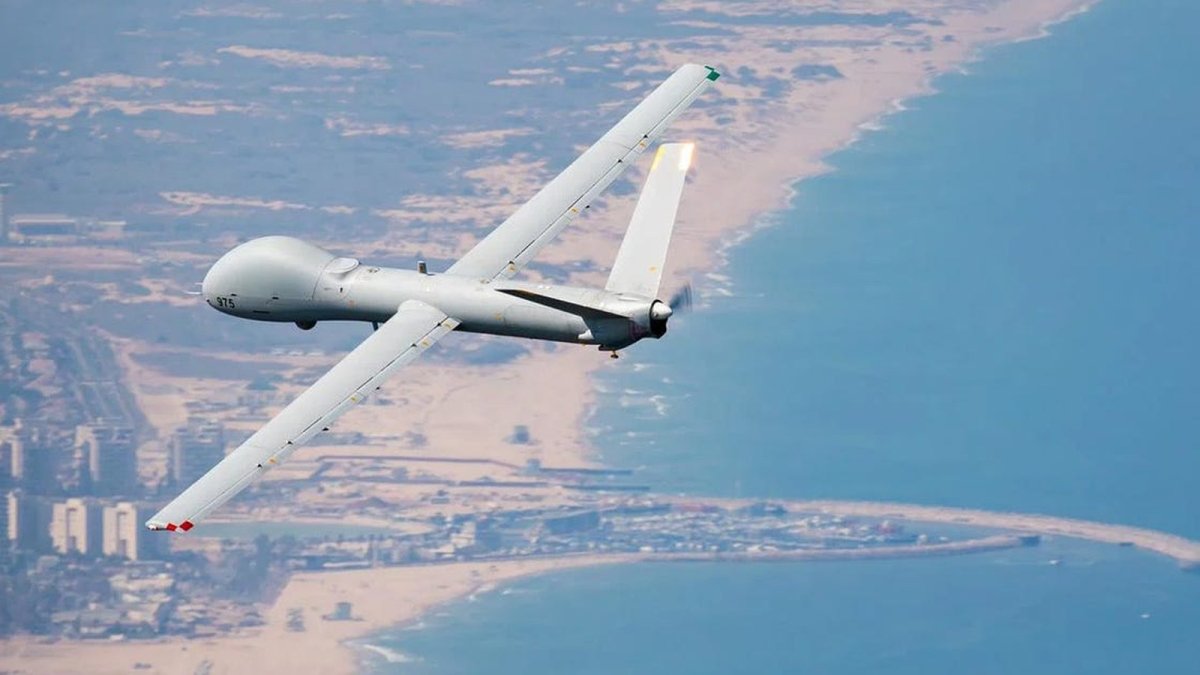
In April 2022, Elbit’s UAE subsidiary offered two Hermes 900 intelligence systems, each consisting of three aircraft for a total of six drones. The package included electro-optical day and night payloads, SkyEye WAPS wide-area surveillance sensors, cellular interception tools, electronic intelligence capabilities, ground control stations, training, and logistics support. The platform, built for long-endurance ISR missions, can stay airborne for up to 36 hours, carry payloads of 450 kilograms, and operate at altitudes of 30,000 feet.
The initial price stood at approximately $154 million, rising to about $225 million with upgrades, with each system priced at $40 million. By late 2022, the requirement had expanded dramatically to 15 complete systems — equating to 45 aircraft and a potential $1.3 billion program. Emirati planners cited the Hermes 900’s proven reliability in similar environments and its ability to fuse multiple intelligence streams in real time. Israeli industry sources describe the scale-up as evidence of growing Gulf confidence in Israeli unmanned systems following the Abraham Accords.
SIGINT Wish List and Loitering Munitions
A classified Emirati request sought four intelligence aircraft equipped for electronic intelligence, communications interception, cyber operations, electronic warfare, and visual intelligence, with delivery required within 42 months. The documents also reference the SkyStriker loitering munition under the codename Red Galloper and project Yasmin 3, which involved plans for 6,000 conversion kits.
These elements formed part of a broader package that combined persistent surveillance with potential strike options. The proposals aligned with Emirati priorities for rapid deployment following the Houthi incident.
Hermes 650 Offer and Secrecy Concerns
By March 2023, Elbit presented the Hermes 650 platform, which offered SIGINT and electronic warfare features along with compatibility for SkyStriker munitions and Aeronautics attack drones. This occurred roughly one year before the system received its public unveiling at the Singapore Airshow.
The involvement of senior managers responsible for international marketing, strategy, business development, and UAV programs underscored the high-level attention the UAE account received inside the company, which is headquartered in Haifa.
Publicly Acknowledged Defense Ties
The only confirmed Elbit-UAE transaction prior to the leaks was a January 2022 contract valued at 50 to 53 million dollars to equip five Emirati aerial refueling aircraft with missile-defense systems. In November 2025, a 2.3 billion dollar deal for electronic defense systems was reported by Intelligence Online as destined for the UAE.
Additional unacknowledged cooperation included Emirati aircraft flights into Israel, an April 2022 airlift to Nevatim Airbase, and satellite imagery showing an IAI Barak system at Al Dhafra Airbase. Reuters reported that the UAE had acquired Rafael SPYDER air-defense systems.
Iran Conflict Context and Iron Dome Deployment
Following Israeli and US operations against Iran on February 28 this year, Iran launched more than 3,000 ballistic missiles and drones toward the UAE. Israel deployed Iron Dome batteries and personnel to the Emirates, marking the system's first operational use outside Israel or the United States, after authorization by Prime Minister Benjamin Netanyahu in coordination with UAE President Mohamed bin Zayed Al Nahyan.
The Rafael-made system intercepted incoming threats during the exchanges. These events occurred against the backdrop of deepening defense cooperation under the Abraham Accords framework.
Elbit Response and Verification Limits
Elbit Systems stated that it does not comment on business matters relating to its customers and that the mentioned data does not reflect the firm's business reality. The UAE Ministry of Defense offered no comment on the documents.
The leaked materials contain no evidence of finalized contracts or completed deliveries. Whether any of the proposed systems were ultimately supplied remains unconfirmed by independent records.
Implications for Israel's Defense Export Growth
Israeli defense exports reached a record 19 billion dollars in 2025, with approximately 3 billion dollars directed to Abraham Accords countries. Since 2021, sales to those nations have totaled around 9 billion dollars, with Morocco and the UAE accounting for the majority.
The documents illustrate how private contractor proposals can advance rapidly in response to regional security events while operating within the constraints of government export approvals. They also highlight the expanding scope of Israel-UAE security cooperation beyond publicly disclosed transactions.
By Hannah Berg, Staff Writer
This article was produced with AI-assisted research and editorial support. Reporting is based on sources cited in the article.
What's Your Reaction?
 Like
0
Like
0
 Dislike
0
Dislike
0
 Love
0
Love
0
 Funny
0
Funny
0
 Wow
0
Wow
0
 Sad
0
Sad
0
 Angry
0
Angry
0

Israel Correspondent at Global1.News. Based in Tel Aviv, covering Israeli politics, security, technology, and society. Provides balanced, deeply-sourced reporting on one of the most closely-watched regions in the world.















Comments (0)