
Bangkok Post Celebrates 80 Years of Trusted Journalism in Thailand
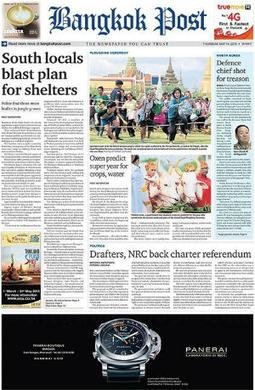
Today the Bangkok Post marks its 80th anniversary with the release of a video on its official YouTube channel titled "Today, we celebrate 80 years of trusted journalism. The next era begins." The milestone arrives exactly eight decades after the newspaper's first issue appeared on 1 August 1946. Readers across Thailand and the region now look back at a publication that has remained a steady source of English-language reporting through decades of change.
Today the Bangkok Post marks its 80th anniversary with the release of a video on its official YouTube channel titled "Today, we celebrate 80 years of trusted journalism. The next era begins." The milestone arrives exactly eight decades after the newspaper's first issue appeared on 1 August 1946. Readers across Thailand and the region now look back at a publication that has remained a steady source of English-language reporting through decades of change.
Bangkok Post at 80: Eight Decades of Trusted Journalism in Thailand
Bangkok, Thailand – August 1 — The Bangkok Post released its anniversary video today to mark the precise date its first four-page edition went on sale for one baht in 1946, when the baht still circulated as a paper note. The newspaper operates from its headquarters at the Bangkok Post Building, 136 Sunthorn Kosa Road, Klong Toey, Bangkok, and continues to publish in broadsheet and digital formats under Post Publishing PCL, listed on the Stock Exchange of Thailand under the ticker SET: POST.

From a Four-Page First Edition to a Digital Newsroom
The Bangkok Post's first issue on 1 August 1946 carried only four pages and sold for one baht at a time when that amount represented real value for most households. Founded by Alexander MacDonald, a former US Office of Strategic Services officer, and his Thai associate Prasit Lulitanond, the paper quickly established itself as Thailand's oldest English-language daily still in publication. Its current daily circulation stands at about 110,000 copies, with roughly 80 percent distributed inside Bangkok and the rest reaching readers nationwide.
More than half of the total readership consists of Thai nationals who rely on the paper for coverage of national events and regional developments. The publication now reaches audiences through its website, social media channels, and YouTube presence in addition to the printed broadsheet. Post Publishing PCL lists major shareholders that have included the Chirathivat family of the Central Group, the South China Morning Post of Hong Kong, and GMM Grammy, Thailand's largest media and entertainment company.
In the years following its modest launch near the end of World War II, the Bangkok Post grew alongside Thailand's own transformation from a wartime economy into a modern Southeast Asian hub. Early editions captured the cautious optimism of Bangkok residents rebuilding after global conflict, while later decades saw the paper adapt to the rise of television in the 1970s and the internet boom of the 1990s. Today its digital platforms allow readers in remote Isaan villages to access the same stories as those in central Bangkok markets.
The newspaper's evolution also mirrors shifts in Thai society, where English-language reporting once served mainly diplomats and traders but now supports students preparing for international careers. Concrete investments in online video and mobile apps have kept the publication relevant even as print circulation faces pressure from free social media content. This steady adaptation reflects a quiet commitment to serving both longtime subscribers and younger audiences discovering the paper through classroom use.
Thailand's Newspaper of Record Through Turbulent Times
The Bangkok Post has reported on military coups, pro-democracy movements, and repeated political crises while maintaining its role as the newspaper of record for Thailand. Its motto, "The newspaper you can trust," appears on every edition and reflects the consistent approach taken by successive editors, including current editor Soonruth Bunyamanee. Staff members have covered events from the streets of Bangkok to developments in the Isaan region and southern provinces.
Foreign correspondents who began their careers at the paper under Alexander MacDonald's direction later gained international recognition, among them Peter Arnett and T. D. Allman. The paper's presence at 136 Sunthorn Kosa Road in Klong Toey has served as a fixed point for English-language journalism even as governments changed. Thai readers and expatriates alike continue to turn to its pages for detailed accounts of policy decisions made by the Thai Ministry of Foreign Affairs and actions taken by the Royal Thai Police.
Throughout the 1970s and 1980s, the Bangkok Post documented Thailand's rapid economic opening and the social changes that accompanied it, including the growth of tourism along the Andaman coast near Phuket. Its measured tone during periods of political tension helped readers inside and outside the country understand complex events without sensationalism. This approach earned quiet respect from diplomats and scholars who relied on its dispatches for accurate context on ASEAN developments.
More recently, coverage of infrastructure projects linking Bangkok with neighboring countries has highlighted Thailand's central role in regional connectivity. Reporters have traveled to temple restorations in Chiang Mai and agricultural fairs in the northeast, bringing local voices into national conversations. Such consistent presence across decades has made the paper a cultural anchor for those seeking continuity amid change.
More Than a Newspaper: A Bridge for Thai Readers and English Learners
The Bangkok Post maintains a well-known Learning section that uses daily articles to help Thai students and teachers build English vocabulary and reading skills. Each installment includes targeted vocabulary lists and comprehension questions drawn directly from the news of the day. This long-standing feature has supported generations of readers preparing for university entrance exams and professional work in tourism and international trade.
Thai nationals make up more than half the readership, many of whom first encountered the paper through classroom exercises in Bangkok schools or provincial towns. The section connects directly to local cultural moments such as preparations for Songkran water festivals or the floating of krathongs during Loy Krathong, giving learners both language practice and context about their own traditions. Teachers in Chiang Mai and Phuket have incorporated the materials into lesson plans for decades.
Beyond vocabulary drills, the Learning section often features gentle explanations of Thai customs that help young readers appreciate their heritage while gaining practical language skills. For instance, articles timed with Buddhist holidays explain temple etiquette alongside new words, creating a bridge between tradition and modern communication needs. Families in provincial areas have long valued these resources as affordable supplements to formal schooling.
Many current professionals in Thailand's hospitality and export sectors recall using the section during their student years, crediting it with building confidence for interactions with international visitors. The feature continues to evolve with online quizzes and audio versions that reach learners beyond the printed page, maintaining its warm connection to everyday Thai life.
A Milestone for Thai Media and Southeast Asian Journalism
The 80th anniversary of the Bangkok Post carries weight for media outlets across ASEAN because the paper has long supplied English-language reporting on Thai politics and economy that influences regional understanding. Coverage of trade agreements and tourism flows from Bangkok reaches decision-makers in neighboring countries who monitor Thailand's role in the bloc. The newspaper's digital expansion now allows readers in Singapore, Kuala Lumpur, and Hanoi to follow developments without waiting for print copies.
Ownership ties to the Stock Exchange of Thailand and shareholders such as GMM Grammy place the Bangkok Post within Thailand's broader media and entertainment sector. This structure supports continued investment in reporting that affects daily life, from updates on Buddhist temple restorations to analysis of agricultural policies in the Isaan region. The anniversary video released today signals that the paper intends to extend this service into new formats while preserving its core standards.
Within ASEAN circles, the Bangkok Post has often served as a reference point for balanced coverage of cross-border issues such as Mekong River cooperation and labor migration. Its anniversary prompts quiet reflection among journalists in neighboring capitals about the value of steady, independent English-language voices in a fast-changing media landscape. This regional resonance underscores the paper's gentle yet enduring influence beyond Thailand's borders.
Community Voices: Reader Stories Across Generations
Over eight decades, the Bangkok Post has collected countless personal stories from readers who credit the paper with shaping their understanding of Thailand and the wider world. In Bangkok's older neighborhoods, longtime subscribers still recall discussing editorials over morning coffee during the 1960s, while younger readers in Chiang Mai now share digital editions with family members abroad. These quiet connections form an invisible thread linking generations through shared information.
Teachers in provincial schools often describe how the Learning section helped entire classrooms prepare for national exams, creating small moments of pride when students succeeded in university placements. Expatriate communities in Phuket and Pattaya have likewise found the paper a reliable guide to local customs and policy changes, easing their integration into Thai society. Such everyday experiences highlight the publication's role as more than a news source.
Today, as the anniversary video circulates online, many readers express gentle appreciation for the paper's consistent presence during both joyful festivals like Loy Krathong and challenging national moments. These voices remind us that trusted journalism builds community one story at a time, fostering understanding across Thailand's diverse regions and beyond.
What to Watch For
Readers can expect continued emphasis on the Learning section as schools reopen after the latest academic term and as tourism operators prepare for the upcoming high season. The Bangkok Post's coverage of upcoming sessions at the Election Commission of Thailand will likely draw particular attention from both domestic and regional audiences. Digital platforms will carry additional video reports that expand on stories first published in the broadsheet edition.
The newspaper's headquarters in Klong Toey remains the center for editorial decisions under editor Soonruth Bunyamanee, while the YouTube channel grows as a secondary distribution point. Thai students preparing for English proficiency tests will continue to find the daily vocabulary exercises useful for both classroom and self-study. The milestone today underscores the paper's ongoing commitment to serving readers who value accurate English-language reporting on Thailand's place in Southeast Asia.
By Ann Srisawat, Staff Writer
This article was produced with AI-assisted research and editorial support. Reporting is based on sources cited in the article.
What's Your Reaction?
 Like
0
Like
0
 Dislike
0
Dislike
0
 Love
0
Love
0
 Funny
0
Funny
0
 Wow
0
Wow
0
 Sad
0
Sad
0
 Angry
0
Angry
0

Southeast Asia Correspondent at Global1.News. Based in Bangkok, covering Thai and Southeast Asian politics, economy, technology, and culture. Deep regional perspective on one of the world's most dynamic regions.














Comments (0)