
Andy Burnham commits to Starmer's Brexit red lines in blow to hopes of rejoining EU
Andy Burnham has poured cold water on hopes that Britain is on a path back to the European Union, with Downing Street confirming on Monday that the Prime Minister remains bound by the Brexit red lines set out in Labour's manifesto.
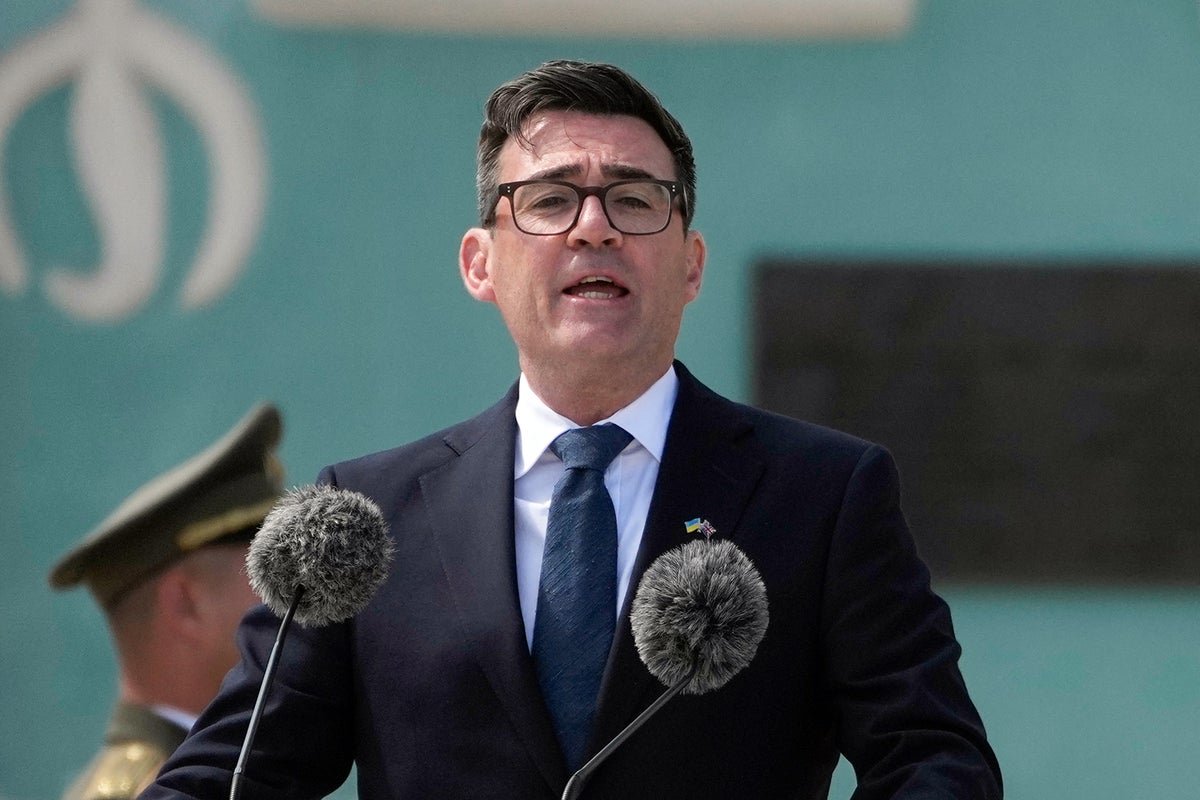
Andy Burnham has poured cold water on hopes that Britain is on a path back to the European Union, with Downing Street confirming on Monday that the Prime Minister remains bound by the Brexit red lines set out in Labour's manifesto. The commitment — no rejoining the EU, the single market, or the customs union — comes as a significant blow to those who believed the new occupant of Number 10 would tear up the constraints inherited from his predecessor, Sir Keir Starmer.
Mr Burnham, who took office in July, had fuelled speculation of a more radical European approach during his time as Mayor of Greater Manchester, when he spoke openly of wanting the UK back in the bloc. His new Europe minister, Hamish Falconer, further stoked expectations by refusing to rule out future membership. But on Monday, a Downing Street spokesperson was unequivocal: the manifesto commitments stand, and there will be no return to freedom of movement, the customs union, or the single market.
Downing Street draws a line under rejoin ambitions
The confirmation will disappoint campaigners and a significant tranche of Labour members who had pinned their hopes on Mr Burnham charting a different course from his predecessor. During last year's leadership contest, when he was still Mayor of Greater Manchester, Mr Burnham said he wanted the UK to rejoin the EU — a position that electrified pro-European activists and prompted serious speculation that he would use his mandate to reset the relationship fundamentally.
That speculation intensified when Mr Falconer, appointed as Minister for Brexit in the new administration, declined on multiple occasions to rule out rejoining at some future date. But the Prime Minister's official spokesperson moved to close down that ambiguity on Monday, stating: "We remain committed to the red lines set out in the manifesto. We're not rejoining the European Union, and there will be no return to the customs union, the single market, or freedom of movement."
The statement will be read in Westminster as an attempt to steady the ship ahead of a UK-EU summit scheduled for later this year, and to reassure the 52 per cent of voters who backed Brexit that the government has not abandoned their verdict. It also serves to distinguish Mr Burnham's position from that of Sir John Major, the former Conservative prime minister, who used an interview with The Independent to warn that Brexit is costing the UK £100bn in trade a year and £40bn in tax revenues.
Sir John Major's stark warning on the economic toll
Sir John's intervention, published in recent days, has reignited the domestic debate over the wisdom of the 2016 decision. The former prime minister argued that rejoining the single market should be a priority for the new government, describing the current arrangement as economically damaging and unsustainable. His figures — £100bn in lost trade and £40bn in lost tax revenues annually — have been seized upon by pro-European campaigners as evidence that the Brexit dividend has failed to materialise.
The timing of Sir John's remarks, coming just weeks into Mr Burnham's premiership, was widely interpreted as an attempt to pressure the new leader into a more ambitious European settlement. But Downing Street's response on Monday suggests the Prime Minister is not for turning, at least for now. The spokesperson declined to comment on ongoing negotiations regarding European students, saying only: "The government is continuing to take stock of our position, and there will be a summit later in the year where progress will be set out."
That summit, initially scheduled for July, has been postponed to a yet-to-be-confirmed date later this year. Issues expected to be on the table include youth mobility, defence co-operation, energy sharing, and a series of sectoral deals designed to reduce friction in trade. The delay has prompted speculation that the government is still calibrating its approach, and that internal disagreements remain over how far to push for closer alignment.
European Movement sees opportunity in the next manifesto
Despite the Downing Street statement, pro-European campaigners are refusing to accept that the door is permanently closed. Mike Galsworthy, chair of European Movement UK, argued that the real prize lies not in the current parliament but in the next manifesto. "Interestingly, the biggest opportunity for Andy Burnham lies less in how he handles Starmer's restrictions from the last Labour manifesto and much more in the bigger move he can make with the next manifesto," he said.
"A promise in the next manifesto to open accession talks for full EU membership is the prize here. However, that doesn't mean that the government should take its foot off the pedal at this stage. There are many real-world impactful wins to be had in breaking down as many barriers as possible during this parliament and building deep trust and relationships with the European team. But ultimately, Burnham needs to be thinking about what he should be shaping up to offer in any parliament beyond this one — and there is one very obvious answer to be seized."
Mr Galsworthy's comments reflect a strategic calculation among pro-European groups that the current red lines, while frustrating, are not necessarily permanent. The Labour manifesto, agreed under Sir Keir's leadership, explicitly ruled out rejoining the EU, the single market, and the customs union. But manifestos are not binding on future governments, and a new document could be drafted ahead of the next general election with different commitments.
The question is whether Mr Burnham has the appetite for such a fight. During his campaign to win the heavily pro-Brexit Makerfield constituency in a by-election, he was careful to distance himself from the rejoin cause, warning that it could become a "permanent rut" of Brexit arguments. He had previously said he wanted to see the UK back in the EU within his lifetime, but during the contest he adopted a more cautious tone, acknowledging that "Brexit has been damaging" while stopping short of endorsing immediate re-entry.
Liberal Democrats demand a bolder approach
The Liberal Democrats, who have made Europe a central plank of their political identity, were quick to attack the Prime Minister's decision to maintain the red lines. Al Pinkerton, the party's spokesperson on Europe, said: "Andy Burnham promised boldness, but instead he's caved at the first hurdle. Sticking to Starmer's failed Brexit red lines is being loyal to a failed project — it will only drag down our economy even more, hit taxpayers, and hurt British businesses."
"If the prime minister is serious about building closer relations with Europe, he needs to tear up these self-imposed barriers. We need a bold new deal that will make Britain much stronger, including a Customs Union, but also most crucially taking Britain back into the Single Market."
The Liberal Democrat intervention highlights the political tightrope Mr Burnham is walking. On one hand, he faces pressure from pro-European voters and business groups who argue that the current trading arrangements are stifling growth and investment. On the other, he must contend with a Conservative opposition that stands ready to mobilise any hint of a Brexit betrayal, and a public that remains deeply divided on the issue.
His own comments, written in The Times before he became Prime Minister, suggest a man trying to navigate between these poles. "I want to consolidate the progress made on the existing UK-EU negotiations and make further progress quickly, including by strengthening our co-operation on illegal migration, economic security and the broader resilience of our societies to external threats — from terrorism to AI-driven disinformation," he wrote. The language is careful, emphasising practical co-operation rather than institutional reintegration.
Kyiv trip signals intent for closer ties
Mr Burnham's first foreign visit since becoming Prime Minister — an overnight train journey to Kyiv — was notable for the signals it sent about his European ambitions. During the trip, he spoke with the Prime Minister of Luxembourg, Luc Frieden, and a Downing Street spokesperson said: "The prime minister set out his ambitions for the UK to get closer to the European Union, and both agreed on the important cultural and educational ties between the UK and Europe to deliver opportunity for the next generation of Brits and Europeans."
The choice of Ukraine as a first destination was itself significant, underscoring the government's commitment to European security and its desire to be seen as a reliable partner on the continent. But the accompanying rhetoric about getting "closer to the European Union" will be parsed carefully in Brussels, where officials have learned to be cautious about British overtures given the turbulence of recent years.
Mr Burnham has signalled he intends to go further than Sir Keir in forging closer relations with the EU, suggesting a "bolder" approach. But Downing Street declined to expand on what being "bolder" would mean, leaving diplomats and commentators to speculate about the substance behind the rhetoric. The postponed summit, when it eventually takes place, will provide the first real test of whether the new Prime Minister's words translate into concrete agreements.
For now, the red lines remain firmly in place. The government's position, as articulated on Monday, is clear: no rejoining the EU, no return to the single market, no customs union, no freedom of movement. Whether that position survives contact with the realities of governing — and with the economic pressures highlighted by Sir John Major — remains to be seen. But for those who hoped Andy Burnham would be the leader to take Britain back into the European fold, Monday's statement will have made for sobering reading.
The coming months will be crucial. The UK-EU summit, when it finally takes place, will reveal the extent of the government's ambition. The next manifesto, due within the next few years, will show whether Mr Burnham is prepared to offer something more fundamental. And the state of the economy, buffeted by the headwinds Sir John Major described, will determine whether the political space exists for a more radical European policy. For now, the Prime Minister has chosen caution over courage, continuity over change. The question is whether that choice will prove sustainable.
By Erica Thornton, Staff Writer
This article was produced with AI-assisted research and editorial support. Sources: The Independent.
What's Your Reaction?
 Like
0
Like
0
 Dislike
0
Dislike
0
 Love
0
Love
0
 Funny
0
Funny
0
 Wow
0
Wow
0
 Sad
0
Sad
0
 Angry
0
Angry
0

US Politics and Policy Correspondent at Global1.News. Based in Washington DC, covering American politics, policy, elections, and the courts. Knows how the system works and tells you what it actually means.











Comments (0)