
All Blacks 44-Man Squad for Historic South Africa Tour
All Blacks Name 44-Man Squad for Historic Rugby's Greatest Rivalry Tour of South Africa A Historic Return After Three Decades The All Blacks have landed in Cape Town for their first full tour of South Africa since 1996, and the excitement among local rugby fans is already building like a packed Loftus Versfeld on a Saturday night. This 44-man group marks the start of Rugby's Greatest Rivalry Tour, which will see New Zealand face four United Rugby Championship franchises...
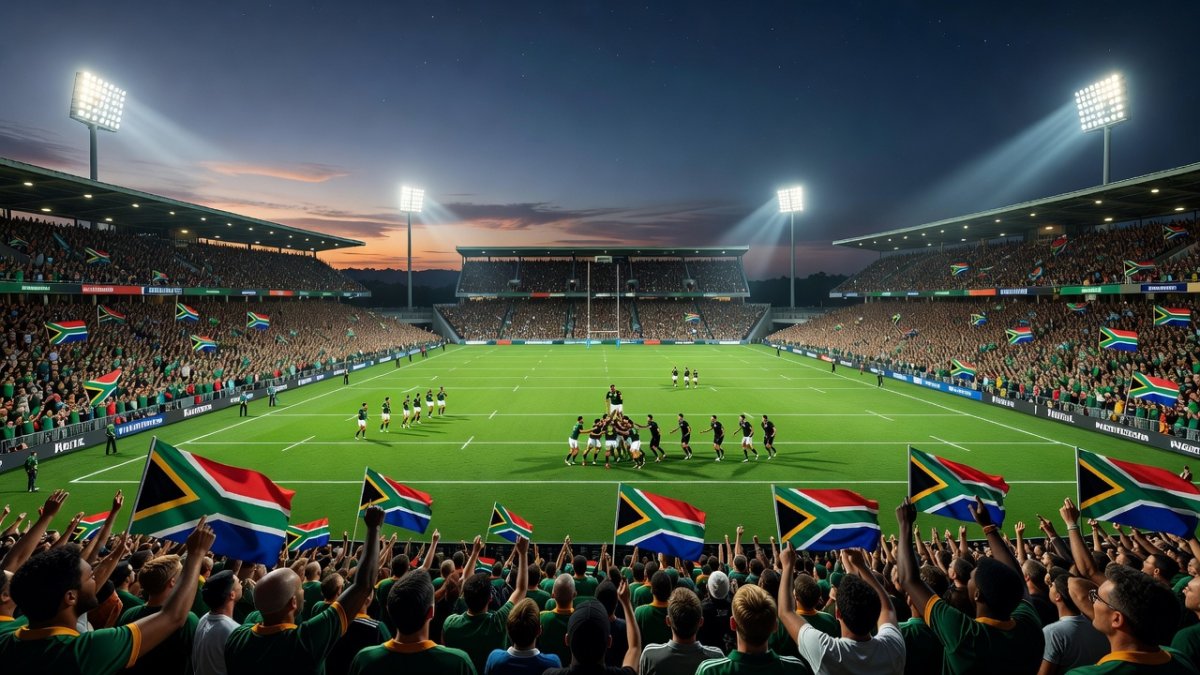
A Historic Return After Three Decades
The All Blacks have landed in Cape Town for their first full tour of South Africa since 1996, and the excitement among local rugby fans is already building like a packed Loftus Versfeld on a Saturday night. This 44-man group marks the start of Rugby's Greatest Rivalry Tour, which will see New Zealand face four United Rugby Championship franchises before locking horns with the world champion Springboks in a four-Test Freedom Cup series. For South African supporters, the occasion carries extra weight because it revives one of the fiercest rivalries in world sport after a long absence.
The 1995 Rugby World Cup final at Ellis Park still echoes through every conversation in South African rugby circles. Nelson Mandela’s famous Springbok jersey moment turned a fractured nation toward unity, and the All Blacks’ return now, three decades later, reconnects that Mandela-era magic with today’s transformed game. Thirty years of franchise rugby growth have turned the Stormers, Sharks, Bulls and Lions into hardened professional outfits that compete weekly in the United Rugby Championship, giving this tour a deeper resonance than any exhibition series could muster.
Grassroots development programmes run by SARU have fed talent into these franchises, and the arrival of the All Blacks offers young players from townships and rural academies a live masterclass in high-tempo execution. The cultural significance runs both ways: New Zealand’s players will experience the raw passion of South African crowds that treat every ruck like a national referendum, while local fans reclaim a rivalry that once defined their sporting identity.
The 44-Man Squad Takes Shape
New Zealand head coach Dave Rennie and selectors Sir Graham Henry and Neil Barnes kept all 34 players from the recent Nations Championship Southern Series and added ten more, including three uncapped talents. Captain Ardie Savea, with 109 caps at age 32, will miss the early franchise matches and join later, while hooker Codie Taylor steps up as tour captain. Lock Scott Barrett remains outside the leadership group for now. The squad arrived in Cape Town in time for a free public welcome at DHL Stadium on 31 July, giving fans an early chance to see the visitors up close.
Rennie’s selection philosophy blends experience with fresh legs, a deliberate nod to the physical demands of four franchise matches followed by four Tests. By resting Savea initially, New Zealand signal they view the franchise leg as serious preparation rather than mere warm-ups, forcing South African clubs to confront a near-full-strength forward pack from the outset. The inclusion of uncapped players also serves as a long-term investment ahead of the 2027 World Cup cycle.
Local analysts note that Taylor’s tour captaincy brings a steady, no-nonsense presence that mirrors the Springboks’ own emphasis on set-piece reliability. The public welcome at DHL Stadium on 31 July will double as an early psychological skirmish, with Cape Town fans eager to gauge whether the All Blacks’ body language already hints at the intensity required for the Freedom Cup battles ahead.
Franchise Fixtures Set the Stage
The tour opens with DHL Stormers against the All Blacks at DHL Stadium on 7 August, followed by Sharks versus All Blacks at Kings Park on 11 August. Matches against the Bulls and Lions complete the franchise leg. These games offer South Africa’s URC sides a rare opportunity to test themselves against the full weight of New Zealand’s depth. Local coaches will be watching how their young forwards handle the All Blacks’ physicality and how the backlines cope with quick ball movement. For fans in Cape Town, Durban, Pretoria and Johannesburg, these evenings represent more than warm-up matches; they are statements of pride for each franchise.
The Stormers fixture at DHL Stadium carries special weight for Cape Town supporters who remember the franchise’s 2022 URC triumph. A strong showing against the All Blacks would validate the region’s investment in high-performance structures and give emerging Springbok hopefuls a platform to impress Rassie Erasmus. Durban’s Kings Park clash, meanwhile, lets the Sharks showcase their powerful loose-forward tradition against a New Zealand side renowned for its own back-row dynamism.
Pretoria’s Loftus Versfeld and Johannesburg’s Emirates Airline Park will host the Bulls and Lions respectively, turning the franchise leg into a nationwide celebration of South African rugby identity. Each venue’s unique atmosphere—trumpets at Loftus, the electric energy of Johannesburg—will test how the All Blacks adapt to different crowd rhythms while giving local supporters a tangible stake in the broader rivalry narrative.
Rassie Erasmus Keeps Tactical Options Open
Springbok head coach Rassie Erasmus has made it clear he has not studied Rennie’s selections in detail. His immediate focus remains the one-off Test against Argentina, while he continues to monitor franchise form for possible call-ups. Erasmus recently added a Stormers forward to the squad, showing he is prepared to promote in-form players at short notice. This approach keeps the Springboks flexible and gives domestic players a genuine pathway into the Test environment ahead of the Freedom Cup series that begins on 23 August.
Erasmus’s squad philosophy revolves around depth and adaptability, a mindset forged during the successful 2023 World Cup campaign. By refusing to over-analyse the All Blacks’ early selections, he maintains psychological distance while sending a clear message that Springbok places remain open to anyone delivering consistent performances in the URC. This calculated restraint is classic Erasmus mind games, keeping opponents guessing about his final 23-man combinations.
The transformation imperative remains central to Erasmus’s thinking. Regular call-ups from franchises accelerate the development of players from previously disadvantaged backgrounds, ensuring the national team reflects the full breadth of South African society. Each franchise match therefore doubles as a scouting mission that strengthens both the Springboks and the grassroots pipeline feeding them.
The Freedom Cup Series and National Pride
Once the franchise matches conclude, attention turns to the four-Test series against the world champion Springboks. The Freedom Cup will be on the line in what promises to be a bruising examination of both sides. South African supporters will be looking for the same intensity and tactical discipline that delivered the 2023 Rugby World Cup title. The series also serves as valuable preparation for the 2027 World Cup cycle, with both nations keen to fine-tune combinations and leadership under pressure.
The Freedom Cup carries symbolic weight beyond the silverware. It represents the hard-fought equality that defines modern encounters between these two rugby giants, and South African fans expect nothing less than the clinical execution that lifted the Webb Ellis Cup in 2023. Every breakdown battle and lineout contest will be dissected as evidence of readiness for the next global cycle.
National pride surges with each Springbok jersey on display. The series offers a platform for the current generation to write their own chapter in a rivalry that has produced some of rugby’s most iconic moments, while simultaneously preparing the squad for the unique challenges of a home 2027 World Cup campaign.
Baltimore Test Adds Global Chapter
The tour concludes with a historic first Test between the two nations on American soil in Baltimore. This fixture extends the rivalry beyond traditional borders and introduces the contest to a new audience. For South African rugby, it represents another chance to showcase the Springboks on the world stage while strengthening the cultural ties that have long defined encounters with the All Blacks.
Playing in Baltimore broadens rugby’s commercial footprint in the United States and gives South African expatriates a rare opportunity to witness their team live. The match also serves as a dry run for potential future neutral-venue Tests that could grow the sport’s global reach ahead of 2027.
Ultimately, the Baltimore Test reinforces the Springboks’ status as ambassadors for South African rugby values—resilience, unity and excellence—while reminding the world that Rugby’s Greatest Rivalry travels wherever these two proud nations decide to meet.
Tags: All Blacks, Springboks, Rugby's Greatest Rivalry, Stormers, Sharks, Bulls, Lions, Freedom Cup, Rassie Erasmus, Dave Rennie, South Africa rugby
By Dante Williams, Staff Writer
This article was produced with AI-assisted research and editorial support. Reporting is based on sources cited in the article.
What's Your Reaction?
 Like
0
Like
0
 Dislike
0
Dislike
0
 Love
0
Love
0
 Funny
0
Funny
0
 Wow
0
Wow
0
 Sad
0
Sad
0
 Angry
0
Angry
0

Breaking News and Investigations Correspondent at Global1.News. Based in London, covering global breaking news, security, and investigative stories. Known for digging deeper and connecting the dots across continents.













Comments (0)