
Workplace Arabic Bans Threaten Palestinian Voices in Israel
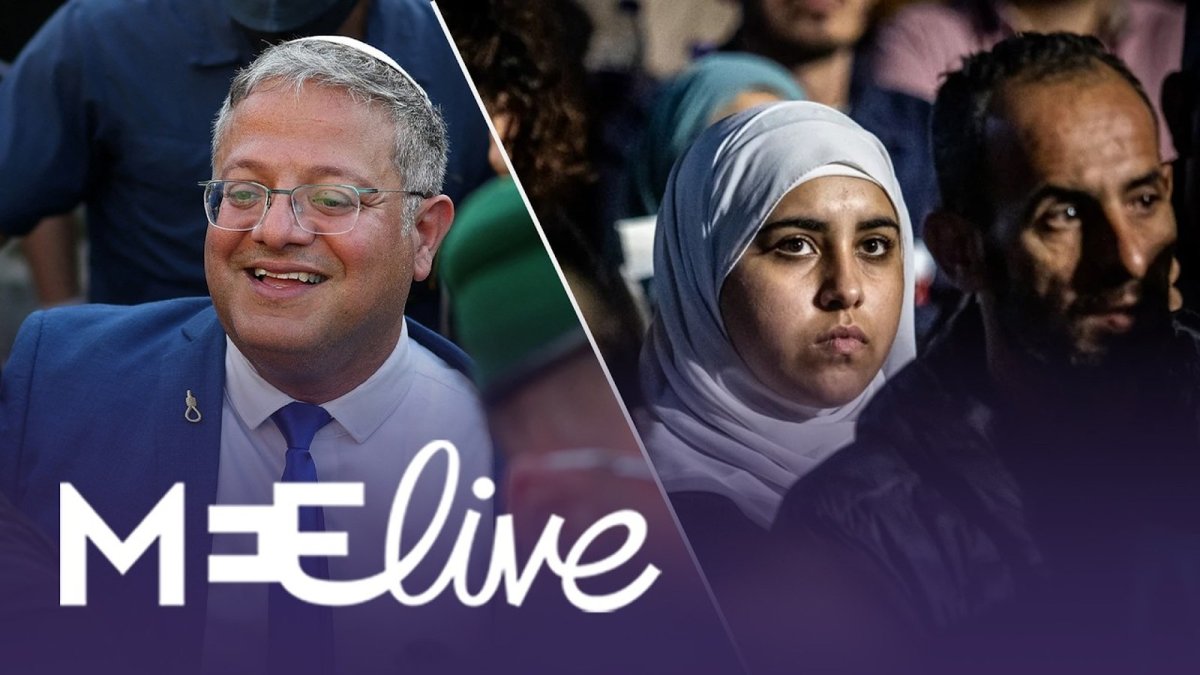
In a recent Middle East Eye report and accompanying MEE Live discussion, journalist Samah Watad examines how Palestinian citizens of Israel are increasingly being told to keep Arabic out of the workplace, and what is at stake for their political voice ahead of Israeli national elections in October.
In a recent Middle East Eye report and accompanying MEE Live discussion, journalist Samah Watad examines how Palestinian citizens of Israel are increasingly being told to keep Arabic out of the workplace, and what is at stake for their political voice ahead of Israeli national elections in October.
Workplace Arabic Bans Threaten Palestinian Voices in Israel
Jatt, Israel - 3 August 2026 -- Palestinian citizens of Israel continue to navigate workplace restrictions on their native language, with cases documented across retail, pharmacies and hospitals in recent months.
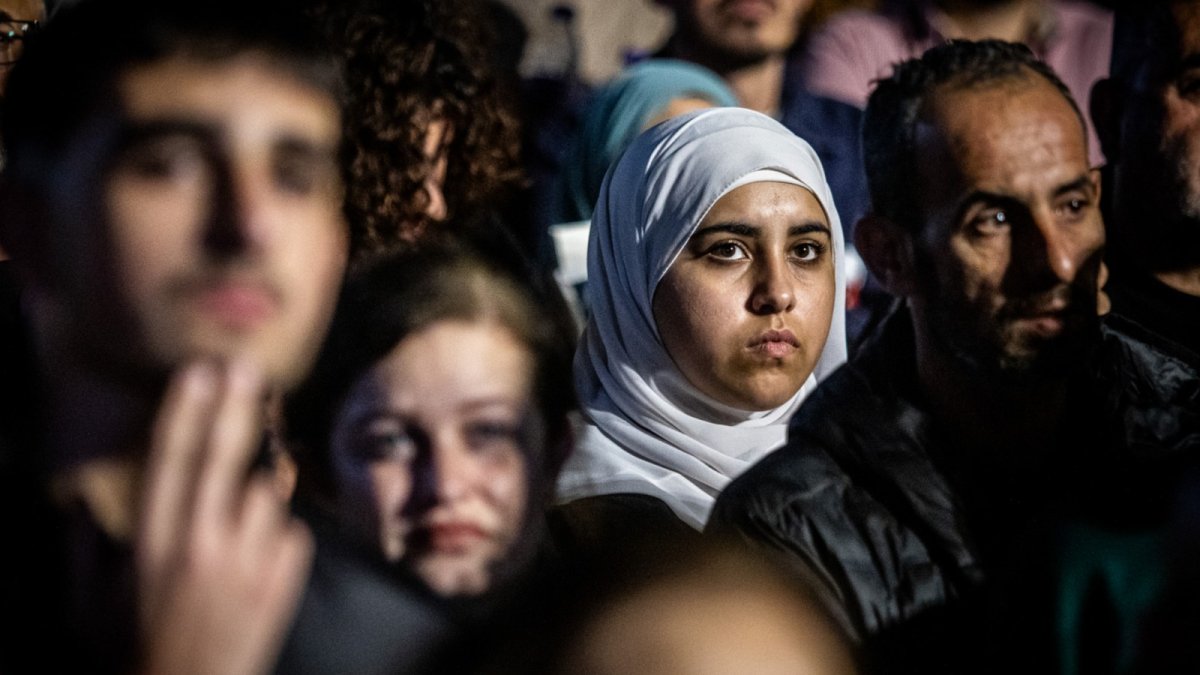
A Ban Delivered by WhatsApp
Salma, a 19-year-old Palestinian citizen of Israel whose name has been changed to protect her identity, received a manager's message on the staff WhatsApp group instructing employees to stop speaking Arabic in their shop. She and her colleagues initially dismissed the instruction as unreasonable and continued their normal conversations. The following day the atmosphere shifted. Staff members grew silent out of fear of repercussions. One colleague who briefly used Arabic to mention moving a box to the storeroom triggered an immediate outburst from the manager. The manager shouted, kicked boxes and declared that Arabic was forbidden. She stated that this was a Jewish state where only Hebrew was spoken and that Arabic belonged at home. The ban stayed in place even after closing time when no customers were present. All floor staff were Palestinian while the manager was the only Jewish Israeli on site. Several employees raised objections. They were subsequently left without shifts for approximately two months before being offered transfers to distant branches. Salma described the experience as the first time she felt the weight of being treated differently solely because of her identity. She is now preparing to enter university and feels heightened anxiety about entering other predominantly Jewish environments. The incident illustrates how language rules can disrupt daily routines and personal confidence for young workers who form part of the roughly two million Palestinian citizens of Israel.
'This Is a Jewish State': The Manager's Words
The manager's explicit statement that Arabic must stay at home reflects a pattern reported in multiple workplaces. In one documented case at a Good Pharm branch in Jaffa, a manager sent WhatsApp messages threatening staff who spoke languages other than Hebrew. The messages claimed that hearing Arabic could upset customers affected by the 7 October attacks. Good Pharm responded that it employs and serves people from all sections of society, remains committed to equality and would handle the manager's conduct internally. Palestinian employees at the branch reported that little changed after the statement. These episodes occur in settings where Hebrew is not required for the tasks at hand. Workers describe the sudden enforcement as creating an environment of surveillance during ordinary conversations. The pressure extends beyond customer hours and affects team cohesion among Palestinian staff. Such rules intersect with broader community experiences since October 2023, when increased arrests, disciplinary actions and job losses have been recorded over expressions related to the war in Gaza. The cumulative effect leaves employees weighing each word they speak during shifts that already demand long hours and physical effort.
Who Are the '48 Palestinians'?
Palestinian citizens of Israel are the native population of historic Palestine who remained after Zionist militias displaced roughly 750,000 Palestinians during the 1948 Nakba. Their community today numbers approximately two million people and constitutes about 20 percent of Israel's population. They maintain Arabic as a core element of daily communication, family life and cultural continuity. Many live in towns such as Jatt and work in mixed or Jewish-majority commercial spaces. The 1948 events shaped their legal status inside the state while separating them from relatives across the 1949 armistice lines. Over generations they have built livelihoods in retail, healthcare and education while facing periodic restrictions on public expressions of identity. The current language disputes occur against this backdrop of demographic presence and historical displacement. Workers like Salma represent a younger cohort entering the labour market with expectations shaped by both their upbringing in Arabic-speaking households and the legal framework that nominally protects equality. Their experiences highlight how workplace policies can echo larger questions of belonging that have persisted since 1948.
The term "48 Palestinians" refers to those who remained within the borders established after 1948, distinguishing their experience from communities displaced beyond those lines. This designation carries the weight of the Nakba, during which roughly 750,000 people were displaced, leaving behind a community whose presence today numbers around two million and constitutes about 20 percent of Israel's population.
Identity within this group remains anchored in language and place, with Arabic serving as a living connection to ancestral villages and shared history even as public spaces increasingly marginalize its use. Since October 2023, the tension between formal citizenship and everyday belonging has sharpened through heightened arrests and job losses tied to political expression, underscoring how legal status alone does not guarantee social inclusion.
The Legal Landscape After the 2018 Nation-State Law
Israel's 2018 Nation-State Law declared Hebrew the state's sole official language and downgraded Arabic to special status. This legislative change intensified existing pressures on Palestinian expressions of identity. Israel's Equal Employment Opportunities Law prohibits discrimination on grounds including nationality, race and religion. However, the statute does not explicitly guarantee an unrestricted right to use any language in every workplace setting. Legal experts note that a blanket ban on Arabic, especially during private conversations or when Hebrew is unnecessary for job performance, may constitute unlawful discrimination. Enforcement remains uneven. Cases can require lengthy proceedings and substantial documentation. Palestinian workers report that formal protections often fail to prevent immediate workplace sanctions. The 2018 law has coincided with heightened scrutiny of Arabic use in public and commercial spaces. This environment affects hiring decisions, shift allocations and daily interactions. The gap between statutory language and practical application leaves employees uncertain about their rights during routine exchanges with supervisors.
The 2018 Basic Law's designation of Hebrew as the sole state language has reshaped public life by diminishing Arabic's institutional presence, creating ripple effects that extend into workplace dynamics where language becomes a proxy for national belonging. This shift intersects directly with employment law, as the Equal Employment Opportunities Law bars discrimination on grounds of nationality, race, or religion yet offers limited safeguards when language requirements serve as informal barriers to hiring or advancement for Palestinian citizens.
Israeli courts face a persistent standard of proof challenge in such cases, requiring claimants to demonstrate an employer's discriminatory motive with evidence that often remains internal to the decision-making process. The resulting evidentiary gap leaves many workers without effective recourse, even as the legal framework nominally protects against exclusion based on identity markers that language policy now amplifies.
Alya Zoabi: The Lawyer on the Front Line
Alya Zoabi, a lawyer specialising in employment law, reports that most cases now reaching her office from Jewish workplaces involve racism, with a significant increase since October 2023. One client, a young Palestinian employee, suffered a panic attack after months of discriminatory treatment. An ambulance was called, yet the employer sent the woman to hospital alone. In another instance a pregnant Palestinian employee was dismissed without the legally required authorisation. Zoabi observes that formal legal protection means little when enforcement proves slow, costly and uncertain. She describes a leniency toward such cases that cannot be ignored since 7 October. When standing in court, Zoabi states that she feels she is both the lawyer and the client, because as a Palestinian woman in Israel she experiences similar racism. Her observations connect individual complaints to systemic patterns affecting the wider community. The rise in reported incidents coincides with the period leading to national elections scheduled for October, when questions of language policy and workplace equality may influence voter mobilisation among Palestinian citizens.
Why Workers Do Not Sue
Both Salma and the Good Pharm employee ultimately abandoned plans to sue after receiving advice that the cases would be lengthy, expensive and difficult to prove. Claims potentially worth tens of thousands of shekels frequently conclude in settlements for a fraction of that amount. The financial risk discourages workers and lawyers from pursuing litigation. Zoabi notes that the economic burden falls heavily on employees who already face limited shift opportunities after raising complaints. Many choose to remain silent rather than risk further isolation or transfer to inaccessible locations. The pattern of quick settlements reduces public documentation of the incidents and limits precedent-setting outcomes. Workers weigh the immediate need for income against the uncertain prospect of compensation months or years later. This calculation affects not only the individuals involved but also the collective ability of the community to challenge workplace rules. The reluctance to litigate leaves many incidents unaddressed even when they occur in settings covered by existing equality statutes.
Analysis and Implications: Elections, Language and Belonging
The October elections carry uncertain implications for Palestinian citizens' political voice, as outcomes remain contingent on shifting alliances and participation patterns that could either amplify or further sideline their concerns in legislative debates. Language bans in this context connect to wider patterns of identity erasure, where restrictions on Arabic in official and professional settings reinforce a hierarchy that questions the legitimacy of Palestinian presence within the state.
Reporting has documented psychological impacts such as Salma's anxiety surrounding university applications and the panic attack case, illustrating how policy changes translate into personal strain that affects mental health and future planning across generations. Amid these pressures, the community continues to demonstrate resilience through sustained cultural practices and collective advocacy that preserve a sense of continuity despite ongoing challenges to belonging.
By Fatima Al-Rashid, Staff Writer
This article was produced with AI-assisted research and editorial support. Reporting is based on sources cited in the article.
What's Your Reaction?
 Like
0
Like
0
 Dislike
0
Dislike
0
 Love
0
Love
0
 Funny
0
Funny
0
 Wow
0
Wow
0
 Sad
0
Sad
0
 Angry
0
Angry
0
Gulf/MENA Correspondent at Global1.News. Based in Doha, covering Gulf politics, energy markets, diplomacy, and development across the Middle East and North Africa. Tracks the economic transformation of the Gulf states.










Comments (0)