
World Bank Approves Funding for Water and Sanitation Project in Three Philippine Islands
World Bank approves $268.62M project ($250.87M financing) for water and sanitation in Bohol, Siargao, Jolo via DPWH and DILG. It targets climate resilience, jobs (8,700 in 5 years, 46,500 over 25), SDG 6, and benefits for families, tourism, health, and education in island provinces.
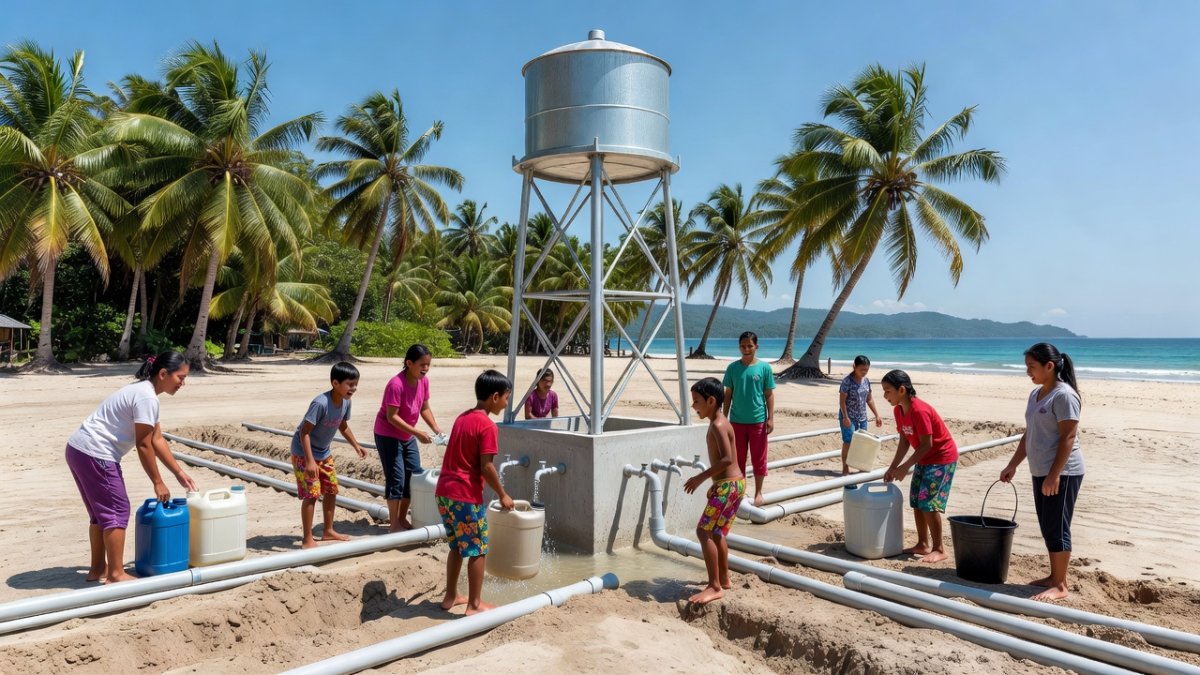
Project Financing and Core Objectives
The World Bank has approved a $268.62 million project to expand access to safe water and sanitation in selected island provinces of the Philippines. The financing package includes $250.87 million from the World Bank itself, with the remainder coming from other sources to reach the total project cost.
Known as the Philippines Accelerated Water and Sanitation Project in Selected Areas, or AWSPSA, the initiative will be carried out by the Department of Public Works and Highways and the Department of the Interior and Local Government. It targets Bohol, Siargao, and Jolo, three islands chosen after careful assessment of poverty levels, gaps in water access, exposure to climate hazards, and readiness of local government units.
Daily Struggles of Families Without Reliable Water
For many households in these island provinces, fetching water remains a daily burden that falls heavily on women and children. In barangays across Bohol, residents often walk long distances to communal sources that may run dry during droughts or become contaminated after floods. Similar challenges affect communities in Siargao and Jolo, where sari-sari stores sometimes sell bottled water at prices that strain family budgets.
The lack of reliable systems disrupts routines tied to school, farming, and small businesses. Children miss classes when tasked with carrying water before sunrise, while mothers balance this chore with household duties and income-generating work. These patterns reflect broader service gaps that have long affected island provinces, where geography and limited infrastructure compound the difficulties faced by ordinary Filipinos.
Why Bohol, Siargao, and Jolo Were Selected
Project planners applied a framework that weighed poverty indicators alongside water access shortfalls and climate risks such as droughts and floods. Local government support and project readiness also played key roles in the final choices. Bohol, Siargao, and Jolo each represent distinct island contexts where national agencies can partner with LGUs and barangay captains to deliver results.
This selection process highlights the need for tailored approaches in provinces that face seasonal typhoons and shifting rainfall patterns. By focusing here first, the project aims to build models that other island communities might later adapt through similar national-local cooperation.
Water Insecurity in Philippine Island Provinces
Island provinces like Bohol, Siargao, and Jolo sit within the typhoon belt, where geography amplifies every water challenge. Limited land area means fewer natural reservoirs, while porous limestone soils allow rainwater to drain quickly underground. Climate change has intensified these pressures, bringing longer dry spells that empty traditional sources and stronger storms that damage pipes and contaminate wells.
Historically, water service gaps in these areas grew from decades of underinvestment. Remote locations raised construction costs, and small populations made cost recovery difficult for local providers. The result has been a patchwork of systems that serve some barangays well while leaving others dependent on rainwater or expensive deliveries. AWSPSA seeks to close these gaps by treating water and sanitation as one connected chain rather than separate problems.
Intersections With Tourism, Health, and Education
Improved water access can directly support tourism in Siargao, where surf visitors expect clean facilities, and in Bohol, where heritage sites draw families year-round. Reliable sanitation helps prevent outbreaks that could damage the reputation of these destinations and the livelihoods of tricycle drivers, resort workers, and sari-sari store owners who depend on steady visitor traffic.
Health centers in Jolo and surrounding areas stand to see fewer cases of waterborne illnesses once safe supplies reach more households. Schools benefit when children no longer miss classes to collect water, allowing teachers to focus on lessons instead of hygiene emergencies. These connections show how one infrastructure project can ripple through entire communities, supporting both daily well-being and longer-term economic hopes.
Job Creation Across Construction and Beyond
The project is expected to generate 8,700 jobs within five years of completion through construction activities. Over a 25-year horizon, that figure could reach 46,500 jobs as infrastructure supports ongoing maintenance and related economic activity.
These opportunities matter for families in the target areas, where steady work can supplement fishing, farming, and tourism-related livelihoods. Workers from nearby barangays stand to gain skills in climate-resilient construction, potentially opening doors to future projects managed by DPWH or local governments.
Building Climate-Resilient Infrastructure
AWSPSA represents the first comprehensive effort in the country to address the entire water and sanitation value chain, from source development to treatment and disposal. Investments will emphasize climate-resilient designs that can withstand droughts and floods common in island settings.
Alongside physical works, the project promotes water, sanitation, and hygiene practices while strengthening the capacity of local service providers. This dual focus on infrastructure and governance seeks to reduce operational inefficiencies that have historically limited service reliability in remote provinces.
Governance and National-Local Cooperation
Successful delivery depends on close coordination between national agencies and local partners. DPWH brings engineering expertise while DILG supports LGU capacity building. Barangay captains can help identify priority sites and encourage community participation in hygiene campaigns, ensuring that plans reflect actual needs rather than distant assumptions.
The project also aims to mobilize private participation in service delivery. By improving the performance of local providers and creating clearer rules for investment, it hopes to attract operators who can maintain systems long after construction ends. This approach builds on the Philippine tradition of bayanihan, where collective effort sustains shared resources.
What This Means for Families
For ordinary households, the changes could mean shorter walks to water points, fewer school absences, and lower medical costs from preventable illnesses. Women may gain time for other work or rest, while youth see new job pathways in construction and maintenance. These practical shifts connect directly to broader goals of reducing poverty and strengthening island economies that rely on tourism and agriculture.
Zafer Mustafaoglu, division director of the World Bank for the Philippines, Malaysia, and Brunei, noted that the project tackles core drivers of water insecurity including climate vulnerability, operational inefficiencies, and financing constraints. He emphasized prioritizing the needs and voices of women, youth, and vulnerable communities while mobilizing private participation for reliable services.
By fostering collaboration between national agencies like DPWH and DILG and local government units, the effort aims to improve governance and deliver sustainable outcomes. Barangay-level involvement will help ensure that solutions reflect community realities rather than top-down assumptions.
Ordinary Filipinos in these islands have long navigated water insecurity that affects everything from daily chores to long-term economic prospects. The project offers a pathway to ease those burdens through targeted investments that connect household needs with broader development goals.
By Bella Reyes, Staff Writer
This article was produced with AI-assisted research and editorial support. Reporting is based on sources cited in the article.
What's Your Reaction?
 Like
0
Like
0
 Dislike
0
Dislike
0
 Love
0
Love
0
 Funny
0
Funny
0
 Wow
0
Wow
0
 Sad
0
Sad
0
 Angry
0
Angry
0

Philippines/Southeast Asia Correspondent at Global1.News. Manila-based journalist covering Philippine politics, environment, maritime security, and social issues. Passionate about marine conservation and the communities protecting the Philippines' natural heritage.











Comments (0)