
Shin Jin-seo Defeats KataGo in Historic Human-AI Go Match
Shin Jin-seo's 2-1 series victory over the open-source Go engine KataGo under a two-stone handicap on July 21, 2026, marks a notable development in the ongoing dialogue between human strategic intuition and machine calculation.
Shin Jin-seo's 2-1 series victory over the open-source Go engine KataGo under a two-stone handicap on July 21, 2026, marks a notable development in the ongoing dialogue between human strategic intuition and machine calculation. The result, achieved by the 26-year-old world number one from Busan, underscores Korea's distinctive position at the intersection of traditional board-game culture and national AI ambitions. It also invites closer examination of how Northeast Asian societies are recalibrating the human-AI relationship a decade after AlphaGo's historic matches.
Shin Jin-seo's Victory Over KataGo Signals New Era in Human-AI Go Competition
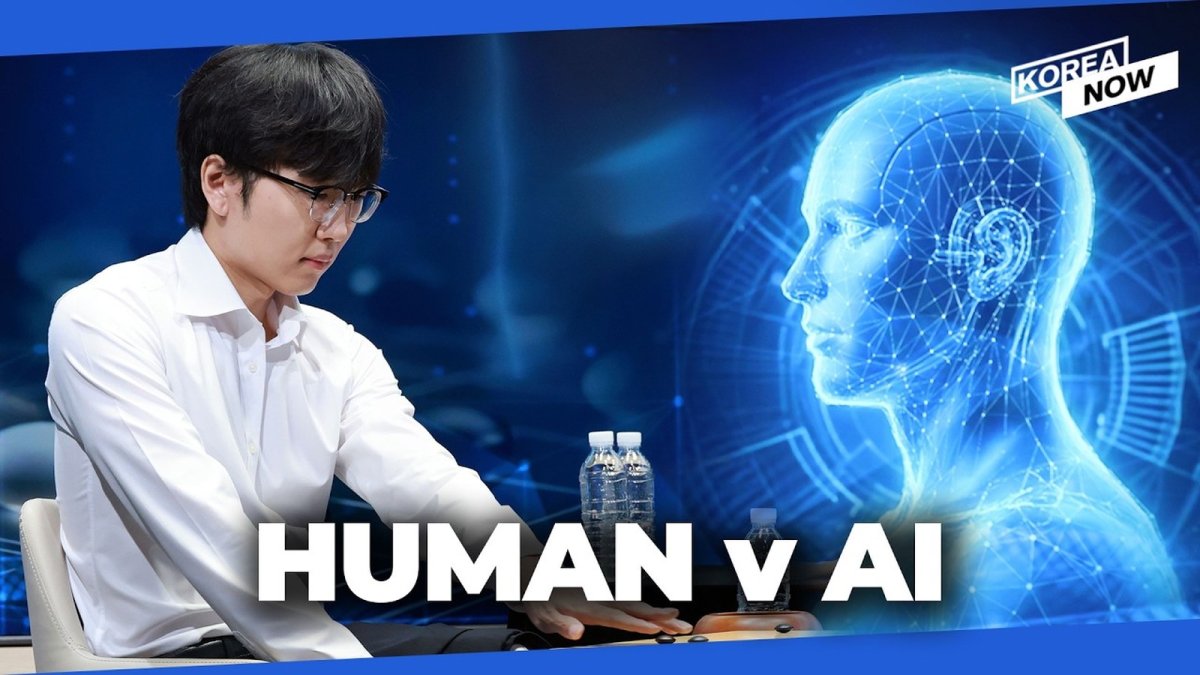
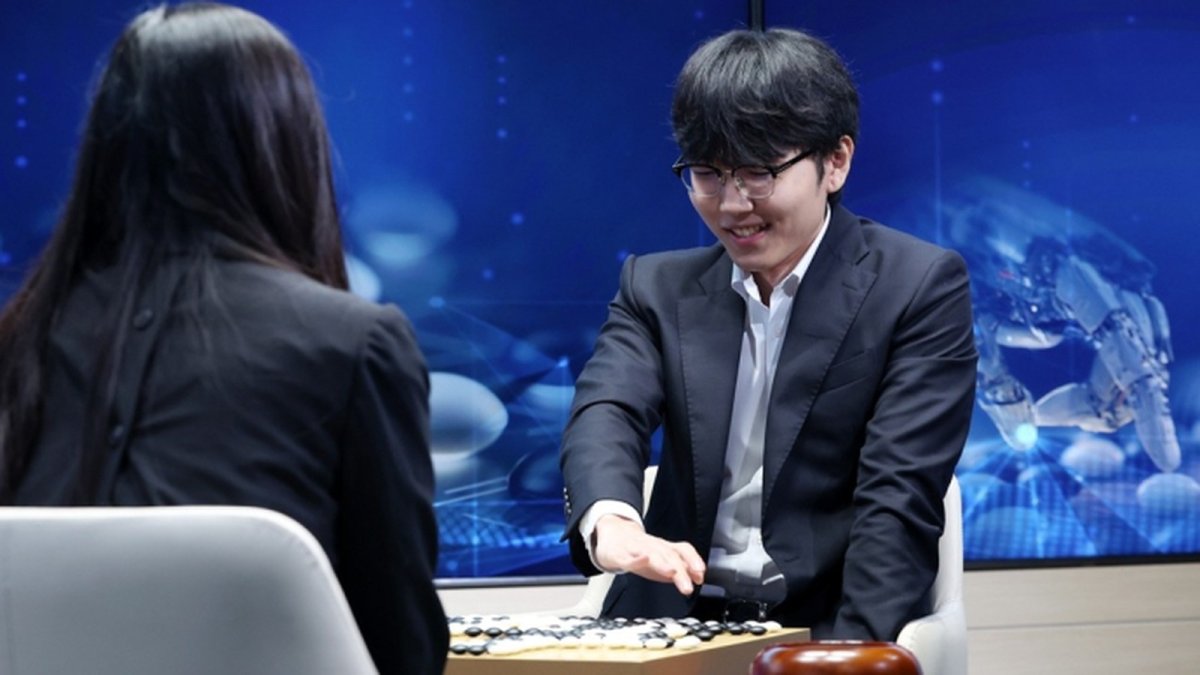
Seoul, South Korea – July 21, 2026 — In a three-game series held at the Korea Economic TV studio in Jung-gu, Shin Jin-seo defeated KataGo 2-1, becoming the first professional player to win an official match series against a leading Go engine while conceding a two-stone handicap. The decisive third game concluded after 221 moves with an 11.5-point margin, following a dramatic arc that illustrated both the strengths and limits of current AI systems. The outcome carries implications that extend beyond the Go board into Korea's broader strategy for technological leadership in Northeast Asia.
The Historic Result
Shin, who holds the highest achievable rank of nine-dan and has been ranked world number one since 2019, secured victory in Game 2 on July 19 by 4.5 points after 290 moves and closed the series in Game 3 on July 21. He had lost the opening game on July 17 after an early unexpected move by the engine. Throughout the series Shin maintained high win probabilities once he established control, reaching 99 percent in the final game.
The result marks the first time a human professional has secured an official match win against a state-of-the-art Go engine with such a concession. It contrasts sharply with Lee Sedol's solitary 2016 game win, which stood alone amid a 4-1 defeat and prompted his eventual retirement amid questions of purpose. The two-stone handicap was proposed by Shin himself, who admitted uncertainty about winning with only a two-stone concession. His post-match assessment underscored measured realism rather than triumph: "I don't think this compares with the one victory that Lee Sedol achieved against AlphaGo 10 years ago," he said, "but I believe it still has meaning because it showed, even in a small way, that humans can still hold their own against AI." The 250 million won prize and a Genesis G90 sedan underscored the commercial and symbolic weight attached to the result by Korean sponsors.
KataGo and the New Generation of Go AI
KataGo, released in 2019 by American developer David Wu, draws directly from AlphaGo Zero's self-play framework yet diverges by optimizing for point margins and territory evaluation instead of binary win-loss outcomes. It was trained on fewer than 30 GPUs over 19 days, representing roughly one-fiftieth the computational resources required for earlier systems — an efficiency that enabled widespread accessibility. Its open-source nature has made it the standard training tool for South Korean professionals, who integrate it into daily study routines.
During the Seoul series, the engine operated via the Tygem platform on four RTX 3090 GPUs running in parallel, with moves executed by 1-dan professional Lee Dan-bi under time controls that granted Shin five hours plus byo-yomi while allowing KataGo approximately 20 seconds per response. This setup reflects KataGo's role as the predominant training instrument for Korean players, embedding AI analysis into the national baduk infrastructure without requiring proprietary hardware.
A Decade After AlphaGo: Context
The 2026 series was organized to commemorate the tenth anniversary of AlphaGo's 4-1 defeat of Lee Sedol in 2016 — a contest highlighted by the iconic move 78 that briefly disrupted machine dominance. AlphaGo Master's 3-0 victory over then-world number one Ke Jie at the Wuzhen summit in May 2017, marked by visible emotion from the Chinese champion, and AlphaGo Zero's subsequent 5,185 self-assessed rating, further widened perceptions of the gap, prompting some analysts to suggest that even a six-stone handicap might be necessary for top humans.
Shin's 3,800-plus GoRating — the first professional to breach that threshold — and his 2-1 result under two stones illustrate how sustained Korean professional engagement with AI tools has narrowed that divide. Korean Baduk League data indicate that Shin's moves align with AI recommendations 37.5 percent of the time, well above the 28.5 percent average, reflecting a decade of systematic human adaptation to machine analysis. The 2026 series, timed explicitly to commemorate the 2016 anniversary, reframes the decade as one of iterative human adaptation rather than retreat.
The Human Factor: Strategy and Psychology
Shin observed that early imitation of AI moves produced heavy fighting and frequent losses, whereas constructing the board according to his own style proved more effective. His approach emphasized territory control and defensive positioning, evident in Game 3's decisive move-80 attack that sustained a 99 percent win probability through 221 moves, and in Game 2's center sacrifice of three stones that recovered a 4.5-point margin after a 290-move battle.
He identified AI's reluctance to take desperate risks when behind as a potential weakness, contrasting this with the human capacity for bold or situation-specific deviations. "AI's weakness seems to be that it is too perfect," Shin said. "Even when it is behind, it doesn't take desperate risks. The beauty of human Go is that players can make bold or unexpected moves depending on the situation." Daily 12-hour AI study sessions, reflected in his 37.5 percent move concordance rate, have enabled this selective integration of machine insight without full assimilation. Commentator Park Jung-sang, a professional 9-dan, noted that sustained training with AI over ten years has allowed professionals to evolve rather than stagnate. Hong Beom-jun of sponsor Truebook Sinsago emphasized that the match's value lies in the adaptive process itself, not merely the final score.
Policy and Geopolitical Implications for Korea
Go remains a shared cultural asset across Northeast Asia, with Korea, China, and Japan each maintaining deep traditions. Under President Lee Jae-myung's administration, South Korea has elevated AI semiconductor diplomacy through targeted engagements in San Francisco, positioning computational infrastructure as a strategic asset. The Shin-KataGo series reinforces this priority by demonstrating how AI functions as an embedded training partner within Korea's baduk ecosystem, cultivated through distinct national institutions such as the Korea Baduk Association.
The match advances a collaboration paradigm in which AI accelerates human strategic evolution rather than supplanting it, offering a model for educational and soft-power initiatives that link technological investment to traditional domains. This framing aligns with Korea's broader narrative of leveraging AI to sustain competitive edges in heritage fields while projecting regional leadership in human-machine integration — and it carries weight in a region where all three major powers claim the ancient game as their own.
Looking Ahead
Shin's explicit caution that he cannot yet claim consistent superiority under two-stone conditions, coupled with his expressed interest in testing more disadvantageous handicaps, signals an ongoing experimental trajectory rather than a settled conclusion. The Korea Baduk Association's engagement with the event — its chairman Chung Tae-soon personally congratulated Shin after the final game — positions the institution to shape subsequent protocols for human-AI encounters.
These developments invite further inquiry into how Korean AI development might incorporate human stylistic variance as a design principle, potentially influencing regional approaches to machine learning in strategic domains. The series thereby opens avenues for sustained dialogue on adaptive coexistence between professionals and engines across Northeast Asia's shared Go traditions.
By Prof. David Park, Staff Writer
This article was produced with AI-assisted research and editorial support. Reporting is based on sources cited in the article.
What's Your Reaction?
 Like
0
Like
0
 Dislike
0
Dislike
0
 Love
0
Love
0
 Funny
0
Funny
0
 Wow
0
Wow
0
 Sad
0
Sad
0
 Angry
0
Angry
0

East Asia/Technology Correspondent at Global1.News. Seoul-based voice covering Korean politics, technology, business, and culture. Analyzes how technology and geopolitics intersect across East Asia.















Comments (0)