
Japan is known for world-class events - but the Asian Games were chaotic
Japan’s reputation for flawless execution of large‑scale events has been tested by the 2026 Asian Games held in Nagoya and the surrounding Aichi Prefecture.
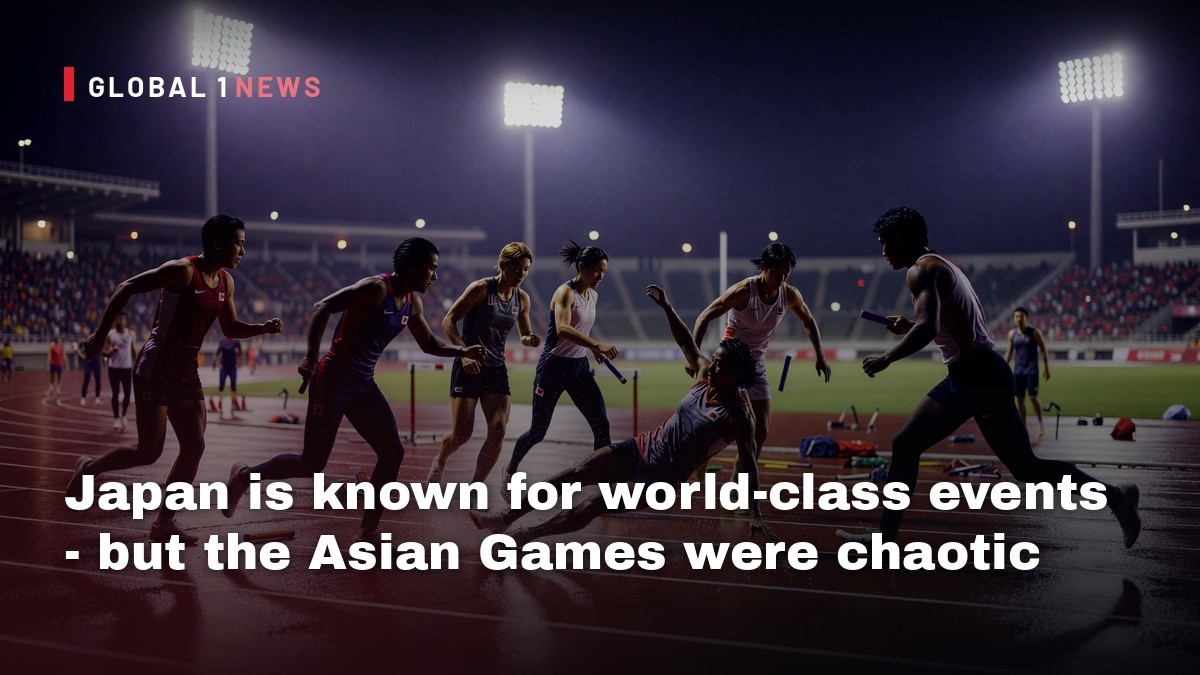
Japan’s reputation for flawless execution of large‑scale events has been tested by the 2026 Asian Games held in Nagoya and the surrounding Aichi Prefecture. While the Games delivered a record number of world‑record performances, they were also marred by a series of logistical, diplomatic and operational failures that have prompted criticism from academics, foreign delegations and domestic media. This article examines the root causes of the chaos, the role of the French‑Japanese firm GL Events, and the potential implications for Japan’s future bid for international competitions.
Accommodation Shortfalls and the Decision to Abandon an Athletes’ Village
From the outset, the Games faced a shortage of suitable lodging. Organisers had originally planned accommodation for up to 15,000 delegation members, a figure stipulated in the host‑city contract. However, as additional sports were added, the expected number of participants rose by roughly 2,000, pushing the total to more than 17,000. Rather than constructing a traditional athletes’ village, officials opted for a cost‑saving model that relied on hotels and temporary container‑style units scattered across Nagoya.
This strategy proved inadequate when the late influx of athletes arrived. A Korean basketball official described the container units as cramped, noting that tall athletes “couldn’t stretch their legs out on the beds.” The shortage became so acute that an Italian cruise ship, equipped with 1,500 cabins, was repurposed to house delegations. Early complaints about “too few rooms and poor‑quality accommodation” were initially dismissed, with organisers telling participants to make their own arrangements before later issuing a joint statement with the Olympic Council of Asia promising “Games‑appropriate accommodation” for all 17,000‑plus guests.
Transport Mishaps and Venue Mismanagement
Transport errors compounded the accommodation crisis. Athletes were repeatedly bussed to the wrong competition venues, a problem that highlighted deficiencies in coordination between the organising committee and the venue‑operations contractor. The misrouting not only delayed training and competition schedules but also added to the stress experienced by delegations already coping with substandard lodging.
These logistical failures extended to ceremonial protocols. During the men’s football gold‑medal ceremony, the South Korean flag was not raised correctly, and the North Korean anthem was mistakenly played for the South Korean men’s hockey team. Taiwan’s sports minister was temporarily barred from a flag‑raising event, and volunteers received conflicting communications about free tickets to the closing ceremony, only to have the offer later retracted as “still under review.” Such inconsistencies undermined the perception of Japan’s famed “omotenashi” hospitality.
The Role of GL Events and the Contractual Context
The Japanese subsidiary of France’s GL Events was tasked with managing venue operations. GL Events secured a contract valued at 63 billion yen, beating out Dentsu Group, an advertising giant with a long history of running sporting events in Japan. A source cited by Kyodo News described GL Events as “overwhelmingly cheaper” than alternative providers, suggesting that cost considerations heavily influenced the award.
Criticism of GL Events intensified after the Tokyo Shimbun reported that the firm cut corners in hiring, resulting in a shortage of experienced staff capable of handling the complex operational demands. The newspaper alleged that the personnel recruited were not properly trained, a claim that aligns with the observed gaps in venue management and transport coordination. GL Events declined to comment on these allegations when approached by the BBC.
Academic Perspectives on Governance and Oversight
Prof. Kozo Tomiyama of Osaka University, an expert on major sporting events, cautioned that the problems stemmed not solely from GL Events’ experience but from the “extremely broad” scope of responsibility assigned to the contractor. He emphasized that the contract was negotiated rather than awarded through a competitive tender, raising questions about the criteria used to assess the contractor’s capabilities and the supervision mechanisms in place after the award.
Tomiyama warned that if the mishandling of the Asian Games erodes international confidence in Japan’s ability to host large‑scale sports events, it could jeopardise future bids for competitions. The deputy director‑general of the Games, Takaaki Omi, acknowledged the “range of unforeseen issues” but asserted that the organising committee responded promptly to feedback and made necessary improvements during the event.
Diplomatic Repercussions and Official Apologies
The diplomatic fallout was notable. South Korea received a formal apology after the anthem and flag errors, while Nagoya Mayor Ichiro Hirosawa, also deputy head of the organising committee, labelled the repeated national‑anthem mishaps at the ongoing Para Games as “unacceptable” and offered his apologies. These incidents underscore how operational oversights can quickly become diplomatic embarrassments, especially in a region where national symbols hold deep significance.
Despite the setbacks, the Olympic Council of Asia director‑general Husain al‑Musallam highlighted the athletic achievements, noting 54 new world records in swimming, weightlifting and shooting. He argued that such performances would not have been possible without a “best environment” created by the organising committee, though this claim appears at odds with athletes’ reported difficulties sleeping and traveling due to the logistical failures.
Implications for Japan’s Future Event Hosting Strategy
The Asian Games have exposed a tension between cost‑saving measures and the expectations of international delegations. The decision to forgo a permanent athletes’ village, while financially prudent, led to a cascade of accommodation and transport challenges that strained the host city’s capacity. Moreover, reliance on a contractor selected primarily on price, without robust oversight, amplified operational risks.
For Japan to maintain its standing as a premier host of global events, the lessons from Nagoya must inform future bidding processes. This includes ensuring that contracts for critical services are awarded through transparent, competitive tenders, and that contractors are held to strict performance standards with clear supervision mechanisms. Additionally, contingency planning for participant influxes and robust staff training programmes are essential to prevent the repeat of accommodation shortages and transport errors.
Looking Ahead: Rebuilding Confidence and the Path to Recovery
In the weeks following the Games, the organising committee has pledged to conduct a thorough review of the incidents. Omi emphasized that each day of the event required “addressing a range of unexpected issues and challenges,” and that feedback from athletes was acted upon promptly. However, rebuilding international confidence will require more than internal assessments; it will demand transparent reporting and tangible reforms.
Prof. Tomiyama’s call for a higher‑quality approach to future events resonates with broader expectations of Japan’s “omotenashi” ethos. By aligning cost considerations with rigorous quality controls, and by ensuring that contractors like GL Events are equipped with adequately trained staff, Japan can restore its reputation for flawless event management. The Asian Games serve as a cautionary tale, but also as an opportunity for Japan to refine its hosting model and reaffirm its commitment to hospitality, precision, and global cooperation.
This article was produced with AI-assisted research and editorial support. Reporting is based on the source material cited below. Sources: BBC News Asia; bbc.co.uk; Global1.News (25 October 2026).
By Kenji Tanaka, Staff Writer
What's Your Reaction?
 Like
0
 Dislike
0
 Love
0
 Funny
0
 Wow
0
 Sad
0
 Angry
0

Japan Correspondent at Global1.News. Tokyo-based voice covering Japanese politics, technology, economy, and culture. Tracks the intersection of tradition and innovation in one of the world's most dynamic societies.















Comments (0)