
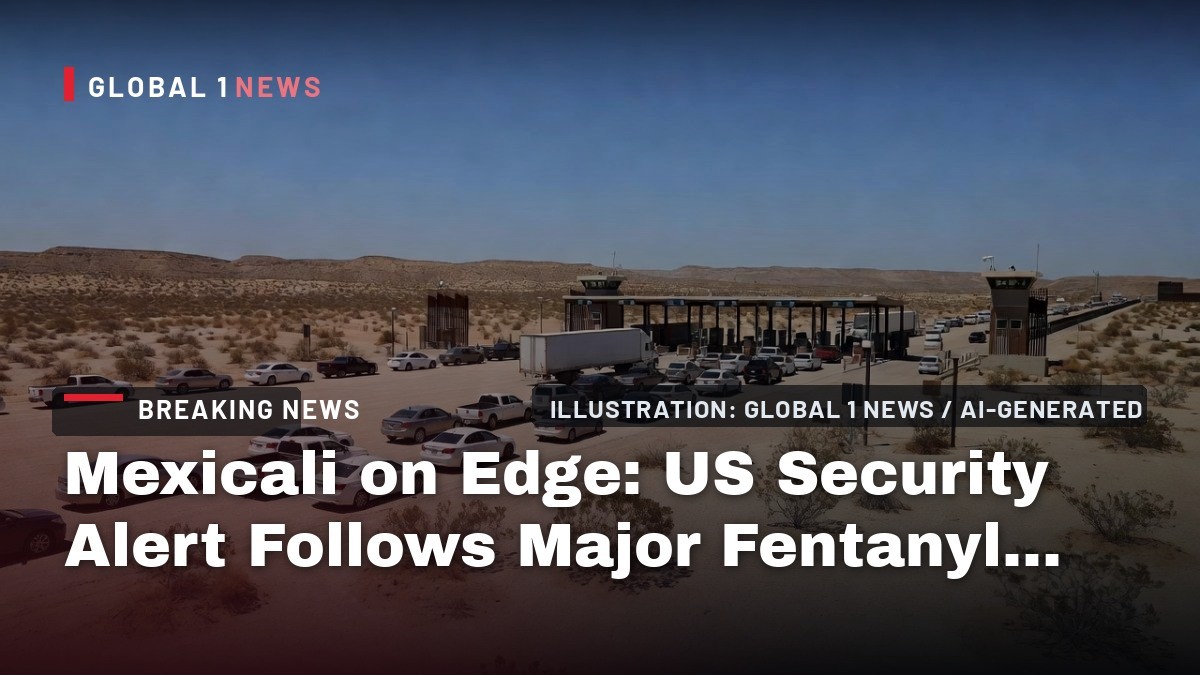
Mexicali on Edge: US Security Alert Follows Major Fentanyl Seizure, Mexico Bolsters Patrols
The rhythm of daily life in Mexicali — the morning rush to maquiladoras, the chatter in the tianguis, the school runs through the colonias — has been met this week with a new and unsettling undercurrent. A tersely worded security alert from the U.S. Embassy, issued on Monday, has put the northern border city on notice: the recent dismantling of a major drug operation could have dangerous repercussions. The alert,.
Mexicali on Edge: US Security Alert Follows Major Fentanyl Seizure, Mexico Bolsters Patrols
The rhythm of daily life in Mexicali — the morning rush to maquiladoras, the chatter in the tianguis, the school runs through the colonias — has been met this week with a new and unsettling undercurrent. A tersely worded security alert from the U.S. Embassy, issued on Monday, has put the northern border city on notice: the recent dismantling of a major drug operation could have dangerous repercussions. The alert, which suspended all U.S. government activities and travel to Mexicali on August 25, has prompted a swift and visible response from Mexican authorities at both the state and federal levels, all while officials work to reassure the public that there is no confirmed, imminent threat.
For the families who call Mexicali home, the news is a stark reminder of the complex and often violent dynamics that play out along the border. The alert stems from a significant law enforcement victory — the seizure of 120 kilograms of fentanyl pills, an estimated 4 million doses — but it also carries the weight of potential retaliation. The U.S. warning, shared by the Consulate in Tijuana, urged American citizens to avoid local government buildings and to stay vigilant, a directive that inevitably casts a shadow over the city's civic spaces. While the Mexican government has moved to bolster security, the underlying tension is palpable, leaving many residents to navigate their daily routines with a heightened sense of caution.
This is not a story of panic, but of precaution. It is a narrative that weaves together international cooperation, the relentless fight against synthetic opioids, and the resilience of a border community accustomed to living with the ebb and flow of cartel influence. As President Claudia Sheinbaum's administration works to project calm, and as Governor Marina del Pilar's state government deploys additional forces, the focus remains on protecting the "peace of mind of Mexicali families," a phrase that now carries a very specific and urgent meaning.
The Catalyst: A Historic Fentanyl Bust and the Shadow of "Los Rusos"
The genesis of this security alert lies in a coordinated operation last week that dealt a significant blow to the illicit drug trade in the region. Mexican federal and state agents, acting on intelligence provided by the U.S. Drug Enforcement Administration (DEA), raided a property in Mexicali linked to "Los Rusos," a criminal cell operating under the umbrella of the Los Mayos faction of the Sinaloa Cartel. The result was the seizure of 120 kilograms of fentanyl pills — a staggering amount equivalent to more than 4 million individual doses — along with a firearm and two vehicles. Security Minister Omar Garcia Harfuch confirmed the details of the operation, highlighting the collaborative effort that made it possible.
The significance of this bust cannot be overstated. Fentanyl is the deadliest drug threat facing the United States, and its production and trafficking are largely controlled by Mexican cartels. The seizure in Mexicali represents a major disruption to the supply chain, but it also creates a power vacuum and a motive for revenge. According to reporting by journalist Luis Chaparro, U.S. authorities decided to issue the security alert after the DEA intercepted at least one call in which alleged members of Los Rusos appeared to be planning an attack on the Municipal Police and the offices of the Federal Attorney General's Office (FGR) in Mexicali. This specific intelligence, while not publicly detailed by officials, was the trigger for the embassy's decisive action.
For the people of Mexicali, this operation is a double-edged sword. On one hand, it is a testament to the effectiveness of binational cooperation in tackling the fentanyl crisis that has devastated communities on both sides of the border. On the other, it places the city squarely in the crosshairs of a violent organization looking to retaliate. The challenge for local authorities is to maintain the momentum of this law enforcement success while simultaneously ensuring that the city's residents are not caught in the crossfire of a cartel's response.
Official Responses: Calm Reassurances and a Show of Force
In the wake of the U.S. alert, Mexican officials have moved quickly to address public concerns while demonstrating that they are taking the threat seriously. On Tuesday morning, President Claudia Sheinbaum addressed the situation during her daily press conference, acknowledging that the alert was issued due to the "possibility" that a criminal group could pose a danger, but she was careful to note that "there is no specific issue." Her measured tone was designed to prevent panic while confirming that the government is fully aware of the potential for violence. This balancing act — between transparency and reassurance — is a hallmark of the current administration's approach to security matters.
At the state level, Baja California Governor Marina del Pilar has been more direct in her messaging. In a statement on social media, she announced that security has been reinforced throughout the entire municipality of Mexicali, with the cooperation of federal agents and members of the armed forces. "Prevention, patrol and surveillance efforts continue on a permanent basis to protect the peace of mind of Mexicali families," she wrote, urging residents to call 911 in case of emergency or to make anonymous reports to the 089 line. The governor's emphasis on community involvement is a crucial element of the strategy, encouraging citizens to be the eyes and ears of law enforcement.
State Security Minister General Laureano Carrillo echoed this sentiment, describing the ongoing work as "rigorous, continuous and coordinated" between state and federal authorities. The goal, he said, is "to prevent and contain any type of contingency in Mexicali." This show of force — a visible presence of police, National Guard, and military personnel on the streets — is intended to serve as both a deterrent to would-be attackers and a source of comfort to the public. Meanwhile, Mexico's federal security cabinet released a statement at midday on Tuesday saying it had not identified evidence confirming "a specific or imminent risk to the public," a carefully worded assessment that leaves room for continued vigilance without escalating the sense of alarm.
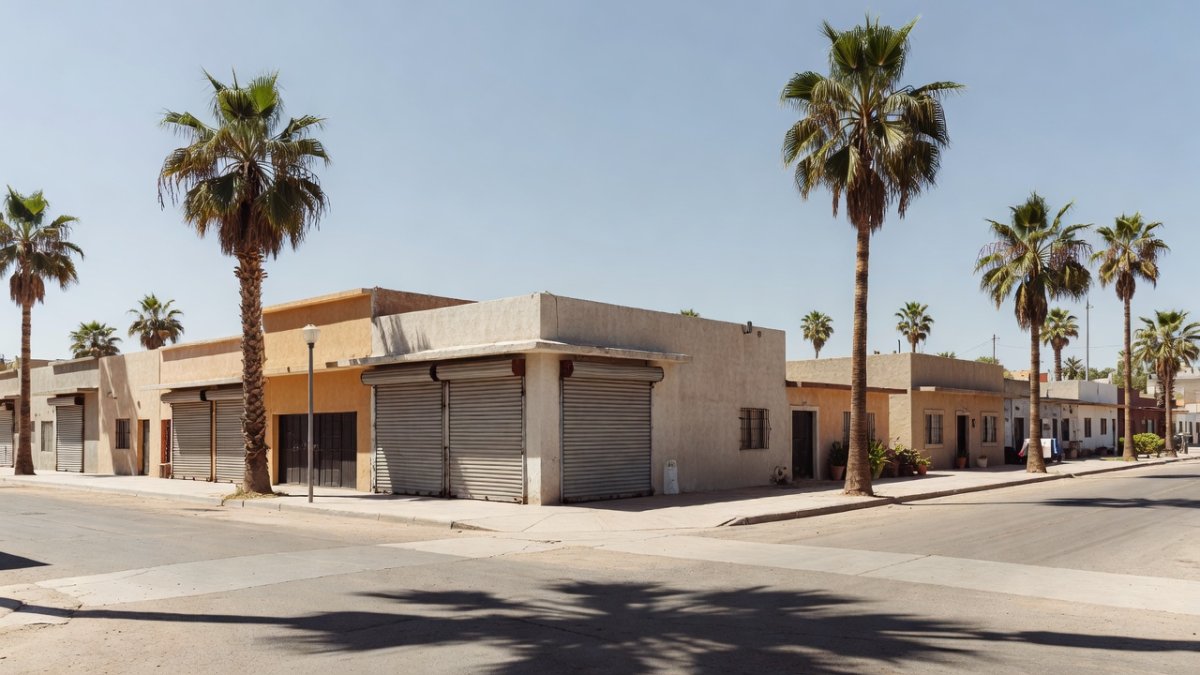
Life in the Balance: How the Alert Affects Everyday Mexicali
For the average resident of Mexicali, the security alert is more than just a headline; it is a factor in everyday decision-making. Will it be safe to visit the central plaza this weekend? Should the kids walk to school or be driven? Is it wise to linger near government buildings? These are the questions that now occupy the minds of many, as the city's civic and commercial life continues under the watchful eye of increased patrols. The U.S. Embassy's advice to avoid local government buildings is particularly impactful, as these are often bustling hubs of activity where citizens go to process paperwork, pay taxes, or seek public services.
The economic implications are also a concern. Mexicali is a major manufacturing hub, with a large number of maquiladoras employing thousands of workers, many of whom cross the border daily or have family ties to the United States. The suspension of U.S. government activities, while not a full travel ban, sends a signal that could deter investment and disrupt the normal flow of cross-border commerce. Small business owners, from the vendors in the local markets to the owners of family-run restaurants, are watching the situation closely, hoping that the heightened security presence will be a temporary measure and that the city's reputation as a safe place to do business will not be permanently tarnished.
Yet, there is also a sense of resilience that defines border communities like Mexicali. The city has weathered many storms, from economic crises to the violence of the cartel wars of the past decade. The people here are accustomed to adapting, to finding ways to maintain their daily lives even in the face of uncertainty. The current situation, while serious, is being met with a pragmatic determination. Parents will still take their children to school, workers will still go to their jobs, and families will still gather for meals. The hope is that the coordinated efforts of the authorities will be enough to prevent the feared retaliation, allowing the city to return to a sense of normalcy without incident.
Binational Cooperation and the Long Road Ahead
The security alert in Mexicali is a powerful illustration of the intricate and often delicate relationship between Mexico and the United States in the realm of security. The DEA's involvement in the fentanyl bust highlights the deep level of intelligence-sharing that exists between the two countries, a partnership that is essential in the fight against transnational organized crime. However, the U.S. Embassy's decision to issue a public alert also demonstrates the limits of that cooperation, as Washington's primary concern is the safety of its own citizens, even if that means publicly highlighting a threat that Mexican officials might prefer to handle more discreetly.
For the Sheinbaum administration, this incident presents both a challenge and an opportunity. It is a challenge because it exposes the persistent security vulnerabilities in border cities, a reality that the president has pledged to address through her "zero impunity" policy. It is an opportunity because it allows the government to showcase its ability to respond swiftly and effectively to a potential crisis, working in tandem with state authorities and the armed forces. The coordinated response — from the president's measured public statements to the visible deployment of security forces on the ground — is designed to project an image of control and competence.
Looking ahead, the situation in Mexicali will require sustained attention. The seizure of 120 kilos of fentanyl is a significant victory, but it is only one battle in a much larger war. The Los Rusos gang, like many cartel cells, is likely to adapt and regroup, and the threat of retaliation may not dissipate quickly. The coming weeks will be critical, as authorities work to dismantle the remaining infrastructure of the group and prevent any violent reprisals. For the people of Mexicali, the hope is that the increased security presence will be a lasting commitment, not just a temporary response to a single alert. The peace of mind of the city's families depends on it.
Tags: Mexicali, security alert, Los Rusos, fentanyl, Sinaloa Cartel, US Embassy, Claudia Sheinbaum, Marina del Pilar, Baja California, drug bust, DEA, border security, Omar Garcia Harfuch, Mexico security
By Rosa Martinez, Staff Writer
This article was produced with AI-assisted research and editorial support. Sources: Mexico News Daily, UPI, Gringo Gazette North.
What's Your Reaction?
 Like
0
Like
0
 Dislike
0
Dislike
0
 Love
0
Love
0
 Funny
0
Funny
0
 Wow
0
Wow
0
 Sad
0
Sad
0
 Angry
0
Angry
0
Latin America/Andes Correspondent at Global1.News. Based in Bogota, covering politics, environment, energy, and social movements across the Andean region. Passionate about environmental journalism and communities protecting their land.












Comments (0)