
UAE's Iron Skies: Missile Shield Tested in Combat as THAAD Upgrades and Israeli Iron Dome Reshape Gulf Defense
In a recent i24NEWS English report titled "Iron Skies: The UAE's Shield vs Iran," the Gulf state's layered missile defense architecture was put under the microscope following a dramatic February exchange that saw Iranian projectiles streaking toward Emirati cities.
In a recent i24NEWS English report titled "Iron Skies: The UAE's Shield vs Iran," the Gulf state's layered missile defense architecture was put under the microscope following a dramatic February exchange that saw Iranian projectiles streaking toward Emirati cities. The report, published this week, examines how a network of American, South Korean, and — secretly — Israeli systems held the line against Tehran's barrages, even as vulnerabilities in radar coverage and falling debris exposed cracks in the armor. What emerged was a real-world stress test of a defense concept that has become the cornerstone of Gulf security strategy, and a quiet demonstration of how deeply Israel's security establishment is now woven into the region's air-defense fabric.
The timing of the report's release coincides with a flurry of defense contracting activity that underscores Washington's commitment to shoring up its Gulf partners. As the i24NEWS footage shows interceptor launches lighting up the night sky over Dubai, the behind-the-scenes story involves billions of dollars in new hardware, a historic first for Israel's Iron Dome, and a regional axis that continues to harden against Iranian missile capabilities.
UAE's Missile Shield Tested in Combat as THAAD Upgrades and Israeli Iron Dome Deployment Reshape Gulf Defense
Jerusalem, Israel – this week — The United Arab Emirates emerged from February's Iranian missile and drone barrages with its layered air-defense network battle-tested but bruised, prompting a wave of new contracts and deployments that are redrawing the Gulf's security map. The U.S. Missile Defense Agency this week awarded Lockheed Martin a $211.4 million contract modification to build new "Configuration 3" Terminal High Altitude Area Defense (THAAD) launchers for the UAE, raising the total of the original 2019 launcher contract to approximately $1.055 billion. The change order, which obligates $211.435 million of UAE Foreign Military Sales funds, schedules work from August 2026 through January 2031, according to Pentagon announcements.
The Gulf's Layered Shield
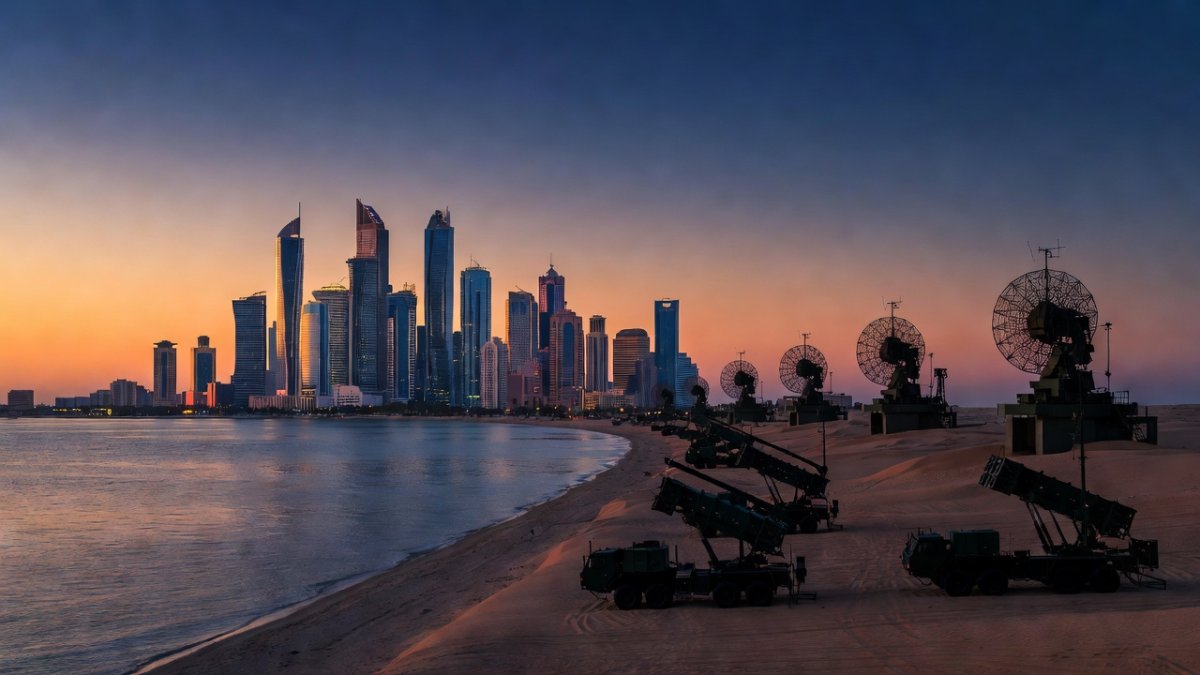
The UAE's air-defense architecture is built on redundancy, with two THAAD systems serving as the upper tier of a network that also includes MIM-104 Patriot batteries at lower altitudes. South Korea's Cheongung-II (M-SAM II) systems, with two batteries deployed in the UAE, fill the medium-altitude gap, while Israel's Iron Dome — deployed secretly during the February crisis — provided point defense against shorter-range threats. Reports cited a 90%+ interception success rate across the network during the February exchange, a figure that Emirati and American officials have pointed to as validation of the layered concept.
But the combat debut was not flawless. Radar damage and falling debris exposed vulnerabilities that defense analysts had long warned about. In March, the U.S. State Department approved a $4.5 billion THAAD radar and command package for the UAE specifically to restore missile-defense sensing capacity after the strikes exposed gaps in coverage. The February attack, which targeted US-linked sites across the Gulf, forced the UAE Ministry of Defence to confirm it had intercepted Iranian missiles and drones, with flames visible over Dubai and airspace temporarily closed as interceptors engaged incoming threats.
The Cheongung-II system, built by South Korea's LIG Nex1 and Hanwha Aerospace, proved particularly effective in its combat debut. A single Cheongung-II battery intercepted an Iranian ballistic missile during the February barrage, with performance compared favorably to American and Israeli systems by regional defense officials. The UAE has since asked Seoul to accelerate deliveries of additional batteries, though South Korean officials said speeding the timeline was difficult due to existing commitments. A third battery was nonetheless fast-tracked, with each unit costing roughly 300-400 billion won — about one-third the price of a Patriot battery, making it an attractive option for Gulf states seeking cost-effective layered defense.
Israel's Iron Dome Goes Abroad
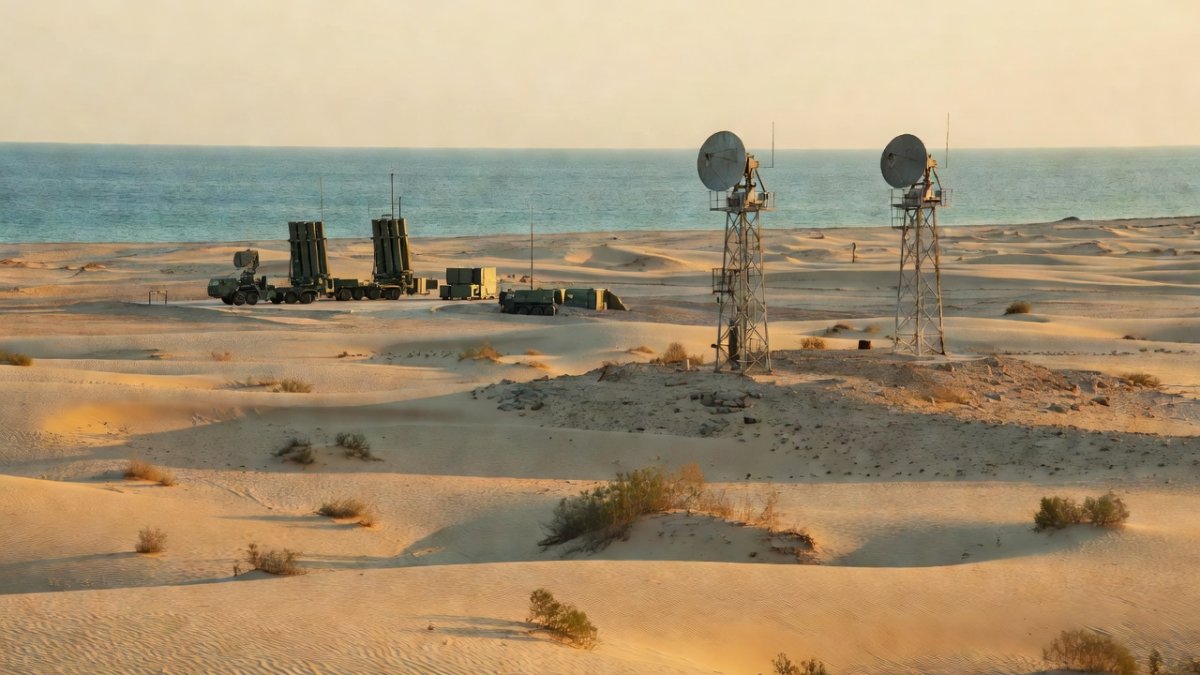
The most consequential development of the February crisis was the secret deployment of an Israeli Iron Dome battery with IDF operators to the UAE, marking the first overseas combat use of the system. According to a CNN-sourced report, Iron Dome intercepted an Iranian missile over the UAE — the system's first operational use in a foreign nation. The deployment followed a direct call between Prime Minister Benjamin Netanyahu and Emirati President Mohammed bin Zayed (MBZ), with officials saying the battery intercepted dozens of Iranian missiles during the conflict.
This was the first time Israel deployed Iron Dome abroad with its own personnel, and the first use defending a country outside Israel and the United States. The operational significance cannot be overstated: Israeli soldiers operated air-defense systems on Emirati soil, defending a Gulf state against Iranian aggression, in a scenario that would have been unthinkable before the Abraham Accords. The deployment also signaled a level of trust and operational integration between Jerusalem and Abu Dhabi that extends far beyond the diplomatic normalization announced in 2020.
For the IDF, the deployment provided invaluable combat data on Iron Dome's performance against Iranian missiles in a Gulf environment — different terrain, different threat profiles, and different rules of engagement than the system's familiar northern and southern fronts. Israeli defense officials have described the operation as a proof of concept for regional air-defense integration, with the UAE serving as a test bed for what could become a broader Gulf-wide network.
Regional Context: The Anti-Iran Axis
The February exchange did not occur in a vacuum. It followed US-Israel strikes on Iranian missile sites near the Strait of Hormuz, the narrow waterway through which roughly 20% of global oil passes. The strikes, which targeted Iranian capabilities that Tehran had used to threaten Gulf shipping, triggered the Iranian response that tested the UAE's shield. The Strait remains a flashpoint for global oil shipping, and the ability of Gulf states to defend against Iranian retaliation is now central to energy security calculations in Washington, Beijing, and European capitals.
The interception cooperation reflects the deepening Israel-UAE security alliance born of the Abraham Accords, an anti-Iran axis that includes intelligence sharing and air-defense integration. Israeli and Emirati officials have quietly built a relationship that extends from Mossad-Shin Bet intelligence cooperation to joint military exercises and now to the physical deployment of Israeli systems on Emirati soil. The Gulf airspace closures during the February crisis — which briefly disrupted civilian flights across the region — underscored how quickly regional security dynamics can escalate, and how dependent the Gulf states have become on coordinated defense responses.
Egypt, watching these developments from Cairo, has taken note of the Israel-UAE defense relationship as it weighs its own air-defense modernization needs. The trend toward Gulf states acquiring advanced missile-defense systems — and integrating them with Israeli capabilities — is reshaping the region's balance of power in ways that extend far beyond the immediate Iran confrontation.
Diplomatic and International Reactions
The international response to the UAE's defense buildup has been largely supportive, with Washington leading the charge. The U.S. Foreign Military Sales pipeline to the UAE has accelerated, with the THAAD launcher modification and the $4.5 billion radar package representing the most significant recent approvals. The Lockheed Martin contract, which extends through January 2031, ensures that the UAE's THAAD inventory will remain at the cutting edge of American missile-defense technology for years to come.
South Korea's role in Gulf defense has also expanded, with the Cheongung-II's combat performance boosting Seoul's arms export ambitions. The system's cost-effectiveness — roughly one-third the price of a Patriot battery — has made it an attractive option for Gulf states looking to build layered defenses without bankrupting their defense budgets. South Korean defense officials have said the UAE's request for accelerated deliveries reflects growing confidence in the system, though Seoul's existing commitments to its own military and other export customers have limited how quickly it can ramp up production.
The United Nations and international stakeholders have largely remained on the sidelines, with no formal condemnation of the UAE's defense buildup or Israel's deployment. The February exchange, which involved Iranian missiles targeting US-linked sites, was widely framed as Iranian aggression, and the UAE's right to self-defense was not seriously challenged in international forums. The quiet acceptance of Israeli military presence in the Gulf — even on a temporary, defensive basis — marks a significant shift in regional norms that would have been unthinkable a decade ago.
Analysis and What This Means
The THAAD upgrade and the Iron Dome precedent carry profound implications for Israel, the UAE, and the broader region. For Israel, the Iron Dome deployment represents a strategic breakthrough: the ability to project defensive capabilities into the Gulf without establishing a permanent military footprint. It also deepens the Abraham Accords' security dimension, transforming what began as a diplomatic normalization into a functioning military alliance. Israeli defense officials have described the deployment as a template for future cooperation, with potential applications in other Gulf states that have normalized relations with Jerusalem.
For the UAE, the February crisis validated its investment in layered defense while exposing the need for continued modernization. The radar vulnerabilities that emerged — and the $4.5 billion package approved to address them — highlight the reality that missile defense is an ongoing arms race, not a one-time purchase. The UAE's willingness to integrate Israeli, American, and South Korean systems into a single network also positions Abu Dhabi as a regional hub for defense integration, with potential implications for how other Gulf states approach their own security architectures.
The broader regional picture is one of hardening anti-Iran alignment. The Israel-UAE axis, now backed by American hardware and South Korean technology, represents a formidable deterrent to Iranian missile adventures. But the February exchange also demonstrated that Iran retains the ability to penetrate even the most sophisticated defenses — the 90%+ interception rate, while impressive, means that some missiles got through, and the debris damage to radar systems showed that even successful interceptions carry costs.
For Israeli and regional readers, the takeaway is clear: the Gulf's air-defense architecture is no longer a collection of national systems but an integrated network that includes Israeli capabilities operating in real time. The Iron Dome's first overseas combat use was not a symbolic gesture but a functional deployment that intercepted dozens of Iranian missiles. The question now is whether this integration can be sustained and expanded — and whether Iran will test it again.
As the Lockheed Martin contract work proceeds through January 2031 and South Korea fast-tracks additional Cheongung-II batteries, the UAE's shield will only grow stronger. But the February crisis served as a reminder that missile defense is never perfect, and that the region's security depends as much on deterrence and diplomacy as on interceptor batteries. For Israel, the UAE deployment has opened a new chapter in its regional security posture — one that could see Israeli systems and operators playing a growing role in defending Gulf partners against shared threats. The Iron Skies over the UAE are no longer just American and Emirati; they are increasingly Israeli as well.
By Hannah Berg, Staff Writer
This article was produced with AI-assisted research and editorial support. Reporting is based on sources cited in the article.
What's Your Reaction?
 Like
0
Like
0
 Dislike
0
Dislike
0
 Love
0
Love
0
 Funny
0
Funny
0
 Wow
0
Wow
0
 Sad
0
Sad
0
 Angry
0
Angry
0

Israel Correspondent at Global1.News. Based in Tel Aviv, covering Israeli politics, security, technology, and society. Provides balanced, deeply-sourced reporting on one of the most closely-watched regions in the world.













Comments (0)