
Katz Says Israeli Forces Will Maintain Permanent Presence in Northern West Bank Refugee Camps
Israeli Defence Minister Israel Katz announced on Monday that Israeli forces will maintain a permanent presence in refugee camps across the northern occupied West Bank, framing the policy as a key factor in what he described as a sharp decline in Palestinian attacks.
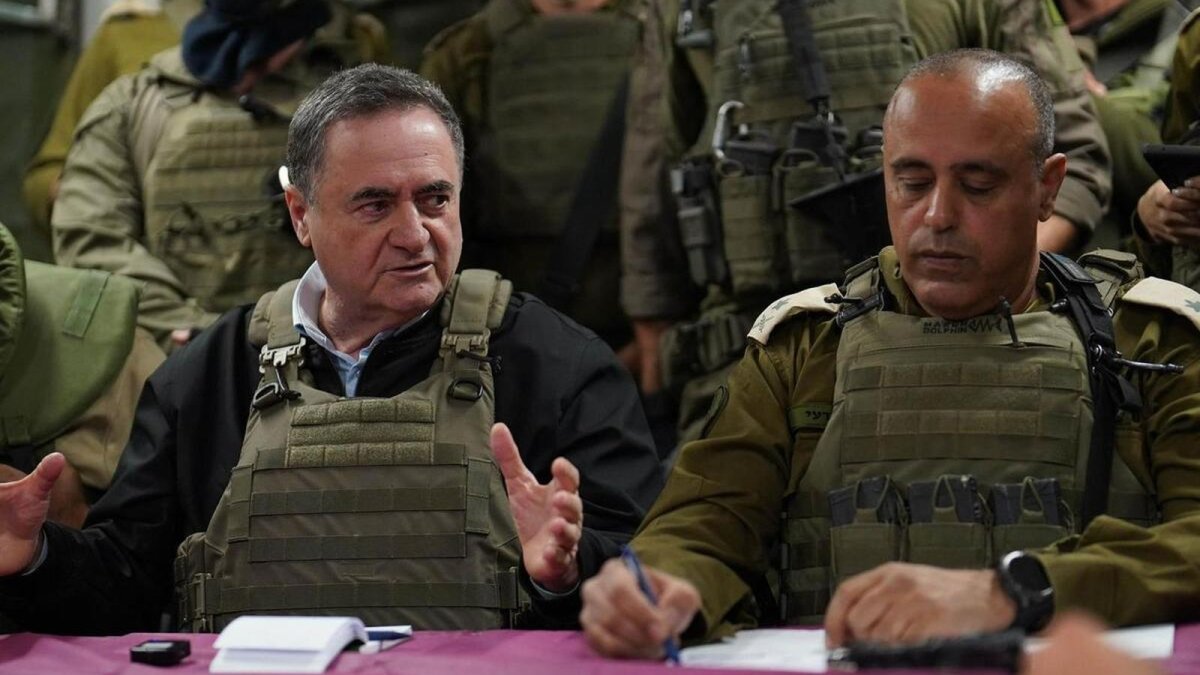
Israeli Defence Minister Israel Katz announced on Monday that Israeli forces will maintain a permanent presence in refugee camps across the northern occupied West Bank, framing the policy as a key factor in what he described as a sharp decline in Palestinian attacks. The statement, delivered following a security assessment at the Israeli military's Central Command headquarters, marks a significant escalation in Israel's stated military posture toward the occupied territory — one that Palestinian authorities and humanitarian organisations warn is entrenching displacement and collective punishment.
Katz's Announcement and the Claim of Declining Attacks
Speaking after a security assessment attended by Prime Minister Benjamin Netanyahu, Israeli military Chief of Staff Eyal Zamir and other senior security officials, Katz said the meeting reviewed the security situation in the West Bank, ongoing Israeli military operations and what he described as the "dramatic growth of settlements." The defence minister said figures presented during the assessment showed that Palestinian "attacks" had declined for a second consecutive year, reaching what he described as "unprecedentedly low levels."
Katz attributed the decline to the Israeli government's intensified military policy in the West Bank, including operations in refugee camps in the north. He specifically cited Israeli directives to evacuate refugee camps, destroy what Israel claims to be militant infrastructure and maintain a permanent military presence inside the camps, saying the measures had significantly weakened Palestinian armed groups. The remarks represent one of the clearest public acknowledgements by a senior Israeli official that the policy of displacing camp residents is not a temporary tactical measure but a long-term strategic objective.
Figures supporting Katz's claim of declining attacks were not immediately available, and Israeli military spokespeople did not release the data referenced during the assessment. Palestinian analysts and human rights monitors have previously cautioned that Israeli statistics on "attacks" often exclude settler violence and military raids, which have continued unabated throughout the same period.
The Security Assessment at Central Command
The security assessment took place at the Israeli military's Central Command headquarters, the division responsible for operations in the occupied West Bank. Earlier on Monday, Netanyahu's office said the prime minister had conducted an assessment at the same headquarters focusing on what it described as security challenges in the West Bank. The presence of both Netanyahu and Zamir, alongside Katz, signals the high priority the Israeli government places on its West Bank policy and suggests the permanent presence decision was coordinated at the highest levels of the security establishment.
The Central Command has been the operational hub for Israel's ongoing military campaign in the northern West Bank, which has intensified significantly over the past year. The campaign has involved repeated incursions into refugee camps, mass arrests, and the demolition of homes and infrastructure. Katz's remarks indicate that the Israeli government views these operations not as episodic responses to specific incidents but as the foundation of a new permanent security architecture in the territory.
The inclusion of settlement growth in the assessment's agenda is notable. Katz referenced the "dramatic growth of settlements" as part of the broader security picture, suggesting that the Israeli government sees the expansion of illegal settlements and the military occupation of refugee camps as complementary elements of the same policy. This framing aligns with the far-right components of Netanyahu's coalition, which have long advocated for increased settlement activity and tighter military control over the West Bank.
The Policy of Displacement and Permanent Military Presence
The policy Katz described involves the evacuation of refugee camps, the destruction of what Israel claims to be militant infrastructure, and the establishment of permanent Israeli military positions inside the camps. Large-scale Israeli military operations in the northern West Bank have resulted in prolonged displacement from refugee camps, particularly in the Jenin, Tulkarm and Nur Shams areas, alongside extensive demolitions and changes to the camps' infrastructure.
For the residents of these camps, the announcement formalises a reality that has been unfolding for months. Many families have been forced to flee their homes repeatedly as Israeli forces conduct operations, and the destruction of infrastructure has made it increasingly difficult for those who remain to access basic services. The establishment of permanent military positions inside the camps would represent a fundamental transformation of these communities, which have existed as refugee camps since 1948 and 1967 and are home to generations of Palestinians displaced from their original villages and towns.
The legal implications of a permanent Israeli military presence in the camps are significant. Under international humanitarian law, the West Bank is occupied territory, and the Fourth Geneva Convention prohibits the transfer of parts of an occupying power's civilian population into the territory it occupies, as well as collective punishment and the destruction of property except under narrow military necessity. A permanent military presence in civilian refugee camps raises serious questions about the treatment of residents, freedom of movement, and the protection of civilians under occupation.
Human Impact on Jenin, Tulkarm and Nur Shams
The refugee camps of the northern West Bank have borne the brunt of Israel's intensified military campaign. Jenin refugee camp, long a symbol of Palestinian resistance, has been subjected to repeated large-scale operations that have displaced thousands of residents and destroyed significant portions of the camp's infrastructure. The camp, which was established in 1953 to house Palestinians expelled from their homes in the Haifa area, has a population of approximately 14,000 people living in an area of less than half a square kilometre.
Tulkarm refugee camp, located in the northern West Bank near the Green Line, has similarly experienced repeated incursions and displacement. The camp was established in 1950 to house refugees from villages in the coastal plain and has a population of around 18,000 registered refugees. Nur Shams camp, also in the Tulkarm area, has been the site of some of the most intense operations, with residents reporting extensive demolitions and the destruction of water and electricity infrastructure.
The human cost of these operations extends beyond physical destruction. Children in the camps have missed months of schooling, families have been separated, and the psychological toll of repeated displacement and military incursions is incalculable. Medical facilities in the camps have been damaged or rendered inaccessible during operations, and residents have reported shortages of food, water and medicine during prolonged military closures. The permanent military presence Katz announced would likely compound these hardships, restricting movement and daily life in ways that would be difficult to reverse.
Palestinian Authorities and Humanitarian Concerns
Palestinian authorities and humanitarian organisations have raised concerns about the displacement of camp residents and the destruction of civilian property during Israeli attacks. The Palestinian Authority, which exercises limited administrative control over parts of the West Bank, has repeatedly called on the international community to intervene to stop what it describes as collective punishment and forced displacement. However, the Authority's capacity to influence events on the ground is severely limited by the terms of the Oslo Accords and the ongoing Israeli military occupation.
Humanitarian organisations operating in the West Bank have documented the impact of the military operations on civilian populations, including the destruction of homes, schools and medical facilities. The United Nations and other international bodies have expressed alarm at the scale of displacement and the destruction of infrastructure in the refugee camps, which they note is occurring in violation of Israel's obligations under international law as an occupying power. Figures on the total number of displaced residents and the extent of property destruction were not immediately available, but humanitarian workers on the ground describe a situation of acute and ongoing crisis.
The permanent presence policy also raises concerns about the future of the refugee camps themselves. The camps are not merely residential areas but symbols of the Palestinian right of return, enshrined in UN General Assembly Resolution 194. The transformation of the camps into zones of permanent Israeli military control would represent a significant step toward the erasure of the refugee issue, which remains one of the core final-status issues in the Israeli-Palestinian conflict. Palestinian refugees and their descendants, who number in the millions across the region, view the camps as temporary dwellings pending their return to their original homes — a permanent military occupation of the camps would signal that return is no longer contemplated.
What Permanent Presence Means for the West Bank
The establishment of a permanent Israeli military presence in the northern West Bank refugee camps would mark a significant shift in the nature of the occupation. Since 1967, Israel has maintained a military presence in the West Bank, but the pattern has been one of checkpoints, settlements and periodic incursions rather than the permanent garrisoning of Palestinian population centres. The new policy would place Israeli forces inside the camps on a continuous basis, fundamentally altering the relationship between the military and the civilian population.
Analysts note that the policy is consistent with the broader trajectory of Israeli policy in the West Bank, which has increasingly blurred the line between temporary security measures and permanent territorial control. The expansion of settlements, the construction of bypass roads and the fragmentation of the West Bank into isolated enclaves have all contributed to a reality in which a two-state solution becomes increasingly difficult to implement. The permanent presence in the refugee camps would add another layer to this fragmentation, effectively placing some of the most densely populated Palestinian communities under direct and continuous military administration.
The announcement also comes at a time of heightened regional tension and international scrutiny of Israeli policies in the occupied territories. Human rights organisations have documented what they describe as a pattern of systematic discrimination and apartheid in Israeli policies toward Palestinians, and the International Court of Justice has issued advisory opinions on the illegality of the occupation and settlement enterprise. The permanent presence policy is likely to further isolate Israel internationally and to deepen the grievances that fuel Palestinian resistance.
For the residents of Jenin, Tulkarm and Nur Shams, the announcement confirms their worst fears. The camps, which have survived for decades as communities of memory and resistance, now face the prospect of permanent military occupation. The displacement that Katz cited as a factor in declining attacks is, for the residents, not a statistic but a lived reality of loss, uncertainty and the ongoing denial of their right to live in their homes with dignity and security. The international community's response to this policy will be a test of whether the principles of international law and human rights retain any meaning in the occupied Palestinian territory.
By Fatima Al-Rashid, Staff Writer
This article was produced with AI-assisted research and editorial support. Sources: Middle East Monitor
What's Your Reaction?
 Like
0
Like
0
 Dislike
0
Dislike
0
 Love
0
Love
0
 Funny
0
Funny
0
 Wow
0
Wow
0
 Sad
0
Sad
0
 Angry
0
Angry
0

Gulf/MENA Correspondent at Global1.News. Based in Doha, covering Gulf politics, energy markets, diplomacy, and development across the Middle East and North Africa. Tracks the economic transformation of the Gulf states.













Comments (0)