
Tigrayan Women Keep Ashenda's Light Alive in Addis Ababa
In the heart of Ethiopia's capital, a familiar rhythm pulsed through the air on Sunday, August 23, 2026, as Tigrayan women gathered to celebrate Ashenda, the centuries-old festival of womanhood. The joyful sounds of singing and dancing in Addis Ababa stood in stark contrast to the ominous silence hanging over their homeland, where recent drone strikes on Mekelle have renewed fears of another devastating war.
In the heart of Ethiopia's capital, a familiar rhythm pulsed through the air on Sunday, August 23, 2026, as Tigrayan women gathered to celebrate Ashenda, the centuries-old festival of womanhood. The joyful sounds of singing and dancing in Addis Ababa stood in stark contrast to the ominous silence hanging over their homeland, where recent drone strikes on Mekelle have renewed fears of another devastating war. Across Africa, from the Sahel to the Horn, we know too well how the drumbeat of conflict can threaten the very fabric of our cultural heritage, yet here, in this moment, the women chose to dance.
Tigrayan Women Keep Ashenda's Light Alive in Addis Ababa
Addis Ababa, Ethiopia — The capital's celebration of Ashenda, a festival that fills Tigray's streets with colour and song each August, stands in sharp contrast to the cancellation of the main gathering in Mekelle, the regional capital. This year, the festival has become a testament to how culture endures even under the shadow of conflict, as Tigrayan women of all ages came together to honour their identity, their sisterhood, and their resilience in a city far from home.
Ashenda's Colours Brighten the Capital
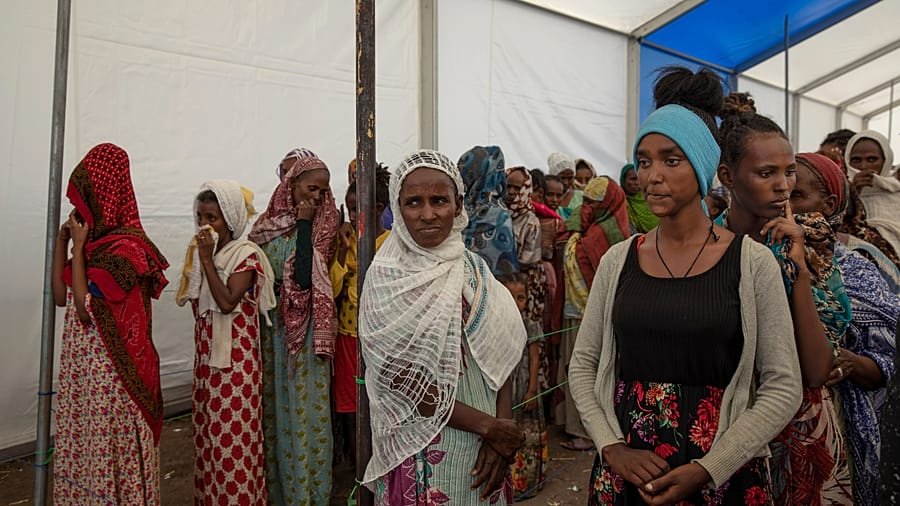
The scene in Addis Ababa was one of vibrant defiance, as young Tigrinya girls sang and danced in colourful festive dresses with braided hair, their voices rising above the city's usual hum. Women of every generation joined the procession, their laughter and rhythmic movements transforming an ordinary Sunday into a celebration of life itself. The festive atmosphere in the capital was electric, a pocket of joy carved out of the anxiety that has gripped the Tigrayan community since the recent escalation of tensions.
Mothers adjusted their daughters' embroidered dresses while grandmothers clapped along, their eyes glistening with memories of Ashenda celebrations past in the villages of Tigray. The air was thick with the scent of traditional incense and the warmth of shared stories, as women who had left their homeland for work or safety found a piece of home in this gathering. For a few hours, the weight of worry seemed to lift, replaced by the simple, profound joy of being together.
The celebration expressed a deep sense of identity and sisterhood, as women linked arms and moved in unison, their voices blending in songs passed down through generations. It was a powerful reminder that even in displacement, the bonds of culture and community remain unbroken. The contrast between the capital's joy and the tension in Tigray was stark, yet it only seemed to fuel the women's determination to celebrate with even greater passion.
As the sun climbed higher, the dancing continued, with young girls mimicking the graceful steps of their elders, learning the rhythms that have defined their culture for centuries. The festival in Addis Ababa was smaller than the grand gatherings of Mekelle, but its spirit was no less fierce. Here, in the shadow of uncertainty, Ashenda became a declaration that Tigrayan womanhood would not be silenced by fear.
For many of the women present, this celebration was also an act of remembrance, a way to honour those who could not be there, whether because of distance, work, or the dangers that now haunt their homeland. The joy was real, but so was the underlying sorrow, a bittersweet undertone that seemed to echo through every song and dance.
A Festival Older Than Many Kingdoms
Ashenda is an annual festival of women and girls believed to have originated in the Axum region of Tigray, with scholars estimating its beginnings around 400 AD, making it older than many of the kingdoms that have risen and fallen across the Horn of Africa. In Tigrinya, the name Ashenda means a type of tall green grass found on river banks, and this natural element is central to the festival's unique aesthetic. Women wear skirts made of woven Ashenda grass over white cotton dresses with colourful embroidery, a striking visual that has become synonymous with the celebration.
Originally a Christian festival marking the end of the Filseta fast, a 15-day period of mourning and prayer commemorating the Assumption of Mary, Ashenda has evolved over the centuries into a celebration that transcends religion. While its roots lie deep in the Orthodox Christian traditions of Tigray, the festival today is embraced by women of all faiths and backgrounds, a testament to its power as a cultural unifier. The festival is also celebrated in the Amhara region and in neighbouring Eritrea, where similar traditions have taken root and flourished.
Widely known as "Girls' Day," Ashenda is an annual festival celebrating women and girls, a rare occasion in many societies where the spotlight shines squarely on the feminine. It is a time when young women are the stars of the show, their beauty, grace, and vitality celebrated openly and joyfully. The festival typically lasts three days, filling the streets of Mekelle and other Tigrayan towns with song, dance, and the brilliant white of traditional dresses.
The Ethiopian government has honoured Ashenda with a commemorative coin since 2016, a recognition of the festival's cultural significance to the nation as a whole. This official acknowledgment underscores the festival's importance not just to Tigray, but to Ethiopia's diverse cultural tapestry. For the women who celebrate it, Ashenda is more than a party; it is a living link to their ancestors, a tradition that has survived wars, famines, and political upheaval.
The festival's endurance through the centuries is a testament to the resilience of Tigrayan culture, a culture that has faced countless challenges yet continues to thrive. In the Axum region, where the festival is believed to have begun, the echoes of ancient celebrations can still be felt in the songs and dances performed today. Ashenda is a thread connecting modern Tigrayan women to their foremothers, a chain of cultural transmission that no conflict has been able to break.
War Fears Hang Over This Year's Holiday
Yet this year, a dark cloud hung over the festivities, as recent drone strikes on Mekelle, Tigray's regional capital, renewed fears of conflict and cast a pall over the holiday. Federal and Tigrayan forces have massed on either side of the northern state's border in recent months, a worrying build-up that has drawn international concern and raised the spectre of a return to full-scale war. Minor skirmishes have been reported in some areas, adding to the sense of unease that has gripped the region.
The main Ashenda stadium gathering in Mekelle was called off over drone strike fears, a decision that underscored just how precarious the situation has become. In normal years, the three-day festival fills Mekelle's streets with song, dance, and white dresses, transforming the city into a sea of celebration. This year, those streets were quiet, the stadium empty, as residents huddled indoors, wary of the skies above.
Many Tigrayans could not travel back home for the holiday because of the current situation, leaving families separated and communities fragmented. The roads into Tigray are fraught with danger, and the uncertainty of the political landscape has made travel a risky proposition. For those in Addis Ababa, the decision to stay was painful, a choice between the safety of the capital and the pull of home.
The memory of the devastating 2020-2022 war in Tigray looms large over this year's celebrations, a conflict that claimed hundreds of thousands of lives and left the region in ruins. The scars of that war are still fresh, both physical and psychological, and the prospect of a new conflict is almost too terrible to contemplate. The massing of forces on both sides has only heightened these fears, as the world watches with bated breath.
For the women celebrating Ashenda in Addis Ababa, the joy of the festival was tempered by the knowledge that their homeland remains on the brink. The drone strikes on Mekelle were a chilling reminder that the peace they long for is still fragile, still elusive. And yet, they danced, because to stop dancing would be to surrender to the fear that has already taken so much from them.

Voices of Hope From Tigrayan Women
Among the women gathered in Addis Ababa, the voices of hope and sorrow intertwined, painting a complex picture of life under the shadow of conflict. Tiras Gebregziabher, a hair stylist who has made the capital her home, spoke with a mixture of faith and worry. "When it comes to my families — it's at hands of the God, I pray he makes it peaceful, but the situation is not good. Our people are living in sadness and in a bad situation. It is not good," she said, her words echoing the sentiments of many.
Muluberhan Argawi, an Addis Ababa resident, expressed a longing for home that was palpable in her voice. "Because of the current condition, everyone is eager to celebrate it back home [Tigray]. However, it wasn't convenient for us because of work and the current situation. I was planning to go there to celebrate it, but God willing, I will celebrate there next year," she said, her hope for the future tempered by the reality of the present.
These words capture both the sorrow and the hope that define the Tigrayan experience today, a duality that was on full display at the Addis Ababa celebration. The women danced with joy, but their hearts were heavy with concern for their families and friends back home. They laughed and sang, but their eyes often drifted towards the north, towards a homeland that feels both near and impossibly far.
The women expressed hopes for lasting peace in Ethiopia's Tigray region, a peace that would allow them to return home and celebrate Ashenda in the streets of Mekelle once more. Their prayers were simple but profound: an end to the violence, a chance to rebuild, a future for their children. In their voices, there was a determination to hold onto hope, even as the world around them seems to spiral towards conflict.
For Tiras, the festival was a moment of respite from the constant worry, a chance to connect with her community and remember who she is beyond the headlines. Her words were echoed by the women around her, a chorus of resilience that seemed to push back against the darkness.
Why Ashenda Matters Beyond the Dance
Ashenda is more than just a festival of song and dance; it is a profound expression of women's identity and dignity, a celebration of womanhood in all its forms. For Tigrayan women, the festival is a time to honour their strength, their resilience, and their community, a reminder that they are the backbone of their society. The tradition of passing cultural heritage from mothers to daughters is at the heart of Ashenda, ensuring that the knowledge, songs, and customs of their ancestors live on.
This passing of the torch is a sacred duty, one that the women of Addis Ababa took seriously as they taught their daughters the steps and songs of the festival. In a world that often seeks to erase or marginalise women's contributions, Ashenda stands as a powerful counter-narrative, a celebration of the feminine that is both joyful and defiant. It is a time when women are the centre of attention, their beauty and strength on full display.
Across Africa, there are parallels to Ashenda, festivals that celebrate women's roles in society and honour their contributions to culture and community. From the Umhlanga Reed Dance in Eswatini to the Gerewol festival in Niger, the continent is rich with traditions that place women at the centre of celebration. Ashenda is part of this broader tapestry, a uniquely Tigrayan expression of a pan-African reverence for womanhood.
Celebrating Ashenda in Addis Ababa becomes an act of cultural preservation and resistance to despair, a way of saying that no matter what happens, the Tigrayan spirit will not be broken. The festival is a reminder that African cultural traditions endure through displacement and fear, that they are carried in the hearts and memories of the people who love them. Even in exile, even under threat, the dance continues.
For the women who gathered on that Sunday, Ashenda was a lifeline, a connection to a homeland that feels increasingly distant. It was a way of reclaiming their identity in a city that is not their own, of asserting their presence and their worth. The festival is a testament to the power of culture to sustain us, to give us hope, and to remind us of who we are.
What to Watch For
In the coming weeks, the world will be watching to see whether tensions along the Tigray border de-escalate or spiral into another devastating conflict. The massing of forces on both sides is a worrying sign, but there is still time for diplomacy and dialogue to prevail. The international community has expressed deep concern over the risk of renewed war, and pressure is mounting on all parties to step back from the brink.
The possibility of the festival returning to Mekelle next year remains a distant hope, but it is a hope that the women of Tigray cling to with fierce determination. Muluberhan Argawi's wish to celebrate at home next year is shared by countless others, a dream that depends on the fragile peace holding. For now, the women of Addis Ababa will continue to celebrate Ashenda in the capital, keeping the tradition alive until they can return home.
Ongoing diplomacy and international concern over the risk of renewed war will be crucial in the months ahead, as will the resilience of Tigrayan communities and their cultural traditions. The people of Tigray have shown time and again that they can endure unimaginable hardship, and their commitment to their culture is a testament to their strength. Ashenda will be celebrated again, whether in Addis Ababa or Mekelle, because the spirit of the festival cannot be extinguished.
The resilience of Tigrayan communities and their cultural traditions is a beacon of hope in a region too often defined by conflict and despair. The women who danced in Addis Ababa on that Sunday are the living embodiment of this resilience, their joy a defiant answer to the threat of war. They carry Ashenda in their hearts, and no drone strike, no political manoeuvre, no act of violence can take that from them.
As we look to the future, we must celebrate the continent's cultural dynamism while being honest about the challenges that lie ahead. Africa is a land of immense beauty and strength, but it is also a land of conflict and suffering. Ashenda reminds us of what we stand to lose if we allow war to prevail, and it inspires us to fight for peace with the same passion that the women of Tigray bring to their dance.
In the end, Ashenda is a celebration of life itself, a reminder that even in the darkest of times, there is joy to be found, community to be cherished, and hope to be nurtured. The women of Tigray, whether in Mekelle or Addis Ababa, are the guardians of this hope, and their dance will continue, no matter what the future holds. The grass of the riverbanks may wither, but the spirit of Ashenda is eternal.
By Amara Diop, Staff Writer
This article was produced with AI-assisted research and editorial support. Reporting is based on sources cited in the article.
What's Your Reaction?
 Like
0
Like
0
 Dislike
0
Dislike
0
 Love
0
Love
0
 Funny
0
Funny
0
 Wow
0
Wow
0
 Sad
0
Sad
0
 Angry
0
Angry
0

West Africa/Sahel Correspondent at Global1.News. Dakar-based journalist covering politics, security, climate, and development across Francophone and Anglophone West Africa. Tells the stories of a region undergoing profound transformation.














Comments (0)