
Sinaloa Governor Reverses Return Amid US Drug Trafficking Charges
Sinaloa Governor Rubén Rocha Moya reversed his return to office within a day, requesting indefinite leave amid US drug trafficking charges and a rebuke from President Sheinbaum. He is the first sitting Mexican politician charged by Washington, and now awaits a US extradition decision.
In a DW News report published on April 30, 2026, the scope of the United States Justice Department's indictment against Sinaloa Governor Rubén Rocha Moya was laid bare, marking the first time Washington publicly charged a sitting Mexican politician with drug trafficking. That initial shockwave has now morphed into a full-blown political crisis, as the 77-year-old governor's chaotic attempt to return to office this weekend was reversed within 24 hours, drawing a stern rebuke from President Claudia Sheinbaum and exposing deep fractures within the ruling Morena party.
Sinaloa Governor's 24-Hour Reversal Deepens Political Turmoil
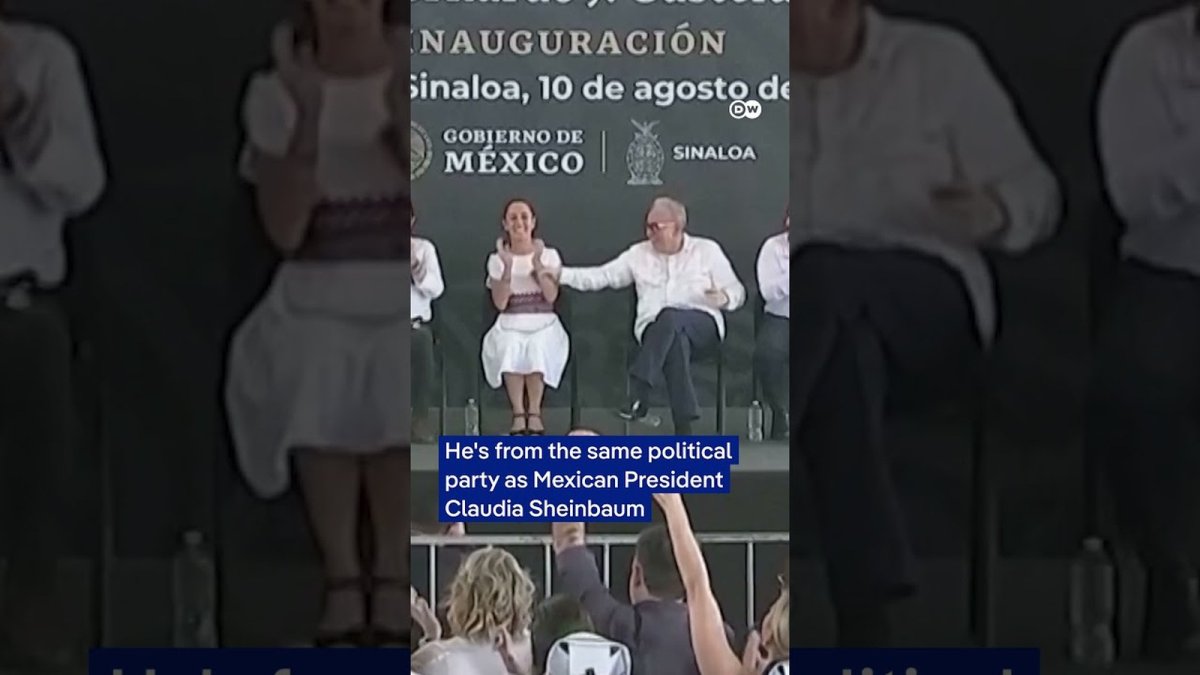
Culiacán, Sinaloa – Mexico — The political whiplash in Sinaloa reached a fever pitch this weekend when Governor Rubén Rocha Moya announced on Friday via his X account that he was resuming leadership of the state, insisting he had "committed no crime" and was returning "with a clear conscience and head held high." However, less than a day later, on Saturday, the governor shared a document on the same platform asking the state congress to authorize "a temporary leave of absence of indefinite duration, exceeding 30 days," writing that "Sinaloa, the nation, and the movement of transformation are above everything."
The abrupt reversal came after his initial return was met with immediate and fierce opposition from the federal government and his own political party. President Claudia Sheinbaum, without naming Rocha directly, posted on X on Saturday a pointed warning: "no personal interest can ever be placed above the interest of the people and the nation." She added, "Power without principles becomes arrogance; power without limits, abuse; and power that forgets the people ends up confronting history," emphasizing that Mexico deserved public servants who were not there to "feed personal ambitions." When pressed by journalists for a direct comment on the governor, Sheinbaum referred them to her social media post.
A Historic Indictment and a Governor in Limbo
The core of this crisis lies in the late April 2026 indictment unsealed by the US Justice Department in a New York federal court. Rocha Moya, who has governed Sinaloa since November 2021, is charged alongside nine other current or former officials of the Morena party with conspiracy to traffic drugs into the United States. The indictment alleges they colluded with a faction of the Sinaloa Cartel known as Los Chapitos, the sons of Joaquín "El Chapo" Guzmán Loera, exchanging bribes and political support for impunity. The charges include narcotics importation conspiracy, possession of machine guns and destructive devices, and another conspiracy count, carrying a mandatory minimum of 40 years in prison and a potential life sentence.
This unprecedented legal action forced Rocha to take a leave of absence in May 2026 to face an investigation by Mexican prosecutors, though he never fully stepped down. At the time, he denied being in hiding, stating on X that he had "stayed, without moving, in my home in the city of Culiacan," and dismissed the case as a "media onslaught" and an "attack promoted by the far right." His brief, dramatic return on Friday and subsequent request for another leave on Saturday highlight a man caught between a US extradition demand and a domestic political firestorm.
Sheinbaum's Tightrope: Sovereignty vs. US Pressure
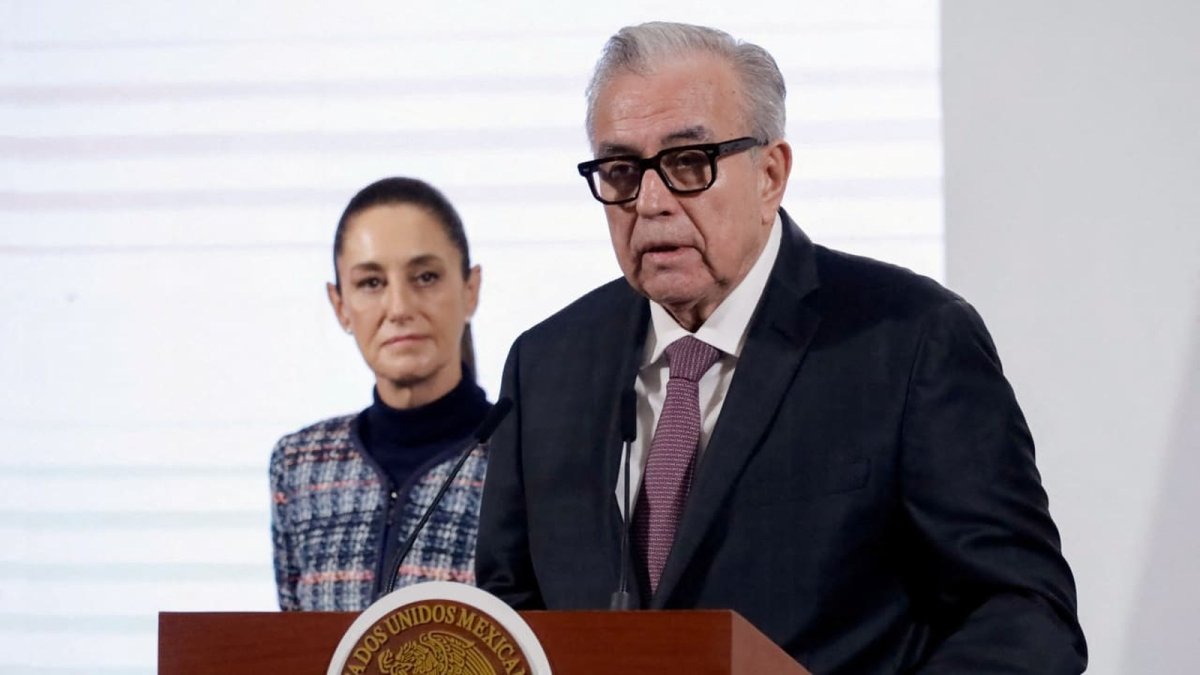
President Sheinbaum's government now finds itself navigating one of the most delicate diplomatic and domestic challenges of her presidency. Her administration previously stated that Washington did not provide sufficient evidence to justify Rocha's arrest or extradition, even as it opened its own investigation. In late April, Sheinbaum dismissed the idea of arresting or extraditing anyone named in the US indictment, accusing Washington of "meddling" in Mexico's affairs and insisting that Mexican prosecutors would determine whether the US allegations "have a legal basis for requesting arrest warrants."
This stance is further complicated by the Trump administration's aggressive posture. The White House has used the threat of tariffs to pressure Mexico into intensifying its drug war, with President Trump frequently claiming that Mexico is governed by politicians linked to drug trafficking. Trump has also offered military support to Sheinbaum, an offer she has consistently rejected as an unacceptable intervention in Mexican sovereignty. The Sinaloa Cartel is one of six Mexican narcotrafficking groups designated as foreign terrorist organizations by the Trump administration, raising the stakes for any perceived leniency toward Rocha.
Morena's Internal Fracture and the AMLO Legacy
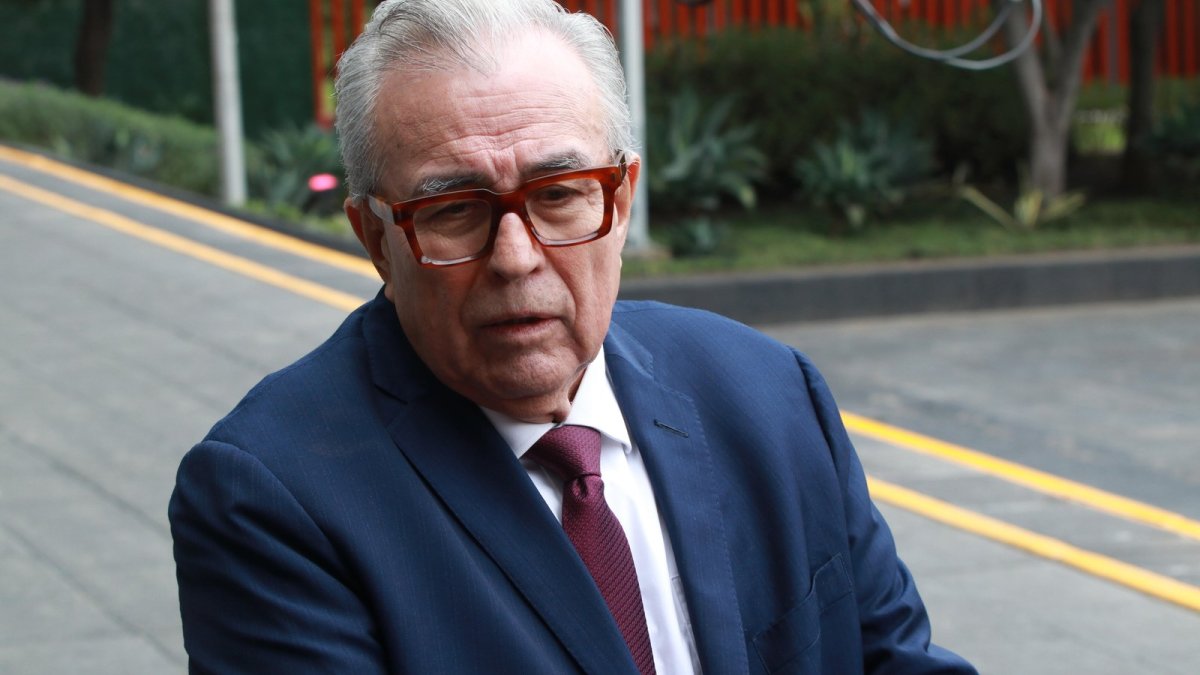
Rocha Moya is not just any governor; he is considered a close ally of President Sheinbaum and a confidant of her mentor, former President Andrés Manuel López Obrador (AMLO). His political survival is now a test of loyalty for the Morena party, which has publicly accused him of prioritizing personal interests over the public interest. The governor's actions this weekend have placed the party in an untenable position, forcing it to choose between defending one of its own and maintaining the veneer of integrity that has been central to the AMLO legacy of the "Fourth Transformation."
The scandal also resurrects the 2023 controversy when Rocha's name appeared in a letter written by a then-Sinaloa Cartel capo who had been kidnapped by a rival faction. The capo, later handed to US law enforcement, claimed he believed he was being taken to meet Rocha Moya. Furthermore, the US indictment alleges that Rocha was elected in 2021 with the help of El Chapo's sons, who allegedly kidnapped and intimidated his rivals in exchange for promised impunity for drug trafficking. These allegations, combined with last year's testimony from convicted drug lord Ismael "El Mayo" Zambada, who admitted in US federal court to bribing politicians, police, and military officials, paint a grim picture of systemic corruption.
The Human Cost in Culiacán and Mazatlán
For the residents of Sinaloa, this political drama is not an abstract legal battle; it is a matter of life and death. The state has long served as a hub for drug trafficking and, more recently, the production of synthetic drugs like fentanyl. Communities in Culiacán and Mazatlán have lived for decades under the shadow of cartel violence, and the spectacle of their governor being publicly accused of colluding with Los Chapitos only deepens their disillusionment. Families who voted for change in 2021 now watch as their leader's fate is decided in courtrooms in New York and the halls of the Palacio Nacional, far from the colonias where the real impact of the drug war is felt daily.
The uncertainty is paralyzing for local governance. With the governor requesting an indefinite leave of absence, the state congress in Culiacán must now decide how to proceed. This vacuum of power comes at a time when the Sinaloa Cartel's internal dynamics are shifting, and the federal government is under immense pressure to show results in its security strategy. The people of Sinaloa are left wondering who, if anyone, is truly in charge of their state's security and well-being.
No Way Out: The Geopolitical Trap
Carlos Pérez Ricart, a professor of international relations at the Center for Research and Economic Education (CIDE) in Mexico City, told Drive Mexico Magazine that the president faces an impossible position: "There is no way out of this for Claudia Sheinbaum. Even if you give the U.S. what it wants, you can see from the past months that Trump will just ask for more. There is no limit." This analysis underscores the zero-sum game facing the Mexican government. If Sheinbaum extradites Rocha, she risks alienating the Morena base and validating Trump's claims of a narco-state. If she protects him, she invites further US sanctions, tariffs, and accusations of complicity.
The governor's request for an indefinite leave, submitted to the state congress on Saturday, is a tactical retreat, but it does not resolve the underlying conflict. The Mexican Fiscalía General de la República (FGR) continues its own investigation, while the US extradition request remains active. For the rest of Mexico, this saga serves as a stark reminder that the lines between politics, power, and narcotrafficking remain dangerously blurred in the era of the sexenio.
What to Watch For
The immediate question is what the Sinaloa state congress does with Rocha Moya's request for a temporary leave of absence of indefinite duration. Whether lawmakers approve the measure quickly or demand further explanations will signal how much political cover remains for a governor who, just days ago, insisted he was returning to office with his "head held high." A prolonged procedural fight would only deepen the paralysis gripping the state government.
Beyond Culiacán, the coming weeks will be critical in determining whether Rocha Moya faces justice in a US courtroom or becomes a martyr for a political movement that has now turned its back on him. The FGR's domestic probe and the active US extradition demand are running on parallel tracks, and President Sheinbaum's careful balancing act — defending Mexican sovereignty without appearing to shield alleged narco-politics — will be tested every step of the way. For Mexican families watching from Sinaloa's colonias and beyond, the outcome will say a great deal about whether the country's institutions can hold power accountable, no matter how close to the president's inner circle it sits.
This article was produced with AI-assisted research and editorial support. Sources: DW News, The Associated Press via AOL, The Jerusalem Post, Suriname Times/AFP, Drive Mexico Magazine.
By Rosa Martinez, Staff Writer
What's Your Reaction?
 Like
0
Like
0
 Dislike
0
Dislike
0
 Love
0
Love
0
 Funny
0
Funny
0
 Wow
0
Wow
0
 Sad
0
Sad
0
 Angry
0
Angry
0
Latin America/Andes Correspondent at Global1.News. Based in Bogota, covering politics, environment, energy, and social movements across the Andean region. Passionate about environmental journalism and communities protecting their land.










Comments (0)