
The Shanghai Cooperation Organization at 25: Building a Multipolar Framework Through Partnership
In a recent CGTN report marking the 99th anniversary of the People's Liberation Army, SCO guests at a Beijing reception highlighted how the organization evolved from border-confidence efforts into the world's largest regional body. The video traces the SCO's 25-year journey, noting its expansion beyond security into economic and governance cooperation among ten member states that together represent roughly 40 percent of global population.
In a recent CGTN report marking the 99th anniversary of the People's Liberation Army, SCO guests at a Beijing reception highlighted how the organization evolved from border-confidence efforts into the world's largest regional body. The video traces the SCO's 25-year journey, noting its expansion beyond security into economic and governance cooperation among ten member states that together represent roughly 40 percent of global population.
The Shanghai Cooperation Organization at 25: Building a Multipolar Framework Through Partnership
Beijing, China — The Shanghai Cooperation Organization enters its twenty-sixth year at a moment of intensifying great-power competition, and the trajectory of its institutional growth offers a window into how Beijing intends to shape multilateral governance. This trajectory carries direct implications for multipolar diplomacy. China, Russia, and Central Asian states launched the group in 2001, later joined by India, Pakistan, Iran, and Belarus. The model emphasizes consensus and partnership rather than alliance, positioning the SCO as a counterweight to exclusive Western groupings while advancing Beijing's goals of technological self-sufficiency and regional stability.
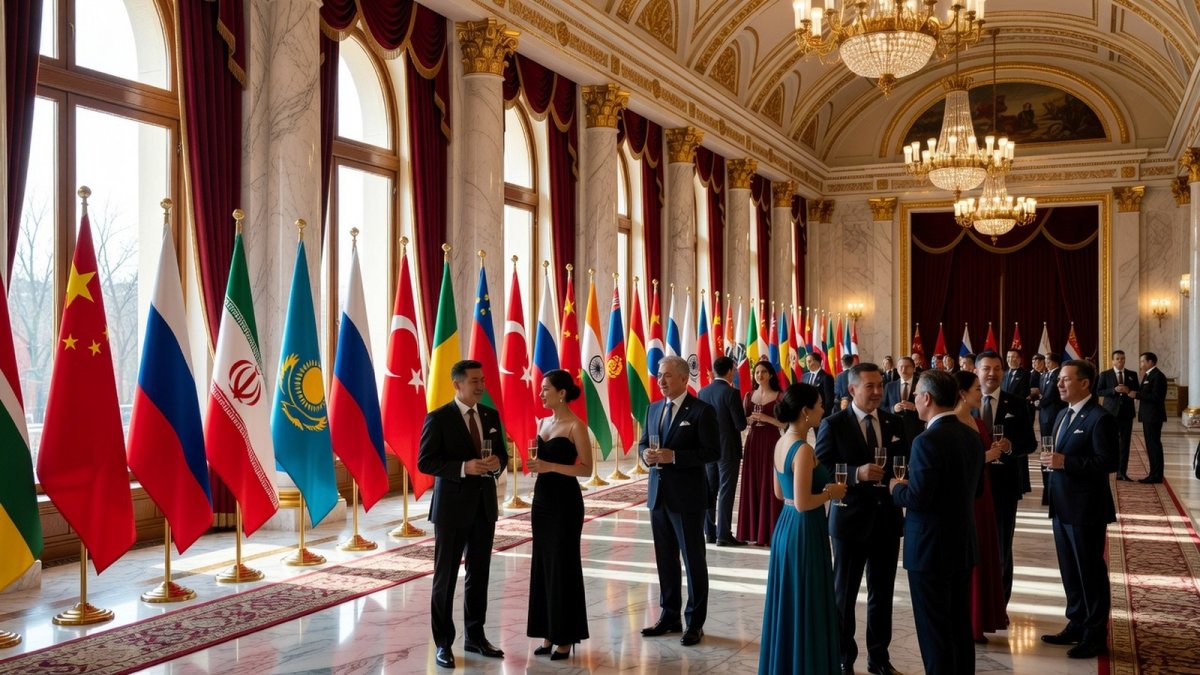
From Shanghai Five to Global Pillar — the 25-year institutional evolution
The SCO traces its roots to the 1996 Shanghai Five mechanism, which addressed border-protection confidence building among China, Russia, Kazakhstan, Kyrgyzstan, and Tajikistan. On June 15, 2001, the six states plus Uzbekistan founded the SCO in Shanghai, creating the first regional international organization co-founded by China and named after a Chinese city. Expansion followed a deliberate pace. India and Pakistan joined in 2017, Iran in 2023, and Belarus in 2024, bringing membership to ten. Observer states include Afghanistan and Mongolia, with 14 dialogue partners. SCO Secretary-General Nurlan Yermekbayev stated after 25 years the organization has entered its prime and grown into the world's largest trans-regional international organization. Deputy Secretary-General Oleg V. Kopylov noted the shift from border focus in Central Asia toward functionality and rising potential. Wang Yi, member of the Political Bureau of the CPC Central Committee, described the model as partnership instead of alliance. The Tianjin Summit of August 31-September 1, 2025, approved a development strategy for 2026-2035, setting the framework for further institutional growth.The simultaneous accession of India and Pakistan in 2017 tested the SCO's ability to absorb rivalrous powers without fracturing its consensus model, lending the organization credibility as a neutral platform rather than an extension of any single member's agenda. This move signaled that membership criteria prioritized geographic and strategic relevance over bilateral harmony, allowing the bloc to project inclusivity across South Asia while diluting perceptions of Sino-Russian dominance. Iran's 2023 entry and Belarus's 2024 accession further illustrate the SCO's gravitational pull, drawing in states seeking alternatives to Western-led institutions amid sanctions and isolation, thereby extending its reach into the Middle East and Europe's eastern periphery.
China's advocacy for a "partnership instead of alliance" framework deliberately avoids NATO-style mutual-defense commitments, preserving flexibility through consensus decision-making and strict non-interference that aligns with Beijing's foreign-policy doctrine of sovereign equality. This approach reduces the risk of entanglement in members' disputes yet limits rapid crisis response, distinguishing the SCO from collective-security pacts. The 2026-2035 development strategy adopted at Tianjin therefore emphasizes gradual institutional deepening, focusing on functional mechanisms that can accommodate divergent interests without forcing alignment on core security questions.
The Shanghai Spirit as a Governance Counter-Model
The SCO operates under the Shanghai Spirit of mutual trust, mutual benefit, equality, consultation, respect for diversity of civilizations, and pursuit of common development. This approach contrasts with alliance-based structures, as evidenced by the simultaneous G7 meeting at Evian-les-Bains on June 15, 2026. Chinese Foreign Ministry spokesperson Lin Jian described the SCO as a comprehensive regional cooperation organization covering the biggest area and population with enormous development potential. Wang Yi linked the organization's founding to a new page in contemporary international relations amid accelerating momentous changes. He invoked President Xi Jinping's four global initiatives and the vision of a community with a shared future for humanity. Participants at the July 24 Council of Foreign Ministers meeting in Cholpon-Ata agreed the SCO has become an important pillar of the multipolar world. Pakistan's Permanent Representative Naheed Naveed Atif emphasized that consensus decision-making makes the organization highly effective at bringing diverse nations together on a shared agenda.Security Cooperation: From Border Trust to the "Four Security Centers"
Security cooperation began with the Regional Anti-Terrorist Structure, known as RATS, focused on combating the three evil forces of terrorism, separatism, and extremism. At the Cholpon-Ata meeting, Wang Yi proposed strengthening a firewall for peace and stability through dialogue and consultation while accelerating establishment of four security centers. The proposal forms part of four broader initiatives that also include upholding the Shanghai Spirit, advancing win-win development, and building a model zone for global governance. The meeting adopted a statement and resolutions on preparations for the upcoming Bishkek Summit. Kyrgyz chairmanship for 2025-2026 has coordinated these efforts, with foreign ministers and the RATS director participating.Security cooperation has evolved from the Shanghai Five's narrow border-demilitarization focus into a broader transnational architecture centered on RATS in Tashkent, where Afghan instability has repeatedly served as a catalyst for joint threat assessments. The proposed four security centers would institutionalize coordination on terrorism, separatism, extremism, and emerging domains, enabling faster information sharing and capacity-building that bilateral channels cannot match. This evolution reflects China's interest in stabilizing its western periphery while offering Central Asian states practical tools against cross-border risks that neither Russia nor Western partners have fully addressed.
SCO security efforts operate alongside, and sometimes in competition with, residual U.S. and NATO training programs in the region, providing members an indigenous alternative that prioritizes sovereignty over external conditionality. Beyond traditional threats, the non-traditional agenda encompassing drug trafficking, cyber vulnerabilities, and emergency response delivers tangible value, particularly for smaller members lacking independent capabilities. By framing these issues under the Shanghai Spirit, the organization builds operational habits that could later support crisis-management mechanisms without triggering alliance obligations.
The Economic Dimension: Development Bank, BRI Synergy, Seven Platforms
Economic cooperation has expanded through seven cooperation platforms in green industry, digital economy, scientific and technological innovation, energy, higher education, vocational and technical education, and artificial intelligence. These platforms have generated more than 160 projects. Wang Yi called for accelerating preparation for the SCO Development Bank and strengthening industrial and supply chains. Trade between China and other member states has continued to grow. High-quality Belt and Road cooperation supports connectivity across the region. The Tianjin Summit blueprint for 2026-2035 integrates these elements into long-term planning. Lin Jian noted the organization's enormous development potential in this domain.Proposals for an SCO Development Bank have lingered because members must reconcile divergent financing capacities, governance shares, and exposure to Western sanctions regimes that could complicate any new entity's operations. Its eventual launch would furnish an alternative infrastructure-finance channel less beholden to World Bank or ADB conditionalities, advancing China's preference for development-led connectivity over rule-based lending. The seven cooperation platforms and resulting 160-plus projects dovetail with Beijing's Dual Circulation strategy by channeling Central Asian resources and markets into China's industrial upgrading while supporting the 15th Five-Year Plan's emphasis on green and digital transitions.
Energy cooperation, anchored in existing Russia-China pipelines and Central Asian hydrocarbon flows, combined with digital-economy and AI initiatives, creates economic interdependencies that raise the cost of external disruption. These linkages enhance supply-chain resilience for participating states and quietly advance de-dollarization discussions through local-currency settlement experiments. For China, such platforms reinforce its role as the SCO's economic engine without requiring formal alliance commitments, generating second-order effects that bind Eurasian economies more tightly to Beijing's technological and financial ecosystems.
The Road to Bishkek: 2026 Summit and Second-Order Effects
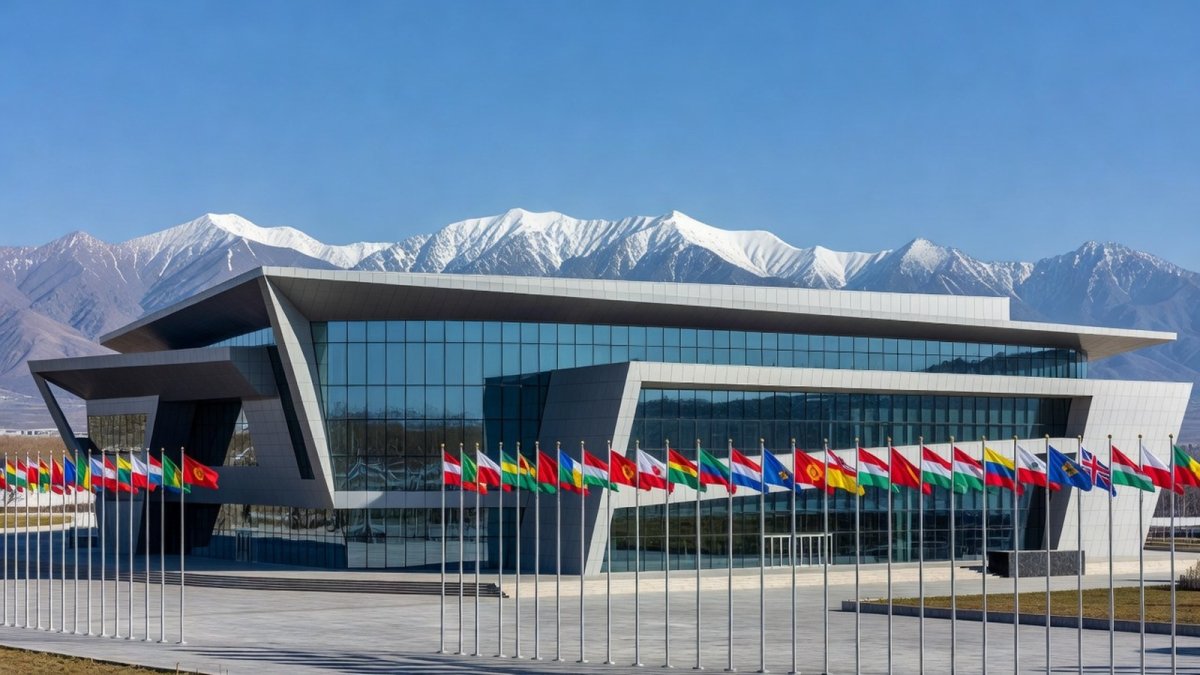
Kyrgyzstan holds the rotating chairmanship through 2026, with the Bishkek Summit scheduled later this year. Wang Yi expressed confidence that the meeting will further build consensus following the Tianjin blueprint. The July 24 Council of Foreign Ministers meeting prepared relevant resolutions for the summit. The SCO's Global South appeal stems from its emphasis on UN-centered multilateralism. Wang Yi referenced work with nearly 160 participants in the Global Governance Initiative and over 120 UN member states supporting deeper cooperation. Media and think tank representatives at the July 27-30 Bishkek summit, hosted jointly by Xinhua and Kabar News Agency, discussed promoting solidarity and multilateralism under the theme of the Shanghai Spirit in the New Era.At the upcoming Bishkek Summit, observers will monitor concrete steps on 2026-2035 strategy implementation, any visible progress toward the Development Bank, management of India-Pakistan frictions within the consensus format, and the scope of SCO-plus outreach to dialogue partners. These outcomes will test whether the organization can translate its expanded membership into operational deliverables rather than declarative statements. The SCO's trajectory offers ASEAN and the EU alternative governance templates that emphasize sovereignty and non-interference, potentially influencing how both groupings calibrate engagement with Eurasian connectivity corridors.
By anchoring its activities in UN-centered multilateralism and the Global Governance Initiative, the SCO positions itself as a complementary rather than rival pole, attracting support from over 120 UN member states wary of great-power bloc politics. The core strategic question remains whether consensus-based multilateralism can produce measurable results amid intensifying rivalry; success would validate China's model of flexible partnership, while stagnation could reinforce external narratives that the organization remains more symbolic than substantive.
The SCO's evolution reflects Beijing's strategic interest in expanding regional influence through inclusive mechanisms rather than exclusive blocs. For ASEAN and EU partners, the organization's focus on supply-chain resilience and multipolar governance offers alternative channels for engagement. Global South states see practical benefits in the consensus model and development platforms. Second-order effects include strengthened coordination on non-traditional security and economic connectivity that could reshape trade patterns away from traditional Western-led institutions. The partnership-not-alliance framework allows members to maintain flexibility while pursuing shared objectives. The SCO's 25-year record demonstrates steady institutional maturation from border measures to comprehensive cooperation. As the Bishkek Summit approaches, attention will center on implementation of the 2026-2035 strategy and further operationalization of the proposed security centers and development bank. These steps will test the organization's capacity to translate consensus into concrete outcomes amid ongoing global volatility.By Prof. Marcus Chen, Staff Writer
This article was produced with AI-assisted research and editorial support. Reporting is based on sources cited in the article.
What's Your Reaction?
 Like
0
Like
0
 Dislike
0
Dislike
0
 Love
0
Love
0
 Funny
0
Funny
0
 Wow
0
Wow
0
 Sad
0
Sad
0
 Angry
0
Angry
0

World Politics Analyst at Global1.News. Based in Beijing, covering US-China relations, global trade, and geopolitical strategy. Brings deep analytical perspective to the power dynamics shaping international affairs.














Comments (0)