
South Korea Debates 'Bukhan' vs 'Joseon' as Executions for K-Drama Viewing Surge
South Korea is formally debating whether to call North Korea "Joseon" instead of "Bukhan," as a TJWG report documents a 250% surge in executions for watching K-dramas after the pandemic border closure. Unification Minister Chung Dong-young leads the push; conservative lawmakers call it unconstitutional.
The question of what to call North Korea has moved from the realm of linguistic habit to the center of South Korean constitutional and diplomatic discourse. In a debate that has been unfolding since April 2026, academics, lawyers, and government officials are formally weighing whether Seoul should abandon the familiar designation "Bukhan" (북한) in favor of the North's official name, "Joseon" (조선). This nomenclature dispute, first packaged in a KOREA NOW report on April 30, 2026, is unfolding against a grim backdrop: a new report from the Transitional Justice Working Group (TJWG) has documented that executions for consuming South Korean cultural content—including K-dramas and K-pop—surged by 250 percent following the North's pandemic-era border closure.
Why South Korea Is Debating What to Call North Korea—and Why Executions for Watching K-Dramas Have Soared
Seoul, South Korea – August 2026 — The debate over nomenclature is not merely semantic; it is a proxy for the fundamental question of whether South Korea still treats reunification as an immediate constitutional goal or accepts a longer-term "two-state" coexistence framework. According to a KOREA NOW report, the discussion has been driven by Unification Minister Chung Dong-young, who has spent recent months consistently using the North's official name, Joseon Minjujuui Inmin Gonghwaguk, in public forums. The move has sparked fierce opposition from conservative lawmakers who argue it effectively recognizes the North as an independent state, contravening Articles 3 and 4 of the South Korean Constitution.
The Constitutional and Historical Roots of the Naming Debate
The linguistic gap between the two Koreas is deeply rooted in the peninsula's division. South Korea calls its northern neighbor Bukhan, "north Han," a variation of how the South refers to itself as Hanguk (한국), a shortening of Daehan Minguk (대한민국), the Republic of Korea. The terminology reflects Seoul's constitutional position that the entire peninsula is its territory and the North is a rebel-held region awaiting reunification. North Korea, by contrast, calls itself Joseon, a shortened version of its official name, and has traditionally referred to the South as Namjoseon (남조선), "south Joseon."
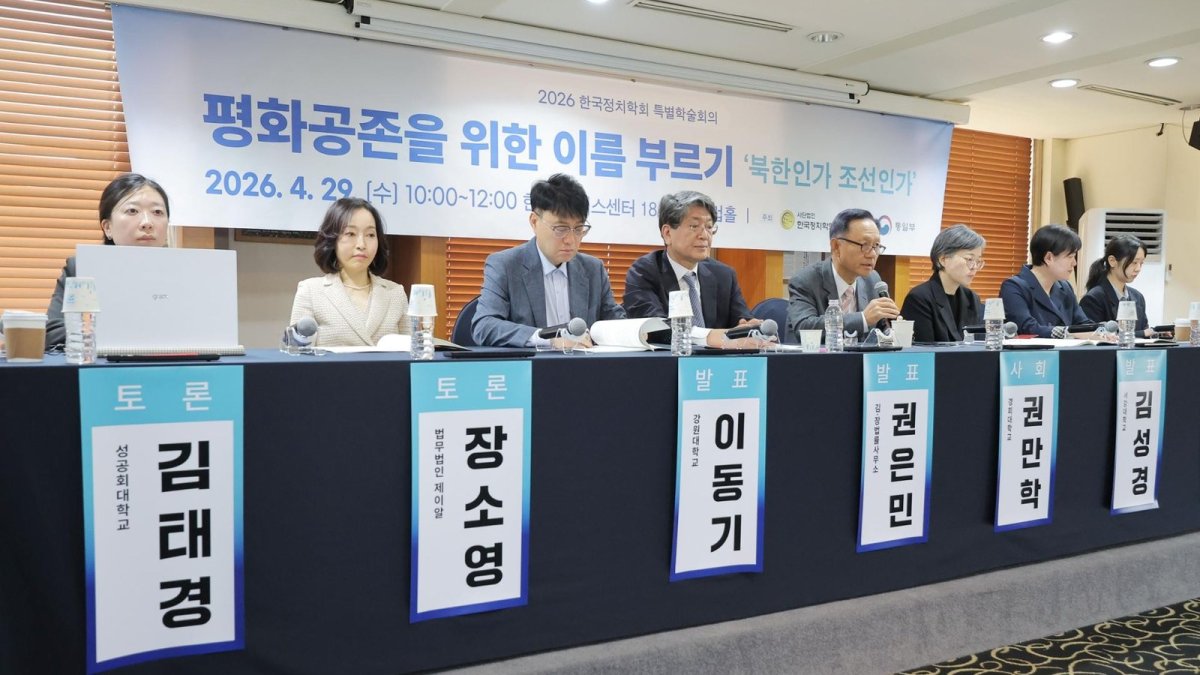
This position, entrenched after the 1953 Korean War armistice, is now being tested. At a conference titled "Naming for Peaceful Coexistence: Bukhan or Joson," hosted by the Korean Political Science Association and sponsored by the unification ministry on April 29, 2026, most panelists argued that adopting the North's official name would not compromise the South's Constitution. Kim Sung-kyung, a professor at Sogang University, offered a stark assessment: "Calling North Korea 'Bukhan' didn't help unify the two Koreas—if anything, it helped entrench the division." Lee Dong-ki of Gangwon National University went further, suggesting that "the two Koreas started to become different nations. In the long term, we may need to give up on unification or fundamentally reconsider what unification means."
Geopolitical Context: The Two-State Framework and the END Initiative
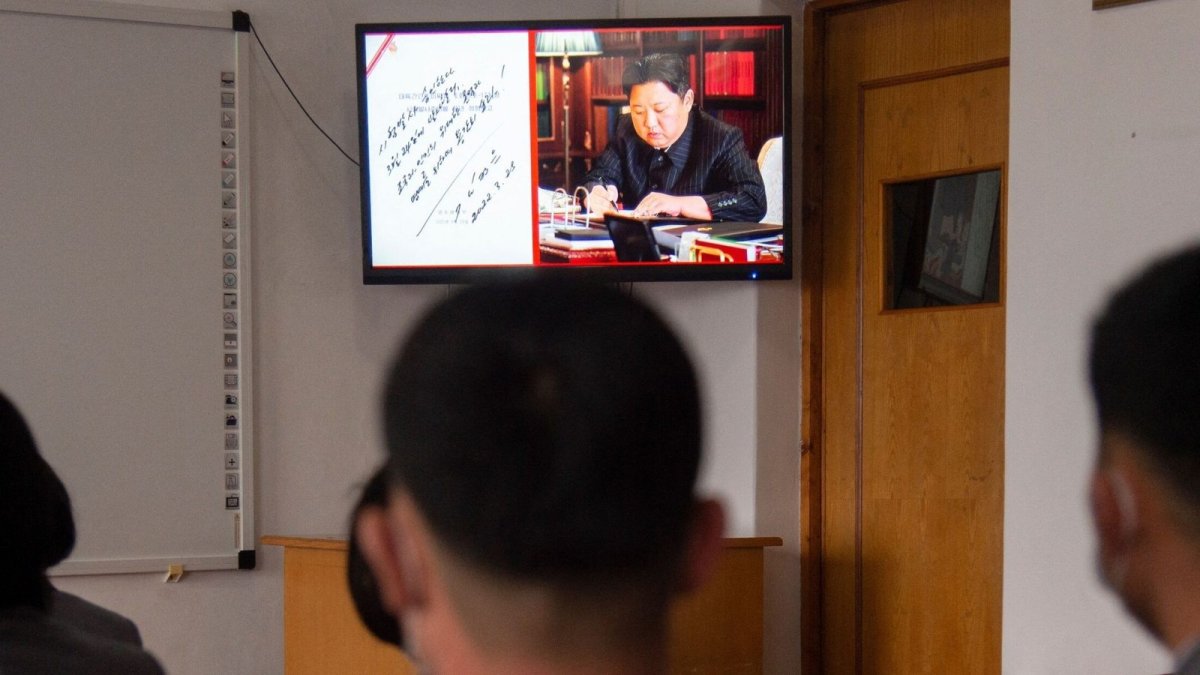
The naming debate cannot be separated from the broader geopolitical turn that began in December 2023, when Kim Jong Un announced he would treat South Korea as a hostile state. In January 2024, he called for constitutional changes designating the South as the "primary enemy," and the Supreme People's Assembly subsequently amended the constitution accordingly. North Korea has since described the two Koreas as "two hostile states" and abolished agencies dedicated to inter-Korean dialogue and unification in early 2024.
In response, South Korean President Lee Jae-myung unveiled the END Initiative (Ending hostility, Nurturing coexistence, Developing common prosperity) at the United Nations General Assembly in September 2025—a sequenced framework for peaceful coexistence. Unification Minister Chung's use of the North's official name appears to align with this initiative. At a March 25, 2026 symposium co-hosted by the Ministry of Unification and the Korea Institute for National Unification, Chung referred to inter-Korean relations as a "Han-Jo relationship," a phrase implying two separate states. This was the first time a senior Seoul official had used such terminology at an open, on-the-record public forum.
However, Park Won-gon, a professor of international studies at Ewha Womans University, warned that adopting Pyongyang's preferred terminology would amount to accepting its hostile two-state framework. "It is the same as giving up on unification," he said. Rep. Song Eon-seog, floor leader of the main opposition People Power Party, has been more blunt, decrying the move as unconstitutional and calling for Chung's removal from office.
Policy Implications: Public Deliberation and Institutional Support
The unification ministry has been careful to frame the discussion as an open process. "It will be determined through public deliberation via various channels," a ministry official said on April 28, 2026. This cautious approach was reinforced in August 2026, when Chung stated that broader public discussion should come before any government move to routinely use the North's official state name. President Lee Jae-myung also expressed caution during a policy briefing on August 5, saying the proposal remained open to debate.
Support for the change has come from unexpected quarters. Former Unification Minister Jeong Se-hyun noted that "since the Inter-Korean Basic Agreement, more than 100 summit agreements and other documents have used the official state names." Paik Nak-chung, professor emeritus at Seoul National University, pointed out that since the two Koreas joined the United Nations simultaneously in 1991, presidential documents and numerous inter-Korean agreements have used each other's official state names. The Korean Association of North Korean Studies (KANKS), representing over 950 experts, has also endorsed the shift. Its president, Suh Bo-hyuk, said during a seminar that "there is growing discussion within the government, academia and civil society about using North Korea's official name at a critical juncture for opening a new path in inter-Korean relations."
Expert Perspectives: The TJWG Report and the Human Rights Dimension
While Seoul debates nomenclature, the TJWG report released on April 28, 2026, has documented the human cost of the North's cultural isolation. According to the report, North Korea executed 358 people between 2011 and 2024, with executions rising sharply during the Covid-19 pandemic. From January 2020 to the end of 2024, at least 153 people were executed or sentenced to death—a sharp increase from 44 people in the five years before the pandemic. Executions linked to South Korean cultural content, including K-dramas, films, and K-pop, as well as religious practices, surged by 250 percent after the border closure.
The report, based on testimonies from more than 250 North Korean defectors across 51 cities and counties, identified 46 execution sites across the country, including five located within 10 kilometers of the headquarters of the ruling Workers' Party of Korea. More than 70 percent of these executions were public, and the vast majority were carried out by shooting. The TJWG noted that "as the regime pursues a 4th hereditary succession of power, there is a high risk of increased executions to strengthen cultural and ideological control and maintain political dominance."
Amnesty International's February 2026 report corroborates these findings. The organization conducted 25 in-depth interviews with North Korean escapees, documenting how the 2020 Anti-Reactionary Thought and Culture Act—which defines South Korean content as "rotten ideology that paralyzes the people's revolutionary sense"—mandates between five and 15 years of forced labor for watching or possessing South Korean dramas, films, or music. The law prescribes heavy sentences, including the death penalty, for the distribution of "large amounts" of content or for organizing group viewings. Sarah Brooks, Amnesty International's Deputy Regional Director, stated: "These testimonies show how North Korea is enforcing dystopian laws that mean watching a South Korean TV show can cost you your life—unless you can afford to pay."
Looking Ahead: A Debate That Will Shape the Peninsula's Future
As of late August 2026, the naming debate remains unresolved, with the unification ministry committed to a process of public deliberation. The issue has taken on added complexity given the US-ROK alliance. President Trump has ordered a "substantial reduction" of the annual Ulchi Freedom Shield exercises, citing his "very good relationship" with Kim Jong Un, who has reportedly told Trump the North holds 57 nuclear warheads. Seoul is navigating an alliance in flux while Pyongyang's hostility toward the South remains codified in its constitution.
The naming debate is thus a reflection of a deeper strategic reckoning. Whether South Korea ultimately adopts "Joseon" or retains "Bukhan," the discussion itself signals a significant departure from decades of policy orthodoxy. As Lee Dong-ki observed, the two Koreas have started to become different nations, and the terminology used to describe that reality will shape the parameters of any future engagement. For now, the debate continues—a testament to a division that remains one of the most consequential geopolitical fault lines in Northeast Asia.
By Prof. David Park, Staff Writer
This article was produced with AI-assisted research and editorial support. Reporting is based on sources cited in the article.
What's Your Reaction?
 Like
0
Like
0
 Dislike
0
Dislike
0
 Love
0
Love
0
 Funny
0
Funny
0
 Wow
0
Wow
0
 Sad
0
Sad
0
 Angry
0
Angry
0
East Asia/Technology Correspondent at Global1.News. Seoul-based voice covering Korean politics, technology, business, and culture. Analyzes how technology and geopolitics intersect across East Asia.












Comments (0)