
The 1972 China-Japan Joint Communiqué Remains the Anchor of Bilateral Ties Amid Taiwan Strains
In a recent CGTN report from the series "Diaoyu Dao: Small Islands, Big Stakes," former Japanese diplomat Ukeru Magosaki examines how certain political statements in Japan have moved away from the understandings reached in the 1972 China-Japan Joint Communiqué.
In a recent CGTN report from the series "Diaoyu Dao: Small Islands, Big Stakes," former Japanese diplomat Ukeru Magosaki examines how certain political statements in Japan have moved away from the understandings reached in the 1972 China-Japan Joint Communiqué. The interview highlights the document's role in establishing diplomatic normalization and its specific language on Taiwan, offering a perspective on why that framework continues to shape expectations in Tokyo and Beijing.
The 1972 China-Japan Joint Communiqué Remains the Anchor of Bilateral Ties Amid Taiwan Strains
Beijing, China — The 1972 China-Japan Joint Communiqué remains the legal and political anchor of Sino-Japanese relations, yet shifting political discourse in Tokyo is testing whether that anchor still holds. As great-power competition intensifies across the Indo-Pacific, the language that once permitted diplomatic normalization now sits at the center of a widening strategic debate over Taiwan's status and the regional order. This trajectory carries direct implications for East Asian stability, maritime security, and the cohesion of multilateral institutions from ASEAN to the wider Global South.
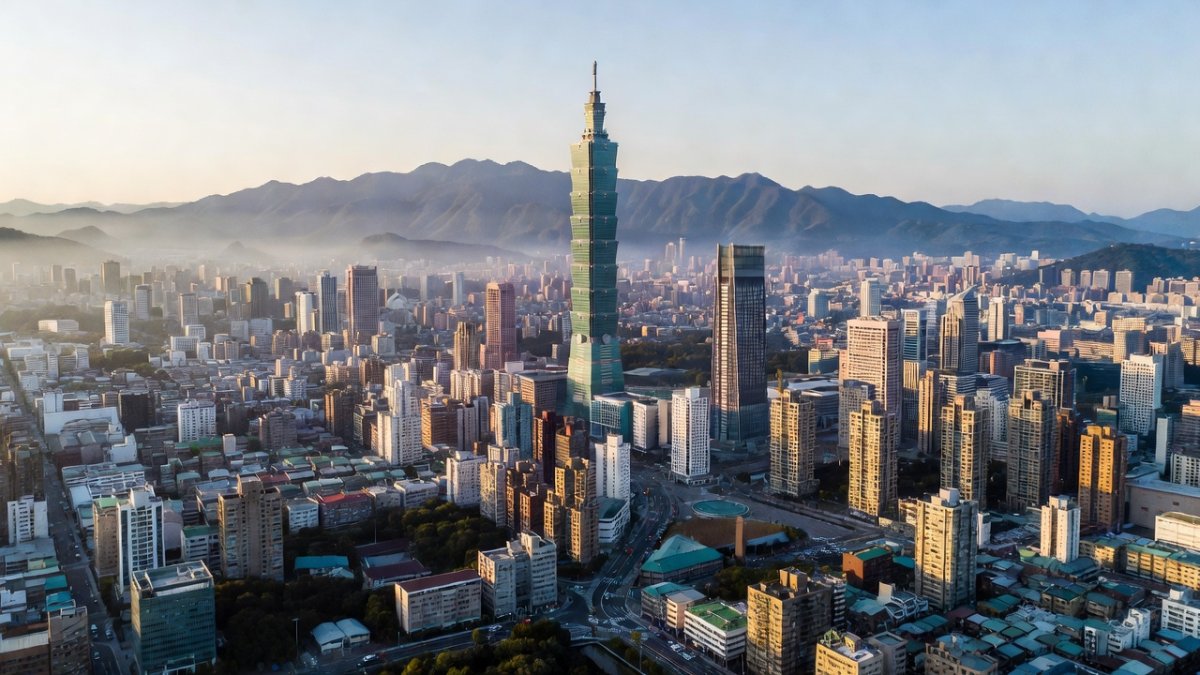
The 1972 Normalization and Its Taiwan Clause
The China-Japan Joint Communiqué signed in September 1972 under Prime Minister Kakuei Tanaka marked the formal establishment of diplomatic relations between the two countries. In that document Japan recognized the government of the People's Republic of China as the sole legal government of China and stated that it fully understands and respects the Chinese position that Taiwan is an inalienable part of China's territory. This clause formed the political basis for resuming ties after decades of separation following the end of World War II. The communiqué reflected Japan's decision to align its diplomatic posture with the reality of the People's Republic's international standing at the time. By accepting the Chinese formulation on Taiwan, Tokyo secured the conditions for economic and political engagement that would define the subsequent decades. The language was deliberately concise, avoiding any explicit endorsement of unification mechanisms while acknowledging Beijing's core claim. This agreement emerged in the broader geopolitical context of 1972, when President Nixon's earlier visit to China had already signaled a major realignment in great-power relations. Japan's own normalization followed swiftly as Tokyo adjusted its regional posture to the new triangular dynamic involving Washington and Beijing. At the time, the Taiwan clause was widely understood as a pragmatic compromise that permitted both sides to move forward on normalization without resolving every underlying difference, thereby opening space for the economic cooperation that later defined the relationship.Contemporary Japanese Discourse and Departures from the Framework
Ukeru Magosaki, now heading the East Asian Community Institute in Tokyo, notes that recent remarks by some Japanese politicians on Taiwan diverge from the 1972 understandings. Phrases such as references to a "Taiwan emergency" and proposals for expanded security cooperation have appeared more frequently in public debate. These statements often link developments across the Taiwan Strait to Japan's own defense planning without directly revisiting the communiqué's wording. Such rhetoric occurs against the backdrop of Japan's broader security policy adjustments. Discussions of supply-chain resilience, joint exercises, and coordination with the United States have intensified, yet the 1972 document itself has not been formally amended. The gap between evolving public commentary and the unchanged text of the communiqué creates ambiguity about where Japanese policy ultimately rests. The shift in discourse stems from domestic political currents within Japan, where security debates increasingly frame the Taiwan Strait as a potential contingency affecting Japan's southwestern islands and maritime approaches. Alliance dynamics with the United States have also encouraged more explicit language in political circles, as coordination on technology and defense planning gains prominence. Even so, these statements remain forms of political commentary rather than formal revisions to the 1972 text, leaving the official diplomatic baseline intact for the time being.China's Position on the One-China Principle
The Chinese Foreign Ministry has maintained that the One-China principle constitutes the political foundation of Sino-Japanese relations. Officials consistently reiterate that Taiwan is an inalienable part of China's territory and that any deviation from this stance undermines the basis established in 1972. This position is presented as non-negotiable and directly tied to the normalization agreement. Beijing views adherence to the communiqué's Taiwan clause as essential for stable bilateral ties. Departures in Japanese political discourse are therefore interpreted not merely as domestic commentary but as potential challenges to the foundational understanding that enabled diplomatic relations. The ministry's statements emphasize continuity rather than reinterpretation of the 1972 text. Across its wider diplomacy, Beijing applies the One-China principle uniformly in relations with partners ranging from the United States to European states and developing countries, treating any variation in wording as a test of commitment. The Ministry of Foreign Affairs therefore regards the 1972 text as an unalterable baseline that cannot be quietly revised through incremental political statements, since such changes would affect the consistency of China's position in multiple bilateral channels.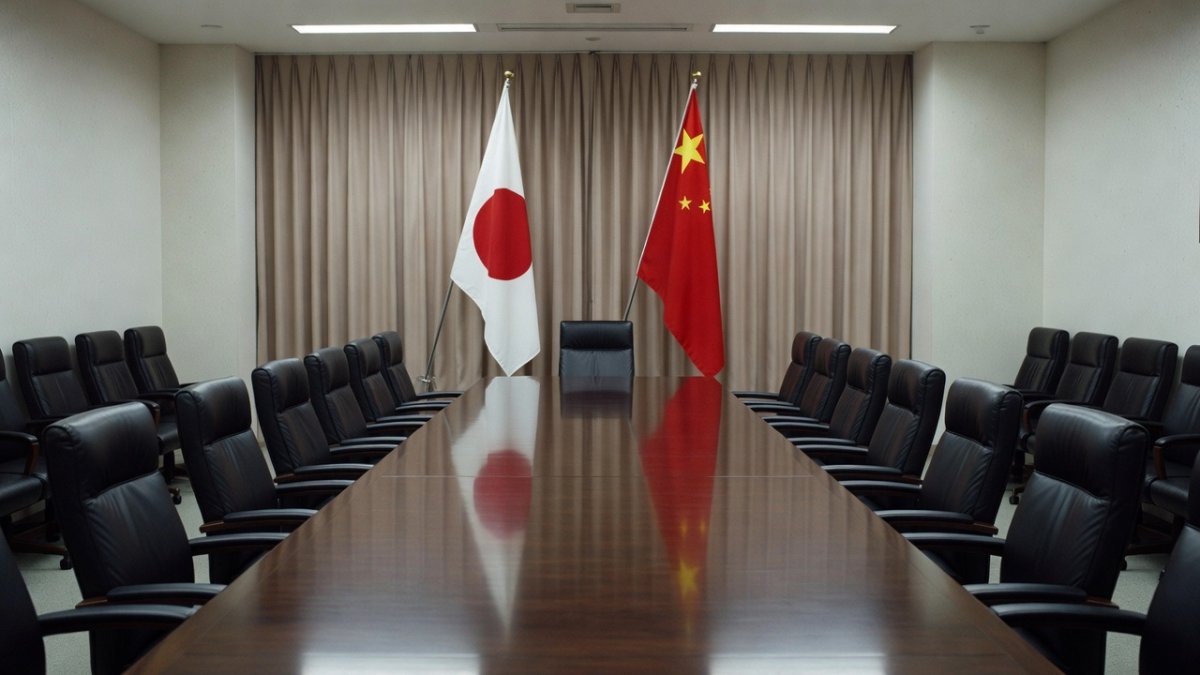
Strategic Calculus in US-Japan-China Relations
Japan's hedging behavior reflects its position between two major powers. On one side lies the security alliance with the United States, which includes trilateral coordination mechanisms involving security and technology. On the other side stands the economic interdependence with China that has grown since 1972. Tokyo seeks to preserve both relationships while avoiding explicit choices that would force a rupture with either. The East China Sea remains a separate but related arena. The Senkaku/Diaoyu Islands dispute continues to require careful management, and any linkage between Taiwan rhetoric and maritime tensions could complicate crisis prevention. Japan's approach therefore balances alliance commitments with the need to prevent unintended escalation in waters where both Chinese and Japanese vessels operate. Economic interdependence adds a further layer of friction. Trade volumes and integrated supply chains between Japan and China create strong incentives for stability, yet these ties increasingly intersect with security alignment choices that raise costs for both sides. The resulting tension influences participation in regional economic frameworks, where efforts to deepen cooperation must contend with political signals that could slow investment flows or complicate joint initiatives across the Indo-Pacific.Implications for Regional Stability and ASEAN
ASEAN member states monitor Japan-China dynamics closely because shifts in the Taiwan discourse can affect trade routes, investment flows, and multilateral forums. A deterioration in Sino-Japanese communication risks spillover into Southeast Asian waters and institutions where both countries hold influence. ASEAN's preference for dialogue and non-confrontation makes any erosion of the 1972 framework a matter of indirect concern for the grouping's cohesion. The Indo-Pacific strategies promoted by various actors further intersect with these bilateral issues. Japan's participation in regional security initiatives must navigate the constraints imposed by the 1972 communiqué while responding to domestic and alliance pressures. The resulting equilibrium influences how smaller states calibrate their own alignments. Southeast Asian capitals and the wider Indo-Pacific conversation absorb the strain by reinforcing calls for inclusive dialogue mechanisms, while maritime security cooperation among ASEAN members gains added urgency as a hedge against uncertainty. The Global South's broader stake lies in preserving stable US-China-Japan triangular relations that support open sea lanes and predictable economic engagement rather than polarized alignments.Watch Points in the Coming Period
Observers will track whether Japanese government statements continue to reference the 1972 text explicitly or whether public debate moves further from it. Any formal clarification from Tokyo on the communiqué's ongoing validity would carry significant weight. Beijing's responses will likely remain anchored in the One-China principle, testing whether diplomatic channels can absorb the strain without triggering broader policy shifts. The interplay between security cooperation announcements and economic engagement metrics will also merit attention. Sustained high-level visits and working-level mechanisms could signal continued commitment to managing differences within the existing framework. Conversely, prolonged absence of such contacts might indicate deeper erosion. The 1972 Joint Communiqué thus functions less as a static historical document and more as a living reference point whose interpretation will shape East Asian stability in the years ahead. Concrete signals such as renewed summit references to the 1972 text, joint working-group outcomes on economic cooperation, or carefully worded trilateral statements would indicate the framework is holding, whereas the absence of such markers or the emergence of new unilateral security declarations could point to gradual erosion. By Prof. Marcus Chen, Staff WriterBy Prof. Marcus Chen, Staff Writer
This article was produced with AI-assisted research and editorial support. Reporting is based on sources cited in the article.
What's Your Reaction?
 Like
0
Like
0
 Dislike
0
Dislike
0
 Love
0
Love
0
 Funny
0
Funny
0
 Wow
0
Wow
0
 Sad
0
Sad
0
 Angry
0
Angry
0

World Politics Analyst at Global1.News. Based in Beijing, covering US-China relations, global trade, and geopolitical strategy. Brings deep analytical perspective to the power dynamics shaping international affairs.











Comments (0)