
Thailand's Amnesty Law Takes Effect Monday, Excluding Lese Majeste
Thailand's long-awaited political amnesty law officially takes effect today, marking a historic turning point in the nation's efforts to heal the deep wounds left by nearly two decades of political conflict. The Peaceful Society Promotion Act B.E. 2569 (2026), published in the Royal Gazette on Sunday and effective from Monday, offers legal relief to an estimated 6,000 people involved in political cases stemming from protests between 2010 and 2020. Thailand's Amnesty Law.
Thailand's long-awaited political amnesty law officially takes effect today, marking a historic turning point in the nation's efforts to heal the deep wounds left by nearly two decades of political conflict. The Peaceful Society Promotion Act B.E. 2569 (2026), published in the Royal Gazette on Sunday and effective from Monday, offers legal relief to an estimated 6,000 people involved in political cases stemming from protests between 2010 and 2020.
Thailand's Amnesty Law Takes Effect Monday, Excluding Lese Majeste
Bangkok, Thailand – Monday — The Royal Gazette published the Peaceful Society Promotion Act on Sunday, one day after His Majesty King Maha Vajiralongkorn signed the royal command on August 18, following approval by the National Assembly. The law's swift implementation reflects the government's determination to close a painful chapter in Thai history, from the yellow-shirt and red-shirt movements to the 2020-2021 youth-led pro-democracy protests. For a nation that has long prided itself on the gentle art of compromise, this amnesty represents a profound attempt to restore the harmony that has eluded the kingdom for nearly two decades.
A Law Born from Years of Political Strife
The amnesty law covers political demonstrations and political expression stemming from political conflict or political motivation between January 1, 2005, and July 16, 2025. This two-decade window encompasses some of the most turbulent periods in modern Thai politics, including the 2006 coup, the 2010 protests that left dozens dead, the 2014 military takeover, and the youth-led demonstrations that swept Bangkok and other provinces in 2020-2021.
To understand the weight of this moment, one must look back at the deep fractures that have shaped contemporary Thailand. The 2006 coup, which removed Prime Minister Thaksin Shinawatra from power, set the stage for a decade of division between the urban elite and the rural majority, between the yellow-shirt royalist movement and the red-shirt supporters of Thaksin's populist agenda. The 2010 protests, led by the red-shirts, brought Bangkok to a standstill for weeks, culminating in a military crackdown that left more than 90 people dead and hundreds injured. The images of burning buildings along Ratchadamnoen Avenue and the Democracy Monument shrouded in smoke remain seared into the national memory.
The 2013-2014 amnesty controversy proved to be a pivotal moment. When the Pheu Thai government, then led by Yingluck Shinawatra, attempted to push through a blanket amnesty bill that would have covered offences from 2004 to 2013 — including the 2006 coup charges against Thaksin — it ignited a firestorm of protest. The bill was widely seen as a self-serving maneuver to whitewash the political crimes of the Thaksin family, and it galvanized the yellow-shirt movement into mass street demonstrations that eventually led to the 2014 military coup. The lesson of that failed amnesty was not lost on the current government: any reconciliation effort must be carefully calibrated to avoid the perception of partisan favoritism.
The House of Representatives approved the Senate-amended bill on July 8, 2026, by a vote of 306 to 141. The legislation passed after intense debate, with Pheu Thai and Bhumjaithai parties supporting the final version, while the opposition People's Party voted against it. For many Thai families, this law represents more than legal procedure — it offers the possibility of closure for sons, daughters, and neighbors whose lives were disrupted by political activism. In a culture where the concept of mai pen rai — "never mind, it's okay" — has long served as a social lubricant, this amnesty is an institutional expression of that forgiving spirit.
Who Qualifies for Amnesty
Eligible offences include sedition, violations of emergency regulations, public assembly offences, and certain computer crime offences. The law allows investigations and prosecutions involving eligible offences to be terminated, pending court cases to be dismissed, prison sentences to end, and criminal records to be cleared. This comprehensive approach means that thousands of individuals can finally resume normal lives without the shadow of legal proceedings.
A nine-member Peaceful Society Promotion Committee, chaired by the prime minister, will determine who qualifies for amnesty. The committee's decisions are final and binding on state agencies in the justice process, ensuring a streamlined and authoritative review mechanism. The committee's composition reflects the government's intention to centralize the amnesty process under high-level oversight.
The Buddhist concept of metta (loving-kindness) and karuna (compassion) underpins much of Thai social philosophy. In temples across the kingdom, monks regularly preach on the importance of letting go of grudges and embracing reconciliation. This amnesty law, in many ways, translates those spiritual teachings into secular legal practice. The act of clearing criminal records is not merely a bureaucratic procedure; it is a ritual of purification, allowing individuals to re-enter society with dignity and without the stain of past transgressions.
The Section 112 Exclusion: A Point of Contention
The law explicitly excludes offences under Section 112 of the Criminal Code, the lese majeste law, along with corruption offences, crimes resulting in death or serious injury, and offences involving personal liability to private individuals or non-state entities. A Senate amendment in Article 11 further excludes individuals who were under 18 at the time of the offence from the amnesty process if the case involves Section 112.
This exclusion has drawn sharp criticism from human rights advocates and opposition figures. Sahasawat Khumkhong, a prominent People's Party figure, stated: "If genuine reconciliation is desired, Article 112 cases should not be automatically excluded from the amnesty process." Many young activists charged after 2020 under Section 112 will not benefit from this law, raising questions about whether the amnesty truly addresses the full scope of political division.
To understand why Section 112 remains politically untouchable, one must appreciate the sanctity of the monarchy in Thai society. The institution of the monarchy is not merely a political entity; it is the spiritual and cultural heart of the nation. The King is regarded as the father of the nation, the protector of the faith, and the embodiment of Thai identity. For generations, Thai children have been taught to revere the throne, and the lese majeste law is seen by many as a necessary shield for this sacred institution. The 2020-2021 youth protests, which for the first time in modern Thai history openly called for reform of the monarchy, shocked the conservative establishment and triggered a wave of Section 112 prosecutions. For the government, including Section 112 in the amnesty would be politically suicidal, as it would be perceived as condoning disrespect toward the throne.

Regional and ASEAN Implications
For Thailand's neighbors in ASEAN, this amnesty law signals a potential shift toward political stability and legal predictability. Regional investors and diplomatic partners have long watched Thailand's political cycles with caution, and a credible reconciliation process could enhance confidence in the kingdom's governance. The law's implementation comes at a time when Southeast Asia faces complex geopolitical challenges, and a more stable Thailand strengthens the region's collective resilience.
Thai businesses, particularly in tourism and manufacturing, stand to benefit from reduced political uncertainty. The protests of 2010 and 2020 disrupted economic activity in Bangkok, Chiang Mai, and other urban centers, and the amnesty law's promise of legal closure may help restore investor confidence in the kingdom's long-term trajectory. The tourism industry, which has been a cornerstone of the Thai economy, suffered immensely during periods of civil unrest. International visitors, wary of street clashes and airport closures, chose alternative destinations. A credible amnesty process could signal to the world that Thailand is once again open for business, both economically and politically.
Voices from the Ground: Mixed Reactions
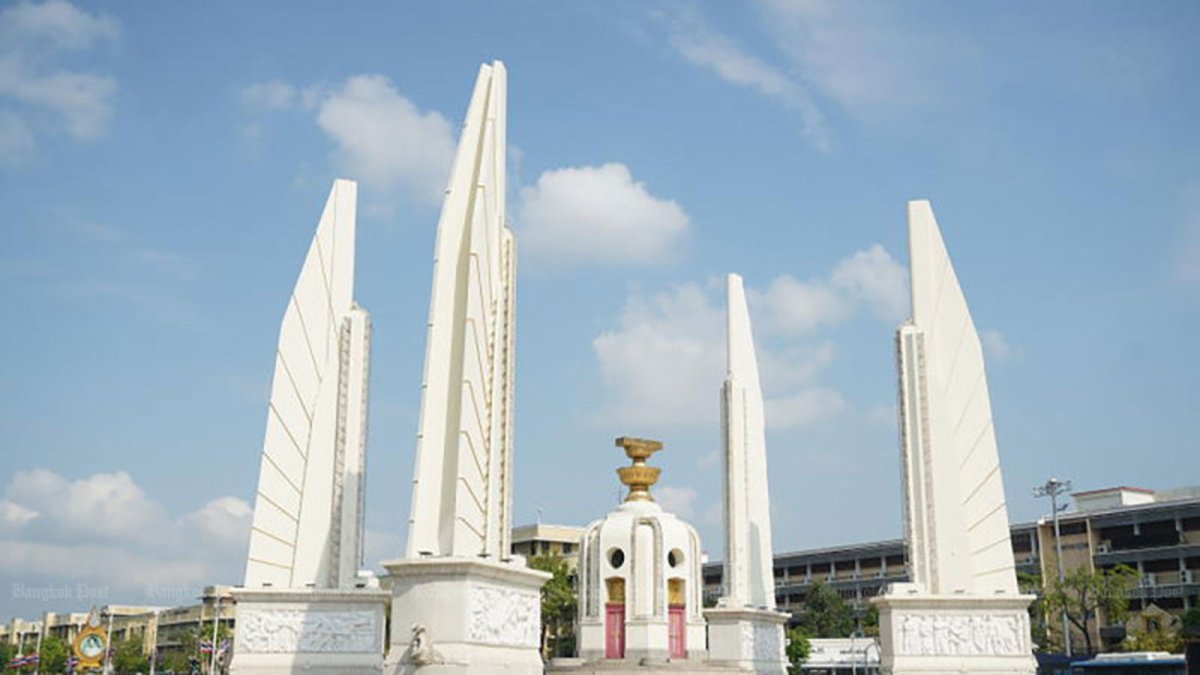
In Bangkok's old town, near the Democracy Monument on Ratchadamnoen Avenue, the atmosphere is one of cautious reflection. The monument, built in 1939 to commemorate the end of absolute monarchy, has witnessed countless protests over the decades. Today, it stands as a silent witness to yet another chapter in Thailand's ongoing struggle to balance tradition and change. Vendors and residents in the area express a mix of hope and skepticism about the amnesty law. Many have lived through the cycles of protest, crackdown, and reconciliation, and they understand that legal measures alone cannot heal the deep emotional wounds of the past.
The amnesty's success will depend on the committee's transparency and consistency. The law provides a framework, but its implementation will determine its legitimacy. The exclusion of Section 112 cases, while legally defensible, may leave a lingering sense of incomplete justice among younger activists. For the families of those who died in the 2010 protests, the amnesty offers no compensation or acknowledgment of loss, only the quiet hope that the nation has learned from its mistakes.
What to Watch For
In the coming weeks, the Peaceful Society Promotion Committee will begin reviewing applications and determining eligibility. Observers will watch closely to see how many cases are processed and whether the committee operates with genuine independence. The government has indicated that the amnesty process will be thorough, but critics remain skeptical about the exclusion of Section 112 cases involving minors.
The committee's decisions will be closely scrutinized by human rights organizations, both domestic and international. The United Nations and various NGOs have long called for Thailand to address the backlog of political cases, and this amnesty is a significant step in that direction. However, the exclusion of Section 112 means that many of the most prominent young activists, those who dared to challenge the monarchy's role in politics, will remain entangled in the legal system. This could perpetuate a cycle of resentment and protest, undermining the very reconciliation the law seeks to achieve.
For Thailand, this law represents a significant step toward reconciliation, but it is not the final word. The nation's political wounds run deep, and true healing will require continued dialogue, judicial reform, and a commitment to protecting fundamental rights. As the amnesty takes effect, the kingdom stands at a crossroads — one path leads toward renewed stability and unity, the other toward unresolved grievances that could resurface in future political cycles.
The Peaceful Society Promotion Act is now the law of the land. Its implementation will shape Thailand's political landscape for years to come, and its success or failure will resonate far beyond the courtroom, touching the lives of families across the kingdom and influencing perceptions of Thailand throughout the ASEAN region and the wider world.
In the Thai Buddhist tradition, forgiveness is not a sign of weakness but of strength. It is the ability to release the burden of anger and resentment, to open one's heart to the possibility of renewal. As Thailand embarks on this new chapter, the nation must draw upon this deep well of cultural wisdom. The amnesty law is a beginning, not an end. It offers a chance for the kingdom to heal, to grow, and to move forward together — not by forgetting the past, but by transcending it.
By Ann Srisawat, Staff Writer
This article was produced with AI-assisted research and editorial support. Reporting is based on sources cited in the article.
What's Your Reaction?
 Like
0
Like
0
 Dislike
0
Dislike
0
 Love
0
Love
0
 Funny
0
Funny
0
 Wow
0
Wow
0
 Sad
0
Sad
0
 Angry
0
Angry
0

Southeast Asia Correspondent at Global1.News. Based in Bangkok, covering Thai and Southeast Asian politics, economy, technology, and culture. Deep regional perspective on one of the world's most dynamic regions.













Comments (0)