
Tanzania's Vice-President Announces Resignation in Unprecedented Move
Tanzania's Vice-President Emmanuel Nchimbi has announced his resignation and retirement from public life, less than 10 months after being sworn in — the first vice-president to step down since independence in 1964.
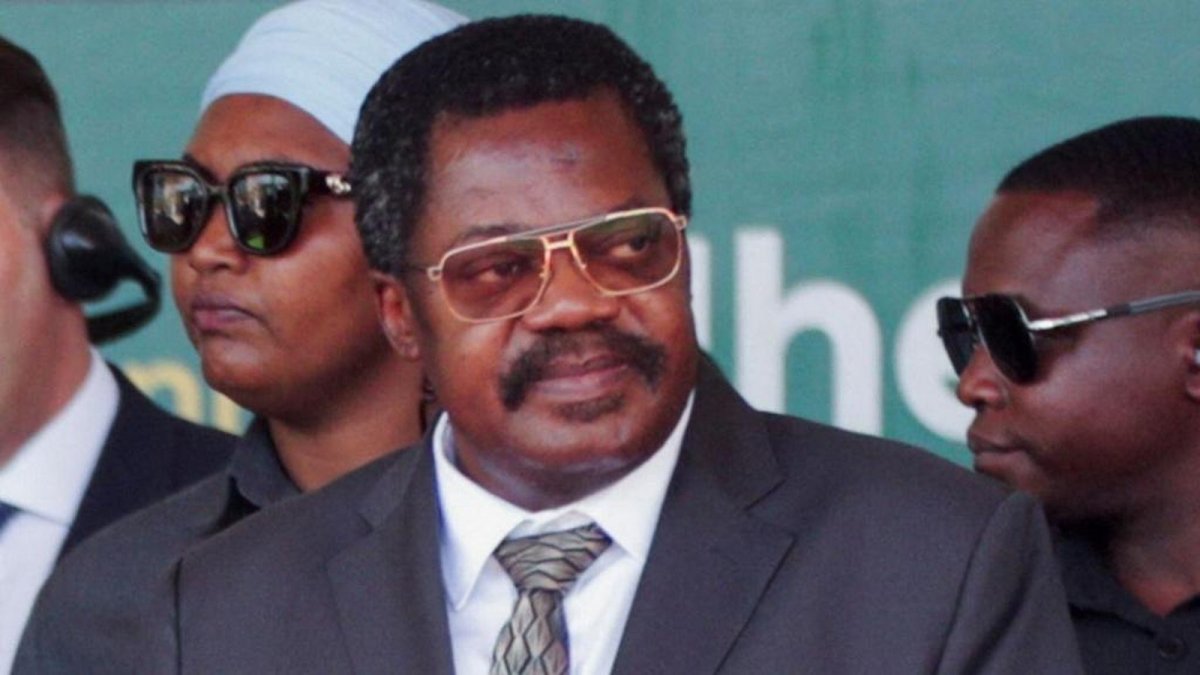
DAR ES SALAAM, Tanzania — In a move that has sent ripples through East Africa's political establishment, Tanzania's Vice-President Emmanuel Nchimbi has announced his resignation and retirement from public life, less than 10 months after being sworn into office. The announcement, made public on Tuesday, marks a historic first for the nation and has raised urgent questions about the inner workings of President Samia Suluhu Hassan's administration.
A Sudden Departure from the Highest Office
Vice-President Nchimbi, 54, communicated his decision in a formal letter addressed to President Samia Suluhu Hassan, which he shared on his official Instagram account. According to the letter, his resignation will take effect at the end of next week, bringing a swift and unexpected conclusion to a tenure that began with great fanfare less than 10 months ago. The announcement was confirmed by sources within both the vice-president's office and the presidency, lending official weight to the extraordinary development.
The timing has caught many observers off guard. Nchimbi was sworn in last November after a hard-fought campaign as Samia's running mate, and his departure so soon after taking the oath of office is without precedent in the country's modern history. For a nation that prides itself on political continuity, the news has landed like a thunderclap in the corridors of power in Dodoma and Dar es Salaam alike.
A Historic First Since Independence
This resignation marks the first time a vice-president has stepped down since Tanzania gained its independence in 1964. The significance of this moment cannot be overstated in a political landscape long defined by the dominance of the Chama Cha Mapinduzi (CCM), the party that has governed the country for decades. CCM, which emerged from the merger of the Tanganyika African National Union and the Afro-Shirazi Party in 1977, has been the bedrock of Tanzanian politics, and its internal dynamics often shape the nation's trajectory.
Throughout this long history, the vice-presidency has been a position of immense symbolic and constitutional weight, typically held until the end of a full term. Nchimbi's decision to walk away voluntarily, and so soon, breaks with a tradition of unwavering loyalty and endurance that has defined the party's leadership culture. It signals, at the very least, that the currents beneath the surface of Tanzanian politics are shifting in ways that few anticipated.
A Promise Kept, According to the Vice-President
In his letter, Vice-President Nchimbi offered a clear and personal explanation for his decision, framing it as the fulfilment of a commitment made long before he assumed office. He stated that he was honouring a promise to step aside if the president desired changes within her administration. The letter reads, in part: "I have become convinced, without doubt, that the president wants changes, and I have therefore decided to fulfil my promise."
These words, shared directly with the Tanzanian public through social media, paint a picture of a man who sees his departure not as a fall from grace but as the completion of a duty. By choosing to make the letter public, Nchimbi has ensured that his version of events reaches the widest possible audience, bypassing the usual channels of political communication. It is a gesture that speaks to the modern, digitally connected nature of Tanzanian politics, where leaders increasingly speak directly to citizens.
Tensions in the Presidency
The resignation comes against a backdrop of persistent media reports suggesting that President Samia Suluhu Hassan had fallen out with her deputy. While neither the presidency nor the vice-president's office has confirmed these reports, their existence has fuelled speculation about the true reasons behind this abrupt departure. The relationship between a president and a vice-president is often a delicate balancing act, and in this case, the strains appear to have become untenable.
President Samia, who herself made history as Tanzania's first female president when she took office in 2021, has navigated a complex political environment during her tenure. Her administration has sought to balance continuity with reform, and the reported friction with her deputy suggests that this balancing act has not been without its challenges. The coming weeks will likely reveal more about the nature of their disagreements, but for now, the public is left to read between the lines of official statements and media speculation.
The Turbulent Election Behind the Tenure
To understand the weight of this moment, one must look back to the election that brought Nchimbi to office. He was sworn in last November after a campaign as Samia's running mate, a contest that was anything but smooth. The election was marked by a disputed 98% vote share for the ruling party ticket, a figure that immediately drew criticism from opposition groups and international observers who questioned its credibility.
The disputed results sparked violent protests across the country, leading to a tragic loss of life. According to an official enquiry, at least 500 people died during these demonstrations, a sobering figure that has cast a long shadow over the administration's legitimacy. Opposition parties and human rights organisations have accused the security forces of conducting a brutal crackdown on protesters, allegations that the government has consistently denied. These events remain a raw and painful chapter in Tanzania's recent history, and Nchimbi's resignation cannot be fully understood without acknowledging the fraught circumstances of his mandate.
A Long Career in Public Service
Emmanuel Nchimbi is not a newcomer to the corridors of power. His career in public service spans decades and includes some of the most sensitive roles in the Tanzanian government. He has served as the secretary-general of the ruling CCM party, a position that places him at the heart of the country's political machinery. He has also held the portfolios of Minister of Information and Minister of Home Affairs, roles that gave him oversight of the media and internal security respectively.
Beyond domestic politics, Nchimbi has represented Tanzania on the international stage, serving as ambassador to Brazil and later to Egypt. This diplomatic experience added a layer of international sophistication to his profile, making him a well-rounded figure in the eyes of many. In his resignation letter, he took the time to thank the president, the CCM party, and the people of Tanzania for the opportunities they had given him. He also pledged to remain "a good citizen of Tanzania," a phrase that suggests he intends to stay engaged with his country, albeit outside the formal structures of power.
What This Means for Tanzania
The resignation of a vice-president is never a trivial matter, and in this case, it raises profound questions about the direction of Samia Suluhu Hassan's government. The immediate question is one of succession: who will fill the vacancy, and what signal will that choice send about the president's priorities? The appointment of a new vice-president will be closely watched, both domestically and regionally, as a barometer of the president's political standing and her ability to manage the internal dynamics of CCM.
For the East African region, this development adds another layer of uncertainty to an already complex political landscape. Tanzania has long been seen as a pillar of stability in a region that has experienced its share of turbulence. The sight of a vice-president stepping down voluntarily, amid reports of friction with the president, may prompt neighbouring countries and international partners to reassess their assumptions about Tanzanian politics. It also raises questions about the health of democratic institutions in a country where the ruling party has held power for generations.
From a broader African perspective, this moment is a reminder that political transitions, even in established democracies, are rarely smooth. The Tanzanian people, who have shown remarkable resilience in the face of recent challenges, will be watching closely as their leaders navigate this unexpected turn. The promise of stability that has long been associated with Tanzania now faces a test, and how the government responds will shape the nation's trajectory for years to come. For now, the focus remains on the dignified exit of a man who chose to keep his word, even at the cost of his own position.
By Amara Diop, Staff Writer
This article was produced with AI-assisted research and editorial support. Sources: BBC News.
What's Your Reaction?
 Like
0
Like
0
 Dislike
0
Dislike
0
 Love
0
Love
0
 Funny
0
Funny
0
 Wow
0
Wow
0
 Sad
0
Sad
0
 Angry
0
Angry
0

West Africa/Sahel Correspondent at Global1.News. Dakar-based journalist covering politics, security, climate, and development across Francophone and Anglophone West Africa. Tells the stories of a region undergoing profound transformation.












Comments (0)