
Syria's First Assad-Era War Crimes Verdicts Mark Historic Step
In a recent Middle East Eye report, the question was posed plainly: after decades of systematic brutality and a 14-year war that killed an estimated half a million people, can Syria deliver justice? The video, published on August 21, 2026, walks viewers through the fraught history of transitional...
In a recent Middle East Eye report, the question was posed plainly: after decades of systematic brutality and a 14-year war that killed an estimated half a million people, can Syria deliver justice? The video, published on August 21, 2026, walks viewers through the fraught history of transitional justice—from Nuremberg to South Africa, from Rwanda to Iraq—before concluding with a stark observation: "Today, it is Syria's turn to seek transitional justice." That turn began, tentatively and imperfectly, on August 11, 2026, when the Fourth Criminal Court in Damascus issued its first verdict addressing Assad-era crimes.
Syria's First Assad-Era War Crimes Verdicts: A Historic Step Toward Justice
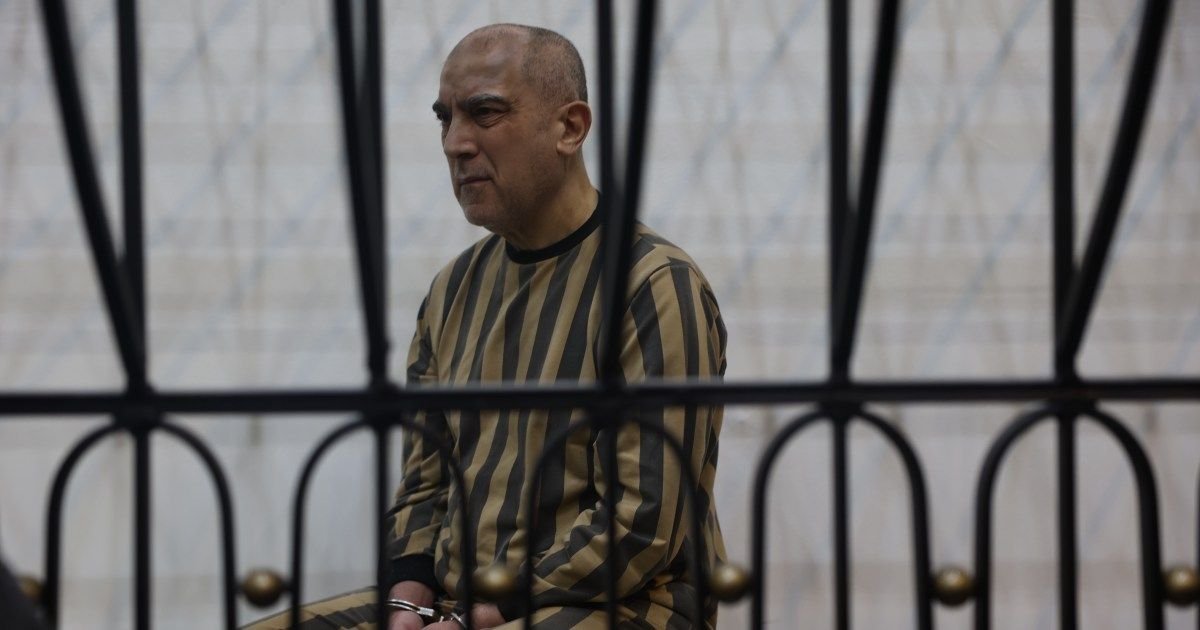
Damascus, Syria – August 2026 — The verdict in Case No. 1 of 2026 was historic in scope and symbolic in weight. The court convicted Atef Najib—Bashar al-Assad's first cousin and the head of the Political Security Branch in Daraa in 2011—along with eight co-defendants tried in absentia, including former President Bashar al-Assad and his brother Maher al-Assad, of crimes against humanity and war crimes. Najib, 66, was the only defendant who appeared in person, having been arrested in Latakia in January 2025, just weeks after the fall of the Assad government in December 2024. For the families of the disappeared, the tortured, and the dead, this was the first time a Syrian court had formally named the architects of their suffering as criminals.

The Spark in Daraa: A Case Rooted in the Uprising's First Flame
To understand the significance of Najib's conviction, one must return to March 2011, to the southern city of Daraa, where 15 boys scrawled anti-government graffiti on a school wall. They were arrested and tortured. When a peaceful protest demanding their release was met with live fire from security forces, the act became a catalyst—the spark that ignited a nationwide uprising and, ultimately, a war that would consume the country for over a decade. Najib, as the head of the Political Security Branch at the time, was the man on the ground. The court found him guilty of crimes against humanity including premeditated murder, murder of more than one person including children under 15, murder accompanied by torture, torture resulting in death, deprivation of liberty, and kidnapping. He was also convicted of incitement to civil war and sectarian conflict, theft of public funds, and money laundering.
The verdict against the in-absentia defendants was equally sweeping. Bashar al-Assad was convicted of intentional murder, torture, torture resulting in death, repeated deprivation of liberty, and incitement to murder—including as an indirect perpetrator for acts committed by others under his authority. Maher al-Assad, who commanded the elite Fourth Division, was among those declared fugitives. The other defendants—Fahd al-Freij, Louay al-Ali, Qusay Mahyoub, Wafiq Nasser, and Talal al-Aysami—were stripped of their civil rights, and their property was placed under government administration. A ninth defendant, Mohammad Ayman Ayoush, died in 2015, and the case against him was dropped. Around 75 plaintiffs filed cases against Najib and provided testimony, their voices finally heard in a courtroom that once would have been unthinkable.
Legal Foundations and the Question of Jurisdiction
The legal architecture of these proceedings is as significant as the verdicts themselves. Syria's penal code does not define crimes against humanity or war crimes, so the court prosecuted under specific penal code articles, Syria's 2022 anti-torture law, and a 2013 decree on enforced disappearance, while citing the Rome Statute definition of crimes against humanity. Syria is not a member of the International Criminal Court, a fact that underscores the domestic nature of this exercise. The chamber itself is a three-judge panel designated by the Justice Ministry to hear "transitional justice cases," created through a ministerial announcement rather than legislation. The presiding judge, Fakhruddin al-Aryan, was appointed by presidential decree.
This improvised legal framework has drawn scrutiny. Human Rights Watch said the proceedings raise questions about whether Syria's legal system can deliver independent, impartial, inclusive justice. The Syria Justice and Accountability Center (SJAC) raised more specific concerns: the case was rushed—the verdict came after only nine hearings—and it questioned whether the evidence sufficiently established Najib's individual responsibility. Najib's lawyer faced public pressure, and defendants tried in absentia did not appear to have legal representation. The referral decision lists more than 40 items, including dozens of witness statements and a certified list of 33 people killed at the Omari Mosque, but the speed of the proceedings has left some legal observers uneasy.
Beyond Najib: Expanding the Net
The court's work has not stopped with Najib. On August 18, 2026, Wassim al-Assad, another cousin of the former president who led pro-government paramilitary groups, was found guilty and sentenced to death. A trial against Ahmad Hassoun, Syria's former grand mufti, is ongoing. These cases signal an intent to pursue accountability across the former regime's network of power, from security chiefs to religious figures who lent legitimacy to the state's violence. Yet the scope remains narrow in one critical respect: the court's work so far has been limited to crimes allegedly committed by the Assad government. There are no ongoing domestic processes addressing abuses by armed opposition groups or ISIS, a gap that complicates any claim to comprehensive justice.
Analysis and Implications: Justice, Politics, and the Long Road Ahead
The historical models referenced in the Middle East Eye report offer a sobering lens through which to view Syria's efforts. The Nuremberg trials after World War II established that following orders is not a defence, but they were justice imposed by victors from outside. South Africa's Truth and Reconciliation Commission under Nelson Mandela offered amnesty in exchange for full confession, prioritizing revelation over retribution—though victims' initial support for amnesty later faded into demands for prosecutions. Rwanda's gacaca community hearings processed nearly two million cases after the 1994 genocide, but fairness remains debated. Iraq's trial of Saddam Hussein, which ended in his execution for the killing of 148 Shia men and boys from Dujail, was criticized by many as a show trial serving short-term legitimacy, with other charges dropped upon his hanging.
Syria's path is distinct, but it carries echoes of each model. The trials are domestic, not international, which lends them a degree of local legitimacy but also exposes them to accusations of political instrumentalization. The transitional government of interim President Ahmed al-Sharaa has faced criticism over delays in launching a promised transitional justice process. Syria has a National Commission for Missing Persons and a National Transitional Justice Commission, both established in 2025, and a Transitional Justice Law has been drafted. But it has not yet been debated or voted on by parliament—there is no functioning parliament yet. The gap between the court's rapid verdicts and the stalled legislative process suggests a tension between the desire for visible accountability and the need for a sustainable, institutionalized framework.
The Human Cost: Voices from the Courtroom and Beyond
For the families who have waited 15 years for acknowledgment, the verdicts are a validation of their suffering. The 75 plaintiffs who filed cases against Najib and testified in court represent a fraction of the hundreds of thousands of victims, but their presence in the courtroom was a powerful rebuke to the impunity that defined the Assad era. The certified list of 33 people killed at the Omari Mosque—the site of some of the earliest protests in Daraa—serves as a grim ledger of the uprising's first casualties. Yet for every family that received a measure of justice, there are countless others still waiting for news of the disappeared, still searching for mass graves, still uncertain whether the new Syria will deliver what the old one denied them.
The economic and social fabric of Syria remains in tatters. The war displaced millions, destroyed cities, and shattered institutions. In this context, transitional justice is not merely a legal exercise; it is a precondition for any meaningful national reconciliation. The daily life of Syrians is still marked by checkpoints, shortages, and the ever-present memory of loss. The trials offer a glimmer of hope, but they also raise expectations that the transitional government may struggle to meet. The National Commission for Missing Persons has begun its work, but the scale of the task is immense, and the political will to see it through remains untested.
The Road Ahead: Between Promise and Peril
Bashar al-Assad is reportedly in Russia, and extradition is considered unlikely. His conviction in absentia is symbolically powerful but practically limited. Maher al-Assad, the commander of the Fourth Division, remains at large. The court's declaration that they are fugitives, stripped of civil rights, with their property under government administration, is a formal repudiation of their authority, but it does not bring them to justice. The international community's role remains ambiguous; Syria is not an ICC member, and there is little appetite among major powers to push for extradition from Moscow.
The coming months will test whether the judicial momentum can be sustained. The trial of Ahmad Hassoun, the former grand mufti, will be watched closely as a barometer of the court's willingness to pursue figures beyond the security establishment. The draft Transitional Justice Law, if it reaches a future parliament, could provide the legal foundation for a broader reckoning—or it could languish, a victim of political expediency. The interim government's commitment to the process will be measured not in statements but in resources, staffing, and the willingness to extend accountability to all sides of the conflict.
Conclusion: A First Step, Not a Final Word
The August 11 verdict is a milestone, but it is not a destination. Transitional justice, as the Middle East Eye report reminds us, is never easy. It is messy, contested, and incomplete. The Nuremberg trials did not heal Germany overnight; South Africa's Truth and Reconciliation Commission left wounds that still fester; Rwanda's gacaca courts remain a subject of debate; Iraq's experience with Saddam Hussein's trial left a legacy of cynicism. Syria's journey is just beginning, and its path is uncertain. The verdicts against Atef Najib and his co-defendants are a necessary first step, but the hunt for transitional justice—for the disappeared, for the tortured, for the millions who lost everything—is far from over.
By Fatima Al-Rashid, Staff Writer
This article was produced with AI-assisted research and editorial support. Sources: Middle East Eye, Human Rights Watch, Al Jazeera.
What's Your Reaction?
 Like
0
Like
0
 Dislike
0
Dislike
0
 Love
0
Love
0
 Funny
0
Funny
0
 Wow
0
Wow
0
 Sad
0
Sad
0
 Angry
0
Angry
0

Gulf/MENA Correspondent at Global1.News. Based in Doha, covering Gulf politics, energy markets, diplomacy, and development across the Middle East and North Africa. Tracks the economic transformation of the Gulf states.














Comments (0)