
Sweden Votes to the Wire: Opposition Projects a One-Seat Majority as the Far Right Slips
Sweden's centre-left opposition bloc is projected to take a one-seat majority in the Riksdag, 175 seats to 174, while the far-right Sweden Democrats lost ground for the first time since 2010. Final results are not expected until Wednesday, when early and overseas ballots are counted.
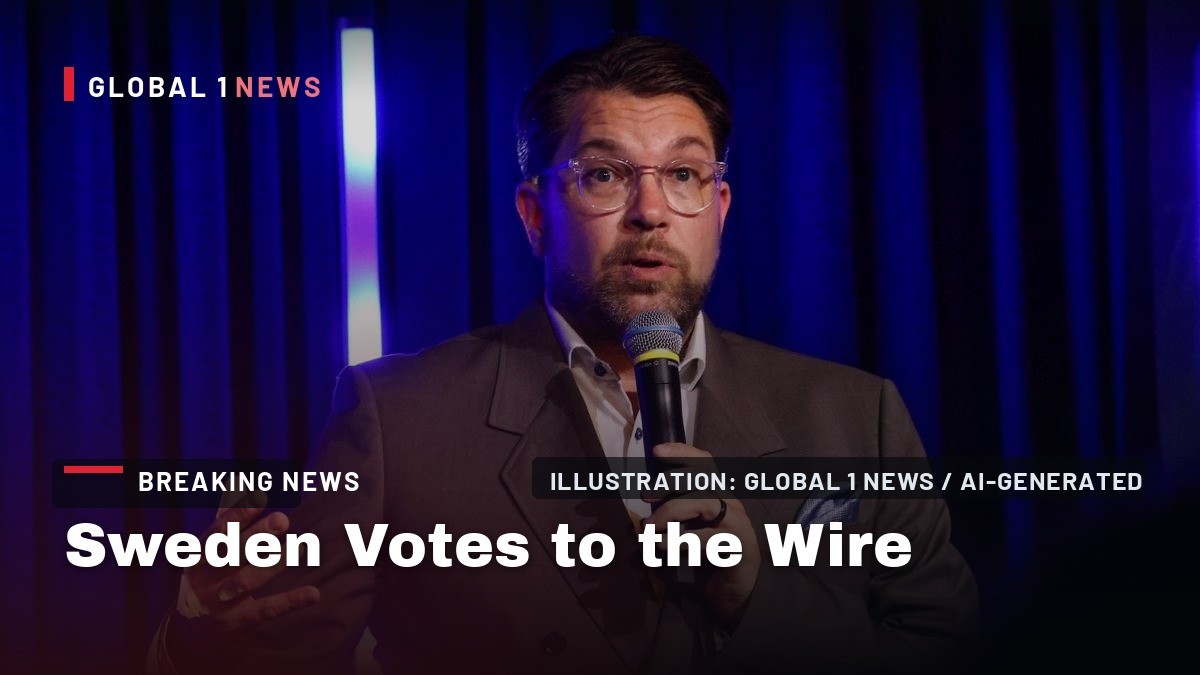
Folks, Sweden voted on Sunday and still does not have a government. With 349 seats in the Riksdag and 175 needed for a majority, the centre-left opposition bloc is projected to hold exactly one seat more than the right-wing governing alliance — 175 to 174 — and the outcome now rests on early ballots nobody has finished counting.
Sweden Votes to the Wire: Opposition Projects a One-Seat Majority as the Far Right Slips
Stockholm, Sweden — Swedes cast ballots Sunday in a general election that produced a projected one-seat majority for the centre-left opposition and the first electoral setback for the far-right Sweden Democrats since the party entered parliament in 2010. The Election Authority's projection, based on votes from 4,853 of Sweden's 6,312 election districts, put the four opposition parties at 175 seats to 174 for the governing bloc, according to Reuters. A final result may not be confirmed until Wednesday, when local election boards count early votes that did not reach polling stations by election day, including overseas ballots, the AP reports.
The Count That Would Not Settle
Nobody won Sunday night. Not officially. With 92 percent of the vote counted early Monday, the Election Authority still had the opposition at 175 seats and the government alliance at 174, the AP reported via The Hindu. Public broadcaster SVT's forecast, based on roughly 70 percent of votes tallied, put the opposition at 49.4 percent against the governing bloc's 49.0 percent, and noted that "just a few thousand votes separate the blocs," according to The Local. The BBC, citing SVT, reported that with 50 percent of votes counted the two blocs were separated by only 20,000 votes.
Both campaigns reached for the same phrase: too close to call, per the BBC, DW and Reuters. Around half of all votes were cast in advance, DW reported, with early voting opening on 26 August, according to POLITICO Europe. Turnout in Sweden regularly exceeds 80 percent, per DW, and 8 million people were eligible in a country of 10.6 million. Registered voters totalled 8,051,238, up 3.5 percent on 2022, according to Wikipedia citing the Election Authority.
A One-Seat Majority, and the Arithmetic Behind It
Sweden uses proportional representation, and parties below 4 percent of the national vote get no seats at all, per POLITICO Europe. That threshold is not a footnote this year. It is the whole ballgame. Reuters, via WTAQ, reported the election could ultimately be decided by whether the Liberals surpass 4 percent to win seats, bolstering a right wing that includes the Moderates, Christian Democrats and, since being invited by Kristersson earlier this year, the Sweden Democrats. The Liberals, per The Local's SVT-based projection, were sitting at 5.4 percent. If that holds, the right has a pulse. If it slips, the arithmetic tilts hard toward the opposition.
The projection covered 4,853 of 6,312 districts, per Reuters. That is a snapshot, not a result, and the snapshot has moved all night. At 50 percent counted the gap was 20,000 votes, per the BBC. At roughly 70 percent, SVT had it at a few thousand, per The Local.
The Night's Biggest Surprise: the Sweden Democrats Lost Ground
This is the headline nobody in the commentariat saw coming. The Sweden Democrats went into Sunday hoping to enter government for the first time since the party's founding. Instead, they lost support — the first time since entering parliament in 2010, according to DW and the BBC. DW put them at 17.9 percent at more than 90 percent counted. The Local's SVT projection at roughly 70 percent counted had them at 17.5 percent. In 2022 they won 20.5 percent and 73 seats, becoming Sweden's second-largest party, per Wikipedia. Either partial figure is a drop of more than three points.
Jimmie Åkesson, who has led the party for over two decades and is 47, did not deny it. "It's obvious that we've lost a few percentage points compared with our result four years ago," he said, per DW. But he also claimed his party were "winners of the campaign," telling The Local: "There are so many more people in our country now who don't feel awkward saying that they are a Sweden Democrat. On the contrary, people are proud." At his final rally in Stockholm's Kungsträdgården park on Saturday he declared, per RTV: "We've already won! ... Sweden is becoming safer, better, and more Swedish." Campaign posters read "Make Sweden Sweden Again." Voting in Rinkeby, a Stockholm suburb home to one of the country's biggest Swedish-Somali populations, Åkesson said the suburb "doesn't look like Sweden," per Reuters via WTAQ. His party has pledged to ban both the niqab and the burqa if it enters government, per Reuters.
Context matters, and the outlets did not shy from it. DW noted that some of the founders of Åkesson's party had ties to Sweden's neo-Nazi movement, and the BBC described the party as "founded by Nazi sympathisers in the 1980s" and noted it "had been shunned for years until 2022 when it became the country's second largest party after campaigning on violent crime and immigration." The AP, via India Today, put it this way: "The Sweden Democrats acknowledge that their party was founded in part by neo-Nazis and white supremacists in the 1980s, but say they have eliminated such extremists from their ranks and have apologised for their past." That is the party that lost ground Sunday. The facts do the indicting.
The Social Democrats' Hollow Victory
Magdalena Andersson's Social Democrats are projected to remain the largest party. They are also on course for their worst result in over a century. DW reported they were on track for 28 percent; The Local's SVT-based projection put them at 27.9 percent, "heading towards their worst general election performance in modern history, should the figures hold." In 2022 they won 30.3 percent and 107 seats, per Wikipedia. So: first place, and a warning sign the size of a billboard.
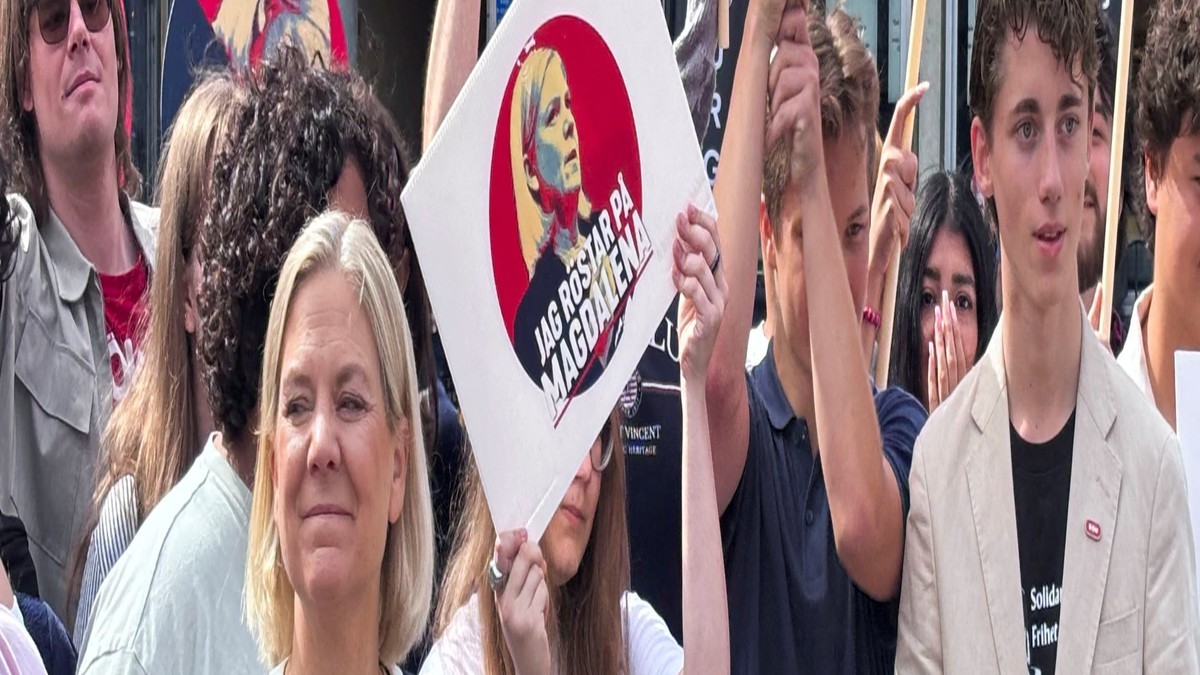
Andersson was careful early Monday. "It looks like it will be very close," she said, per DW. She told supporters, per the AP via The Hindu, that "we must wait for the final election result" but added: "right now we are leading... But we have to wait for the final result." In fuller remarks, per DW and The Local: "We Social Democrats will always be ready to assume responsibility for the result... For now, we are in the lead. And if that is confirmed, Sweden will have a new government." She went on: "regardless of how the final election result turns out, there is good reason to seek a new spirit of cooperation in Swedish politics." After casting her vote she framed the choice this way, per the BBC: "Should we have a government entirely dominated by the Sweden Democrats, something that has never happened in Sweden before? Or should we have a government led by me, which will steer Sweden in a new spirit of co-operation?"
What Kristersson Actually Said
Prime Minister Ulf Kristersson did not concede. He also did not claim victory. "The voters have had their say, but we still don't have a final result. Which government will lead Sweden in the coming years is still an open question, and we will do everything we can to ensure that this government will be the very best for our country," he said, per DW. He told The Local: "This election result could lead to a complicated government formation. Where it ends up remains to be seen. It might take time, but we are in no hurry." Per the AP via The Hindu: "When we have the final result it's a good idea to look at possible combinations," adding that "there is a very clear non-socialist majority, or non-left leaning economic majority in the Swedish parliament." On the delay, per the AP via India Today: "Maybe we won't even have the results until Wednesday when the votes that have been cast abroad arrive."
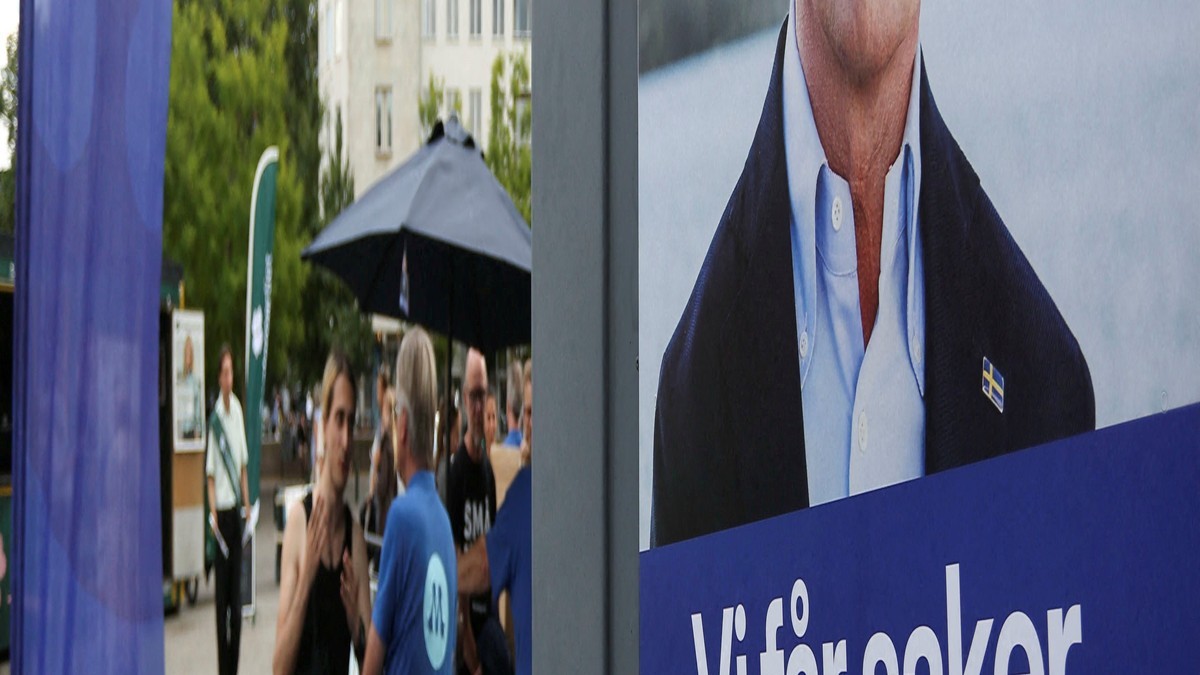
Before the vote, Kristersson told AFP: "We want to use our new and far better preconditions to improve the lives of ordinary people... to make Sweden great again." After casting his ballot in his home municipality of Strängnäs he said, per the BBC: "I think there is a genuine enthusiasm for us being able to continue our important work." That was Sunday. By Monday morning the enthusiasm was intact. The majority was not yet confirmed.
The Liberals' 'Historic Comeback'
Simona Mohamsson had one word for it: "It's a historic comeback." That is from The Local, and she may have a point. The Liberals were projected at 5.4 percent in the SVT projection, after trailing around 2 percent in opinion polls for a long time and facing the risk of being knocked out of parliament altogether. The party spent most of 2022-2026 below the Riksdag's 4 percent electoral threshold, per Wikipedia. In 2022 they won 4.6 percent and 16 seats. Now they are at 5.4 percent in the projection — and that number could be the difference between a right-wing government and a centre-left one.
The other parties, per The Local's SVT projection: Moderates at 19.9 percent, slightly higher than in 2022, retaining second place; Christian Democrats at 6.2 percent, gains on 2022; Left Party at 8.3 percent, Centre Party at 7.1 percent and Green Party at 6.1 percent, all faring better than in 2022. For comparison, the 2022 baseline per Wikipedia: Social Democrats 30.3 percent and 107 seats; Sweden Democrats 20.5 percent and 73; Moderates 19.1 percent and 68; Left Party 6.8 percent and 24; Centre Party 19 seats; Greens 5.1 percent and 18; Liberals 4.6 percent and 16. The 2026 numbers are not final. They are also not reassuring for the governing bloc's junior partners.
Why Wednesday Matters
Here is the mechanical reason this is not over. The outcome may not be decided until Wednesday 16 September, when local election boards count early votes that did not reach the polling stations by election day, including overseas votes, per the AP via The Hindu. DW put it simply: "The final outcome of the election might not be confirmed until Wednesday, when early votes will have been counted." That is a lot of ballots sitting in boxes — around half the electorate, per DW — waiting for local boards to process them.
Christian Democrat leader Ebba Busch, per The Local: "This is going to be a real nail-biter. It could stay uncertain all the way until Wednesday." She added: "Every single vote must be counted. We aren't taking anything for granted in either direction." Nooshi Dadgostar of the Left Party, per The Local: "We have done everything we can to say goodbye to Tidö," adding, "But the situation remains uncertain for the opposition. We still don't know which side will govern Sweden for the coming four years." That is where we are. Wednesday is where we are going.
Four Years of the Tidö Experiment
To understand Sunday, you have to understand 2022. After that election a right-wing bloc of Moderates, Christian Democrats, Liberals and Sweden Democrats secured a narrow majority. A month of negotiations produced the Tidö Agreement, which allowed Moderate leader Ulf Kristersson to become prime minister and lead the Kristersson cabinet, per Wikipedia. He came to power after his minority coalition reached an unprecedented deal giving the far right influence over government policy in exchange for its support in parliament, per AFP — breaking a decades-long taboo against working with the far right, per POLITICO Europe and AFP.
Over four years, that coalition, backed by the Sweden Democrats, abolished permanent residency for refugees, tightened welfare rules and boosted expulsions of those without a right to stay, per Reuters via WTAQ. Kristersson's campaign focused on his government's record of reducing violent and organized crime and clamping down on immigration. Supporters say a win would amount to a public endorsement of that approach. Critics have denounced the agenda as undermining civil liberties and unfairly targeting immigrants, per DW. The left-wing bloc promised to boost the welfare state and address rising costs, per DW; the right wing vowed to continue its crackdown on crime and immigration, slash income taxes and abolish pre-school fees, per AFP.
What Was Really on the Ballot
Strip away the horse race and the question underneath was four more years of the Tidö experiment, or a change of direction. The 2026 election was the first in Sweden since the country joined NATO on 7 March 2024, after more than 200 years of military non-alignment, per Wikipedia, and it is unlikely to change Sweden's pro-Western and pro-Ukraine stance, per Reuters via India Today. National security, gang crime and welfare spending dominated the campaign, per the BBC.
And then there was the campaign colour. ABBA's Benny Andersson changed the lyrics in the refrain of "Mamma Mia" to "Magdalena" at a rally where he performed this week, one of several celebrities supporting the Social Democrats, per Reuters via WTAQ. Long queues were reported at some polling stations, per The Guardian's Europe live blog. An election-eve opinion poll credited the four left parties with 50.7 percent and the right bloc with 48.1 percent, with the gap narrowing to 0.3 points by election day, per AFP and The Guardian. Following the 2026 Fagersta school attack on 21 August, several party leaders cancelled planned campaign speeches, per Wikipedia. A Kurdish-Swedish sociologist, Kahin Ahmed, 57, who came to Sweden from Somalia as a refugee, told Reuters: "A quarter of those working in healthcare are immigrants. If immigrants stayed home for a single day, Sweden wouldn't function."
What Comes Next in Stockholm
Andersson needs the support of all three other left-wing parties to build a majority, and is willing to negotiate with all of them. But the agrarian Centre Party has ruled out sitting in a government with the formerly communist Left Party because of ideological and economic differences, per AFP via France24 and RFI. Marja Lemne, a political scientist at Södertörn University, told AFP: "The Social Democrats are losing ground," and "it's very unclear what a (left-wing) government formation would look like. It's very fragmented and there are a lot of different views."
The right's picture is no cleaner. The Tidö parties announced in 2025 their intention to keep cooperating, but the Sweden Democrats said they would vote against any government that did not grant them cabinet positions, while the Liberals said they would continue to block the SD from receiving them, per Wikipedia. Kristersson promised the SD key government posts if his alliance wins, with Åkesson widely expected to be given the migration portfolio, per DW and AFP. That was the plan. Sunday put the plan in question.
Andersson said it best, per The Local: "there is good reason to seek a new spirit of cooperation in Swedish politics." She may get that chance. She may not. One threshold, one seat, a few thousand votes — and a count that will not finish until Wednesday. Folks, that is not a dodge. That is the story.
By Jessica Ali, Staff Writer
This article was produced with AI-assisted research and editorial support. Sources: Reuters, Associated Press, DW, BBC, The Local (Sweden), AFP, POLITICO Europe and the Swedish Election Authority.
What's Your Reaction?
 Like
0
Like
0
 Dislike
0
Dislike
0
 Love
0
Love
0
 Funny
0
Funny
0
 Wow
0
Wow
0
 Sad
0
Sad
0
 Angry
0
Angry
0

Editor-in-Chief at Global1.News. Atlanta-based journalist who cuts through the BS and tells it like it is. Lead anchor, host, and the voice you hear when the spin stops and the truth starts.












Comments (0)