
Sudanese Artists Rebuild Cultural Life in Wartime Shelter
In a school-turned-shelter on Sudan's Red Sea coast, music rises above the hardships of war as around 120 displaced artists recreate a sense of community and purpose. What began as a place of refuge has become a living cultural institution — classrooms doubling as rehearsal spaces, courtyards as studios, and war as the unlikely backdrop to one of Africa's most defiant creative communities.
In a school-turned-shelter on Sudan's Red Sea coast, music rises above the hardships of war as around 120 displaced artists recreate a sense of community and purpose. What began as a place of refuge has become a living cultural institution — classrooms doubling as rehearsal spaces, courtyards as studios, and war as the unlikely backdrop to one of Africa's most defiant creative communities.
Sudanese Artists Rebuild Cultural Life in Wartime Shelter
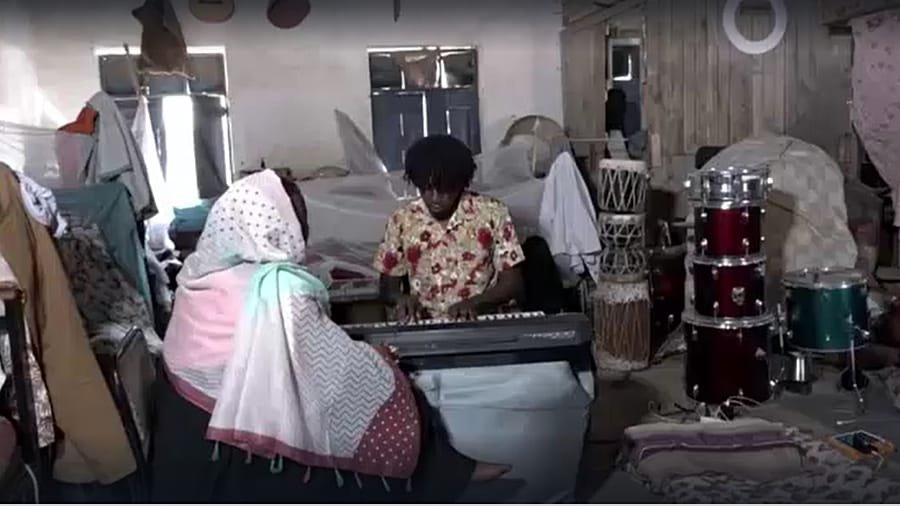
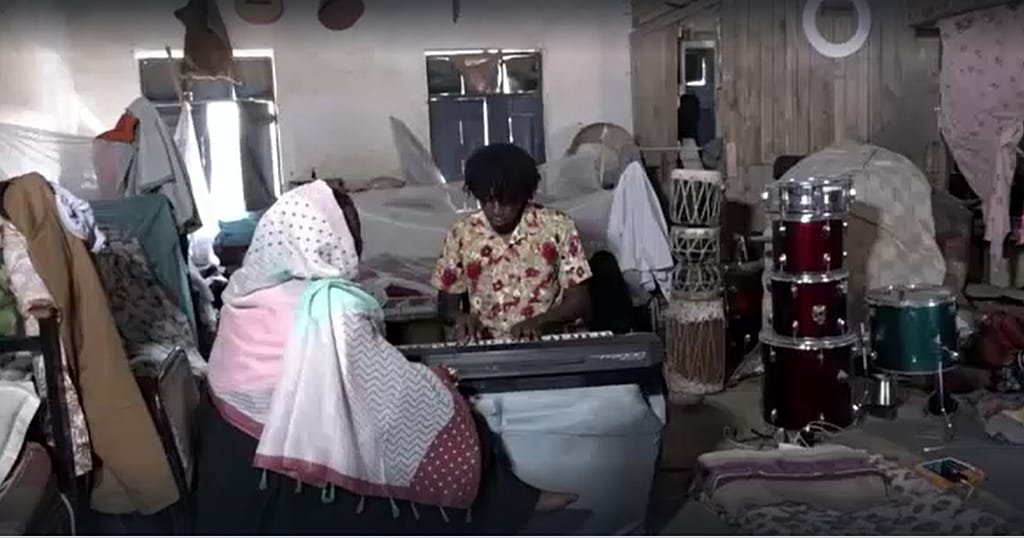
Port Sudan, Sudan — Inside crowded classrooms, a singer rehearses beside a keyboardist while painters, actors and writers work under the sun outside. After fleeing fighting between the army and the Rapid Support Forces, the artists gathered at the El-Rabat centre and pooled their money to buy instruments and materials, forming collaborations across disciplines.
A Shelter That Became a Stage
The El-Rabat centre on Sudan's Red Sea coast began as a simple school-turned-shelter for families fleeing conflict. Over time the former classrooms and open courtyards transformed into rehearsal halls and open-air studios where creativity took root amid uncertainty.
Each morning a singer rehearses beside a keyboardist in crowded classrooms while painters, actors and writers work in the courtyard under the coastal sun. These daily rhythms turned the shelter into a living cultural space that follows the natural flow of the day rather than the chaos outside.
Around 120 artists gathered after fleeing fighting between the army and the Rapid Support Forces. They pooled scarce resources to buy instruments and materials, sharing what little they had to keep their practices alive.
Cross-disciplinary collaborations emerged naturally between musicians, poets, dramatists and filmmakers who found themselves under one roof. These exchanges created new works that blended sound, image and word in ways that reflected their shared displacement.
The collective atmosphere brought people closer together as artists restored the abandoned school themselves, painting walls and repairing furniture to make the space functional again. Their hands turned a temporary refuge into something lasting and meaningful.
This persistence carries deep symbolism for communities across Africa where creativity often survives in places built only for displacement. The El-Rabat centre stands as proof that cultural life can flourish even when everything else feels broken.
Three Years of War, a Cultural Sector in Ruins
Sudan's cultural sector has faced devastating losses during three years of conflict that began when the civil war erupted in April 2023 between the Sudanese Armed Forces and the Rapid Support Forces. Theatres and museums across the country were looted or forced to shut down.
The Sudan National Museum in Khartoum was occupied during the fighting with reports of more than 60 percent of its collection looted. UNESCO reported the loss of more than 4,000 artifacts from institutions nationwide, erasing irreplaceable pieces of Sudan's heritage.
Over 20 museums nationwide were affected by looting, burning or smuggling as fighting spread. These attacks struck at the heart of national memory and left gaps that will take generations to fill.
Millions remain displaced and in urgent need of aid while the destruction of cultural sites continues to compound their losses. Families who once visited these museums now carry only fragments of stories in their minds.
The scale of loss has galvanized artists and advocates to document what remains and push for international protection of Sudan's heritage. Their efforts highlight how cultural memory can become a form of resistance even in the darkest times.
Port Sudan in Sudan's Red Sea State has become a focal point for these conversations as displaced creators gather to share knowledge and plan for the future. Their work connects directly to broader African efforts to safeguard heritage during conflict.
The Ethnographic Museum's courtyard was looted and burned, while archaeological stores at sites such as Amara West were also ransacked. Heritage experts warn that the recovery of stolen antiquities, some of which have surfaced on international markets, is only beginning, and that the fight to reclaim Sudan's civilizational memory will outlast the guns.
Art as Resistance and Healing
Music, film, visual art and storytelling serve as essential survival tools for those living through the war. These forms allow people to process grief and maintain identity when daily life feels uncertain.
The Sudanese Film Group's tradition of independent cinema continues through the experimental 2025 film Khartoum which creates intimate portraits of life during the war. The film captures quiet moments of resilience that echo across the continent.
Traditional Sudanese wedding songs remain a living soundtrack across generations, sung in the shelter to mark small celebrations and keep spirits connected to home. These melodies carry the same warmth found in Senegal's Mbalax gatherings where music binds communities.
Artist Hajar Al-Bashir's beloved song Sudaniya has comforted displaced people with its message of pride and endurance. Its tenth anniversary celebrated in 2026 brought renewed attention to how one voice can lift many hearts.
Cultural expression has become a form of resistance that transcends the narrow discourse of war. It reminds listeners that Sudan's people are more than victims and that their stories deserve to be heard far beyond the battlefield.
These practices mirror the creative resilience seen in other African cities like Lagos and Nairobi where artists turn hardship into new genres and movements. The shelter in Port Sudan adds its own chapter to that shared history.
Voices From the Shelter
Filmmaker Mohamed Ali Ibrahim described the gathering as a blessing “that all of these artists found each other in the same place.” He noted how the collective environment helped bring people closer together despite the difficult circumstances.
Musician Assem Abdel Aziz spoke with quiet determination when he said, “Here there are dreams… full of energy and experiences.” His words capture the forward-looking spirit that keeps the group working every day.
Visual artist Mohira Fathi described the shelter as a miniature cultural institution where creativity continues to defy the war. She sees the daily routines of painting and performance as acts of quiet defiance that sustain everyone involved.
The psychological relief of making art amid displacement cannot be overstated for those who have lost homes and loved ones. Creating together offers a sense of purpose that counters the isolation of exile.
These personal accounts reveal how the El-Rabat centre functions as more than a roof over heads. It serves as a living archive of Sudanese voices that might otherwise be scattered and silenced.
Coverage by AFP, africanews and other international outlets has helped carry these stories outward, connecting the shelter's work to global conversations about art in conflict zones.
From Khartoum to the Diaspora
Sudanese creativity now flows through exile communities in Egypt and beyond as artists carry traditions across borders. The Zanig genre has become a cultural bridge for Sudanese communities in the diaspora, blending old rhythms with new influences.
Fashion designer Nafisa Hafiz rebuilt her brand NUCY after her atelier was shuttered by war. Support from innovation programs and the African Development Bank's youth entrepreneurship initiatives helped her reopen doors and continue her work.
Journalist AlMigdad Alruhaid warned that “silence, too, can be a form of violence” and pleaded that Sudan must not become a “forgotten story.” His reporting keeps attention on the human cost of the conflict.
Diaspora networks play a vital role in sustaining cultural work by sending materials, sharing platforms and organizing exhibitions abroad. These connections link Port Sudan directly to creative hubs in Cairo, Paris and Dakar.
The flow of ideas between those inside the shelter and those abroad strengthens Sudan's presence on the global stage. It ensures that the country's music, film and visual arts remain visible even while the war continues.
Such exchanges echo Senegal's own history of artists like Youssou N'Dour and Baaba Maal who carried Wolof traditions worldwide. The Sudanese experience adds another layer to Africa's ongoing cultural dialogue.
Inside the shelter, traditional Sudanese wedding songs remain a living soundtrack across generations, sung to mark small celebrations and keep spirits connected to home. These melodies carry the same warmth found in Senegal's Mbalax gatherings where music binds communities together, proving that the rituals of joy survive even in exile.
What Lies Ahead for Sudan's Creatives
The future of the El-Rabat shelter remains precarious after an eviction order reported in April 2026 with no clear alternative housing offered. Artists continue to create despite the threat of losing their shared space.
Resilience runs deep among those who have already rebuilt once and refuse to let the war erase their momentum. They keep rehearsing and painting while searching for new solutions together.
Rebuilding Sudan's cultural sector after peace will require sustained international attention and support for displaced artists. Without it, the losses of the past three years could become permanent.
The broader challenge includes restoring museums, reopening theatres and protecting heritage sites that suffered during the fighting. These efforts will need collaboration across generations and borders.
Yet the enduring belief persists that Sudan's rich creative traditions from its music to its cinema to its visual arts will survive the war. The artists at El-Rabat embody that conviction every day.
Their story offers hope to creative communities across Africa that culture can endure even in the harshest conditions. It reminds us that displacement does not have to mean the end of expression.
By Amara Diop, Staff Writer
This article was produced with AI-assisted research and editorial support. Reporting is based on sources cited in the article.
What's Your Reaction?
 Like
0
Like
0
 Dislike
0
Dislike
0
 Love
0
Love
0
 Funny
0
Funny
0
 Wow
0
Wow
0
 Sad
0
Sad
0
 Angry
0
Angry
0

West Africa/Sahel Correspondent at Global1.News. Dakar-based journalist covering politics, security, climate, and development across Francophone and Anglophone West Africa. Tells the stories of a region undergoing profound transformation.










Comments (0)