
Chinese Dissident's 40-Hour Sea Escape Exposes Limits of Exit Controls
Dissident's Dinghy Escape Lays Bare Beijing's Exit-Control Limits Dong Guangping, a 68-year-old former police officer turned human rights activist, spent 40 hours crossing the Yellow Sea in a 3.3-metre rubber dinghy before South Korean authorities pulled him from the water near Taean county on 27 May.
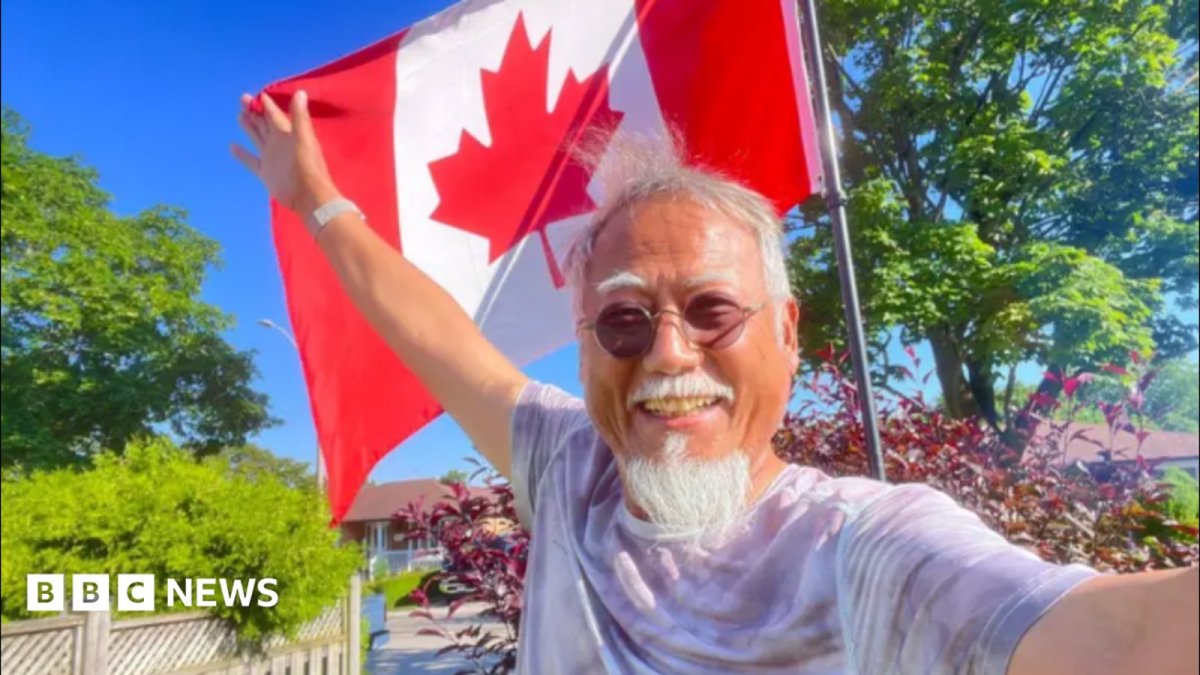
Dissident's Dinghy Escape Lays Bare Beijing's Exit-Control Limits
Dong Guangping, a 68-year-old former police officer turned human rights activist, spent 40 hours crossing the Yellow Sea in a 3.3-metre rubber dinghy before South Korean authorities pulled him from the water near Taean county on 27 May. His arrival in Canada in late June, after more than a decade of failed attempts to leave China, offers a rare public account of how individual determination can test the exit-control machinery of the Chinese state.
Toronto, Canada — Dong Guangping had gone without sleep for two days, his phone battery nearly exhausted and his portable charger dead, when the rubber boat he was steering rocked through choppy waves somewhere between China's Shandong province and the Korean peninsula. The 68-year-old told BBC Chinese nearly two months later that the only thing standing between him and recapture was a fading digital compass.
A Desperate Voyage Through the Yellow Sea
Dong Guangping set out from Weihai in Shandong province in a 3.3-metre rubber dinghy on the evening of 24 May. The 68-year-old activist carried minimal supplies and relied on a phone compass for navigation across more than 300 kilometres of open water. After 40 hours at sea he was rescued by South Korean coast guard and fishermen near Taean county on 27 May.
Choppy conditions, sunburn and a dying battery left him disoriented. He later told BBC Chinese that drifting back toward China would have meant certain recapture. The route change toward South Korea became necessary when fog threatened his original plan to reach Japan.
"Not being able to navigate would have been terrifying. I could have drifted back towards China," Dong recalled. At one point he dozed off and woke to find his boat bobbing past a large cargo ship, estimating that twenty more seconds of sleep would have meant a collision.
Background of a Police Officer Turned Activist
Dong served 13 years in the police before his dismissal in 1999 for signing a petition marking the tenth anniversary of the Tiananmen crackdown. He received a three-year sentence in 2001 for inciting subversion of state power and another term after 2014 for commemorating the same events, according to Amnesty International records.
These episodes established his pattern of repeated detention tied directly to public remembrance of 1989. Each release brought tighter restrictions rather than rehabilitation.
Each release from detention brought tighter restrictions instead of any form of rehabilitation, reinforcing a cycle in which former police experience offered no protection once political activity resumed. This trajectory highlights the Chinese system's prioritization of preventing organized remembrance of 1989 over reintegrating individuals with prior institutional ties. The consistent application of new sentences after 2014 further demonstrates that domestic stability calculations treat historical anniversaries as persistent risks requiring sustained control measures.
Dong described life under these conditions in stark terms during an Associated Press interview from Toronto: "It's like living in a cage. Very suffocating."
Sequence of Failed Escape Attempts
In 2015 Dong reached Thailand with his family and secured UN refugee status for resettlement in Canada. Thai authorities deported him days before departure, leading to a further three-and-a-half-year sentence upon return. In 2019 he attempted to swim to Taiwan's Kinmen island but was intercepted by Chinese fishermen and handed to police.
His 2020 entry into Vietnam ended with two years in hiding in Hanoi before deportation in 2022 and nearly a year of additional imprisonment. These cases illustrate consistent cooperation between neighbouring states and Chinese security organs on repatriation.
The pattern across Thailand, Vietnam, and maritime interceptions shows how land-border and coastal enforcement networks limit individual movement even when international refugee determinations have been secured. Neighbouring governments' willingness to return individuals sought by Beijing creates reliable pressure points that raise the cost of each attempt. Such cooperation underscores the strategic value Beijing places on preventing dissidents from reaching third countries where resettlement processes could begin.
Post-Release Restrictions and Surveillance
After his final release Dong was denied retirement benefits and passport renewal while remaining under continuous police monitoring. He described the environment as suffocating, with no space for expression. Such measures form part of standard exit-control practices applied to individuals previously convicted of political offences.
The Chinese Foreign Ministry stated that entry and exit matters are handled according to law and that citizens must observe the Constitution, without addressing Dong's specific circumstances.
This approach demonstrates how exit controls function as an extension of domestic stability policy, converting past convictions into permanent administrative barriers. By withholding documents and benefits while maintaining surveillance, authorities reduce the practical possibility of renewed overseas travel or advocacy. The result is a system that manages political risk through layered administrative controls rather than relying solely on physical detention.
South Korean Processing and Canadian Resettlement
South Korean authorities initially detained Dong on immigration grounds but a court declined to issue an arrest warrant, citing insufficient grounds. He was transferred to an Incheon refugee centre. The UN refugee agency conducted a video interview, after which Canadian authorities arranged his onward travel.
Dong arrived in Toronto in late June. He retains the resettlement status originally approved for his family in 2015. South Korea's Foreign Ministry confirmed the case was handled according to law and principle, while the Canadian Embassy in Seoul offered no public comment.
This sequence illustrates how South Korea and Canada applied narrower individual-risk criteria compared with the repatriation practices of ASEAN states, creating a functional pathway once maritime arrival occurred. The court's refusal of the warrant and subsequent UNHCR involvement show the operational steps that can bypass broader regional cooperation networks. Such processing outcomes highlight the uneven asylum landscape along China's periphery and the specific institutional channels that permitted final resettlement.
Regional Precedents and Asylum Patterns
Dong's crossing follows the 2023 jet-ski escape of activist Kwon Pyong, who reached South Korea and later resettled in the United States. Both cases show that direct maritime routes can bypass land-border cooperation networks involving Thailand and Vietnam.
ASEAN states have demonstrated willingness to return individuals sought by Beijing, while South Korea and Canada have applied narrower criteria focused on individual risk. This divergence creates uneven pressure points along China's periphery.
Dong said he plans to consult Canadian counsel about whether he can sue Thailand and Vietnam over his previous deportations. He celebrated his mother's 95th birthday days before fleeing, without telling her of his plan, and called the resulting lapse in filial duty his greatest regret.
Strategic Calculations and Second-Order Effects
Beijing seeks to maintain domestic stability by limiting the international visibility of dissidents and preventing the formation of organised exile networks. The leverage lies in bilateral repatriation agreements and economic ties that encourage compliance from neighbouring governments.
Over time, successful resettlements can raise operational costs for Chinese security services monitoring departures while strengthening diaspora advocacy in North America. Neighbouring states face continued requests for cooperation that test their own asylum commitments against relations with Beijing. These dynamics suggest that maritime routes may prompt tighter Yellow Sea surveillance even as land-border mechanisms remain effective at containing most movement.
Outlook for Constitutional Advocacy
Dong has stated his intention to pursue legal action against Thailand and Vietnam through Canadian counsel and to continue pressing for constitutional democracy in China. "My ultimate goal is for China to achieve constitutional democracy," he told the AP. His arrival in Toronto removes immediate physical constraints but does not end the underlying political contest.
The episode underscores how individual determination can exploit gaps in enforcement, even as state-to-state mechanisms remain effective at most land borders.
By Prof. Marcus Chen, Staff Writer
This article was produced with AI-assisted research and editorial support. Reporting is based on sources cited in the article.
What's Your Reaction?
 Like
0
Like
0
 Dislike
0
Dislike
0
 Love
0
Love
0
 Funny
0
Funny
0
 Wow
0
Wow
0
 Sad
0
Sad
0
 Angry
0
Angry
0

World Politics Analyst at Global1.News. Based in Beijing, covering US-China relations, global trade, and geopolitical strategy. Brings deep analytical perspective to the power dynamics shaping international affairs.















Comments (0)