
Mélenchon Condemns Ben Gvir's Gaza Kill Calls as France Faces Complicity Accusations
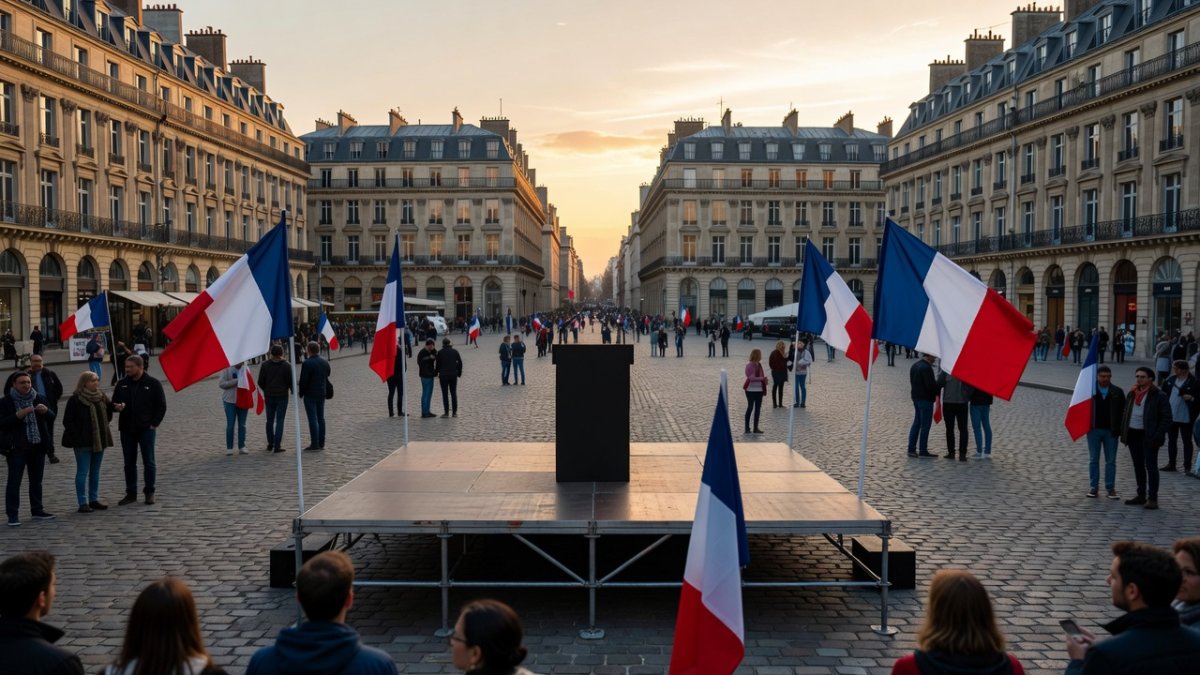
In a recent Middle East Eye report, French opposition leader Jean-Luc Mélenchon took the stage at a rally in France to condemn remarks by Israeli National Security Minister Itamar Ben Gvir, who called for the killing of dozens of Palestinians nightly in Gaza.
In a recent Middle East Eye report, French opposition leader Jean-Luc Mélenchon took the stage at a rally in France to condemn remarks by Israeli National Security Minister Itamar Ben Gvir, who called for the killing of dozens of Palestinians nightly in Gaza. Mélenchon, leader of the France Unbowed (LFI) party, used the moment to accuse the French government of complicity in what he described as genocide, sharpening a political battle that now reaches into the heart of France's foreign policy ahead of the 2027 presidential election.
Mélenchon Condemns Ben Gvir's Gaza Kill Calls as France Faces Complicity Accusations
Paris, France - August 24, 2026 — Speaking at a rally in France, Jean-Luc Mélenchon quoted directly from a podcast interview in which Itamar Ben Gvir called for Israel to "take out 30, 40" Palestinians every night in Gaza. The remarks, which surfaced around August 16-17, 2026, were made in conversation with Rom Braslavski, a former Israeli captive held in Gaza, and have since drawn international condemnation from Germany, Britain, and Iran. Mélenchon told the rally that France's failure to condemn such statements — and its broader refusal to label Israel's military campaign a genocide — had made the country "complicit in Israel's crimes."
The French leader, who launched his 2027 presidential campaign in June with a rally in Saint-Denis, has placed Gaza and France's foreign policy at the center of his bid to return to the Élysée Palace. His remarks come at a moment when Israel's military operations in Gaza, Lebanon, and Syria continue unabated, and when the international community's response remains fractured. For Palestinians on the ground, the political posturing in Paris may feel distant, but the stakes could not be more immediate: the death toll in Gaza has surpassed 73,000, according to the latest figures from the territory's health authorities, and the true number, including those missing under rubble, is estimated to exceed 100,000.
Ben Gvir's Kill Calls Spark Outrage
The comments that ignited this latest controversy were made by Ben Gvir in a podcast with Braslavski, a former captive who spent time in Gaza. In the recording, the National Security Minister argued that Israel should carry out "targeted strikes" in Gaza every night, saying, "take out 30, 40," and adding that Palestinians in the territory were "not even people" and that there were those "who are not worthy of life." He also acknowledged a disagreement with Prime Minister Benjamin Netanyahu on the matter, suggesting that the prime minister's approach was insufficiently aggressive.
The remarks were met with swift condemnation. Germany called for European Union sanctions against Ben Gvir, while campaigners in Britain demanded stronger measures against Israeli officials. Iran's foreign ministry called for the comments to be documented for a potential criminal trial at international bodies. Human rights groups have denounced the remarks, with some describing them as incitement to genocide, though formal complaints to the International Criminal Court regarding these specific comments were not immediately confirmed.
For Palestinians, Ben Gvir's words are not an aberration but a reflection of a political climate that has grown increasingly hostile. Palestinian political figures have long warned that such rhetoric flourishes when the international community responds with silence rather than accountability. Mustafa Barghouti, a Palestinian politician and physician who this week urged unity against Israeli settlement expansion, has repeatedly argued that the failure of world powers to act emboldens far-right Israeli officials.
A Law Built for Hangings
Ben Gvir's comments come against the backdrop of a significant legal development in Israel. In March 2026, the Knesset passed the Death Penalty for Terrorists Law by a vote of 62 to 48. The legislation makes death by hanging the default sentence in Israeli military courts for Palestinians convicted of deadly attacks. In practice, the law applies only to Palestinians — not to Israeli Jews — a distinction that has drawn sharp criticism from legal scholars and human rights groups who argue it institutionalizes a discriminatory legal system.
In August 2026, Ben Gvir went further, publicizing a gallows site in Israel, a move that drew additional international condemnation. The image of a functioning execution facility, presented as a deterrent, was seen by many as a provocation designed to appeal to his far-right base. Rights advocates have described the law as a tool of collective punishment, warning that Ben Gvir is using it to signal that Palestinian lives hold no value.
The law's passage and Ben Gvir's subsequent actions have deepened concerns among Palestinian families who fear that loved ones detained by Israeli forces could face execution. According to data from the Palestinian Prisoners Society, more than 9,000 Palestinians remain in Israeli detention, including hundreds of children and administrative detainees held without charge. The prospect of hangings has cast a shadow over already fraught negotiations over prisoner exchanges, with families on both sides watching developments with anxiety.
Gaza's Toll and the Human Cost
The human cost of Israel's offensive, which began on October 7, 2023, continues to mount. According to Gaza's health authorities, as reported by WAFA on August 20, 2026, at least 73,417 Palestinians have been killed and 174,360 injured since the start of the campaign. Medical sources on the ground estimate that the true figure, including those still missing under the rubble of destroyed buildings, exceeds 100,000. Children make up a large share of the casualties, with the United Nations reporting that thousands of minors have been killed in the conflict.
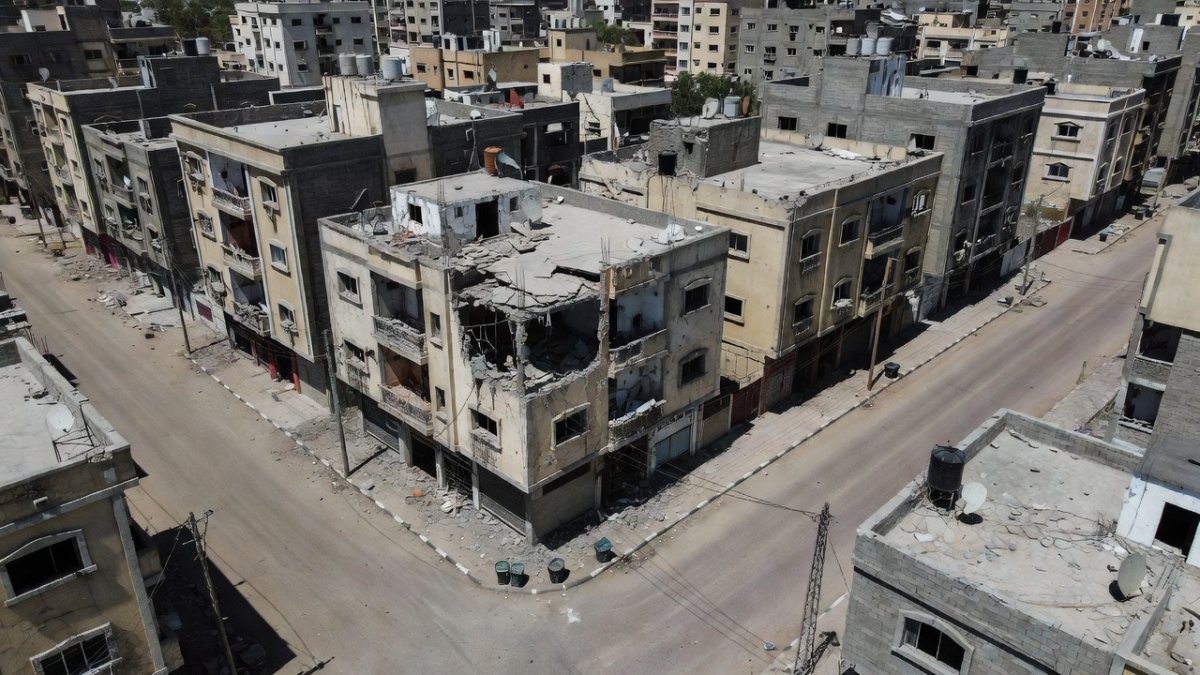
The scale of destruction is difficult to comprehend. Entire neighborhoods in Gaza City, Khan Younis, and Rafah have been reduced to rubble. The United Nations estimates that over 70 percent of the territory's housing stock has been damaged or destroyed, leaving more than a million people displaced, many of them living in makeshift tents or crowded into UN-run shelters. The health system, already fragile before the war, has collapsed, with hospitals operating without adequate supplies of medicine, fuel, or clean water.
For families across the Strip, the statistics are abstract. Mothers in tent camps in Deir al-Balah describe losing sons, daughters, and grandchildren in a single strike; survivors speak of names and dreams reduced to rubble, and of grief compounded by a sense of abandonment by the international community. Their words echo a sentiment heard across Gaza: that the world counts the dead but rarely holds anyone accountable.
France's Balancing Act
France's position on the conflict has been characterized by a delicate balancing act. The government has condemned some Israeli actions, including the killing of aid workers and the bombing of civilian infrastructure, while consistently rejecting the genocide label. President Emmanuel Macron has called for a ceasefire on multiple occasions, but France has continued to maintain diplomatic and economic ties with Israel, and has resisted calls for sanctions.
This approach has drawn criticism from both sides. Pro-Palestinian advocates argue that France's refusal to name the situation as genocide amounts to complicity, while pro-Israel voices accuse the government of not being supportive enough of Israel's right to self-defense. The result, Mélenchon argued at the rally, is a policy that amounts to inaction in the face of ongoing crimes.
France's historical role in the region adds another layer of complexity. As a former colonial power in the Middle East, France has long positioned itself as a mediator, advocating for a two-state solution while maintaining ties with both Israel and Arab states. But critics argue that this posture has become untenable in the face of Israel's ongoing military operations and the expansion of settlements in the West Bank. Middle East analysts in Paris point to a widening gap between France's stated commitment to a two-state solution and its reluctance to take concrete accountability measures — a gap, they argue, that is eroding France's credibility in the region.
A Campaign Built Around Gaza
For Mélenchon, Gaza has become a defining issue of his 2027 presidential campaign. In the 2022 election, he won approximately 22 percent of the vote, finishing third in the first round. Recent polling cited by Politico suggests he could qualify for the second round against far-right candidates, a prospect that has energized his supporters and alarmed his opponents.
His pro-Palestinian stance has drawn criticism inside France, with some commentators accusing him of "playing with fire" on an issue that touches on sensitive questions of antisemitism and France's Jewish community. Mélenchon has rejected these accusations, insisting that his position is rooted in international law and human rights, not in hostility toward Jews. Mélenchon has rejected the accusations, insisting that defending Palestinian rights is rooted in international law and universal principles, not in hostility toward Jews.
The campaign has also highlighted divisions within the French left. While LFI has made Palestine a central issue, other left-wing parties, including the Socialist Party and the Greens, have taken more cautious positions, reflecting the political sensitivity of the issue. This fragmentation could weaken the left's chances in 2027, even as Mélenchon's personal popularity appears to be growing.
Analysis and Implications
The controversy surrounding Ben Gvir's remarks and Mélenchon's response underscores a broader shift in the international discourse on Israel and Palestine. For years, Western governments have sought to maintain a consensus that supports Israel's security while paying lip service to Palestinian rights. That consensus is now under strain, as the scale of destruction in Gaza and the rhetoric of Israeli officials like Ben Gvir make it increasingly difficult to maintain the fiction of a balanced approach.
For Palestinians, the implications are profound. The international community's failure to hold Israel accountable for actions that many legal experts describe as war crimes and crimes against humanity has created a sense of impunity. This, in turn, has emboldened figures like Ben Gvir, who openly call for violence and the denial of Palestinian humanity. The death penalty law, the gallows site, and the nightly strikes are all manifestations of this impunity.
At the same time, the growing political salience of the issue in countries like France suggests that the Palestinian cause is gaining traction in Western public opinion. Polls in France and other European countries show increasing sympathy for Palestinians, particularly among younger voters. This shift could have significant electoral consequences, as politicians are forced to take positions on an issue they might prefer to avoid.
For Mélenchon, the gamble is clear: by making Gaza central to his campaign, he is appealing to a constituency that feels deeply about the issue, but he is also risking alienating voters who view the conflict as distant or who are uncomfortable with his rhetoric. The coming months will test whether his approach resonates beyond his core base.
As the world watches, the people of Gaza continue to endure. The bombs fall, the children die, and the international community debates. For the people of Gaza, the question is not whether Mélenchon wins or loses an election in France, but whether the world will ever act to stop the killing — a demand echoed in the tents and hospitals of the Strip, where survivors ask to be seen as human beings, not as statistics.
The road ahead is uncertain. Israel's military operations show no signs of abating, and the political dynamics in both Israel and France are fluid. What is clear is that the issue of Palestine has moved from the margins to the center of global politics, and that the choices made by leaders in the coming years will have lasting consequences for millions of people. For now, the words of Ben Gvir and the response of Mélenchon serve as a reminder that the struggle over the future of Palestine is not just a regional conflict, but a test of the international community's commitment to law, justice, and human dignity.
By Fatima Al-Rashid, Staff Writer
This article was produced with AI-assisted research and editorial support. Reporting is based on sources cited in the article.
What's Your Reaction?
 Like
0
Like
0
 Dislike
0
Dislike
0
 Love
0
Love
0
 Funny
0
Funny
0
 Wow
0
Wow
0
 Sad
0
Sad
0
 Angry
0
Angry
0

Gulf/MENA Correspondent at Global1.News. Based in Doha, covering Gulf politics, energy markets, diplomacy, and development across the Middle East and North Africa. Tracks the economic transformation of the Gulf states.










Comments (0)