
Albanese Urges International Protection Presence in Gaza, West Bank
The call from the United Nations’ top human rights monitor for the occupied Palestinian territories lands at a moment of profound institutional crisis, where the Security Council’s paralysis clashes with the International Court of Justice’s binding legal findings. As Arab states push forward with fragile diplomatic tracks, the gap between legal obligation and political reality in the Middle East has never been starker.
The call from the United Nations’ top human rights monitor for the occupied Palestinian territories lands at a moment of profound institutional crisis, where the Security Council’s paralysis clashes with the International Court of Justice’s binding legal findings. As Arab states push forward with fragile diplomatic tracks, the gap between legal obligation and political reality in the Middle East has never been starker.
UN Special Rapporteur Demands Urgent International Protection Presence in Palestinian Territories
Geneva, Switzerland - August 24, 2026 - UN Special Rapporteur Francesca Albanese issued an urgent appeal on Sunday for the deployment of an "international protection presence" across the occupied West Bank, East Jerusalem, and Gaza, framing the move as an immediate necessity rather than a distant political aspiration. In a statement posted on X late Sunday, Albanese declared that "third states have an obligation, per the ICJ, to act to end Israel's unlawful occupation," directly invoking the International Court of Justice's landmark July 2024 advisory opinion. That opinion deemed Israel's decades-long occupation unlawful and explicitly stated that all states must not render aid or assistance in maintaining the situation. Albanese’s call comes as violence escalates in the West Bank, with documented attacks on water infrastructure and continued military operations in Gaza, including a strike on Maghazi in the central Gaza Strip on August 23, 2026, following Israeli evacuation warnings.
Legal Obligation Versus Political Paralysis
The Special Rapporteur’s statement highlights a growing chasm between international legal pronouncements and on-the-ground enforcement mechanisms. She detailed ongoing violations against Palestinians, including Israeli soldiers and settlers cutting water pipes in several areas of the West Bank, restricting movement, and blocking access to basic services. These actions, she argued, constitute a systematic pattern that demands an immediate international response. The reference to the ICJ opinion is not merely rhetorical; it establishes a legal baseline that obligates the international community to move beyond condemnation toward concrete protective measures. Albanese’s framing suggests that the failure to act is no longer a matter of policy preference but a violation of international law in itself, placing third states in a position of complicity if they remain passive.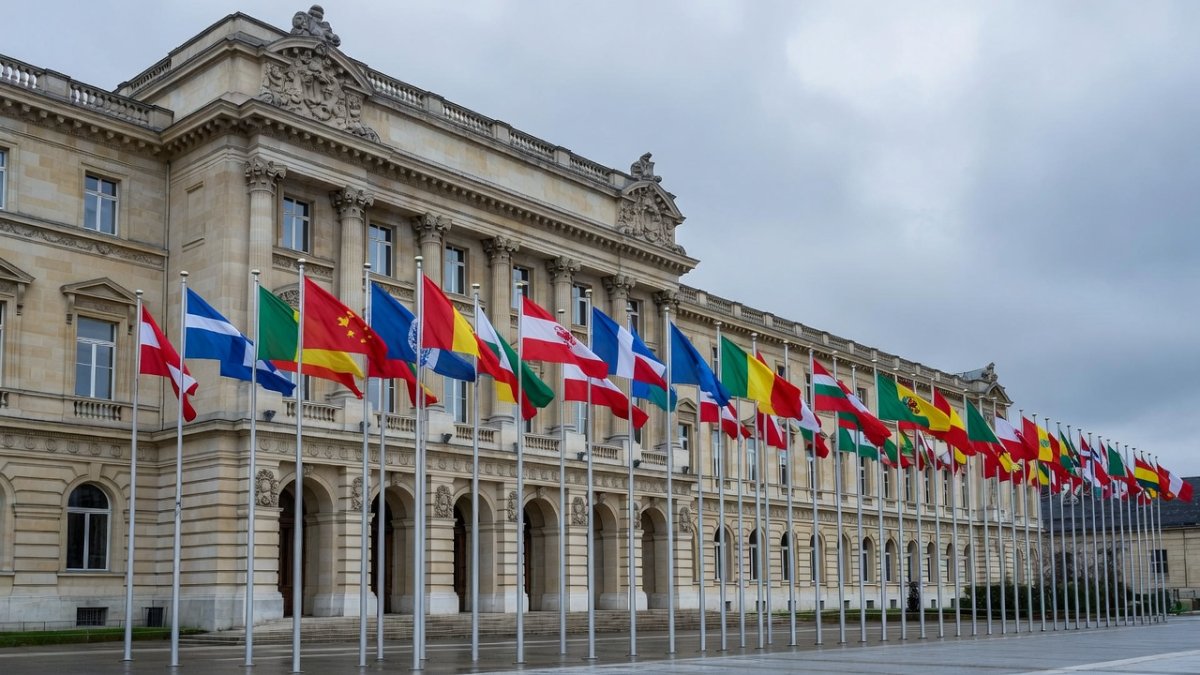
The Security Council’s Enduring Deadlock
Albanese’s appeal directly challenges the United Nations’ institutional machinery, questioning whether Secretary-General Antonio Guterres’ diplomatic efforts and the General Assembly’s "Uniting for Peace" mechanism can overcome the Security Council’s entrenched deadlock. The "Uniting for Peace" procedure, established in 1950, allows the General Assembly to consider international peace and security issues when the Security Council fails to act due to a lack of unanimity among its five permanent members. This mechanism has been invoked repeatedly in the context of the Israeli-Palestinian conflict, yet its resolutions remain non-binding, limiting their practical impact. The Security Council has been repeatedly stymied on Gaza and the West Bank, with the United States exercising its veto power on multiple occasions to block resolutions critical of Israel’s military operations and settlement expansion.Escalation on the Ground: Gaza and the West Bank
The timing of Albanese’s statement is significant, coming just one day after an Israeli strike hit Maghazi in the central Gaza Strip and as displacement continues in Jabalia in the north. The humanitarian situation in Gaza remains catastrophic, with the UN reporting widespread destruction of civilian infrastructure and a collapsing health system. In the West Bank, the situation has deteriorated markedly, with settler violence reaching record levels and the Palestinian Authority struggling to maintain control over key urban centers. The combination of military operations in Gaza and systematic violations in the West Bank points to a coordinated strategy of territorial consolidation that the international community has thus far failed to address effectively.Regional Dynamics: Arab Diplomacy and the Gaza Track
The regional context adds another layer of complexity to Albanese’s call. Arab leaders recently gathered in Egypt to sign a Gaza deal following high-stakes shuttle diplomacy involving Egyptian, Qatari, and Saudi mediators. This diplomatic push reflects the Arab states’ growing concern that the conflict could spiral into a wider regional war, drawing in Hezbollah on Israel’s northern border and potentially destabilizing Jordan and Egypt. However, the deal’s implementation remains uncertain, with Israeli strikes continuing to kill Palestinians in Gaza in late August 2026 despite the agreement’s signing. The Arab states’ leverage over Hamas and the Palestinian Authority is limited, and their ability to influence Israeli policy is constrained by the United States’ unwavering support for Israel in international forums.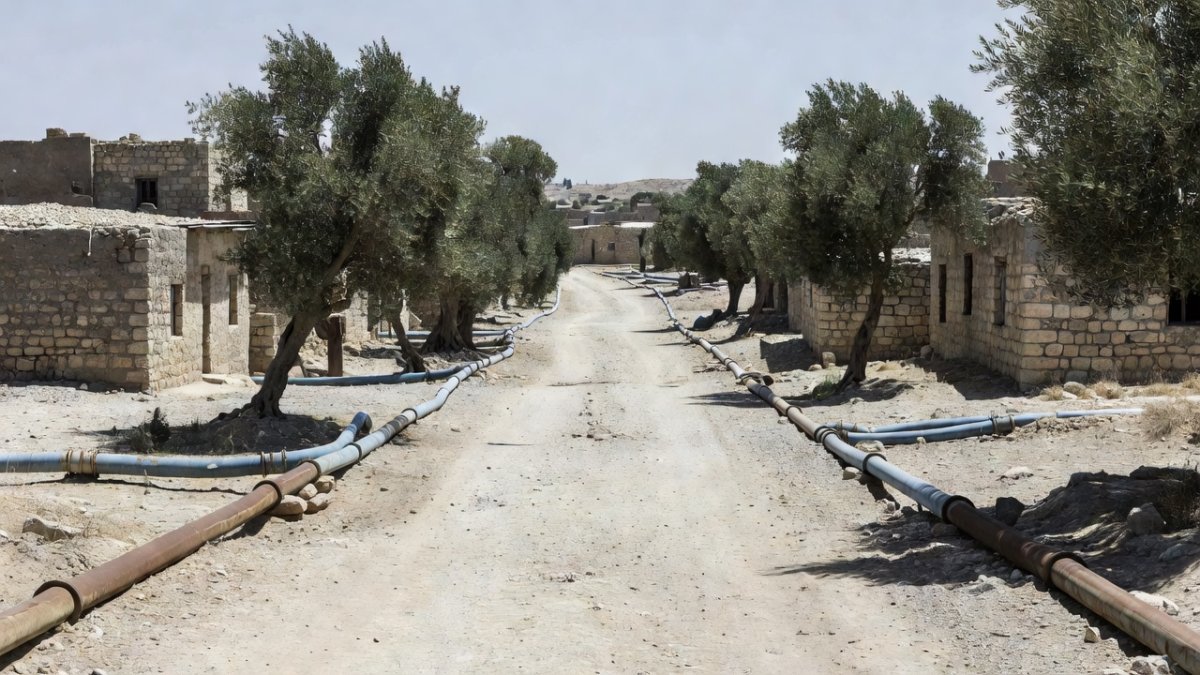
Third-State Obligations Under the ICJ Opinion
The debate over third-state obligations under the ICJ advisory opinion has become a central legal and political battleground. Legal scholars argue that the opinion’s finding that states must not assist in maintaining the occupation creates concrete obligations, including the potential for sanctions, arms embargoes, and the suspension of trade agreements. Several European countries have begun reviewing their export licenses and trade arrangements with Israel in light of the ruling, while others, particularly the United States and the United Kingdom, have resisted such measures. The feasibility of an international protection mission remains highly contested, with questions about its mandate, composition, and rules of engagement. Proponents point to successful precedents such as the UN Interim Force in Lebanon (UNIFIL) and the UN Disengagement Observer Force (UNDOF) on the Golan Heights, while critics argue that a protection force without enforcement capabilities would be ineffective and potentially counterproductive.Strategic Calculus: What Each Side Stands to Gain or Lose
The strategic calculus for all parties involved is complex. For Israel, an international protection presence would represent a significant erosion of its operational freedom in the occupied territories and could be seen as a precursor to broader international involvement in the conflict. For the Palestinians, such a presence could provide a measure of security against settler violence and military incursions, but it also risks legitimizing the occupation’s framework if not carefully designed. For the Arab states, supporting an international protection mission aligns with their stated commitment to Palestinian rights but could strain their normalization efforts with Israel. The United States faces a dilemma: its traditional role as Israel’s protector in international forums conflicts with its stated commitment to a two-state solution and international law.Albanese’s call also raises fundamental questions about the United Nations’ credibility and effectiveness in addressing the Israeli-Palestinian conflict. The organization has been criticized for its inability to enforce its own resolutions, with Security Council Resolution 2334 (2016) declaring settlements illegal remaining unimplemented. The "Uniting for Peace" mechanism, while providing a platform for the General Assembly to act, has produced resolutions that lack enforcement mechanisms. The Secretary-General’s diplomatic efforts, including his recent engagement with regional leaders, have yet to produce a breakthrough in the Security Council. The gap between the ICJ’s legal clarity and the political reality of the Security Council’s paralysis highlights the fundamental weakness of the international system when faced with a powerful state backed by a permanent member of the Security Council.
The Humanitarian Cost of Inaction
The humanitarian dimension of the crisis cannot be overstated. Attacks on water sources in the West Bank have forced entire communities to rely on trucked water at exorbitant costs, while in Gaza, the destruction of water and sanitation infrastructure has created conditions for disease outbreaks. The restrictions on movement and access to basic services have effectively fragmented the Palestinian population into isolated enclaves, undermining any possibility of economic development or political cohesion. The international community’s response, focused primarily on humanitarian aid, has failed to address the root causes of the crisis, which lie in the occupation itself. Albanese’s call for an international protection presence represents an attempt to shift the paradigm from humanitarian response to protective intervention, a shift that would have profound implications for the conflict’s trajectory.Feasibility and Regional Implications
Looking ahead, the feasibility of an international protection mission will depend on several factors: the political will of key states, the willingness of the parties to accept such a presence, and the ability of the UN to design a mission that can operate effectively in a highly volatile environment. The precedent of UNIFIL, which has operated in southern Lebanon since 1978, offers both lessons and warnings. While UNIFIL has contributed to relative stability in its area of operations, it has been unable to prevent major escalations, including the 2006 war and subsequent incidents. A protection mission in the West Bank and Gaza would face even greater challenges, given the density of settlements, the presence of armed groups, and the lack of a clear political framework for the conflict’s resolution.The coming weeks will be critical in determining whether Albanese’s call translates into concrete action. The General Assembly’s upcoming session, scheduled for September 2026, could provide a platform for member states to consider the "Uniting for Peace" mechanism and potentially mandate a protection mission. However, the political dynamics within the General Assembly are complex, with many states reluctant to confront the United States directly on the Israeli-Palestinian issue. The Arab states, while rhetorically supportive of Palestinian rights, have shown a pragmatic willingness to engage with Israel on security and economic matters. The European Union, which has been increasingly vocal in its criticism of Israeli policies, has yet to translate its statements into meaningful action. The window for international intervention may be closing, as the situation on the ground continues to deteriorate and the prospects for a negotiated settlement recede further into the distance.
By Malik Hassan, Staff Writer
This article was produced with AI-assisted research and editorial support. Reporting is based on sources cited in the article.
What's Your Reaction?
 Like
0
Like
0
 Dislike
0
Dislike
0
 Love
0
Love
0
 Funny
0
Funny
0
 Wow
0
Wow
0
 Sad
0
Sad
0
 Angry
0
Angry
0
Middle East Correspondent at Global1.News. Based in Beirut, covering politics, conflict, energy, and society across the Middle East. Brings context and depth to a region often reduced to headlines.









Comments (0)