
How Sawan Powers Rs 1.5 Lakh Crore Local Micro-Economy Across India
Sawan 2026 begins today, driving an estimated Rs 1.5 lakh crore in local economic activity through temple markets, flower vendors, Kanwar Yatra, and seasonal small-scale retail across India. The holy month is a lifeline for millions in the informal sector.
New Delhi – July 30, 2026 — As the sacred month of Sawan begins today, millions of devotees across India prepare for a period of fasting, prayer, and pilgrimage dedicated to Lord Shiva. But behind the rituals and religious observances lies a formidable economic engine — one that generates an estimated Rs 1.5 lakh crore in economic activity through temple markets, sweet shops, flower vendors, transport operators, and small-scale retailers who see their annual peak during this holy month.
Sawan's Hidden Economy: The Rs 1.5 Lakh Crore Seasonal Boom Powering India's Grassroots Markets
New Delhi – July 30, 2026 — Sawan, the fifth month of the Hindu calendar, begins on July 30 this year and runs through August 27, encompassing five Mondays known as Sawan Somvar, the most auspicious days for Shiva worship. The month triggers a cascade of economic activity that touches virtually every district in India, from the flower markets of Ujjain and the Kanwar Yatra routes of Uttarakhand to the sweet shops of Varanasi and the roadside vendors of small-town India.
The Scale of the Seasonal Economy
India's religious tourism and temple-related economy supports an estimated 7.6 to 8 crore livelihoods across the country, according to sector-level research published in 2025. Sawan alone accounts for a disproportionate share of this annual activity. The Rs 1.5 lakh crore figure — derived from combined estimates of retail sales, transport spending, hospitality, and puja-related purchases during the month — positions Sawan as one of India's most significant seasonal economic events, comparable in scale to the Diwali festival season.
The economic footprint is distributed across multiple sectors. Temple towns see the most concentrated impact: Ujjain's Mahakal Temple, one of India's 12 Jyotirlingas, witnesses a 400% increase in daily footfall during Sawan, from an average of 25,000 visitors to over 1.25 lakh on Mondays. Each visitor spends an average of Rs 800-1,200 on offerings, prasad, parking, and local purchases. For Varanasi's Kashi Vishwanath Temple corridor, the Sawan surge generates an estimated Rs 300 crore in ancillary economic activity alone.
Flower Markets: The First Link in the Sawan Supply Chain
The flower trade is arguably the most visible beneficiary of the Sawan economy. India's flower market, valued at approximately Rs 28,000 crore annually according to the Ministry of Agriculture, sees 35-40% of its annual revenue concentrated in the four-month festival season from July to October, with Sawan as the peak. Major flower markets in Delhi (Ghazipur), Mumbai (Dadar), and Kolkata (Mallick Ghat) report 60-80% increases in daily turnover during Sawan weeks.
In Ujjain, flower vendors around the Mahakal Temple report daily sales of Rs 15,000-25,000 during Sawan, compared to Rs 3,000-5,000 during regular months. The demand chain stretches deep into rural India: marigold farmers in Madhya Pradesh's Malwa region, jasmine growers in Tamil Nadu's Madurai district, and rose cultivators in Karnataka's Kolar belt all time their harvest cycles to coincide with the Sawan peak. A 2025 study by the Indian Institute of Horticultural Research found that flower farmers in temple-belt districts earn 55-65% of their annual income during the four-month festival corridor.

Sweet Shops and Food Vendors: The Taste of Devotion
The Sawan month imposes specific dietary restrictions — many devotees abstain from grains, onions, garlic, and non-vegetarian food, creating a surge in demand for special vrat (fasting) foods. Sweet shops across North India report a 70-90% increase in sales of Sawan-specific items: sabudana khichdi, kuttu ka atta (buckwheat flour), samak rice, and makhana-based sweets. Major sweet chains like Haldiram's and Bikanervala report that Sawan contributes 8-10% of their annual revenue in a single month.
The street food economy undergoes a seasonal transformation. In Delhi alone, an estimated 15,000 temporary vendors set up shop during Sawan, selling everything from fresh coconut water and sugarcane juice to special vrat thalis priced at Rs 100-250. A 2024 study by the Centre for Policy Research estimated that seasonal vending during Sawan generates approximately Rs 2,500 crore in incremental income for urban informal workers across India's top 20 cities.
The Kanwar Yatra: Pilgrimage as Economic Engine
The Kanwar Yatra — the annual pilgrimage where devotees walk to the Ganga to collect holy water and carry it back to their local Shiva temples — represents the most logistically complex element of the Sawan economy. In 2026, an estimated 3.5 crore kanwariyas are expected to travel across routes connecting Haridwar, Gaumukh, and Gangotri to destinations in Uttar Pradesh, Bihar, Delhi, Rajasthan, and Madhya Pradesh.
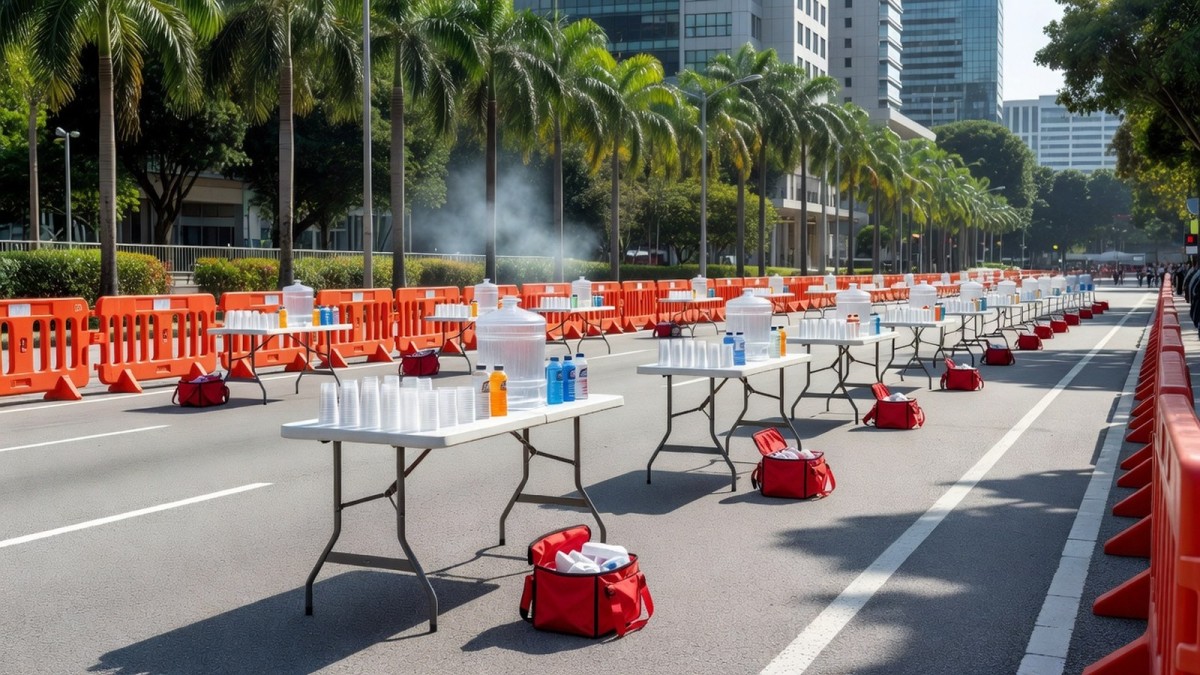
The state governments of Uttarakhand, Uttar Pradesh, and Delhi collectively budget over Rs 1,200 crore annually for Kanwar Yatra infrastructure — temporary water points, mobile toilets, medical camps, traffic management, and route lighting. The economic multiplier extends far beyond government spending: along the 250-kilometre Haridwar-Delhi route alone, an estimated 50,000 temporary stalls, kiosks, and eateries spring up during the yatra period, employing over 2 lakh people for 30-45 days.
The Unorganised Sector: Where the Real Impact Lives
The most significant — and most overlooked — dimension of the Sawan economy is its impact on India's vast unorganised sector. Unlike Diwali and Durga Puja, where spending is concentrated in urban retail and consumer goods, Sawan's economic footprint is disproportionately rural and informal. Coconut sellers, garland makers, incense stick rollers, clay diya artisans, and roadside prasad vendors — workers who operate outside formal taxation and social security frameworks — see their annual income peak during this month.
For these workers, Sawan is not merely a religious observance but an economic lifeline. A 2025 survey by the National Council of Applied Economic Research found that 68% of informal workers in temple-town economies reported that income from the July-October festival corridor accounted for over 40% of their annual household earnings. The Sawan month alone contributed 18-22% of this festival corridor income for most respondents.
Digital Payments and the Modernising Sawan Economy
The Sawan economy is also undergoing a quiet digital transformation. UPI payments at temple donation counters, once almost entirely cash-based, now account for 35-40% of transactions at major temples like Mahakal (Ujjain), Kashi Vishwanath (Varanasi), and Baidyanath (Deoghar). Temple trusts have reported a 200% increase in digital donations during Sawan since 2023, with the average online donation rising from Rs 51 to Rs 151 over the same period.
E-commerce platforms have also entered the Sawan economy. Amazon India and Flipkart report a 150% surge in searches for Sawan-specific items — puja thalis, rudraksha beads, bel patra (leaves offered to Shiva), and ganga jal — during the month. Local artisans and small businesses selling through these platforms see order volumes increase 3-4 times during Sawan compared to the preceding months.
The Bottom Line
The Sawan economy of Rs 1.5 lakh crore is not a single industry or sector but a distributed economic phenomenon that touches flower farmers in Tamil Nadu, sweet shop owners in Punjab, temporary vendors in Delhi, and transport operators across North India. Its scale rivals the formal retail spikes of Diwali and Durga Puja, but its character is fundamentally different — deeply informal, geographically distributed, and reliant on a network of millions of micro-entrepreneurs who operate at the margin of India's formal economy. As UPI and e-commerce penetrate deeper into this ecosystem, the Sawan economy offers a unique lens through which to understand both India's cultural continuity and its economic transformation at the grassroots level.
— By Dr. Raj Patel, Staff Writer
This article was produced with AI-assisted research and editorial support. Reporting is based on sources cited in the article.
What's Your Reaction?
 Like
0
Like
0
 Dislike
0
Dislike
0
 Love
0
Love
0
 Funny
0
Funny
0
 Wow
0
Wow
0
 Sad
0
Sad
0
 Angry
0
Angry
0

India/South Asia Correspondent at Global1.News. Analytical voice with a background in science and health journalism. Based in New Delhi, covering Indian politics, education, healthcare, technology, and policy. Breaks down complex data into clear, actionable reporting.














Comments (0)