
Robredo-Tulfo, Duterte-Marcos in Dead Heat for 2028
In a recent episode of ANC 24/7’s Beyond the Exchange , veteran anchor Rico Hizon sat down with OCTA Research founder Ranjit Rye and WR Numero’s Robin Garcia to unpack a political bombshell: for the first time, a Leni Robredo-led presidential tandem has numerically overtaken a Sara Duterte-Imee Marcos pairing in a major national survey. For ordinary Filipinos watching from their living rooms in Quezon City or their sari-sari stores in Cebu, the numbers signal that the 2028
In a recent episode of ANC 24/7’s Beyond the Exchange, veteran anchor Rico Hizon sat down with OCTA Research founder Ranjit Rye and WR Numero’s Robin Garcia to unpack a political bombshell: for the first time, a Leni Robredo-led presidential tandem has numerically overtaken a Sara Duterte-Imee Marcos pairing in a major national survey. For ordinary Filipinos watching from their living rooms in Quezon City or their sari-sari stores in Cebu, the numbers signal that the 2028 race is no longer a foregone conclusion, but a genuine contest that could reshape the country’s future.
The discussion, which aired as part of the 89th episode of the program, dissected the latest OCTA Research “Tugon ng Masa” (TNM) survey, a face-to-face poll of 1,200 registered voters conducted from July 4 to 11. The findings, released on Wednesday, show a statistical dead heat that has energized supporters and given political analysts plenty to chew on nearly two years before the May 2028 elections.
OCTA Survey Shows Robredo-Tulfo and Duterte-Marcos in Statistical Dead Heat for 2028
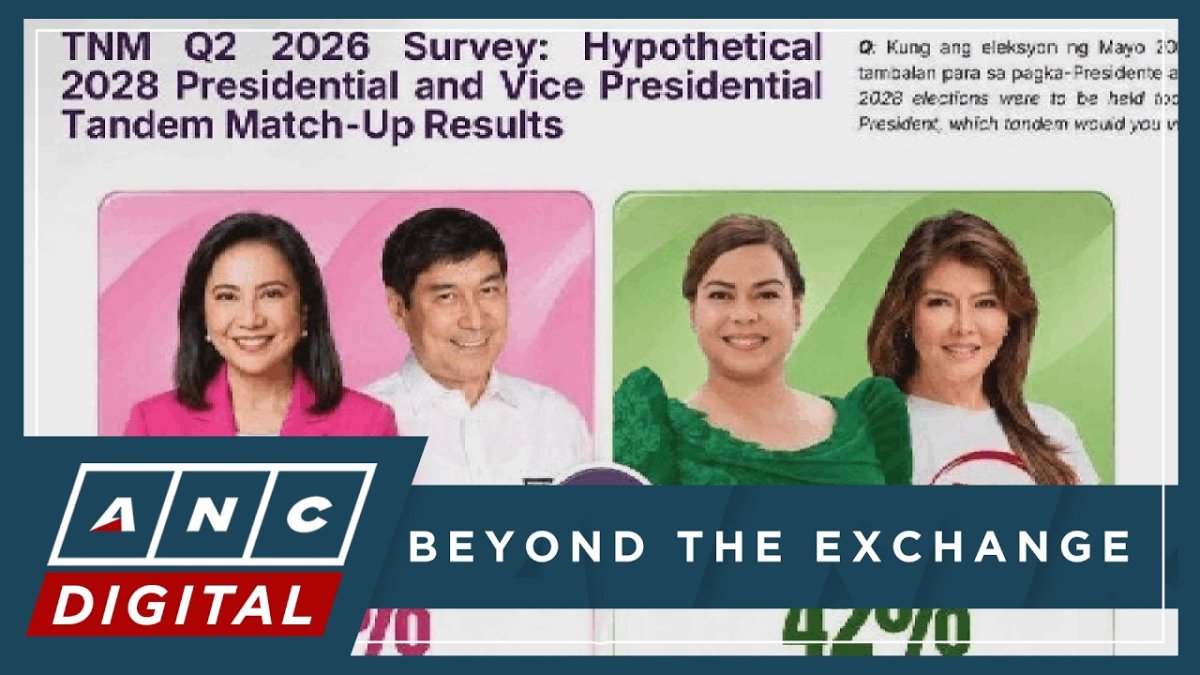
Manila, Philippines – Wednesday — The latest OCTA Research “Tugon ng Masa” survey has thrown the 2028 presidential race wide open, showing Naga City Mayor Leni Robredo and Sen. Raffy Tulfo leading Vice President Sara Duterte and Sen. Imee Marcos by a razor-thin margin of 45 percent to 42 percent. The three-point gap falls within the survey’s head-to-head margin of error of ±3 percentage points, making the contest a statistical tie that has never been seen before in OCTA’s comparable tandem match-up surveys.
The Story: A Dead Heat That Changes the Narrative
The survey, conducted through face-to-face interviews with 1,200 registered voters nationwide from July 4 to 11, revealed that 45 percent of respondents would choose the Robredo-Tulfo tandem if the elections were held today, while 42 percent would pick Duterte-Marcos. The remaining 13 percent of the electorate remains non-committal, with 8 percent saying they would vote for neither, 4 percent undecided, and 1 percent refusing to answer.
OCTA Research founder Ranjit Rye, speaking on Beyond the Exchange, emphasized the significance of the findings. “The central implication of the results is that Robredo-Tulfo and Duterte-Marcos are now statistically in a dead heat,” Rye said. The survey has a margin of error of ±3 percentage points at a 95 percent confidence level, meaning the actual support for either tandem could be even closer than the headline numbers suggest.
Robin Garcia, President and CEO of WR Advisory Group and head of WR Numero, joined Rye in analyzing the data, noting that the survey represents a critical inflection point in the political landscape. The findings were released on Wednesday, just as the nation continues to grapple with the ongoing impeachment trial of Vice President Duterte in the Senate, a backdrop that adds layers of complexity to the numbers.
A Historic Flip: From 25-Point Deficits to a Statistical Tie
What makes this survey truly historic is the trajectory it represents. Earlier TNM surveys showed the Duterte-Marcos tandem leading Robredo-Tulfo by approximately 15 to 25 percentage points, a commanding advantage that seemed insurmountable. The first quarter 2026 survey showed Robredo-Tulfo holding an apparent four-point lead, 44 percent to 40 percent over Duterte-Marcos — a narrow gap that hinted at a tightening race but was not yet the outright reversal seen today.
Now, for the first time in OCTA’s comparable TNM tandem match-up surveys, a Robredo-led tandem has numerically surpassed a Duterte-Marcos alignment. OCTA researchers described this as the “first recorded instance” of such a flip, marking a seismic shift in voter sentiment that has caught the attention of political operatives across the spectrum.
The flip is not just a statistical curiosity; it reflects a broader realignment of Filipino voters who are increasingly weighing their options beyond traditional political dynasties. The fact that Robredo, who has repeatedly ruled out another presidential bid, and Tulfo, who has said he does not plan to run in 2028, are leading in a hypothetical match-up speaks volumes about the electorate’s desire for alternative leadership.
Philippine Context: The Great Divide Between Mindanao and Luzon
The survey’s regional breakdown reveals a nation deeply divided along geographic lines, a pattern that has defined Philippine politics for decades. Robredo-Tulfo dominated Balance Luzon with 61 percent support and the National Capital Region (NCR) with 56 percent, while the two tandems were tied at 45-45 in the Visayas. The real story, however, lies in Mindanao, where Duterte-Marcos enjoyed overwhelming support at 90 percent.
The regional extremes are striking. Robredo-Tulfo’s strongest areas include Mimaropa (84 percent), Bicol (71 percent), Central Luzon (71 percent), Ilocos (69 percent), Western Visayas (68 percent), and the Negros Island Region (61 percent). Meanwhile, Duterte-Marcos posted staggering numbers in Caraga (97 percent), Northern Mindanao (92 percent), Davao Region (91 percent), BARMM and Soccsksargen (88 percent each), Zamboanga Peninsula (87 percent), and Central Visayas (82 percent).
This geographic chasm reflects the enduring influence of regional political machines and the legacy of the Duterte name in Mindanao, where Vice President Sara Duterte remains a formidable force. At the same time, Robredo’s strong showing in Luzon, particularly in her home region of Bicol and in the vote-rich Central Luzon, demonstrates her enduring appeal among voters who value her track record on transparency and good governance. The urban-rural divide further complicates the picture, with Robredo-Tulfo leading in urban areas (48-38) while Duterte-Marcos dominates rural communities (47-40).
Impact on Filipinos: Why Survey Numbers Matter Beyond Politics
For ordinary Filipinos, these survey numbers are more than just political trivia. They shape the behavior of candidates, influence policy decisions, and determine where campaign resources will be deployed in the months ahead. When a survey shows a statistical dead heat, it signals to political parties that every vote counts, from the jeepney drivers of Manila to the farmers of Mindanao.
The socioeconomic breakdown of the survey offers a window into the concerns of different classes. Robredo-Tulfo led among the ABC class (41-37) and the D class (48-41), while Duterte-Marcos held a commanding lead among the E class (53-33). This suggests that the poorest Filipinos, who are most reliant on government assistance programs, remain loyal to the Duterte brand, while middle-class voters are increasingly drawn to the Robredo-Tulfo message of institutional reform and anti-corruption.
Age demographics tell another story. Duterte-Marcos led among voters aged 25-34 and 35-44 (50 percent each) and 45-54 (48 percent), while Robredo-Tulfo dominated the youngest and oldest voters: 18-24 (52 percent), 55-64 (48 percent), 65-74 (60 percent), and 75 and above (76 percent). The strong support among senior citizens for Robredo-Tulfo is particularly notable, reflecting the enduring trust that older Filipinos place in Robredo’s integrity and service record.
Education levels also reveal distinct patterns. Robredo-Tulfo led among voters with no formal education or elementary schooling (46-40), high school graduates (47-45), and vocational degree holders (54-30). Duterte-Marcos, meanwhile, led among college graduates and postgraduates (40-36). These numbers suggest that the race is not simply about class warfare but about competing visions of governance that resonate differently across educational backgrounds.
Reactions and Responses: Candidates Stay Coy While Analysts Weigh In
Despite the survey’s dramatic findings, the candidates themselves have remained characteristically non-committal. Only Vice President Sara Duterte has declared an intention to run for higher office in 2028, while Robredo has consistently ruled out another presidential bid, preferring instead to seek a second term as Naga City mayor. Sen. Raffy Tulfo has also stated that he does not plan to run in 2028, leaving political observers to wonder whether the survey is measuring a hypothetical that may never materialize.
Ranjit Rye and Robin Garcia, however, cautioned against reading too much into the numbers at this early stage. “With 13 percent of the electorate still undecided, rejecting both tandems or declining to answer, a meaningful share of voters have yet to commit to either side, leaving real room for the national picture to move further in either direction before 2028,” Rye said during the Beyond the Exchange interview.
Garcia echoed this sentiment, emphasizing that the survey is an early-stage hypothetical measure nearly two years before the May 2028 elections — a snapshot, not a prediction. The political landscape could shift dramatically as candidates formally declare, campaign machinery activates, and the impeachment trial of Vice President Duterte unfolds in the Senate.
What to Watch For: The Road to May 2028
As the nation looks toward the May 2028 elections, several key factors will determine whether the Robredo-Tulfo lead holds or evaporates. First, the 13 percent non-committal voters represent a significant bloc that could swing the election in either direction. Both camps will likely target these undecided voters with tailored messaging and grassroots outreach in the coming months.
Second, the candidate declaration process will be crucial. If Robredo and Tulfo maintain their stance against running, the survey’s relevance may diminish. However, political pressure from supporters and the tantalizing prospect of a winnable race could prompt a reconsideration. The dynamics of the impeachment trial of Vice President Duterte will also play a pivotal role in shaping public opinion, particularly in Mindanao where her support remains strongest.
Finally, future OCTA and WR Numero surveys will provide critical data points to track voter sentiment over time. The first quarter 2026 survey showed a 44-40 split, and the latest numbers show a 45-42 result — a narrowing gap that suggests momentum is shifting. Whether this trend continues will depend on how candidates respond to the issues that matter most to Filipino families: inflation, jobs, education, and the cost of basic goods.
For now, the survey serves as a powerful reminder that in a democracy, no election is ever decided until the votes are counted. The statistical dead heat between Robredo-Tulfo and Duterte-Marcos is a call to action for every Filipino to engage with the political process, to ask tough questions of candidates, and to hold their leaders accountable. As the 2028 race takes shape, the power to shape the nation’s future rests not with pollsters or pundits, but with the millions of voters across the archipelago who will ultimately decide the country’s direction.
By Bella Reyes, Staff Writer
This article was produced with AI-assisted research and editorial support. Reporting is based on sources cited in the article.
What's Your Reaction?
 Like
0
Like
0
 Dislike
0
Dislike
0
 Love
0
Love
0
 Funny
0
Funny
0
 Wow
0
Wow
0
 Sad
0
Sad
0
 Angry
0
Angry
0

Philippines/Southeast Asia Correspondent at Global1.News. Manila-based journalist covering Philippine politics, environment, maritime security, and social issues. Passionate about marine conservation and the communities protecting the Philippines' natural heritage.









Comments (0)