
DepEd: Over 45,000 schools, only 1,000 guidance counselors
DepEd has fewer than 1,000 guidance counselors for 45,000+ schools. RA 12080 funds hiring 10,000 counselor associates in 2026 at P31,000/month. The shortage leaves students, teachers, and parents without mental health support, especially in rural barangays. New hires aim to close the gap.
The Numbers Behind the Crisis
Cabral, speaking in an interview with dzBB, laid out the scale of the problem with stark clarity. Citing the American School Counselor Association’s international standard of one counselor per 250 learners, he noted that the Philippines is "still a bit far from the ideal ratio."
"According to the American School Counselor Association, internationally there should be one counselor per 250 learners. In the Philippines, in DepEd in particular, we only have a thousand registered guidance counselors. And this meets the needs of more than 45,000 schools across the country," Cabral said.
The gap is even more pronounced when looking at the broader workforce. As of Jan. 31, there were around 5,000 registered guidance counselors and fewer than 3,000 registered psychologists nationwide. However, only a fraction of those — fewer than 1,000 registered guidance counselors — are actually serving under the DepEd. The department created 5,000 guidance counselor positions back in 2020, but only about 1,000 of these were ever filled, a testament to the challenges of recruitment and retention in the public school system.
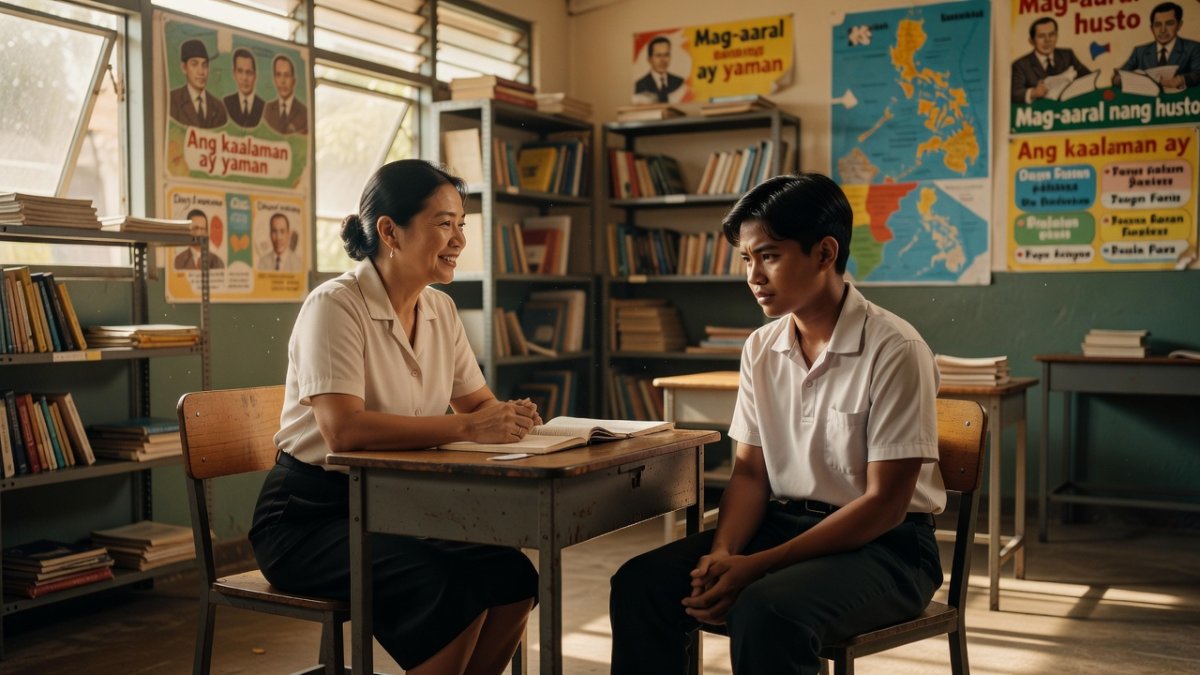
For context, consider the daily reality of a school division in a province like Leyte or Mindanao. A single guidance counselor might be responsible for multiple schools, traveling from one barangay to another just to conduct basic intake interviews. In Metro Manila, where class sizes can exceed 50 students, the counselor’s office is often a revolving door of students with nowhere else to go.
What RA 12080 Means for Schools
Republic Act 12080, signed into law to promote mental health and well-being in basic education, is now the centerpiece of the DepEd’s response. Cabral expressed gratitude for the law, which mandates the creation of care centers in every school and establishes a Mental Health and Well-Being Office at the division level, led by a schools division counselor.
"That is why we are grateful because we have Republic Act 12080, which provides for the promotion of basic education, mental health and well-being. We will start with the creation of school counselor associates," Cabral said.
Under the law, each school is expected to have both a school counselor and a school counselor associate, along with other allied services. This is a significant structural shift from the current setup, where many schools have no dedicated mental health professional at all. The law also envisions a tiered system of support, with the division-level office providing oversight and resources to individual schools.
For 2026, the department is set to hire at least 10,000 school counselor associates. The Department of Budget and Management (DBM) has already authorized the creation of these positions, and the hiring process is underway. Cabral provided a detailed breakdown: out of the 10,000 positions, 9,641 have already been published, with 6,968 ongoing assessments, 2,469 open for applications, and 400 still waiting for the issuance of the Notice of Organization, Staffing and Compensation Action.
"The 10,000 positions have been created, all of them regular and permanent. That's why they also need to have matching eligibility for services," Cabral said.
Who Can Apply and What They Earn
The new school counselor associate positions are designed to be accessible to a broad pool of qualified applicants. According to Cabral, applicants must have completed a degree in psychology, guidance and counseling, or related courses, provided they have earned at least 18 units in behavioral science and completed a supervised internship of at least 200 hours.
This qualification standard is a deliberate effort to widen the pipeline of mental health professionals entering the public school system. By creating a role that is distinct from the full guidance counselor position, the DepEd hopes to attract fresh graduates and career shifters who may not yet have their full counseling license but are eager to serve.
The compensation package is also designed to be competitive. A School Counselor Associate I is entitled to a basic monthly salary of P31,000, plus a P2,000 personal economic relief allowance. For many young professionals, particularly those outside Metro Manila, this represents a stable and respectable income, especially given that the positions are regular and permanent.
For a fresh graduate in psychology from a provincial university, this could be the difference between leaving for overseas work or staying to serve their own community. The permanence of the positions also offers a sense of job security that is rare in the public sector, where contractual appointments are often the norm.
The Human Cost of the Shortage
Behind the numbers are real stories of Filipino children struggling in silence. In a typical public school classroom, a teacher might notice that a student has become withdrawn, or that another is acting out aggressively. Without a guidance counselor on hand, the teacher is left to manage the situation alone, often without the training or resources to provide proper support.
Consider the case of a Grade 6 student in a rural barangay who is being bullied daily. The teacher may intervene, but without a counselor to facilitate a proper intervention, the bullying often continues. The student may stop coming to school, and the cycle of absenteeism and dropout begins. This is not a hypothetical scenario; it is a daily reality in many parts of the country.
Parents, too, feel the strain. A mother in Quezon City might wait weeks for an appointment with a school counselor to discuss her child’s declining grades and emotional outbursts. In the meantime, she is left to navigate the situation with limited guidance, often turning to relatives or even social media for advice.
The shortage also takes a toll on teachers, who are increasingly being asked to act as de facto counselors. A high school teacher in Cebu might spend her lunch break talking a student down from a panic attack, all while preparing lesson plans and grading papers. The emotional labor is immense, and burnout is common.
From Metro Manila to Rural Barangays
The impact of the new hires will be felt differently across the country. In Metro Manila, where schools are densely packed and resources are relatively more accessible, the addition of counselor associates could mean faster referrals and more consistent follow-up for students in crisis. Schools in urban areas may also benefit from partnerships with local government units and non-governmental organizations that can supplement the DepEd’s efforts.
In rural barangays, the challenge is different. Here, the nearest mental health professional might be hours away, and the stigma around seeking help for mental health issues is often stronger. The presence of a school counselor associate — someone who is part of the community and understands its dynamics — could be transformative. It could mean that a farmer’s son in Isabela, struggling with the pressures of adolescence, finally has someone to talk to without fear of judgment.
The law’s mandate to establish a care center in every school is ambitious, and the DepEd acknowledges that it will take time to fully implement. But the hiring of 10,000 counselor associates is a concrete first step. It is a recognition that mental health is not a luxury but a necessity, and that the school system has a critical role to play in nurturing the well-being of the nation’s youth.
Looking Ahead: Challenges and Opportunities
While the hiring of 10,000 counselor associates is a significant milestone, it is only the beginning. The ideal ratio of one counselor per 250 learners remains a distant goal. With over 45,000 schools and millions of students, the DepEd will need to sustain this hiring momentum for years to come.
There are also practical challenges to consider. The 200-hour supervised internship requirement, while valuable, may be a barrier for some applicants who cannot afford to work without pay for that duration. The DepEd will need to work with universities and training institutions to ensure that internship opportunities are accessible and affordable.
Retention is another concern. The public school system has historically struggled to keep qualified professionals, who are often lured away by higher salaries in the private sector or abroad. The P31,000 monthly salary for counselor associates is competitive, but it may not be enough to retain experienced counselors in the long run.
Despite these challenges, there is reason for hope. The passage of RA 12080 signals a national commitment to mental health that was absent just a few years ago. The DepEd’s willingness to create new positions and invest in hiring is a positive sign. And for the thousands of Filipino students who are struggling in silence, the arrival of a counselor associate in their school could be a lifeline.
As Undersecretary Cabral noted, the department is grateful for the law and is moving quickly to implement it. The 9,641 published positions and 6,968 ongoing assessments show that the machinery of government is in motion. For the students, parents, and teachers who have long waited for this moment, the promise of mental health support in schools is finally becoming a reality.
This article was produced with AI-assisted research and editorial support. Sources: Philstar.com
By Bella Reyes, Staff WriterWhat's Your Reaction?
 Like
0
Like
0
 Dislike
0
Dislike
0
 Love
0
Love
0
 Funny
0
Funny
0
 Wow
0
Wow
0
 Sad
0
Sad
0
 Angry
0
Angry
0

Philippines/Southeast Asia Correspondent at Global1.News. Manila-based journalist covering Philippine politics, environment, maritime security, and social issues. Passionate about marine conservation and the communities protecting the Philippines' natural heritage.













Comments (0)