
Rahul Gandhi's Nov 1 INDIA bloc rally: Delhi's CTI cites ₹25K cr Dhanteras business, seeks delay— What letter to MP said
The Chamber of Trade and Industry (CTI) of Delhi has formally asked Congress leader Rahul Gandhi to shift the INDIA bloc rally slated for 1 November at Ramlila Maidan to a later date, citing the potential impact on the city’s peak festive‑season commerce.
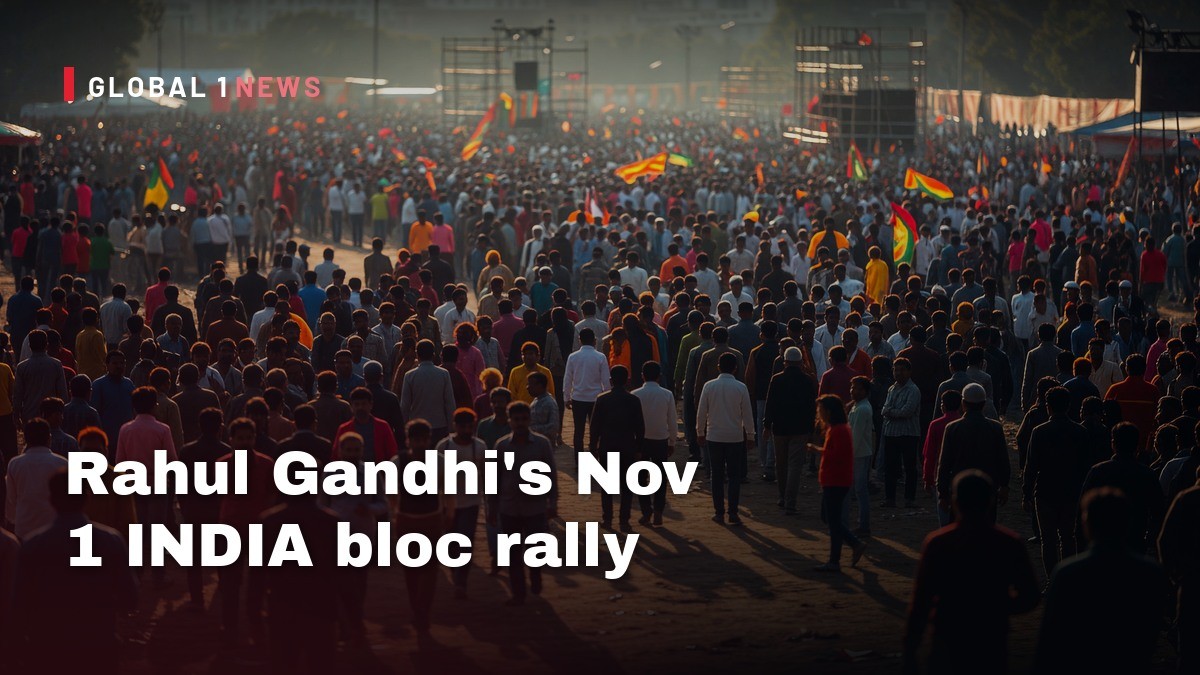
The Chamber of Trade and Industry (CTI) of Delhi has formally asked Congress leader Rahul Gandhi to shift the INDIA bloc rally slated for 1 November at Ramlila Maidan to a later date, citing the potential impact on the city’s peak festive‑season commerce. In a letter addressed to Gandhi on Saturday, CTI chairman Brijesh Goyal argued that the rally, if held as scheduled, could disrupt trade, traffic and commuter flow across a swathe of wholesale and retail markets that lie within a five‑kilometre radius of the venue.
Why the rally timing matters for Delhi’s festive economy
The CTI’s appeal is anchored in the fact that Delhi’s retail calendar intensifies around Dhanteras (6 November), Diwali (8 November) and Bhai Dooj (10 November). According to the association, preparations for these festivals begin well before the actual dates, with consumers flocking to markets for gold, silver, utensils, electronics, garments, dry fruits, sweets, automobiles and furniture. The letter quantifies the economic weight of Dhanteras alone at roughly ₹ 25,000 crore in the capital, underscoring the scale of commercial activity that could be jeopardised by large‑scale public gatherings.
Beyond the sheer volume of sales, the CTI points to recent disruptions in October, when road closures and traffic diversions around Connaught Place, India Gate and other central zones reportedly inflicted losses nearing ₹ 3,000 crore on traders. The association warns that similar or greater losses could accrue if the rally proceeds on 1 November, given the proximity of Ramlila Maidan to key transit arteries and railway stations.
The geography of disruption: markets and transport hubs
Ramlila Maidan sits at the heart of Delhi’s historic commercial belt. Within a five‑kilometre radius, the CTI lists twenty major wholesale and retail markets, including Chandni Chowk, Khari Baoli, Dariba Kalan, Karol Bagh and Lajpat Rai Market. These nodes are not only retail hotspots but also logistical corridors for goods moving in and out of the capital. Any restriction on traffic, metro services or pedestrian flow could therefore ripple across the entire supply chain, affecting both merchants and consumers.
Compounding the market‑centric concerns are the two railway stations that bracket the rally site: Old Delhi Railway Station and New Delhi Railway Station. Both serve as gateways for shoppers arriving from neighbouring states and other parts of the country. The CTI warns that barricading, road closures and congestion could inconvenience commuters, potentially dampening footfall at the very markets that fuel the festive surge.
Political stakes behind the rally
The proposed rally is part of the INDIA bloc’s broader “vote chori” campaign, which seeks to press the government over alleged irregularities in the Special Intensive Revision (SIR) of electoral rolls and to demand the resignation of Chief Election Commissioner Gyanesh Kumar. The opposition’s narrative frames the rally as a pressure tactic ahead of the upcoming elections, positioning it as a continuation of the “March for Democracy” held on 12 October, when activists staged a protest at the Supreme Court.
While the CTI acknowledges the right of political parties to organise public gatherings, it urges Gandhi, in his capacity as Leader of Opposition in the Lok Sabha, to weigh the commercial fallout against the political objectives. The letter explicitly requests that the rally be moved to a date after Bhai Dooj, which falls on 10 November, thereby allowing the festive shopping season to proceed unhindered.
Historical precedents of trade disruptions during rallies
Delhi’s experience with large‑scale political rallies has repeatedly highlighted the tension between civic expression and commercial continuity. Past events have shown that road closures around central landmarks often trigger a cascade of logistical challenges for traders, especially in densely packed market districts. The CTI’s reference to October’s losses illustrates a recent example where traffic diversions alone were sufficient to generate multi‑billion‑rupee setbacks for the trading community.
Such precedents reinforce the association’s argument that timing is critical. By aligning the rally with the festive window, the CTI contends that the economic cost could far exceed the typical inconvenience associated with occasional protests, given the amplified consumer spending and heightened logistical demand during this period.
Potential compromises and mitigation strategies
The CTI’s letter does not categorically reject the rally; rather, it seeks a temporal shift. This opens a window for negotiation. One possible compromise could involve a scaled‑down rally with limited crowd size, staggered timings or alternative venues farther from the core market cluster. Enhanced coordination with traffic police, the Delhi Metro, and municipal authorities could also mitigate congestion, though the association remains sceptical about the efficacy of such measures during a high‑stakes political event.
Another avenue is the provision of dedicated shuttle services for shoppers and commuters, coupled with clear communication about alternate routes. However, the CTI’s emphasis on the magnitude of Dhanteras‑related business suggests that even well‑planned traffic management may not fully offset the loss of footfall and sales that a major rally could entail.
Implications for Delhi’s broader economic ecosystem
Delhi’s festive season is not an isolated retail phenomenon; it intertwines with supply chains spanning northern India and beyond. Disruptions in the capital’s wholesale markets can reverberate to regional distributors, manufacturers and logistics providers. A slowdown in the capital’s trade flow could therefore translate into delayed shipments, inventory shortages and price volatility for goods that are in high demand during Diwali.
Moreover, the festive period is a key revenue generator for the city’s informal sector, which includes countless small‑scale vendors and daily‑wage workers. Any reduction in market activity could affect livelihoods, amplifying the socio‑economic stakes of the rally’s timing. The CTI’s appeal thus reflects a broader concern for the economic well‑being of Delhi’s lower‑income groups who depend on the festive trade surge.
Looking ahead: balancing democratic expression and economic stability
The CTI’s request places Rahul Gandhi at a crossroads between political mobilisation and economic stewardship. While the opposition seeks to capitalise on public sentiment over alleged electoral malpractices, the traders’ association foregrounds the tangible cost to the city’s economy. The outcome of this negotiation will set a precedent for how future political events are scheduled around critical commercial calendars in India’s megacities.
For policymakers, the episode underscores the need for a coordinated framework that can accommodate both democratic expression and the uninterrupted functioning of vital economic zones. As Delhi prepares for a bustling Diwali season, the balance struck between rally logistics and market continuity will be watched closely by business chambers across the country, potentially shaping the protocol for managing large‑scale public gatherings in India’s densely populated urban centres.
This article was produced with AI-assisted research and editorial support. Reporting is based on the source material cited below. Sources: Livemint; livemint.com; Global1.News (25 October 2026).
By Dr. Raj Patel, Staff Writer
What's Your Reaction?
 Like
0
 Dislike
0
 Love
0
 Funny
0
 Wow
0
 Sad
0
 Angry
0

India/South Asia Correspondent at Global1.News. Analytical voice with a background in science and health journalism. Based in New Delhi, covering Indian politics, education, healthcare, technology, and policy. Breaks down complex data into clear, actionable reporting.











Comments (0)