
Public Perception Key in VP Sara Trial, Not Just Senate Votes
In a recent episode of ANC 24/7's "Beyond the Exchange" with Rico Hizon, pollster and WR Advisory Group President and CEO Robin Garcia delivered a blunt assessment of the ongoing Senate impeachment trial of Vice President Sara Duterte: the real battleground is not just the chamber floor but the...
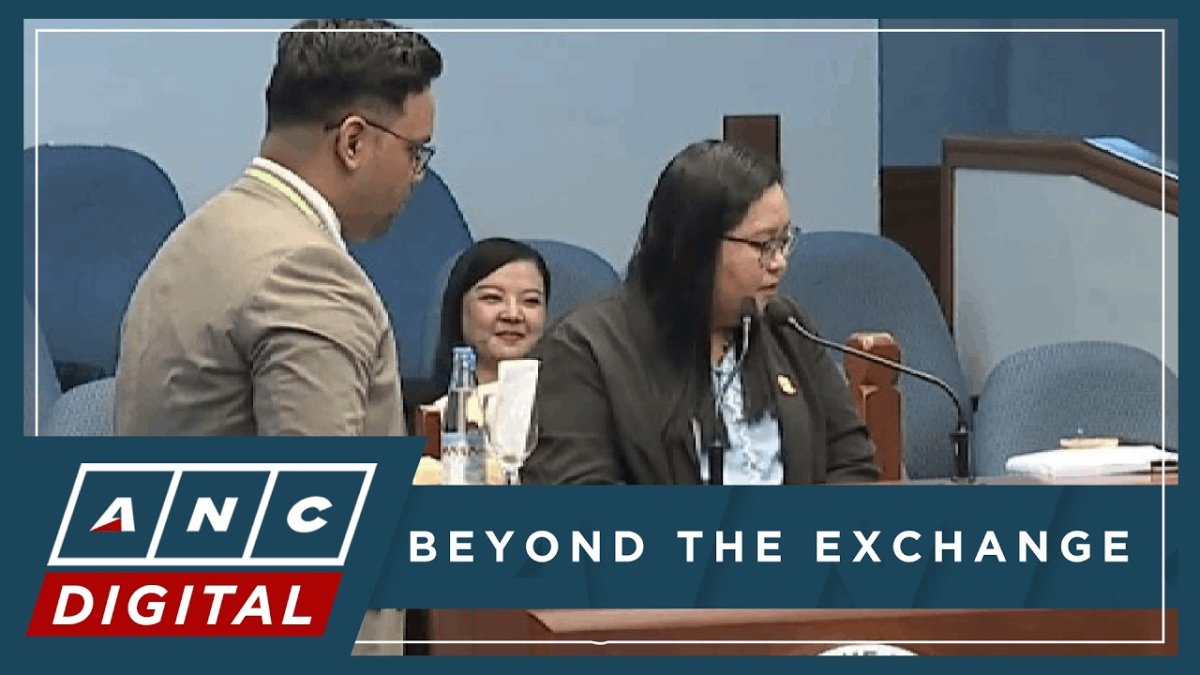
In a recent episode of ANC 24/7's "Beyond the Exchange" with Rico Hizon, pollster and WR Advisory Group President and CEO Robin Garcia delivered a blunt assessment of the ongoing Senate impeachment trial of Vice President Sara Duterte: the real battleground is not just the chamber floor but the hearts and minds of the Filipino public. Garcia, joined by OCTA Research founder Ranjit Rye, argued that public perception will ultimately shape the political fallout of the trial, regardless of how the senators sitting as judges cast their votes. Their conversation arrives as the impeachment court, presided over by Senate President Francis "Chiz" Escudero, works through the trial that began on July 6, 2026, with the prosecution now deep into the evidence phase of the confidential funds case.
Public Perception, Not Just Senate Votes, Will Decide Sara Duterte's Fate
Manila, Philippines – this weekend — The impeachment trial of Vice President Sara Duterte has entered a critical phase, and the men who measure the nation's mood say the outcome may hinge less on legal arguments and more on how ordinary Filipinos perceive the proceedings. In a wide-ranging discussion on ANC 24/7's "Beyond the Exchange," Robin Garcia of WR Advisory Group and Ranjit Rye of OCTA Research dissected the polling data, the trial's slow pace, and the generational shift that could redefine Philippine politics ahead of the 2028 presidential elections.

The Story: What Garcia and Rye Told Rico Hizon
Garcia, whose firm WR Numero has been tracking public sentiment on the impeachment, told Hizon that the Senate's verdict is only half the story. He argued that while the votes of the senators are important, public perception is ultimately the arbiter of the trial's meaning — and that the political consequences for Duterte will be measured in the court of public opinion, particularly as she positions herself for a potential presidential run in 2028.
Rye, the founder of OCTA Research, offered a more nuanced view, saying most Filipinos are adopting a "wait-and-see" attitude toward the trial. He pointed to an OCTA survey conducted from April 20-24, 2026, with 1,200 respondents, which found that 74 percent of adult Filipinos support the Senate impeachment trial — a significant jump from 69 percent in March. But Rye cautioned that support for the process does not automatically translate into support for conviction. People are watching, he explained, but they are not yet convinced either way — they want to see the evidence, and they want to see fairness.
Garcia, however, offered a sobering counterpoint: fewer Filipinos are actually engaging with the trial because they are exhausted by the relentless political noise. His firm's April polling found that 53 percent of respondents rejected impeachment, but a striking 46 percent admitted they were unaware of the evidence presented. Garcia warned that the public is tired and tuning out — a dynamic he called dangerous for both sides, because a trial that cannot break through to ordinary Filipinos risks becoming a theater of the absurd.
The Trial So Far: A Slow Grind Through Article I
The Senate impeachment court, which began its proceedings on July 6, 2026, has already heard arguments on Article IV — the charge that Duterte made grave threats against President Ferdinand Marcos Jr. during a Nov. 23, 2024 online press briefing. The court has now moved to Article I, the more complex and financially detailed charge involving the alleged misuse, misappropriation, and irregular liquidation of P612.5 million in confidential funds from the Office of the Vice President and the Department of Education for fiscal years 2022 and 2023.
In the Article I phase, the House prosecution panel, led by Rep. Joel Chua with veteran lawyer Atty. Lorna Kapunan as private counsel and Rep. Zia Alonto Adiong as spokesperson, has presented a series of witnesses. LandBank officials testified that the P612.5 million in public funds were encashed, raising questions about the liquidation process. State auditor Roderick Wamil also took the witness stand, and the prosecution submitted 15 boxes of confidential-fund documents as evidence. Commission on Audit officials have been lined up to testify in the coming sessions, signaling that the prosecution intends to build a paper trail that connects the funds to specific transactions.
But the trial has been anything but smooth. Procedural disputes have repeatedly slowed the proceedings. One scheduled session — the 17th day of the trial — was canceled recently, frustrating both the prosecution and observers. Former Senate President Franklin Drilon, a respected voice on legal matters, suggested that the court should not dwell too much on the technicalities of the grave-threats charge, urging the senators to focus on the substance. This week, in a bid to accelerate the pace, the Senate agreed to flip its schedule: morning sessions will be dedicated to legislative business, while afternoons will be reserved for open-ended marathon trial hearings.
Philippine Context: A Historic Second Impeachment
This trial is unprecedented in Philippine history. Vice President Duterte was impeached by the House of Representatives on May 11, 2026 — the first time a Philippine official has been impeached twice. The first impeachment attempt failed to gain traction, but the second, driven by a coalition of opposition lawmakers and some administration allies, succeeded in transmitting the articles to the Senate. The trial is being presided over by Senate President Escudero, who has vowed to run a fair and transparent process.
The political stakes could not be higher. Duterte, the daughter of former President Rodrigo Duterte, has long been seen as a leading contender for the presidency in 2028. Her political base remains strong in Mindanao, particularly in Davao City, where her family has held power for decades. But the impeachment trial threatens to tarnish her image, especially among the urban middle class and younger voters who are increasingly influential in national elections.
Garcia highlighted this generational shift during the ANC 24/7 interview. He noted that more than half of the voters in the 2028 elections will be Gen Z and Millennials — a demographic that did not grow up with the Duterte brand of politics. Garcia described these voters as more concerned about corruption, transparency, and accountability, and less loyal to any political dynasty — voters who want a leader who is not corrupt. Rye echoed this sentiment, saying that young voters are particularly attentive to issues of good governance, and the impeachment trial is a test of whether the political system can hold powerful figures accountable.
Impact on Filipinos: Beyond the Senate Halls
For ordinary Filipinos, the impeachment trial is not just a political spectacle — it has real consequences for their daily lives. The P612.5 million in question is public money, funds that could have been used for classrooms, textbooks, or teacher salaries under the Department of Education. Instead, the prosecution alleges, the funds were funneled through questionable disbursement mechanisms, with irregular liquidations that raise red flags about accountability.
In barangays across the country, from Tondo to Davao City, the trial is being watched with a mix of cynicism and hope. The dominant sentiment among ordinary households, echoed in community conversations from Quezon City market stalls to provincial sari-sari stores, is that public money must be accounted for — and that if funds were misused, someone must answer. The Filipino instinct for accountability runs deep, and it cuts across political loyalties.
The trial also has implications for the economy. Political uncertainty, as any economist will note, is bad for business. The Philippine Stock Exchange has been volatile in recent weeks, and foreign investors are watching the proceedings closely. A prolonged, messy trial could dampen investor confidence, while a swift, credible resolution could reassure markets. For Overseas Filipino Workers (OFWs) who send remittances home, the stability of the government is a personal concern — their families depend on a functioning state that prioritizes public welfare over political vendettas.
Reactions and Responses: The War of Words Intensifies
The trial has also sparked a heated war of words outside the Senate chamber. This week, Davao Rep. Paolo Duterte, the Vice President's brother, launched a personal attack on Atty. Lorna Kapunan, calling her an "impeachment Marites" — a reference to the Filipino slang for a gossip-monger. The remark was widely criticized as sexist and dismissive of Kapunan's legal credentials. Rep. Zia Alonto Adiong, the prosecution's spokesperson, fired back, saying that Kapunan is being singled out precisely because she is effective — that the attacks come because she is winning the arguments, not because of any flaw in her case.
The defense team, led by Duterte's legal counsel, has maintained that the Vice President is innocent of all charges. They argue that the confidential funds were used for legitimate security and intelligence purposes, and that the liquidation process, while imperfect, did not involve personal enrichment. The defense has also questioned the motives of the prosecution, alleging that the impeachment is a politically motivated effort to destroy Duterte's presidential ambitions.
Public reaction has been divided. In a WR Numero 2028 presidential poll released in late July, Duterte still led the field, with former Vice President Leni Robredo in second place. This suggests that, despite the trial, Duterte's core supporters remain loyal. But the poll also showed a significant undecided bloc — voters who are waiting to see how the trial unfolds before making up their minds. Garcia warned that this undecided bloc could swing either way, and that the trial's public perception will be crucial in determining whether Duterte enters the 2028 race as a frontrunner or a wounded candidate.
What to Watch For: The Road Ahead
As the Senate impeachment court continues its work, several key developments bear watching. First, the testimony of Commission on Audit officials will be critical. If they can provide concrete evidence of irregularities in the liquidation of the confidential funds, it could strengthen the prosecution's case. Second, the Senate's new schedule — morning legislative sessions and afternoon trial hearings — is designed to speed things up, but it remains to be seen whether the marathon sessions will produce faster results or simply more fatigue.
Third, the political maneuvering behind the scenes will intensify. With the 2028 elections looming, every senator's vote will be scrutinized. Those who vote to convict Duterte may face the wrath of her supporters, while those who vote to acquit may be accused of protecting a corrupt official. The two-thirds vote requirement — at least 16 of the Senate's 24 members — means that conviction is a high bar, but not an impossible one if the evidence is compelling.
Finally, the public's attention span is a wildcard. Garcia's data suggests that many Filipinos are tuning out, but the trial could regain the spotlight if a dramatic witness takes the stand or if new evidence emerges. The OCTA survey showing 74 percent support for the trial indicates that the public wants accountability, but they also want efficiency. A trial that drags on for months without a clear resolution could erode that support, benefiting Duterte in the long run.
For now, the nation watches. In the streets of Manila, in the provinces, and in the homes of millions of Filipinos, the question is not just whether Sara Duterte will be convicted, but whether the process itself will restore faith in the country's institutions. As Robin Garcia noted on "Beyond the Exchange," the trial is a test of the Philippines' democratic maturity — a judgment not only of one person, but of whether the nation can hold its leaders accountable without tearing itself apart.
The Senate will reconvene next week, and the marathon hearings will continue. For the Vice President, for the prosecution, and for the Filipino people, the stakes could not be higher. The verdict, when it comes, will be more than a legal decision — it will be a reflection of the nation's values, its priorities, and its hopes for the future.
By Bella Reyes, Staff Writer
This article was produced with AI-assisted research and editorial support. Reporting is based on sources cited in the article.
What's Your Reaction?
 Like
0
Like
0
 Dislike
0
Dislike
0
 Love
0
Love
0
 Funny
0
Funny
0
 Wow
0
Wow
0
 Sad
0
Sad
0
 Angry
0
Angry
0

Philippines/Southeast Asia Correspondent at Global1.News. Manila-based journalist covering Philippine politics, environment, maritime security, and social issues. Passionate about marine conservation and the communities protecting the Philippines' natural heritage.














Comments (0)