
Parandur Airport Scrapped: TVK Halts Rs 27,400 Cr Project
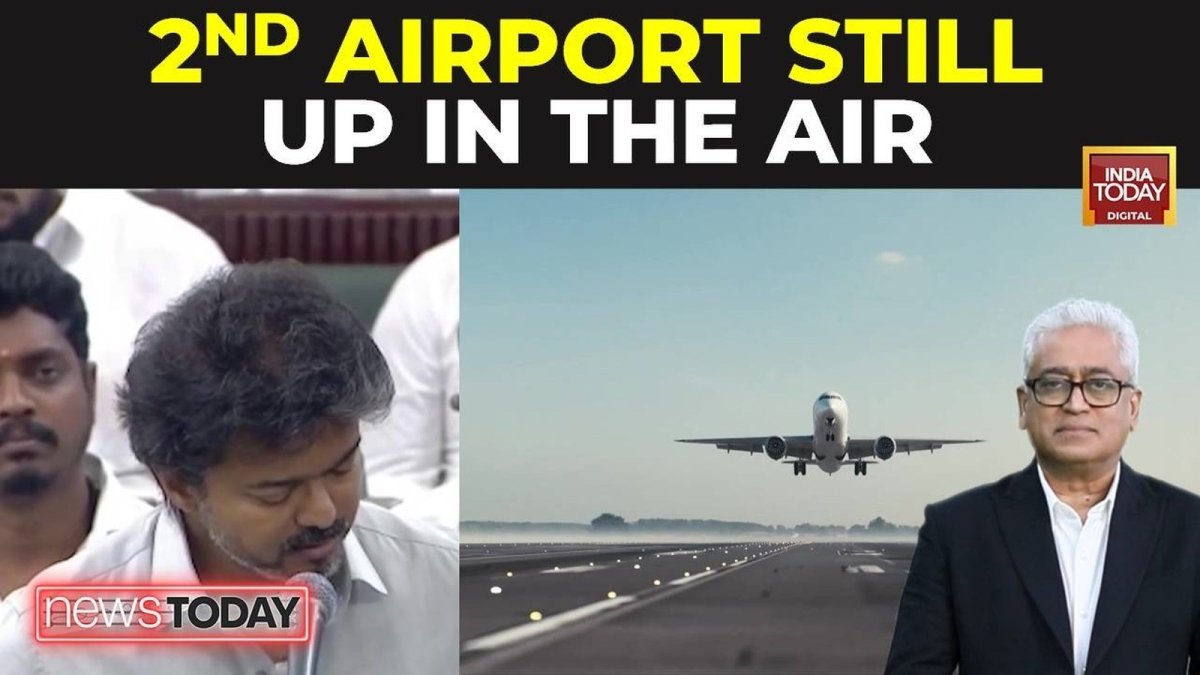
The Tamil Nadu government has formally scrapped the proposed Rs 27,400 crore greenfield airport at Parandur, citing irreparable damage to wetlands and agricultural land. The decision, announced in the state assembly on Monday, August 24, 2026, by Chief Minister C. Joseph Vijay, ends a four-year saga that pitted infrastructure ambitions against farmer livelihoods and environmental safeguards.
The Tamil Nadu government has formally scrapped the proposed Rs 27,400 crore greenfield airport at Parandur, citing irreparable damage to wetlands and agricultural land. The decision, announced in the state assembly on Monday, August 24, 2026, by Chief Minister C. Joseph Vijay, ends a four-year saga that pitted infrastructure ambitions against farmer livelihoods and environmental safeguards. With the existing Chennai International Airport at Meenambakkam already handling 30 million passengers annually, the state now faces a critical capacity crunch as it searches for an alternative site.
Parandur Airport Scrapped: Tamil Nadu Prioritises Wetlands and Farmers, But Chennai's Aviation Future Hangs in Balance
Chennai, Tamil Nadu – August 24, 2026 — In a landmark decision that reshapes Tamil Nadu's infrastructure landscape, Chief Minister C. Joseph Vijay announced the scrapping of the proposed Parandur greenfield airport, a project that was originally slated to cover 5,746 hectares in Kancheepuram district at an estimated cost of Rs 27,400 crore. The announcement, made during a state assembly session, fulfils a major pre-election promise made by Vijay to villagers and environmentalists who had protested the project for over a year. The site, located roughly 60 km west of Chennai, was deemed unsuitable for runway construction due to the presence of significant water bodies and wetlands, which would have required massive and ecologically destructive land modification.
A Four-Year Battle: From DMK's Vision to TVK's Reversal
The Parandur airport project was first announced in August 2022 by then-Chief Minister M.K. Stalin of the Dravida Munnetra Kazhagam (DMK), who envisioned a 100-million-passenger-capacity facility to decongest the existing Meenambakkam airport. The project was positioned as a critical piece of infrastructure for Chennai, India's fourth-largest metropolis, which has seen consistent growth in both passenger traffic and high-value cargo movement, particularly in electronics and pharmaceuticals. However, from the outset, the project faced stiff resistance from farmers and residents across Parandur and 12 surrounding villages, who argued that the acquisition of fertile paddy fields would destroy their primary source of livelihood.
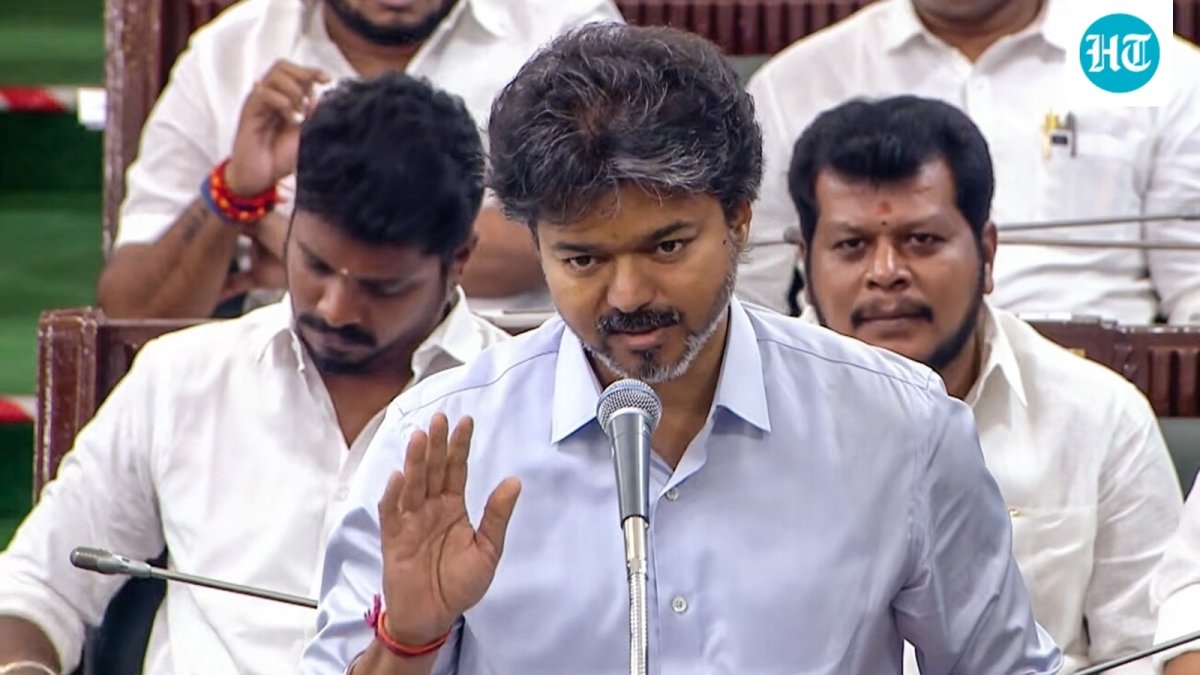
The protests intensified through 2024 and early 2025, culminating in January 2025 when Vijay himself, then leader of the opposition Tamilaga Vettri Kazhagam (TVK), joined the farmers at the protest site. This political alignment with the agrarian cause became a cornerstone of TVK's election campaign, which ultimately brought the party to power. In his assembly address on Monday, Vijay recalled his 2025 visit to the protest site, stating, "Farmers are the backbone of the nation, and these people were protesting to protect their agricultural lands." He argued that the Parandur site would have severely impacted farmers and displaced a large number of residents across 12 surrounding villages, and said his government accords top priority to the environment.
What This Means for India: A Precedent for Wetland Protection
The scrapping of the Parandur airport sends a powerful signal across India regarding the enforcement of environmental regulations in infrastructure planning. The site's classification as wetland brought it under the purview of the Wetlands (Conservation and Management) Rules, 2017, administered by the Ministry of Environment, Forest and Climate Change (MoEFCC). Any large-scale construction on such land would have required a detailed environmental impact assessment, with any violations of wetland norms open to scrutiny by the National Green Tribunal (NGT) — a process that would have been both time-consuming and legally contentious. By proactively halting the project, the Tamil Nadu government has avoided a potential legal battle while setting a precedent that agricultural land and ecological zones cannot be casually sacrificed for development.
For Indian citizens, particularly those in agrarian states like Punjab, Haryana, and Uttar Pradesh, this decision reinforces the growing political salience of land rights and environmental protection. The Parandur case demonstrates that organised farmer protests, when aligned with political interests, can successfully alter the trajectory of mega-infrastructure projects. This is particularly significant given the ongoing national debate over land acquisition for industrial corridors and defence projects, where farmer compensation and rehabilitation remain contentious issues. The Tamil Nadu government's stance may encourage similar scrutiny of projects in other states, potentially slowing down approvals but ensuring more sustainable outcomes.
The Capacity Crunch: Can Meenambakkam Cope?
While the environmental and agricultural arguments for scrapping Parandur are compelling, the decision leaves Chennai with a significant infrastructure gap. The existing Chennai International Airport at Meenambakkam, one of India's busiest single-runway airports, currently handles approximately 30 million passengers annually. This figure is already straining the airport's capacity, leading to congestion during peak hours and limiting the growth of air cargo operations. The state government has outlined a phased expansion plan for Meenambakkam, including a new passenger terminal that will add 20 million passengers of capacity. Upon completion of Passenger Terminal 3, the airport's capacity is expected to reach 35 million passengers per year, with a subsequent Terminal 5 project pushing total capacity to 55 million annually.
However, aviation experts note that even this expanded capacity may prove insufficient in the medium term. Chennai's status as a major economic hub, with a thriving automotive industry in nearby Sriperumbudur and a growing IT corridor along the Old Mahabalipuram Road (OMR), is driving consistent growth in both business and leisure travel. The high-value cargo segment, particularly electronics and pharmaceuticals, requires dedicated freighter operations that compete with passenger flights for scarce runway slots. The state government has promised additional access roads and flyovers to improve connectivity to Meenambakkam, but these measures address surface congestion rather than the fundamental constraint of a single runway.
Alternative Sites: The Search for a Sustainable Solution
Chief Minister Vijay stated that a few suitable alternative sites have been shortlisted after consultations with officials and domain experts. The key criteria for the new location include minimal impact on agricultural lands and residential areas, as well as technical feasibility for runway construction. The government has committed to conducting comprehensive technical feasibility studies before finalising any new site.
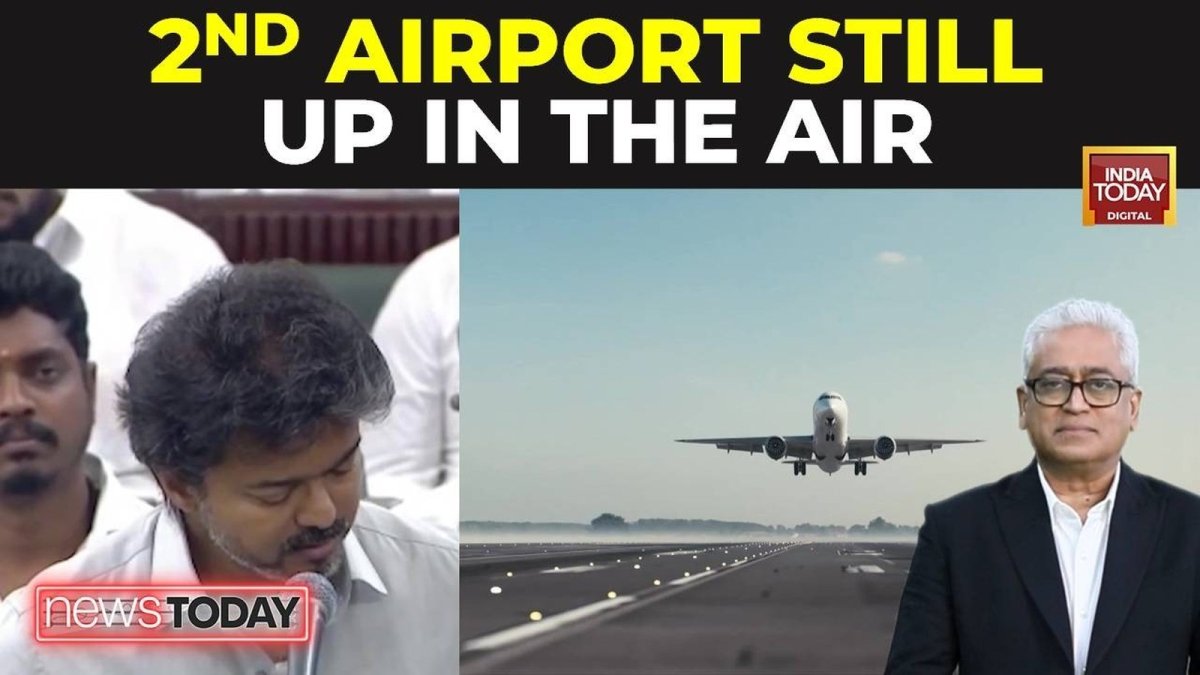
The delay in identifying and approving an alternative site has triggered a political debate over potential delays in addressing Chennai's aviation needs. The opposition DMK, which had championed the Parandur project, demanded a full discussion on the matter in the assembly. When the Speaker did not entertain the request, DMK legislators staged a walkout, accusing the TVK government of prioritising populism over progress. The DMK has argued that the scrapping of Parandur without a ready alternative represents a failure of planning that will cost Tamil Nadu economically, particularly in terms of foreign investment and trade competitiveness.
Political and Economic Implications: Balancing Promises and Progress
The Parandur decision highlights the complex trade-offs inherent in Indian infrastructure development. For the TVK government, scrapping the project fulfils a core electoral promise and consolidates its support base among farmers and environmentalists. However, it also exposes the government to criticism that it lacks a coherent long-term vision for the state's aviation sector. The DMK's walkout underscores the political sensitivity of the issue, with both parties seeking to claim the mantle of responsible governance. The timing of the announcement, less than two years into the TVK government's term, suggests that Vijay is keen to demonstrate decisive action on issues that resonate with his core constituency.
From an economic perspective, the delay in building a second airport for Chennai could have ripple effects across the region. The Tamil Nadu Pollution Control Board (TNPCB) and the state's Environment Department will play crucial roles in vetting any new location, ensuring that the mistakes of Parandur are not repeated. For businesses reliant on air connectivity, particularly in the electronics manufacturing and pharmaceutical sectors, the uncertainty surrounding the second airport is a concern that could influence future investment decisions.
The Bottom Line
The scrapping of the Parandur airport represents a watershed moment in Indian infrastructure planning, where environmental and agricultural concerns have taken precedence over a major capital project. While the decision is a victory for farmers and wetland conservation, it leaves Chennai facing a capacity crunch that will require innovative solutions. The expansion of Meenambakkam to 55 million passengers annually provides a temporary buffer, but the state government must move swiftly to identify and develop an alternative site. The coming months will be critical, as technical feasibility studies and environmental assessments determine the fate of Chennai's aviation future. For now, the message from Tamil Nadu is clear: sustainable development that respects farmers and the environment is non-negotiable, even at the cost of project delays.
— By Dr. Raj Patel, Staff Writer
This article was produced with AI-assisted research and editorial support. Reporting is based on sources cited in the article.
What's Your Reaction?
 Like
0
Like
0
 Dislike
0
Dislike
0
 Love
0
Love
0
 Funny
0
Funny
0
 Wow
0
Wow
0
 Sad
0
Sad
0
 Angry
0
Angry
0

India/South Asia Correspondent at Global1.News. Analytical voice with a background in science and health journalism. Based in New Delhi, covering Indian politics, education, healthcare, technology, and policy. Breaks down complex data into clear, actionable reporting.












Comments (0)