
Pakistan's Army Chief in Tehran to Revive US-Iran Talks
In a recent i24NEWS English report, the network revealed that Washington has reportedly turned to Pakistan's army chief to help revive stalled negotiations between the United States and Iran. The development marks a significant shift in the diplomatic landscape of the Middle East, where the US-Iran war that began on February 28, 2026, continues to shape regional alignments and security calculations from Tehran to Tel Aviv.
In a recent i24NEWS English report, the network revealed that Washington has reportedly turned to Pakistan's army chief to help revive stalled negotiations between the United States and Iran. The development marks a significant shift in the diplomatic landscape of the Middle East, where the US-Iran war that began on February 28, 2026, continues to shape regional alignments and security calculations from Tehran to Tel Aviv.
Pakistan's Army Chief Travels to Tehran as Washington Seeks a Way Out of the Iran War
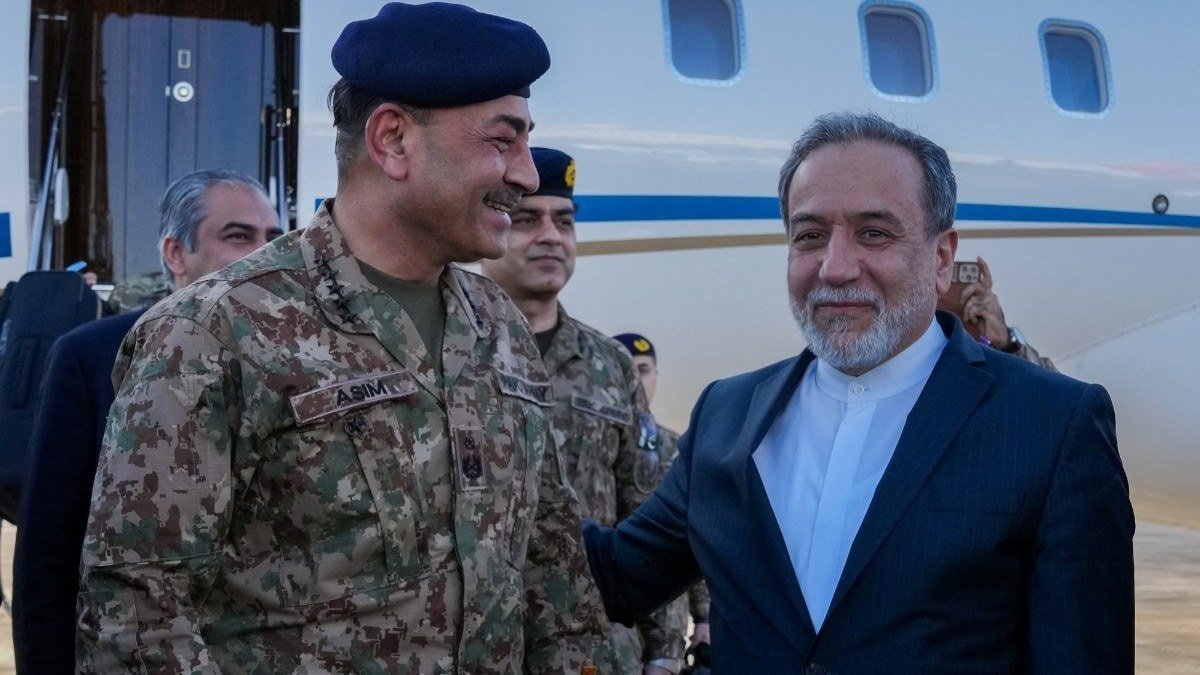
Jerusalem – This week — Pakistan's Chief of Army Staff and Chief of Defence Forces, Field Marshal Asim Munir, traveled to Tehran on Monday for talks with senior Iranian officials, a visit announced by Iran's Foreign Ministry on Sunday. The trip continues Islamabad's self-appointed role as mediator between Washington and Tehran in the conflict that erupted when the United States and Israel launched an air war against Iran, a campaign that claimed the life of Supreme Leader Ali Khamenei on its first day. His son, Mojtaba Khamenei, has since succeeded him as the Islamic Republic's supreme leader.

On the Ground: Munir's Tehran Agenda
Field Marshal Munir's visit comes hours after he spoke by telephone with Iran's Foreign Minister Seyed Abbas Araghchi, according to Pakistani sources. The army chief is expected to meet with individuals close to Iran's supreme leader, a Pakistani source familiar with the visit told reporters. The trip builds on Pakistan's earlier diplomatic achievements, including brokering a two-week ceasefire in April 2026 and hosting delegation-level talks in Islamabad — dubbed the "Islamabad Talks" — where Prime Minister Shehbaz Sharif and Field Marshal Munir were portrayed as the primary architects of the 14-day truce.
Pakistan also helped deliver a 15-point US plan to Iran earlier this year, a document that reportedly outlined a framework for de-escalation and potential normalization of ties. The current visit signals that Islamabad remains the most active intermediary in a conflict that has defied multiple international efforts at resolution. For Tehran, receiving a foreign army chief of Munir's stature underscores the Islamic Republic's willingness to engage through military-to-military channels, even as it faces unprecedented economic and military pressure from Washington.
The Islamabad Talks, as they have come to be known in diplomatic cables and regional media, represent a rare instance of a non-Western power inserting itself into the center of a major US-led military confrontation. Pakistan's historical relationship with Iran has been marked by both cooperation and friction, particularly along their shared border in Balochistan, where cross-border militancy has periodically strained ties. Yet the current mediation effort suggests a pragmatic recalibration on Islamabad's part, driven by the recognition that a full-blown regional war would destabilize Pakistan's own security environment. Pakistani officials have privately noted that their country's geographic position — sandwiched between Iran, Afghanistan, and India — makes it acutely vulnerable to spillover effects from any prolonged conflict in the Persian Gulf. The army chief's direct engagement with Tehran's leadership also reflects Pakistan's broader ambition to project itself as a regional power broker, a role that carries weight in both Beijing and Washington, two capitals where Islamabad maintains significant strategic relationships.
Regional Context: The Stakes for Israel and the Gulf
For Israel, Pakistan's mediation role is deeply problematic. Israeli officials have sharply questioned Islamabad's credibility as a mediator, with some calling Pakistan "not a credible player" in the negotiations. Prime Minister Benjamin Netanyahu opposed the talks from the outset, preferring continued US and Israeli military pressure on Iran rather than diplomatic engagement that could leave the Islamic Republic with residual nuclear and missile capabilities. Israel and Pakistan have no formal diplomatic relations, and decades of mistrust, covert ties, and geopolitical rivalry shape the relationship between Jerusalem and Islamabad.
The timing of Munir's Tehran visit is critical. The Trump administration has vowed an "economic D-Day" against Iran, with Treasury Secretary Scott Bessent describing it as "the greatest financial offensive ever marshalled" against the Islamic Republic. New sanctions are expected to target countries and businesses that continue trading with Tehran, including secondary sanctions on purchasers of Iranian oil. Iran's leadership has responded with threats to halt all oil exports and has warned neighbouring states against joining fresh US economic pressure. Tehran's Persian Gulf Strait Authority has warned vessels violating its rules for passage through the Strait of Hormuz could face fines, seizure, or confiscation — a direct threat to global energy supplies that would have immediate consequences for Israel's energy imports and the broader regional economy.
The economic mechanics of the "D-Day" strategy are worth examining in detail. The Treasury Department's approach, as described in recent briefings, involves a phased escalation of sanctions designed to progressively strangle Iran's remaining revenue streams. The first phase targets Iran's central bank and its access to international clearing systems, effectively freezing Iranian assets held in foreign accounts. The second phase focuses on Iran's petrochemical exports beyond crude oil, including condensates and refined products that have become increasingly important to Tehran's economy as crude sales have declined. The third phase, which administration officials have signaled could come within weeks, would target Iran's remaining banking relationships in Asia, particularly in China, where Iranian oil has found a reliable market despite US pressure. The threat of secondary sanctions on Chinese financial institutions has created significant tension in US-China relations, with Beijing publicly rejecting Washington's extraterritorial enforcement while privately signaling to Iranian officials that their patience has limits. For the Gulf states, the economic warfare carries a double-edged risk: while they stand to benefit from reduced Iranian competition in oil markets, they also fear that a collapsing Iranian economy could trigger internal instability, refugee flows, and retaliatory attacks on their infrastructure. This explains why Oman, Qatar, and the United Arab Emirates have all maintained quiet channels to Tehran even as they publicly align with Washington's pressure campaign.
Diplomatic and International Reactions
Oman's foreign minister is expected to visit Tehran on Tuesday to discuss the Strait of Hormuz, a sign that Gulf states are scrambling to prevent a closure of the strategic waterway. Egypt is also seeking to revive US-Iran negotiations; Egypt's foreign minister and Iran's top diplomat have discussed efforts to bring Tehran and Washington back to the negotiating table. These parallel diplomatic tracks suggest that regional players are hedging against both a prolonged conflict and a potential US withdrawal from the region.
The White House reportedly wants to wind down the conflict before the November US elections. The Washington Post reported that Iran still possesses sufficient firepower and motivation to strike US forces in the Middle East before the elections, a warning that underscores the urgency of finding a diplomatic off-ramp. For Washington, Pakistan's mediation offers a channel that does not require direct US-Iranian engagement, which remains politically sensitive in both capitals.
The Strait of Hormuz dimension of the crisis cannot be overstated. Approximately one-fifth of global oil consumption passes through the strait daily, and any sustained disruption would send energy prices soaring worldwide. Israel, despite its own offshore natural gas fields, remains dependent on imported oil for its transportation and industrial sectors, making it vulnerable to supply shocks. The Persian Gulf Strait Authority's threats to fine, seize, or confiscate vessels violating its rules represent an unprecedented escalation in Tehran's maritime posture. Iranian naval forces have historically avoided direct confrontation with US warships in the strait, but the current conflict has lowered the threshold for aggressive actions. In recent weeks, Iranian fast-attack craft have conducted several close passes on commercial tankers, and Iranian naval commanders have publicly stated that they will not hesitate to enforce their new regulations. The US Navy's Fifth Fleet, based in Bahrain, has responded by increasing its escort operations and conducting freedom-of-navigation exercises through the strait. The risk of a miscalculation at sea, where a minor incident could quickly escalate into a broader naval engagement, remains one of the most dangerous aspects of the current standoff. Gulf states, particularly Saudi Arabia and the UAE, have invested heavily in alternative pipeline routes and strategic storage facilities to mitigate the impact of a potential closure, but these measures can only cushion, not eliminate, the economic damage.
The Nuclear and Missile Question
At the heart of Israel's red lines in any negotiation lies the question of Iran's nuclear program and its ballistic missile arsenal. Israeli defense officials have long maintained that a nuclear-armed Iran would fundamentally alter the strategic balance of the Middle East, threatening not only Israel but also the Sunni Arab states that have increasingly aligned with Jerusalem against Tehran. The February 2026 war's military objectives, as articulated by both US and Israeli officials, centered on degrading Iran's nuclear infrastructure, its missile production and launch capabilities, and its integrated air defense network. The initial strikes reportedly targeted Fordow, Natanz, and Isfahan, the three primary enrichment sites, as well as missile assembly facilities in Kermanshah and Khorramabad. The campaign also struck air defense batteries across Iran, including Russian-supplied S-300 systems and domestically produced Bavar-373 units, to establish air superiority for follow-on strikes.
The International Atomic Energy Agency's monitoring role has been severely constrained since the war began. IAEA inspectors were withdrawn from Iran in the early days of the conflict, and the agency's ability to verify the status of Iran's nuclear materials has been limited to satellite imagery and remote monitoring. The IAEA's last comprehensive report, issued just before the war, estimated that Iran had enriched uranium stockpiles sufficient for multiple nuclear devices if further enriched to weapons grade. Israeli intelligence assessments have concluded that Iran's nuclear program suffered significant damage in the initial strikes, but the extent of the damage remains uncertain. Some Israeli analysts believe that Iran's enrichment capacity has been set back by two to three years, while others warn that Tehran's dispersed and hardened facilities may have survived better than initially assessed. The Islamic Republic has historically demonstrated a remarkable ability to reconstitute its nuclear infrastructure after setbacks, as evidenced by its recovery from the Stuxnet cyberattack and the assassination of key nuclear scientists in the 2010s.
Iran's missile arsenal presents a separate but equally critical challenge. Before the war, Iran possessed one of the largest ballistic missile inventories in the region, with an estimated 3,000 missiles of various ranges. The February strikes targeted production facilities and launch sites, but Israeli defense officials acknowledge that a significant portion of Iran's missile force remains operational. Iran has demonstrated this capability through continued launches against Israeli territory, including several barrages that have tested Israel's multi-layered air defense system. The Arrow-3 system has intercepted most incoming ballistic missiles, while David's Sling and Iron Dome have handled shorter-range threats. However, Israeli officials privately acknowledge that a sustained missile campaign could eventually overwhelm even the most advanced air defense systems, particularly if Iran coordinates attacks with Hezbollah's estimated 150,000 rockets and missiles in Lebanon.
A bad deal, from Israel's perspective, would be one that provides sanctions relief in exchange for vague commitments on nuclear enrichment and missile development without robust verification mechanisms. Israeli officials have pointed to the 2015 JCPOA as a cautionary tale, noting that the agreement's sunset clauses allowed Iran to expand its enrichment capacity once restrictions lapsed. Any new agreement, Israeli defense officials argue, must include permanent or at least very long-term restrictions on enrichment, a complete halt to ballistic missile development, and unfettered IAEA access to all nuclear and missile-related sites. The question of Iran's regional proxies is equally central: Israel has insisted that any deal must address Iran's funding and arming of Hezbollah, Hamas, and the Houthis, groups that have launched attacks on Israeli territory throughout the current conflict. Without such provisions, Israeli officials warn, Iran could use economic relief to rebuild its proxy networks and continue its campaign of attrition against Israel.
Analysis and What This Means
For Israel, the stakes in these negotiations are existential. A US-Iran deal that eases military pressure could leave Israel facing an Iran that retains nuclear and missile capabilities, a scenario that Israeli defense officials have repeatedly described as unacceptable. Conversely, continued deadlock risks a regional escalation with ballistic missile attacks on Israeli cities, renewed Hezbollah and Houthi fronts, and threats to global shipping through Hormuz that affect Israel's energy imports. The IDF has maintained a posture of readiness for both scenarios, with air defense systems on high alert and the Home Front Command preparing for potential missile strikes on Tel Aviv, Haifa, and other population centers.
The Israeli security establishment views Pakistan's role with particular suspicion. Islamabad's historical ties to Tehran, its nuclear weapons program, and its complex relationship with Sunni Gulf states make it an unpredictable intermediary from Jerusalem's perspective. Israeli intelligence assessments have reportedly concluded that Pakistan's mediation efforts are driven primarily by its own strategic interests — including access to Iranian energy resources and leverage over Washington — rather than a genuine commitment to regional stability.
The coming weeks will test whether Pakistan can deliver what Washington wants: a ceasefire that holds, a framework for sanctions relief, and a mechanism for verifying Iran's nuclear and missile activities. For Israel, the critical question is whether any deal emerging from the Islamabad Talks includes enforceable limits on Iran's nuclear program and its missile arsenal, and whether it addresses Iran's support for Hezbollah, Hamas, and the Houthis. Without such provisions, Israeli officials warn, any agreement would merely provide Iran with economic relief while allowing it to continue its regional aggression.
What Comes Next for Jerusalem
In Jerusalem, the diplomatic maneuvering has triggered intense political activity. Prime Minister Netanyahu's coalition government, already navigating a complex domestic political landscape, faces mounting pressure from both hawks and doves within the security establishment. The security cabinet has convened multiple times in recent weeks to assess the implications of the Pakistan-mediated talks, with ministers divided between those who advocate continued military pressure on Iran and those who see diplomatic engagement as the only viable path to de-escalation. Netanyahu himself has walked a careful line, publicly expressing skepticism about the negotiations while privately acknowledging that Israel cannot indefinitely sustain a two-front war without significant economic and military costs.
The Mossad and the Foreign Ministry have established a joint monitoring cell to track the Islamabad Talks and the parallel diplomatic tracks in Muscat and Cairo. Israeli intelligence officials are reportedly providing real-time assessments to the security cabinet on the progress of the negotiations, including intercepted communications and satellite imagery of Iranian military movements. The Foreign Ministry has also been engaged in intensive lobbying efforts in Washington, urging the Trump administration to insist on strict verification mechanisms in any agreement and to consult with Israel before finalizing any deal. Israeli diplomats have emphasized to their American counterparts that Israel retains the right to act unilaterally against Iran's nuclear program if it deems the agreement insufficient, a position that has created some tension in US-Israel relations.
The IDF's posture remains one of high readiness. Air defense batteries are deployed at full capacity, with Arrow-3 interceptors positioned to counter any ballistic missile launches from Iran. The Home Front Command has conducted several large-scale exercises simulating missile attacks on major population centers, and civil defense officials have distributed guidance to citizens on shelter procedures and emergency supplies. The Israeli Navy has increased its presence in the Red Sea and the eastern Mediterranean, preparing for potential Houthi attacks on shipping and any escalation involving Iranian naval forces. Military officials have also prepared contingency plans for a renewed ground operation in Lebanon if Hezbollah escalates its attacks, although such an operation would carry significant risks and costs.
The domestic debate in Israel over the negotiations reflects deeper strategic questions about the country's long-term security. Proponents of continued military pressure argue that Iran has been significantly weakened by the war and that a sustained campaign could finally achieve the long-sought goal of dismantling its nuclear program. They point to the killing of Khamenei and the succession of his son as an opportunity to exploit internal divisions within the Iranian leadership. Opponents of continued escalation warn that Israel cannot afford an open-ended conflict that drains its economy, strains its international relations, and risks catastrophic casualties from missile attacks. They argue that a negotiated settlement, even an imperfect one, could provide Israel with the breathing room it needs to rebuild its military stocks and strengthen its alliances.
In any final agreement, Israel would demand several key provisions. First, a complete and verifiable halt to Iran's uranium enrichment program, with all enriched material either removed from the country or placed under permanent IAEA control. Second, a comprehensive ban on Iran's ballistic missile development and testing, with international inspectors granted access to all missile production and storage facilities. Third, a commitment from Iran to cease all support for Hezbollah, Hamas, and the Houthis, including an end to weapons transfers and financial assistance. Fourth, a mechanism for regional security cooperation that would allow Israel and its Gulf partners to monitor Iranian compliance and respond collectively to any violations. Israeli officials acknowledge that these demands are ambitious, but they insist that anything less would simply postpone the next confrontation rather than prevent it.
As Field Marshal Munir meets with Iranian officials in Tehran, the Israeli government is watching closely. The Mossad and the Foreign Ministry are reportedly monitoring the talks, and Prime Minister Netanyahu has convened security consultations to assess the implications of a potential US-Iran deal. For Israeli readers, the message is clear: the diplomatic track led by Pakistan is not a sideshow but a central arena where the future of the region's security architecture is being decided. Whether it produces a durable peace or a fragile pause that allows Iran to rebuild, the outcome will shape Israel's security environment for years to come.
By Hannah Berg, Staff Writer
This article was produced with AI-assisted research and editorial support. Reporting is based on sources cited in the article.
What's Your Reaction?
 Like
0
Like
0
 Dislike
0
Dislike
0
 Love
0
Love
0
 Funny
0
Funny
0
 Wow
0
Wow
0
 Sad
0
Sad
0
 Angry
0
Angry
0

Israel Correspondent at Global1.News. Based in Tel Aviv, covering Israeli politics, security, technology, and society. Provides balanced, deeply-sourced reporting on one of the most closely-watched regions in the world.












Comments (0)