
P.E.I. For-Pay Clinic Offers Tourists Faster Health Care
A private P.E.I. clinic offers international tourists same-day doctor visits and house calls for up to $900, while Islanders face two-year MRI waits. Advocates say the service tests the Canada Health Act.
In a recent CBC News report, a private business on Prince Edward Island is offering international tourists same-day access to physicians, weekend and evening appointments, and even house calls to hotels, cottages, or Airbnbs — for a price ranging from $229 for a virtual visit to $900 or more for a house call. The service, promoted through the website PEIdoctor.com, is also pitching for-pay medical information sessions to Canadian residents, raising immediate concerns from advocates of Canada's universal health-care system about whether this treads into prohibited territory under the Canada Health Act.
P.E.I. for-pay clinic offers tourists faster healthcare — and Canadians are asking who pays the price
Charlottetown, P.E.I. – this week — The emergence of a private, for-pay medical service on Prince Edward Island is reigniting a familiar Canadian debate: how far can private money go before it starts eroding the public system? The company behind PEIdoctor.com, EndWell Management Inc., says it is simply filling a convenience gap for visitors who do not qualify for Medicare. But health advocates argue the service, particularly its offerings to Canadian residents, may violate the very principles of the Canada Health Act that guarantee access to medically necessary care without charge.

A two-tier system on the Island?
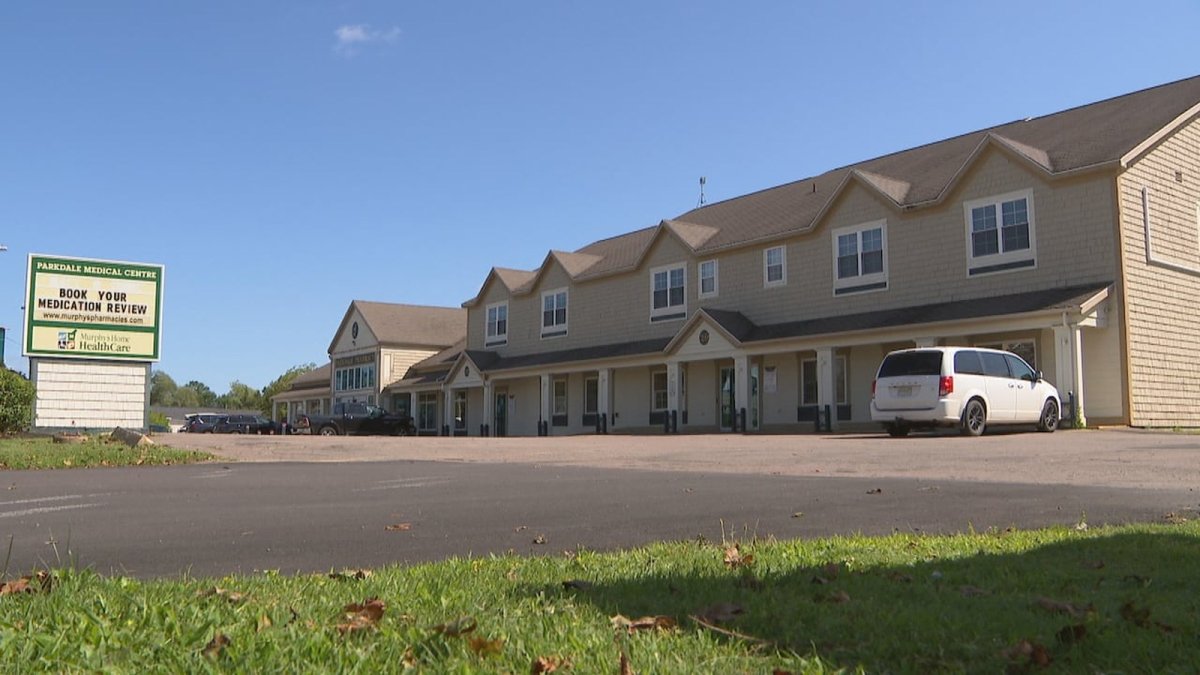
Marius Croeser, CEO of EndWell Management Inc., told CBC News the business model is straightforward: "We believe more visitors will come and longer-stay visitors will come and people who, for instance, are in their retirement age may come for longer stays." The service is designed to make P.E.I. more attractive to tourists who might otherwise face the province's strained urgent care centres or emergency rooms. Dr. Janine Karpakis, one of two physicians listed on the website, is a family doctor who works for Health P.E.I. from a clinic on St. Peters Road in Charlottetown. She said the appointments she keeps with paying international customers fall outside her regular duties with her patient panel from her family practice.
Karpakis described the typical cases as "mostly people who've forgotten their medication at home and need a quick prescription or, you know, a bladder infection or a little rash, an insect bite, that sort of stuff." She framed the service as a matter of convenience: "It's all about convenience... It really is about not having to wait in urgent care or [the] ER." A Google review posted on the website, attributed to a U.S. resident, was effusive: "We received better care from Dr. Karpakis than any care we've received in YEARS in the US… If you're a visitor to P.E.I. avoid urgent care 12+ hour waits and book a 30 minute visit here!"
The Canada Health Act boundary
The legal line here is precise. Under the Canada Health Act, medically necessary health-care services must be provided to insured Canadians without charge. Tourists and visitors are not considered residents of the province and are therefore not eligible for publicly funded insured health services. The P.E.I. Department of Health and Wellness confirmed this in a statement to CBC: "Physicians and nurse practitioners can provide health care to individuals who are not eligible for Medicare, with those patients responsible for the cost of their health care, whether accessed through a HPEI facility or otherwise by way of private agreement."
But the controversy deepens when the service turns to Canadians. PEIdoctor.com offers a 45-minute session with a doctor to explain existing diagnoses, specialist reports, lab and imaging results — at a cost of $195. Karpakis acknowledged this is something all patients should receive through the public health-care system, but said there often isn't time: "Because the health-care system is so strained, you can't really get back to see that provider in a time period, or sometimes never. That's why I'm saying this consultation is inviting you to come sit next to me, as if we're talking in my living room."
Advocates call it a violation
Tracy Glynn with the Canadian Health Coalition is not persuaded. "The description of that service sounds like it's medically-necessary health care, that it's part of the intake process. For us, that would be considered a violation of the Canada Health Act and something that our provinces and the federal government should take action on." Glynn's point is that explaining a diagnosis and reviewing lab results is not a luxury add-on; it is a core component of medical care that should be covered by Medicare. Charging $195 for it, she argues, creates a two-tier system where those who can afford to pay get better access to their own health information.
Croeser pushed back, telling CBC: "We're very cognizant of the rules around what is a medical consultation and what is not. We're asking a simple question: are they services that are outside the scope for private pay?" In a follow-up email, he added: "PEIDoctor does not offer P.E.I. Medicare-insured physician services to insured Islanders on a private-pay basis. We have deliberately structured our services around this boundary." The P.E.I. College of Physicians and Surgeons, which regulates the two doctors listed on the site, issued a measured statement: "All members of the College are expected to abide by the College's Policies and Standards along with the applicable legislation for their profession. The two physicians listed on the website are both active members of the College. They must abide by our policies and work within their clinical scope."
The grey areas of virtual care
Glynn argues the problem is not just this one clinic, but a systemic lack of clarity in the Canada Health Act that has created "grey areas," particularly in virtual health care, where private companies are finding ways to profit. That, she said, is "further starving the public system of resources and health-care workers, and then making the waiting periods for scans and surgeries even longer." The concern is that when physicians like Karpakis spend their evenings and weekends seeing paying private patients, those hours are not going into the public system — even if the appointments themselves are technically outside her Health P.E.I. duties.
The context on P.E.I. makes this tension acute. Health P.E.I. told CBC News that the current wait time on the Island for a routine MRI is more than two years. The Canadian benchmark for such a routine scan is 12 weeks. For semi-urgent MRIs that use a dye injection to detect small tumours, the wait is 46 weeks on the Island, versus the benchmark of eight weeks. Only the most urgent cases are within the Canadian benchmark of two weeks. According to the most recent national data from the Canadian Institute for Health Information (CIHI), dating from 2023, P.E.I. had the second-longest MRI wait times in the country — and the waitlist has only grown since then. The provincial health authority said it has been short two MRI technologists for most of 2024, which has directly affected wait times.
Real Islanders, real waits
The human cost of these waits is not abstract. Vicky Chaisson, a single mother, faced a 17-month wait for her daughter Rianna's MRI — a wait that later stretched to 19 months. Chaisson saved up more than $1,400 to cover a scan at a private MRI clinic in Moncton, New Brunswick, with gas and the Confederation Bridge toll factored in. "It costs an arm and a leg, but I would get the results way faster than if I was to sit and wait for that call [from Health P.E.I.], which I still have not got from them," she told CBC. Her story illustrates the reality that private payment for health services is not a hypothetical on the Island — it is already happening, driven by desperation.
Health P.E.I. has partnered with a private clinic to help reduce MRI wait times for Islanders, a move that has drawn criticism from opposition MLAs who fear privatisation "creep." The province has also announced a review into bureaucratic bloat in Health P.E.I.'s middle management. These are separate but related fronts in the same battle: how to deliver timely care in a system that is clearly struggling to keep up with demand.
Tourists not paying their bills
The for-pay clinic also lands at a moment when Atlantic Canadian health authorities are already absorbing significant losses from international visitors who receive care and then fail to pay. Think tank SecondStreet.org released data in July 2026 from each of the Atlantic province's health authorities showing people from outside Canada are coming to the East Coast, receiving health services, and then not paying their bills — costing the health system $41.69 million since 2020/21. SecondStreet.org President Colin Craig noted: "Tourists not paying their health care bills is costing taxpayers a fortune. Meanwhile, access to health care for Canadians continues to deteriorate. While Atlantic Canada's numbers are lower than British Columbia's $200M loss, what we're seeing here is that this is a nationwide problem that extends from coast to coast." For perspective, the total losses could have paid for over 4,000 unilateral hip replacement operations, according to CIHI data.
The irony is not lost on observers: the public system is losing tens of millions of dollars to unpaid tourist bills, while a private company is now charging those same tourists upfront for faster access. One approach leaves taxpayers holding the bag; the other at least ensures the provider gets paid. But the deeper question is whether either model does anything to fix the underlying problem — that P.E.I.'s public system cannot meet the needs of its own residents in a timely fashion.
What this means for medicare
The Canada Health Act is federal legislation that sets five criteria — public administration, comprehensiveness, universality, portability, and accessibility — that provincial health insurance plans must meet to receive full federal cash transfers. It requires medically necessary insured services be provided to insured residents without charge, with no extra-billing or user fees. Enforcement is through federal transfer payment deductions. The Act has long been criticized for its "grey areas," and the rise of virtual care has only multiplied the loopholes.
Glynn's call for provincial and federal action is not just rhetorical. If the federal government determines that PEIdoctor.com's $195 information sessions constitute medically necessary care being sold to Canadians, it could deduct an equivalent amount from P.E.I.'s Canada Health Transfer. That would be a significant financial penalty for a small province already struggling to fund its health system. But the federal government has historically been reluctant to invoke such penalties, preferring to work with provinces behind closed doors.
For Canadian readers, this story is a warning about the direction of health care. The P.E.I. experiment is small — two doctors, a website, a niche clientele — but it tests the boundaries of what is permissible. If a private clinic can charge Canadians for services that look a lot like medically necessary care, and if the federal government does nothing, other entrepreneurs will follow. The MRI waits on P.E.I. are not an anomaly; they are a symptom of a system under strain from coast to coast. The question is whether Canadians will accept a future where those who can pay skip the line, and those who cannot simply wait longer.
Croeser believes private, for-pay health care can work in support of P.E.I.'s public system. Glynn and the Canadian Health Coalition believe it will further starve the public system of resources and workers. The evidence so far — from MRI waits to unpaid tourist bills to the new for-pay clinic — suggests the public system is not getting healthier. Whether this private venture is a solution or a symptom is a question that will ultimately be answered by the federal government's willingness to enforce the Canada Health Act, and by Islanders' patience with a system that increasingly asks them to pay twice for the care they need.
By Alex Thompson, Staff Writer
This article was produced with AI-assisted research and editorial support. Reporting is based on sources cited in the article.
What's Your Reaction?
 Like
0
Like
0
 Dislike
0
Dislike
0
 Love
0
Love
0
 Funny
0
Funny
0
 Wow
0
Wow
0
 Sad
0
Sad
0
 Angry
0
Angry
0

Canada Correspondent at Global1.News. Based in Toronto, covering Canadian politics, energy, trade, and US-Canada relations. Provides the Canadian perspective on North American and global affairs.














Comments (0)