
Old Trails Fire Destroys 640 Structures in Spokane
The Old Trails Fire destroyed 640 structures in Spokane, Washington, in what officials call the most destructive wildfire in state history. Officials are still assessing the potential for lives lost as crews battle a record-breaking fire season.
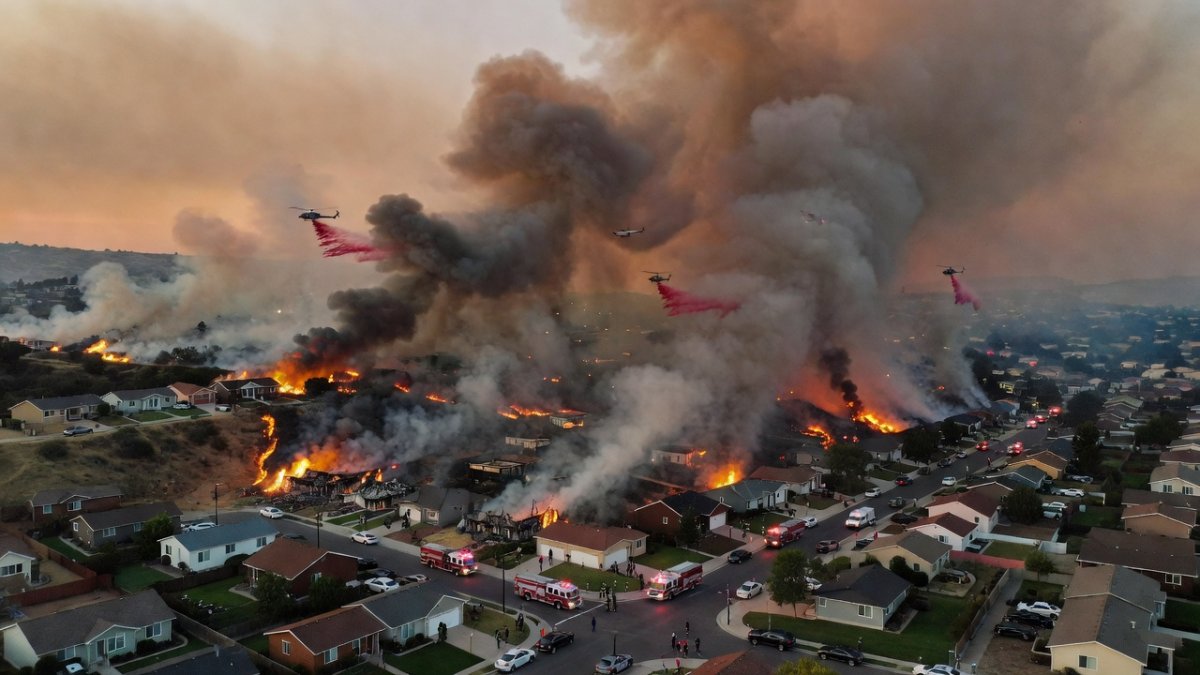
Folks, this weekend Spokane went through hell. The Old Trails Fire tore through northwest neighborhoods on Saturday and into Sunday, destroying 640 structures in what officials are already calling the most destructive wildfire in Washington state history. With no confirmed deaths yet but radio traffic hinting at the worst, the city is still counting the cost while flames smolder and thousands pick through the ashes.
A City on Fire: How Saturday Unfolded
The Old Trails Fire sparked around noon Saturday near Airway Heights on the West Plains. Strong winds immediately pushed it northeast into Riverside State Park, where it jumped the Spokane River, torched the Spokane Rifle Club, and raced up the bluffs into Indian Trail and Five Mile Prairie neighborhoods. Many of those homes sat inside Spokane city limits, according to Cody Rohrbach, Spokane County Fire District 3 fire chief.
Winds gusted 35 to 45 mph for hours with sustained speeds of 15 to 25 mph, exactly the conditions authorities had warned about. The fire burned nearly 4,000 acres on its own. By Sunday morning the broader Spokane Complex had reached about 7,780 acres when you added the 914-acre Fairview fire near Mead and the 3,300-acre Autumn Lane fire near Suncrest in Stevens County. An ember from the main blaze even started the Suncrest fire, which quickly burned three homes along Meadowview.
Evacuations hit critical infrastructure hard, with orders issued for the veterans' hospital, water reclamation facility, and waste energy plant as Riverside State Park faced direct threat. Those moves underscored how quickly the blaze turned from a rural spark into an urban nightmare, forcing officials to weigh protecting essential services against the rush of residents fleeing Level 3 zones.
640 Structures Lost — and Counting
Incident Commander Tom Clemo put it plainly at a Sunday news conference: "Probably the largest, most destructive fire in Washington's history occurred yesterday afternoon." The tally stands at 640 structures destroyed so far, though Clemo said it will likely be days before crews know the exact number of homes lost. Washington State Forester George Geissler noted that about 4,000 buildings were threatened in the path.
Firefighters from California Incident Management Team 7 arrived and helped stop the advance before it reached more neighborhoods. Tom Engberg, a public information officer with the team, said the fire has "moderated significantly." Still, crews worked brutal shifts. Fire Chief Rohrbach explained some teams pulled 30 to 40 hours straight: "Yesterday's day shift was last night's night shift, and they're again today's day shift. We did that intentionally based on the imminent threat to life."
Losing 640 structures in a single mid-size city neighborhood cluster carries long-term weight for housing stock already strained by years of growth. Families now face months in temporary setups while insurance claims pile up, and the ripple effect on local real estate could linger well into next year.
The Human Toll: Stories From the Rubble
Randy Bui came to Spokane nearly 30 years ago from Vietnam and settled off West Tiffany Avenue. The entire street is now razed to ash. Standing in front of what remained of his home — a clump of charred metal and blackened brick — he said simply, "It's gone, all gone." Nearby, the only thing left of his neighbor's house was the pool.
Laura Brodnax, 72, lives on Monroe with eight cats. A neighbor called Saturday evening and told her to get out immediately. She packed five cats into three carriers and left three behind with food and water. "I called 911; I said, 'I'm disabled. I have five cats and three carriers. I will not leave my cats, so I'm gonna go out and sit on the curb.'" Police picked her up and took her to Shadle Park High School, then she was bused to the Spokane Convention Center. "I would never dream this would happen," she said. "I thought I was in about the safest place – no earthquakes, no water – how could I possibly be in a dangerous fire situation? I'm in the middle of town."
Theresa Sullivan lives nearby and came to hug neighbors who lost everything. Her own home survived just a street away. "This is just devastating," she said. "I have friends who lost everything." One family lost three homes between them and managed to pull a burnt safe and some documents from the rubble before loading two lawnmowers into their car. Brent Dallman told CNN affiliate KHQ the scene felt like "a nuclear bomb going off in our neighborhoods."
Early Sunday morning at the convention center, evacuees sat on cots wrapped in Red Cross blankets while lines formed by 9 a.m. for food, water, and coffee. Pet owners received kibble and crates amid the chaos, a small mercy in a shelter that housed 409 families overnight. A separate community college site and Jenkins High School in Chewelah opened for southern Stevens County residents, showing how quickly the response scaled across county lines.
Historic Fire Weather: A First-Ever Warning
Governor Bob Ferguson declared a statewide state of emergency and burn ban Saturday morning after the National Weather Service issued a Particularly Dangerous Situation Red Flag Warning across Central and Eastern Washington. CNN reported this was the first time the NWS has issued such a warning in the state. The agency also put out a rare Fire Warning for Spokane County because active fires were burning in inhabited areas under evacuation orders.
Avista shut off power to hundreds of homes due to the extreme conditions, and Inland Power & Light reported weather-related outages. More than 4,000 personnel are now fighting blazes statewide, with 120 from the California team shadowing local crews on the lines.
The Particularly Dangerous Situation designation signals a new era of fire weather, where new ignitions can explode out of control and aircraft operations get grounded by wind and smoke. Washington DNR officials warned this leaves already exhausted firefighters in even riskier spots, a reality that played out as the Old Trails Fire raced through neighborhoods under the first-ever such alert in state history.
Why This Fire Was So Hard to Fight
Fire and EMS resources across the region stretched extremely thin, according to the Spokane Valley Fire Department, even as the State Fire Marshal's Office mobilized 13 task forces. More than 4,000 personnel battled fires statewide, yet the combination of historic winds, drought-parched fuels, and simultaneous Level 3 evacuations created a perfect storm for rapid spread. Spokane Fire Department spokesperson Justin de Ruyter stressed that Level 3 zones remain extremely hazardous with open flames, meaning more homes could still be lost even after the main front passed.
Schools in the path — Spokane Public Schools, Mead School District, and Great Northern School District — escaped damage, a rare bright spot amid the destruction. Fairmount Memorial Cemetery saw only limited harm while most grounds and the mausoleum were spared, and walls of flame at Dwight Merkel Sports Complex left soccer fields intact. These narrow escapes highlight how wind direction and last-minute containment lines decided what survived.
The State Responds: National Guard, FEMA, and the Governor
Governor Ferguson activated the Washington National Guard, with 110 members called up Friday and more later. Maj. Gen. Gent Welsh said, "You've got fires burning in towns. You've got level 3 evacuations like I haven't seen before. This is a very dangerous and very complex series of events." He added that when the sun sets and rises, "I think we're going to be in shock to see some of the scenes that emerge out of there."
Ferguson spoke with President Donald Trump and Homeland Security Secretary Markwayne Mullin on Sunday afternoon. "I spoke to the president about what's going on," Ferguson said. "Spoke in pretty clear fashion about how dire the situation is... He expressed his support for what people are going through out here." The state requested short-term emergency aid from FEMA, and Ferguson said approval is expected "in the near future." He flew to Spokane on Sunday morning, noting, "There are just so many Washingtonians who literally lost everything in a very, very short period of time."
Spokane Mayor Lisa Brown declared a local state of emergency at a 2 p.m. news conference Sunday. "Although the fires are not out yet," she said, "the care and the recovery began yesterday and continues today, and will go on as long as it needs to go. We will get through this." Level 3 evacuation orders remain in place for several areas, and Spokane Police have extra officers out to deter looters.
Spokane Police staffed extra patrols overnight to combat potential looters, according to Sgt. Terry Preuniger, a necessary step as families waited in shelters unsure whether their homes still stood. The scale of simultaneous threats across multiple counties forced rapid coordination that tested every layer of local and state response.
A Record-Breaking Season in a State That's Drying Out
Washington is in its fourth consecutive statewide drought. More than 1,000 fires have already burned about 425,000 acres this year — the most since 2021, according to the Department of Natural Resources. Commissioner of Public Lands Dave Upthegrove said, "This year has already been one of our busiest wildfire years on record, and we just started August." Across the state, more than 200,000 acres are burning from 12 large fires, with widespread evacuations and power outages hitting the Spokane area hardest.
The fourth straight drought year has left forests and grasslands primed for exactly this kind of blow-up, turning what might have been a containable start into a record event. Officials now face the reality that this season's pace shows no sign of slowing even as August begins.
What Happens Next
Recovery is already underway even as crews continue to mop up hot spots. The Spokane Convention Center sheltered 409 families overnight, and the Red Cross opened additional shelters including one at Jenkins High School in Chewelah. Schools in the path stayed safe, and Fairmount Memorial Cemetery saw only limited damage. If you're as fired up as I am about helping neighbors who lost everything, donate to the Red Cross, check official evacuation maps before traveling, and support local victim funds. The cause remains under investigation, but the message from officials is clear: Washingtonians are in this for the long haul.
By Jessica Ali, Staff Writer
This article was produced with AI-assisted research and editorial support. Reporting is based on sources cited in the article.
What's Your Reaction?
 Like
0
Like
0
 Dislike
0
Dislike
0
 Love
0
Love
0
 Funny
0
Funny
0
 Wow
0
Wow
0
 Sad
0
Sad
0
 Angry
0
Angry
0

Editor-in-Chief at Global1.News. Atlanta-based journalist who cuts through the BS and tells it like it is. Lead anchor, host, and the voice you hear when the spin stops and the truth starts.














Comments (0)