
Old playbook vs Duterte critics resurfaces in journalist Philip Lustre's arrest
When journalist Philip Lustre Jr. was seized by police on a Saturday morning in Manila, the manner of his arrest rekindled memories of the tactics once routinely deployed against critics of former President Rodrigo Duterte.
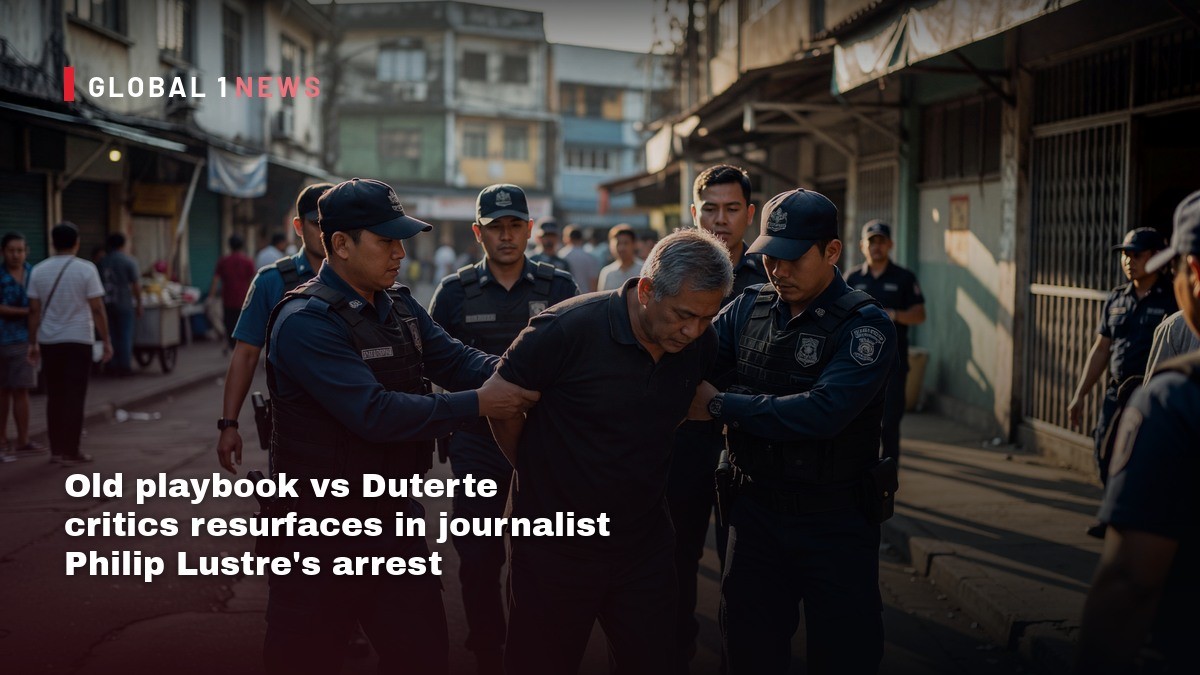
When journalist Philip Lustre Jr. was seized by police on a Saturday morning in Manila, the manner of his arrest rekindled memories of the tactics once routinely deployed against critics of former President Rodrigo Duterte. The 72‑year‑old writer, known for his book “Kill, Kill, Kill” that chronicles the drug war killings, found himself handcuffed in the middle of a public forum, bewildered and unable to post bail before the weekend closed. His lawyer, Dino de Leon, argues that the episode exposes a pattern of procedural shortcuts that bypass constitutional safeguards, especially when the complainant is linked to the powerful Duterte clan in Davao.
Irregularities in the subpoena and warrant service
According to de Leon, the first red flag appeared when the prosecutor’s subpoena for a preliminary investigation was dispatched to an incorrect address, effectively denying Lustre the chance to file a counter‑affidavit. “Hindi siya mahanap, hindi siya matunton. Pero pagka‑posas na, ang daling matunton,” he told DZMM, underscoring how the complainant’s identity remained hidden while the police could locate the journalist once the handcuffs were ready.
The warrant itself, signed by Judge Retrina Fuentes of the Davao City Regional Trial Court Branch 10 on October 2, charged Lustre with cyber libel under Section 4(c)(4) of the Cybercrime Prevention Act of 2012. Yet it omitted the private complainant’s name and the factual basis of the allegation, a common shortfall in e‑warrant uploads that leaves arresting officers unable to explain why they are detaining a person.
Timing designed to hinder bail
Police chose to serve the warrant on a Saturday, when court offices were closed and the usual avenues for posting bail were unavailable. Lustre, a senior citizen with limited mobility, was detained for hours without a meal while his legal team scrambled to locate an emergency duty night judge. The eventual processing of his P48,000 bail late Saturday evening allowed him to avoid a weekend behind bars, but the delay highlighted how the timing of arrests can be weaponized to trap vulnerable individuals.
In a post‑release social‑media note, Lustre described the operation as “a special operation” aimed at keeping him incarcerated over the weekend, when posting bail would be more difficult. This sentiment echoes past cases where authorities have used weekend arrests to pressure suspects who lack the resources to secure immediate release.
Procedural shortcuts and due process concerns
De Leon contended that presenting an arrest warrant as the first notice violates basic constitutional protections. He emphasized that “Hindi naman puwedeng posas ang una mong makikita,” pointing out that due process requires a preliminary investigation and the opportunity to defend oneself before a court‑ordered arrest. The lawyer called on the Department of Justice to investigate whether Davao City prosecutors habitually sidestep these safeguards, especially when complaints originate from the Duterte or Davao groups.
The lawyer’s appeal reflects a broader worry that the justice system may be selectively applied to silence dissent. He asked whether “basta mga Duterte o mga Davao group ang nagrereklamo, wala nang due process?” The question resonates with long‑standing concerns about the impartiality of prosecutorial discretion in politically charged cases.
Historical context of press intimidation
The Lustre arrest is not an isolated incident. During Duterte’s presidency, the former Davao mayor repeatedly targeted media outlets that reported unfavorably on his drug war. In December 2019, he pledged to shut down ABS‑CBN, a promise fulfilled by the House of Representatives in 2020 when the network’s franchise renewal was denied. Likewise, Rappler and its chief executive Maria Ressa faced a cascade of criminal cases, including a 2020 cyber‑libel conviction that remains under appeal before the Supreme Court.
These precedents illustrate a pattern where libel and cyber‑libel statutes become tools for silencing criticism. The United Nations special rapporteur has called for the repeal of the Cybercrime Prevention Act, arguing that the law is weaponized against government critics. Media groups have long advocated for the decriminalization of libel, citing its chilling effect on free expression.
Legal nuances of the cyber‑libel charge
Under the Revised Penal Code, a private individual may file a libel case where the material was first printed or where the complainant lived at the time of publication. The complaint against Lustre was lodged in Davao City, nearly 1,000 kilometers from his Manila residence, raising questions about jurisdiction and the practicalities of serving a subpoena across such distance. The misdirected subpoena, as highlighted by de Leon, effectively stripped Lustre of his right to contest the complaint before the court’s arrest order.
The cyber‑libel charge itself stems from the Cybercrime Prevention Act of 2012, a law that has faced criticism for its broad language and potential for abuse. While the act aims to combat online offenses, rights groups argue that its provisions are overly expansive, enabling authorities to pursue cases that may be more about silencing dissent than addressing genuine cybercrime.
Implications for ordinary Filipinos
Beyond the legal intricacies, Lustre’s ordeal underscores how procedural shortcuts can impact everyday citizens. Many Filipinos, especially senior citizens and those with limited means, rely on community support—barangay officials, sari‑sari stores, and local advocacy groups—to navigate the justice system. When due process is sidestepped, the most vulnerable are left exposed to arbitrary detention.
The case also revives the spirit of bayanihan, as lawyers, activists, and ordinary netizens rallied to secure Lustre’s release. Their collective effort reflects a broader societal commitment to safeguard democratic freedoms and ensure that the law serves all, not just the powerful. As the Department of Justice considers de Leon’s call for an investigation, the outcome could set a precedent for how future complaints—whether from Davao or elsewhere—are handled, potentially reinforcing or weakening the safeguards that protect ordinary Filipinos from unjust state action.
This article was produced with AI-assisted research and editorial support. Reporting is based on the source material cited below. Sources: Philstar.com; Global1.News (26 October 2026).
By Bella Reyes, Staff Writer
What's Your Reaction?
 Like
0
 Dislike
0
 Love
0
 Funny
0
 Wow
0
 Sad
0
 Angry
0

Philippines/Southeast Asia Correspondent at Global1.News. Manila-based journalist covering Philippine politics, environment, maritime security, and social issues. Passionate about marine conservation and the communities protecting the Philippines' natural heritage.














Comments (0)