
Nicki Minaj joins Trump during rally, says he’s ‘changed the energy’ of U.S.
Rapper Nicki Minaj appeared on stage beside U.S. President Donald Trump at a rally in Michigan on Sunday, a move that underscores the increasingly visible partnership between the Make America Great Again movement and high‑profile entertainers.
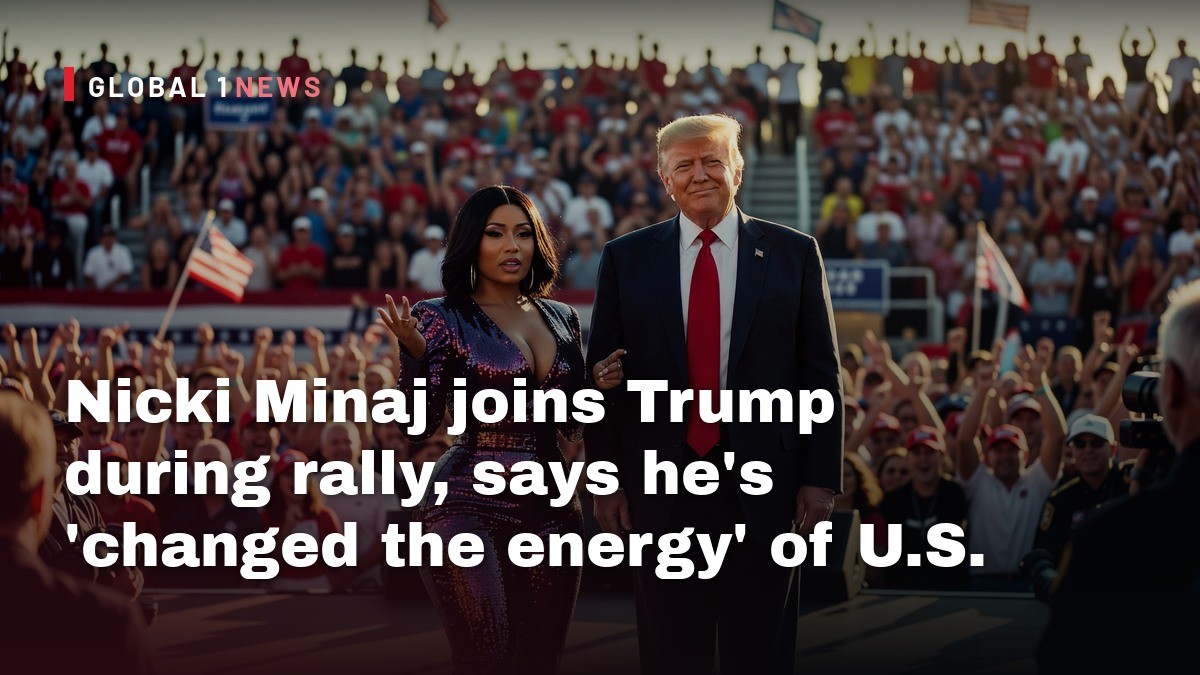
Rapper Nicki Minaj appeared on stage beside U.S. President Donald Trump at a rally in Michigan on Sunday, a move that underscores the increasingly visible partnership between the Make America Great Again movement and high‑profile entertainers. Minaj, who has shifted from a vocal critic of Trump’s immigration stance in 2018 to a self‑described “number‑one fan,” used the platform to praise the president’s “resilience” and “future‑focused energy.”
From controversy to endorsement
Minaj’s appearance marks a stark reversal from her earlier public condemnation of Trump’s zero‑tolerance immigration policy, when she identified herself as an “illegal immigrant” and denounced the administration’s approach. By October 2026, she is openly declaring, “I am so honoured to be working with this president,” and promising “to support you forever and ever” if he runs again. The shift reflects a broader trend of celebrities re‑aligning with political figures after personal benefits, such as the “gold card” visa Minaj received in January, which she described as “free of charge.”
The gold card, a fast‑track residency programme that costs $1 million for most applicants, was presented as a symbol of Trump’s outreach to wealthy foreigners. While a White House official later characterised Minaj’s card as a “memento” rather than a formal visa document, the public display of the card – featuring Trump’s portrait – signals a tangible reward for political endorsement. For Canadian observers, the episode raises questions about the influence of money‑driven immigration pathways on public policy debates at home.
The rally’s messaging and Canadian parallels
Trump’s Michigan rally, held at Port Huron’s McMorran Place Arena, focused on “a major turning point” for the United States, a narrative that resonates with his broader campaign to frame the 2026 midterms as a referendum on his administration’s direction. Minaj echoed this sentiment, urging the crowd to “make some noise for this great man” and describing the president’s impact as “changing the energy of our country.” Such rhetoric mirrors the language used by Canadian political leaders when framing election cycles as pivotal moments for national renewal.
In Canada, the federal government has similarly framed recent budget measures as a “new energy” for the country, especially in the context of climate‑friendly infrastructure spending. While the United States leans on a message of resilience and future‑oriented optimism, Canadian policymakers are balancing that optimism with concrete commitments to affordable housing and health‑care funding, illustrating divergent approaches to rally‑style political communication.
Celebrity influence on political mobilisation
Minaj’s participation illustrates the growing role of pop culture icons in rallying voter enthusiasm. Her performance, punctuated by a brief exchange with Trump on Air Force One, was amplified by social‑media posts that included the hashtag #AirForceOneBARBIE and a video shared by White House Communications Director Steven Cheung, who joked about Minaj potentially becoming the new press secretary. The blend of entertainment and political messaging is designed to capture younger audiences, a demographic that both parties vie for.
Canadian parties have long employed celebrity endorsements, but the intensity of the U.S. approach—linking a gold‑card visa to personal loyalty—offers a cautionary example. The Canadian public service, bound by stricter conflict‑of‑interest rules, would find such direct exchanges between political leaders and high‑profile entertainers more scrutinised, especially when financial incentives are involved.
Implications for immigration discourse
The gold‑card programme, highlighted during the rally and the earlier “Trump Accounts” launch, underscores a shift toward monetised pathways to residency. Minaj’s claim that she was “finalising that citizenship paperwork as we speak” suggests an expedited process, contrasting sharply with Canada’s points‑based system that emphasises skills, language proficiency and family ties. While Canada has introduced pilot streams for high‑skill migrants, the U.S. model of purchasing residency raises concerns about equity and the commodification of citizenship.
For Canadians, the debate is not merely academic. Provincial governments, particularly in Alberta and Saskatchewan, have reported rising public concern over “wealth‑based immigration” models that could divert resources from domestic housing and health‑care. The Minaj episode serves as a vivid illustration of how celebrity endorsement can normalise such programmes, potentially influencing public opinion and policy discussions at home.
Media framing and the role of the press
The coverage of Minaj’s rally appearance, sourced from Global News Canada and the Associated Press, demonstrates the challenges journalists face when reporting on events that blend political messaging with entertainment spectacle. The article notes Trump’s off‑the‑record comment about “looking at one hell of a beautiful a– before, Nicki Minaj,” a remark that, while sensational, also reflects the informal tone that has become commonplace in political rallies.
Canadian media outlets, bound by the Canadian Radio‑television and Telecommunications Commission’s standards for fairness and accuracy, must navigate similar terrain when covering domestic political events that feature celebrity guests. The emphasis on factual reporting—avoiding invented statistics or unverified quotes—remains essential to maintain public trust, especially as political narratives become increasingly intertwined with pop‑culture moments.
Public reaction and cultural resonance
Audience response at the Michigan rally was enthusiastic, with Minaj encouraging the crowd to “make some noise” and describing the president as a “hand‑some, dashing” leader. The event also featured a surprise appearance at Turning Point USA’s AmericaFest convention, where Minaj praised both Trump and Vice President JD Vance as “role models” for young men, though she momentarily misspoke by calling Vance an “assassin” before covering her mouth. Such slip‑ups, highlighted by interviewers like Erika Kirk, illustrate the high‑stakes nature of live political endorsement.
In Canada, similar events—such as the annual Conservative Party conference—have seen musicians and actors step onto the stage, signalling a shared strategy of leveraging cultural capital to energise the base. The public’s reception often hinges on the perceived authenticity of the endorsement; Minaj’s transition from critic to supporter may be viewed by some as opportunistic, while others see it as a genuine change of heart, a narrative she herself framed as “It’s OK to change your mind.”
Looking ahead: electoral impact and policy considerations
As the U.S. midterm elections approach, the Trump‑Minaj partnership could influence voter mobilisation, particularly among younger demographics that consume content on platforms like X and TikTok. The rally’s emphasis on “a brighter future for us and our children” aligns with broader campaign themes of economic optimism and national pride, messages that Canadian parties also employ when addressing cost‑of‑living concerns and the future of public services.
For Canadian policymakers, the episode offers a reminder to scrutinise the intersection of celebrity influence, immigration policy and political fundraising. While Canada’s immigration framework remains points‑based and transparent, the allure of fast‑track visas for wealthy individuals—exemplified by the gold‑card narrative—could prompt calls for reform or tighter regulation. As Parliament Hill debates housing affordability and the sustainability of social programmes, the Canadian public will likely watch the U.S. example closely, weighing the merits of a system that appears to trade financial contributions for political loyalty.
This article was produced with AI-assisted research and editorial support. Reporting is based on the source material cited below. Sources: Global News Canada; globalnews.ca; Global1.News (26 October 2026).
By Alex Thompson, Staff Writer
What's Your Reaction?
 Like
0
 Dislike
0
 Love
0
 Funny
0
 Wow
0
 Sad
0
 Angry
0

Canada Correspondent at Global1.News. Based in Toronto, covering Canadian politics, energy, trade, and US-Canada relations. Provides the Canadian perspective on North American and global affairs.













Comments (0)