
Nepal Flash Floods: At Least 95 Dead, Hundreds Missing After Avalanche Triggers Bhotekoshi Disaster
The ground shook for seconds in Tibet. Seven minutes later, a wall of ice, rock, and water tore through the Bhotekoshi River valley, wiping out settlements, smashing infrastructure, and leaving a death toll that is climbing by the hour. As of Wednesday evening, Bagmati Pradesh Police have confirmed at least 95 dead, with 384 people missing, and those numbers are not final.
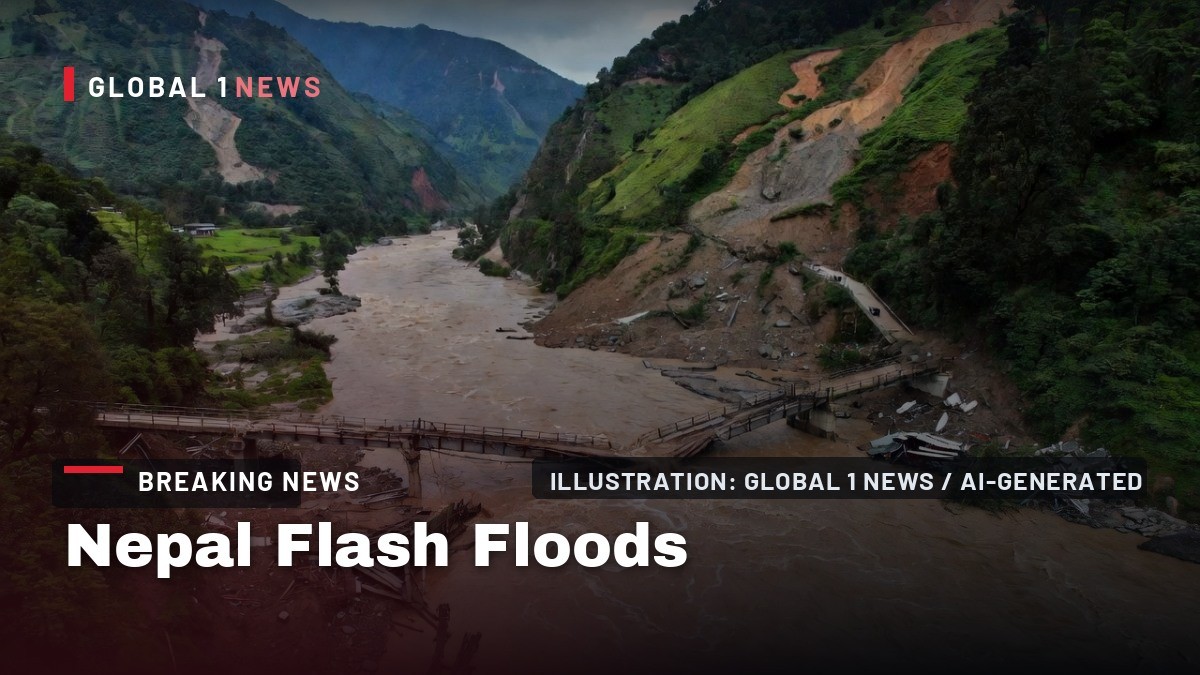
The ground shook for seconds in Tibet. Seven minutes later, a wall of ice, rock, and water tore through the Bhotekoshi River valley, wiping out settlements, smashing infrastructure, and leaving a death toll that is climbing by the hour. As of Wednesday evening, Bagmati Pradesh Police have confirmed at least 95 dead, with 384 people missing, and those numbers are not final. This is not a slow-onset disaster; it is a sudden, violent reminder that the Himalayas are becoming more dangerous, and the countries downstream are not ready.
The Disaster: A Sudden Surge From Upstream
The sequence of events on the morning of August 26, 2026, is becoming clearer, and it is chilling in its precision. According to Nepal's Foreign Minister Shisir Khanal, initial assessments indicate a magnitude 4.4 earthquake struck Tibet, just north of the Nepal-Tibet border. The German Research Centre for Geosciences recorded the quake, and a security-camera timestamp at a Tibet border crossing shows the event. Roughly seven minutes later, the Bhotekoshi River, which had been running at dry seasonal levels around Rasuwa, rose abruptly and violently.
That seven-minute window is the entire warning the region received. A spokesperson for the Kathmandu-based International Centre for Integrated Mountain Development (ICIMOD) confirmed that an avalanche occurred in the Lhende Khola River, a tributary system upstream in Tibet. The avalanche sent a wall of ice, rock, and debris downstream, which then funneled into the Bhotekoshi. The surge was not a gradual swell; it was a flash flood of catastrophic proportions, inundating dozens of settlements in Rasuwa and Nuwakot districts, and hitting the Gyirong Port area on the China-Nepal border in Tibet.
The geography of the region compounded the tragedy. The Bhotekoshi is joined by the Lende River before flowing past Dhunche, downstream of which it forms part of the Trishuli River system, a major tributary of Nepal's river network. This means the floodwater did not just devastate one narrow valley; it had a highway to spread into heavily populated and commercially active areas further south. Officials have warned that higher water could spread into the Trishuli River, threatening communities in Dhading, Gorkha, and Chitwan.
The Human Toll: Tourists, Pilgrims, and Locals
The casualty figures are a grim roll call of a region that lives and dies by its rivers and roads. The Nepal Tourism Board has released a preliminary figure of 384 people missing, a number that is likely to be revised. That figure breaks down to 291 foreigners and 93 Nepalis. The missing are not just statistics; they are pilgrims on a sacred journey, tourists on an adventure, and local people simply going about their lives.
The international dimension is significant. Three Americans are among the missing, according to the tourism board. South Korea's foreign ministry has reported eight citizens missing. At least 105 Indians and 37 overseas Indians are unaccounted for, many of whom were travelling to the Kailash Manasarovar Yatra in Tibet, a pilgrimage of profound religious significance. That group includes 59 pilgrims who were in the direct path of the flood. Tourists from Australia, Malaysia, the United Kingdom, South Africa, and the Netherlands are also unaccounted for, with Sky News reporting 12 British nationals missing.
It is not just civilians. Nine Armed Police Force personnel stationed at the Timure border outpost are missing. These were first responders, the people who would have been tasked with warning others and managing the crisis. Their loss is a direct hit to the response capacity of the region. The confirmed death toll of 95, reported by Bagmati Pradesh Police, is a number that authorities fear will rise significantly as search teams reach the most remote and debris-choked areas. Earlier in the day, figures ranged from 8 to 22, climbing steadily as the scale of the destruction became apparent.
The Cause: A Deadly Chain Reaction
We need to be precise about what happened here, because the cause dictates the future. The initial trigger appears to be the magnitude 4.4 earthquake in Tibet. That is a relatively small quake, but in a glaciated, high-altitude environment, it does not take a massive tremor to destabilize a hanging glacier or a frozen slope. The ICIMOD spokesperson stated that an avalanche then occurred in the Lhende Khola River, sending a wall of ice, rock, and water downstream.
This is a classic glacial lake outburst flood (GLOF) or a glacier avalanche trigger, and it is a growing hazard. Last year, the Bhotekoshi flood was attributed to drainage from a supraglacial lake in Tibet. That is the pattern: a lake sitting on top of a glacier, or a glacier hanging on a steep slope, gives way. The water and debris surge down the valley with the force of a freight train. Scientists have been warning for years that as Himalayan glaciers retreat due to climate change, the risk of these events is rising. The mountains are becoming more unstable, and the water stored in them is being released in violent, unpredictable bursts.
The seven-minute gap between the earthquake and the flood is the critical detail. It is a warning window that is almost useless for evacuation but crucial for understanding the mechanics. It tells us the avalanche was triggered by the quake, and it took that long for the debris to travel from the source to the first populated areas. This is not a natural disaster in the sense of an unpredictable act of God; it is a predictable consequence of a warming planet and a fragile mountain ecosystem. The question is not if this will happen again, but where and when.
Infrastructure in the Crosshairs
The Bhotekoshi and Trishuli river systems are the backbone of Nepal's hydropower industry. That industry is now in the emergency room. The Nepal Electricity Authority has confirmed that six major hydropower and transmission facilities were damaged. The list reads like a who's who of Nepal's energy grid: Rasuwagadhi, Chilime, Trishuli 3A, the Trishuli 3B Hub 220 kV substation, Trishuli Hydropower Station, and Devighat Hydropower Station.
This is not just a repair bill; it is a strategic vulnerability. Hydropower is Nepal's primary export and a key source of domestic energy. Damage to these facilities will have cascading effects on power supply, economic activity, and government revenue. The Trishuli 3B Hub substation is a critical node in the transmission network; its failure could cause blackouts far beyond the immediate flood zone. The fact that these facilities were built in a river valley known to be prone to flash floods and glacial outbursts is a question that will need to be asked, but for now, the priority is rescue and recovery.
The damage to roads, houses, businesses, and government offices is extensive. In Nuwakot district, floodwater entered commercial areas including Betrawati, Trishuli, Dhunge, and Devighat. These are not just villages; they are market towns and administrative centers. The economic impact on local communities will be felt for years, even after the bodies are recovered and the debris is cleared. The loss of infrastructure will hamper the relief effort itself, making it harder to reach isolated communities.
The Response: A Race Against Time
The Government of Nepal has mobilised the full weight of its security apparatus. The Nepal Army, Armed Police Force, and Nepal Police are all engaged in search, rescue, and relief operations, supported by helicopters and medical teams. This is a significant logistical undertaking, as the terrain is some of the most difficult in the world. The flood has likely destroyed or blocked the roads that would normally provide access, meaning helicopters are the only way to reach many areas.
Flood warnings have been issued for communities along rivers in Rasuwa, Nuwakot, Dhading, Gorkha, and Chitwan. This is a critical step, as the surge is moving downstream and could cause further damage. The warning system, however, is only as good as the communication network that supports it. In remote areas, getting the message out is a challenge. The response is a race against time, not just to find survivors, but to prevent further loss of life from secondary flooding.
On the international front, Chinese President Xi Jinping has called for continued efforts to locate missing people and for improvements to disaster monitoring and warning systems. This is a tacit admission that the current systems failed to provide adequate warning. The fact that the disaster originated in Tibet and swept into Nepal highlights the transboundary nature of these hazards. A flood does not respect borders, and neither should monitoring and warning systems. This is a moment for regional cooperation, not just national response.
Analysis: The New Normal
Let's cut through the official statements and look at the bigger picture. This is not an anomaly; it is the new normal. The scientific community, including ICIMOD, has been sounding the alarm about glacial lake outburst floods for decades. The glaciers are retreating, the lakes are growing, and the slopes are becoming more unstable. The earthquake was the trigger, but the vulnerability was pre-existing. We are building infrastructure and housing in valleys that are essentially shooting galleries for debris flows.
The fact that 384 people are missing, including a large number of international tourists and pilgrims, should be a wake-up call to the global travel industry. The Kailash Manasarovar Yatra is a major pilgrimage route, and the Bhotekoshi valley is a popular trekking corridor. Are tour operators and travel advisories accounting for the increased risk of GLOFs? The evidence suggests they are not. The loss of nine Armed Police Force personnel is a stark reminder that the people tasked with keeping the border safe are also in the line of fire.
The damage to the hydropower sector is a strategic blow. Nepal has bet its economic future on selling electricity to India and Bangladesh. If the infrastructure is vulnerable to a single avalanche, that bet is risky. The government will need to invest in early warning systems, engineering solutions to drain dangerous glacial lakes, and possibly relocate critical infrastructure. This is a multi-billion dollar problem, and it is not going away. The seven-minute warning is not a solution; it is a countdown to the next disaster.
What You Should Know
This is a fast-moving situation, and the numbers will change. The confirmed death toll is at least 95, but the 384 missing suggests the final figure could be significantly higher. The international community is involved because the missing include citizens of the United States, South Korea, India, the United Kingdom, Australia, Malaysia, South Africa, and the Netherlands. If you have family or friends in the region, contact them through official channels and the tourism board.
The cause is a chain reaction: an earthquake, an avalanche, and a wall of water. This is a climate-driven hazard that is increasing in frequency. The damage to Nepal's hydropower infrastructure will have economic consequences that extend far beyond the flood zone. The response is underway, but the terrain is brutal and the window for finding survivors is closing. This is a tragedy that was predicted, and it will happen again unless serious investment is made in monitoring, warning, and mitigation.
This article was produced with AI-assisted research and editorial support. Sources: AP News, Reuters, BBC, Sky News, South China Morning Post, Kathmandu Post, USGS, International Centre for Integrated Mountain Development.
By Jessica Ali, Staff Writer
What's Your Reaction?
 Like
0
Like
0
 Dislike
0
Dislike
0
 Love
0
Love
0
 Funny
0
Funny
0
 Wow
0
Wow
0
 Sad
0
Sad
0
 Angry
0
Angry
0

Editor-in-Chief at Global1.News. Atlanta-based journalist who cuts through the BS and tells it like it is. Lead anchor, host, and the voice you hear when the spin stops and the truth starts.













Comments (0)