
Moscow Restaurant Bombing Kills Three at Kudrinskaya Ploshchad
A homemade bomb exploded beside the Balzi Rossi restaurant in central Moscow on Saturday evening, killing three people and wounding at least 21 in an attack authorities have not attributed. Unconfirmed reports say the venue was closed for a private event linked to senior military figures, as the ...
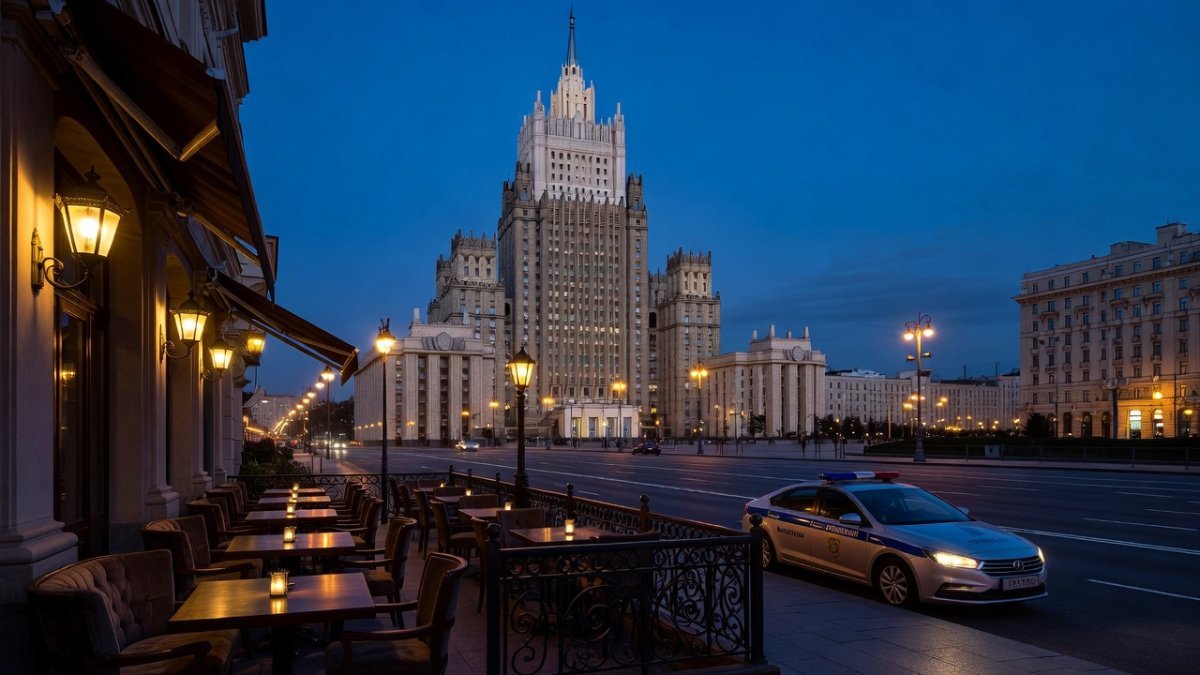
A homemade bomb exploded beside an upscale Italian restaurant in central Moscow on Saturday evening, killing three people and wounding at least 21 in an attack that Russian authorities have not attributed to any group. The blast struck the Balzi Rossi restaurant at Kudrinskaya Ploshchad, inside one of the capital's Stalin-era skyscrapers, as unconfirmed reports circulated that the venue had been closed for a private event attended by senior military figures.
Moscow Restaurant Bombing Kills Three at Kudrinskaya Ploshchad
Moscow, Russia – August 2 — The explosion occurred just before 8:00 p.m. local time near the Balzi Rossi restaurant on the ground floor of one of Moscow's seven Stalin-era skyscrapers at Kudrinskaya Ploshchad, just off the Garden Ring. Three people were killed: an unidentified woman carrying the device, a security guard, and a restaurant customer. At least 21 people were injured.
The Attack at Balzi Rossi
Russia's National Anti-Terrorism Committee confirmed that an explosive device caused the blast, the state-run RIA Novosti news agency reported. According to the committee, the woman tried to enter the restaurant but was stopped by a security guard, after which the explosion occurred. The restaurant's website said the venue had been closed on Saturday for a private event. Moscow's Department of Transport postponed its Night Bike Festival, which had been scheduled to begin later that evening, as heavily armed law enforcement officers sealed off the area and emergency crews searched the building.
The Explosive Device and the Woman Carrying It
The Kommersant daily newspaper, citing law-enforcement sources, reported that the bomb had been intended to maim and kill guests on the restaurant's summer terrace. Kommersant suggested the device may have been set off remotely by someone else and that the woman carrying it may not have known it contained an explosive. The same report indicated the woman approached with a box she described as a gift for the restaurant's guests, and the blast followed once the guard opened it.
Video from the scene showed shattered windows, debris across the entrance, and heavily armed officers guarding the area. The authorities did not name those killed or injured and did not identify any group believed responsible.
Reports on the Private Event and Unconfirmed Target Claims
Several Russian and Ukrainian Telegram channels, later amplified by the Kyiv Post citing Russian journalist Oleg Kashin, reported that the private event was the 55th birthday celebration of Colonel General Alexander Chayko, Commander-in-Chief of the Russian Aerospace Forces. These claims have not been officially confirmed, and other local reports cited witnesses describing a wedding reception underway instead. Colonel General Chayko was confirmed alive in subsequent reports.
Witnesses described government vehicles parked around the restaurant for the private event, which was held on the veranda and reportedly had its own security detail. The question of who was inside — and who the device was meant to reach — remains central to the investigation.
Pattern of Attacks on Russian Military Officials
Russia's FSB security service said earlier this year that authorities would step up protection for high-ranking military officials after a series of assassinations and attempted killings it blamed on Kyiv. In December 2024, Lieutenant General Igor Kirillov, head of Russia's Nuclear, Biological and Chemical Protection Troops, was killed by a scooter bomb in Moscow. Between December 2024 and December 2025, three other Russian lieutenant generals were killed by precisely executed bombings in Moscow and its suburbs, and another general died in a car bomb in the capital in December 2025.
Mediazona has documented at least 15 Russian generals confirmed killed since the February 2022 invasion through drone strikes, car bombings, crashes, and front-line incidents. Earlier cases include the 2023 killing of pro-war blogger Vladlen Tatarsky in a St. Petersburg cafe bombing and the 2022 killing of Darya Dugina by a car bomb near Moscow, attacks that independent analysts say reflect an evolving methodology in targeting figures associated with the war effort.
Security Failures and Strain from Drone Warfare
In recent weeks, Ukrainian drone strikes have reached deep into Russian territory, including an attack that destroyed more than $2 billion worth of inventory at warehouses owned by online retailer Wildberries. The Kremlin cancelled its annual Navy Day parade in St. Petersburg over fears that Ukrainian drones could target the event. The reach of those operations into major Russian population centers has exposed gaps in air defense coverage far from the front lines and demonstrated how economic infrastructure has become vulnerable alongside military targets.
These developments have placed additional pressure on Russian security services already tasked with protecting officials in the capital. For the FSB, the challenge is twofold: detecting threats that originate beyond Russia's borders while managing vulnerabilities exposed by a war that has increasingly come home. The bombing also carries uncomfortable echoes of the security failures that followed previous attacks in Moscow, when the authorities promised tighter controls and stricter screening at public venues — pledges that did not prevent Saturday's explosion.
Independent scrutiny of such incidents has also narrowed: The Moscow Times has been designated an "undesirable" organization by Russia's Prosecutor General's Office, a label that criminalizes its work inside the country.
Kremlin Response and Implications for Power Structures
The National Anti-Terrorism Committee's statement confirmed the use of an explosive device but provided no further details on responsibility or motive. The absence of official attribution leaves open questions about how a device reached a location in central Moscow associated with elite gatherings — and whether the attack reflects an external operation, an internal lapse, or a message directed at the security establishment itself.
Analysts suggest the incident highlights ongoing challenges for the FSB and other security services in shielding senior figures amid sustained external pressure. Explosions at venues frequented by the elite raise questions about the limits of current counterintelligence measures, and such incidents could intensify pressure on security leadership while prompting debate over which actors stand to gain from destabilizing perceptions of control within the capital.
Escalation in the Wider Conflict This Week
On Saturday morning, Russia launched a missile attack on Kyiv that killed at least 10 people, marking the second major strike on the Ukrainian capital this week, with fires breaking out across the city and power outages affecting residents. An AFP analysis found that Russia fired a record 376 missiles at Ukraine in July, more than twice the June total.
This dual dynamic of cross-border strikes and internal security breaches highlights how the conflict continues to generate simultaneous pressures on both sides' strategic calculations, more than four years into the full-scale war.
Effects on Ordinary Russians and the Elite
The postponement of the Night Bike Festival and the visible presence of armed officers at the scene reflect immediate disruptions to daily life in central Moscow. For the broader population, repeated incidents targeting or affecting high-profile locations reinforce a climate of heightened security measures around official and military figures.
Independent Ukrainian reporting, including accounts circulated via Telegram channels and referenced by the Kyiv Post, continues to draw attention to unconfirmed links between such attacks and senior Russian military personnel, even as official Russian sources remain silent on specific motives or perpetrators. Until investigators provide answers, the bombing at Balzi Rossi leaves Moscow's elite facing a pointed question: if a bomb can reach a private terrace in the shadow of the Seven Sisters, no venue in the capital can be assumed safe.
By Irina Volkov, Staff Writer
This article was produced with AI-assisted research and editorial support. Reporting is based on sources cited in the article.
What's Your Reaction?
 Like
0
Like
0
 Dislike
0
Dislike
0
 Love
0
Love
0
 Funny
0
Funny
0
 Wow
0
Wow
0
 Sad
0
Sad
0
 Angry
0
Angry
0
Russia/Eastern Europe Correspondent at Global1.News. Covering Russian politics, energy, security, and the shifting dynamics of the post-Soviet space. Provides clear-eyed analysis on one of the world's most opaque regions.












Comments (0)